San Francisco guide
SOMA, San Francisco: warehouses, museums and nights that run to dawn
South of Market is San Francisco at its most utilitarian and most alive: a grid of museums, convention halls, ballpark crowds, late-night clubs and excellent food stitched between Market Street and the bay.
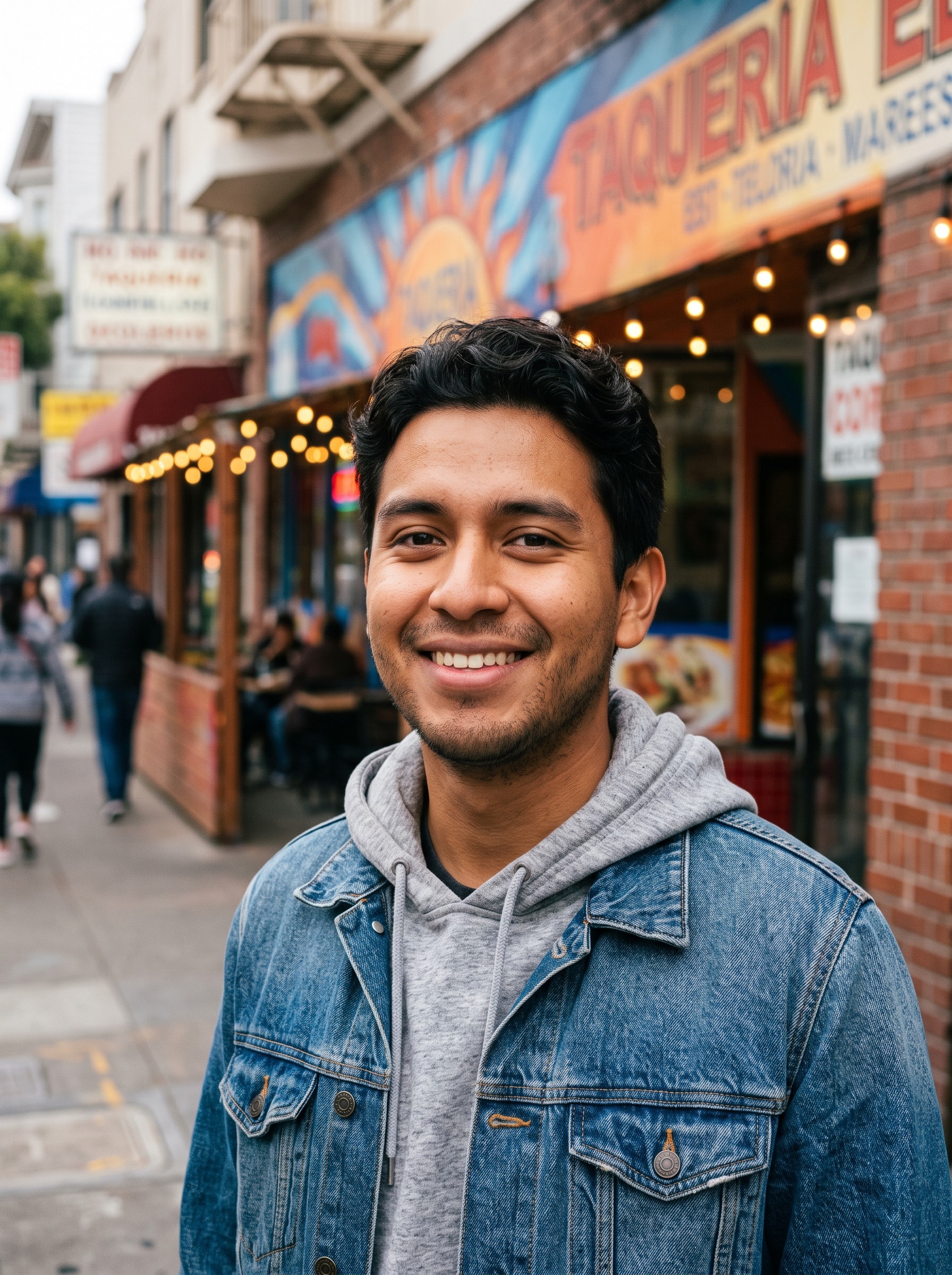 By Mateo Reyes

One block you’re queueing for a wagyu tasting menu; the next you’re standing under warehouse lights with bass shaking the floor at 3am and fog sliding down Folsom. That’s SOMA in a sentence, if a sentence can carry a whole district: the broad, slightly ragged slab of central San Francisco where museum-goers, convention badges, ballpark crowds and after-hours dancers all cross paths between Market Street and the bay.
What SOMA is known for
SOMA is where San Francisco stops posing and starts working. The neighbourhood doesn’t really have a single main street so much as a grid of numbered blocks and named arteries — Folsom, Harrison, Bryant, Brannan, Townsend — where old brick warehouses lean against glass towers, loading docks and surface lots. It’s flat, easy to walk, and never quite polished. You’ll see tents and shuttered storefronts, especially near 6th Street, and you’ll also see a city running at full speed: office workers at lunch, museum crowds drifting through Yerba Buena, and club kids arriving just as the last BART trains thin out.
The district’s cultural centre is the Yerba Buena pocket, a rare soft patch in all this hard-edged geometry. Yerba Buena Gardens gives the neighbourhood a little breathing room — lawn, fountains, public art — and around it sit SFMOMA, the Museum of the African Diaspora, the Contemporary Jewish Museum, Yerba Buena Center for the Arts and the Children’s Creativity Museum. It’s one of the few places in San Francisco where you can move from a major museum to a public garden to a family carousel without ever leaving the same few blocks.

The other anchor is Moscone Center, which explains the hotel towers and the weekday tide of lanyards and rolling suitcases. Then, at the bay end, Oracle Park lands like a different city entirely — all baseball energy, waterfront light and game-day crowds moving toward the water. SOMA’s history is industrial, and you can still feel that in the bones of the place. This was machine-shop and warehouse land until artists started moving into the old spaces in the 1970s, and then the tech boom arrived with its own appetite for scale. What you get now is the collision: raw warehouse structure under a layer of money, reinvention and late-night noise.
Where to eat & drink
If you come to SOMA hungry, the neighbourhood is generous in a very San Francisco way: one minute you’re in a room where dinner is a ceremony, the next you’re eating something cheap and excellent with your elbows on a counter. That range is the point.
At the high end, Californios at 355 11th Street is the kind of place that makes you slow down before you even open the menu. Chef Val M. Cantú’s modern Mexican tasting menu runs sixteen-plus courses in a colourful, festive room, and in 2026 it became the world’s first three-Michelin-star Mexican restaurant. It’s precise, ambitious and not remotely shy about what it is.

A few blocks away, Saison at 178 Townsend keeps things open-hearth and deeply Californian. Its two-Michelin-star tasting menus start around $218, and the room has that particular hush that comes with serious fire cooking and serious expectations. Prospect at 300 Spear, from the Boulevard team, is a more flexible stop — Michelin-listed contemporary American, good happy hour, useful when you want the room to feel polished without turning the whole evening into an event.
For a more casual but still very SOMA kind of dinner, Marlowe at 500 Brannan is beloved for the burger, brussels-sprout chips and deviled eggs. It has the energy of a place that knows exactly why people keep coming back. Rooh at 333 Brannan brings modern Indian small plates and cocktails near Oracle Park, which makes it handy before a game or after one when the waterfront is still buzzing.
The value end of the neighbourhood is where SOMA gets especially good. Yank Sing in the Rincon Center, at 101 Spear Street, has been a dim sum institution since 1958, and that longevity matters: you go because it’s reliable, because it’s part of the city’s food memory, because the carts and the pace still feel right. Tú Lan at 8 6th Street has been turning out famously crisp Vietnamese imperial rolls for nearly fifty years, and if you know the block you know why this place has lasted. Deli Board at 1058 Folsom builds tank-sized custom sandwiches. Square Pie Guys at 1077 Mission does cheddar-crusted Detroit-style pizza. HK Lounge Bistro at 1136 Folsom is where you go for baked pork buns and xiao long bao that hit the table hot enough to make you wait a second before biting in.
And when you need caffeine, there’s Sightglass Coffee at 270 7th Street, a flagship warehouse roastery where the room itself is part of the show. You can watch the beans roasted and then take your drink to the mezzanine for an affogato. It feels right for SOMA: industrial, polished, and just a little theatrical.
Going out
This is the reason people cross into SOMA after dark. The warehouse blocks around 11th Street and Folsom hold the densest concentration of clubs in San Francisco, and the neighbourhood’s night personality is less “bar district” than “engine room.” The music doesn’t spill out politely here; it hits you in the chest.
DNA Lounge at 375 11th Street has been doing this since 1985. It’s a mega-club in the best old-school sense: two stages, four dance floors, six bars, and enough programming to keep the room changing shape all week. Monday nights bring Death Guild, the oldest continually operating goth/industrial night in the US, starting at 9:30pm for a few dollars at the door. That detail alone tells you a lot about SOMA: this is a district where subcultures don’t just survive, they get a proper building.

Then there’s 1015 Folsom, the multi-level EDM and house institution that has been part of the neighbourhood since the 1990s. It’s one of those rooms people mention with a kind of practical respect — not because it’s precious, but because it keeps doing the job. Halcyon at 314 11th Street serves the serious house-and-techno crowd with a proper sound system, which in this corridor is not a bonus, it’s the baseline.
And when the rest of the city starts shutting its doors, The EndUp at 401 6th Street at Harrison keeps the lights on. It’s legendary for a reason: indoor-outdoor, after-hours, and still moving toward dawn while the rest of the block goes quiet. The long-running Sunday soul party is part of the local lore, one of those San Francisco rituals that tells you the city still has a pulse after midnight.
For a different kind of evening, The Pawn Shop at 993 Mission is a speakeasy-style tapas and cocktail bar where you “pawn” a curiosity to get in. It’s playful, a little weird, and exactly the sort of thing SOMA can pull off without feeling forced. Press Club at 20 Yerba Buena Lane is the after-museum answer: sleek wine and cocktails, close enough to the cultural core that you can step out of a gallery and into a glass of something cold. Dirty Habit at 12 Fourth Street pours craft cocktails on an enclosed patio, which makes it a useful bridge between the day crowd and the night crowd.
Things to do / what to see
If you only do one museum in SOMA, make it SFMOMA at 151 Third Street. It’s the largest modern and contemporary art museum in the United States, spread across seven gallery floors, with a wall of living plants and 45,000 square feet of art-filled public space you can wander for free even without a ticket. That free-access generosity matters in a neighbourhood that can otherwise feel expensive at every turn. And if you’re under 18, you’re in free every day.

From there, the best move is to stay in the Yerba Buena orbit and let the blocks do the work. Cross the footbridge to the Museum of the African Diaspora at 685 Mission, where exhibitions celebrate Black cultures, then continue to the Contemporary Jewish Museum, whose Beaux-Arts-plus-blue-cube building is one of the area’s most distinctive sights. Yerba Buena Center for the Arts sits right in the same cluster, and the Children’s Creativity Museum gives families a place to let the energy out, especially with the rooftop carousel at Yerba Buena Gardens.
The gardens themselves are free, and they’re not just a patch of green for show. The Yerba Buena Gardens Festival runs free outdoor concerts, salsa nights and movie screenings on the lawn from spring into autumn, which gives the area a civic rhythm beyond museums and office hours. On a good day, you can drift from exhibit to lawn to another exhibit without ever feeling like you’ve crossed a hard boundary.

Next door, the Metreon adds a different kind of public space with its rooftop terrace and cinema. It’s not the romantic version of city wandering, but it’s part of the district’s actual texture: food, screens, shopping, transit, all in one practical block.
At the bay end of SOMA, Oracle Park changes the tempo again. It’s home to the Giants since 2000, and even if baseball isn’t your religion, the ballpark tour is worth it. On game days, the whole waterfront seems to lean toward McCovey Cove, waiting for splash-hit home runs to land there. The park is one of the neighbourhood’s great release valves: all the office towers and museum blocks give way to jerseys, beers and the open water.
If you need a green break with a view but don’t want to leave the district, Salesforce Park floats four storeys above the transit centre on the SOMA/downtown edge and is open to the public for free. It’s a useful reminder that even in a neighbourhood defined by hard surfaces and straight lines, someone still made room for gardens in the sky.
{{ATTRACTIONS}}
Shopping & markets
SOMA isn’t the sort of neighbourhood where you wander for cute storefronts and end up with a tote bag. Its shopping is more practical, more destination-based, and often more design-forward than charming. The Metreon on the Yerba Buena block is the clearest example: a Target, a food hall and a cinema all under one roof, built for people who want to solve several errands at once.
That same utilitarian streak shows up in the warehouse blocks, where design and interiors showrooms sit alongside outlet and sample-sale spaces. The best browse can be the SFMOMA museum store, which is one of the stronger design-and-art-book shops in the city whether or not you buy a ticket. It’s the kind of store where you go in for one book and leave thinking about a lamp, a print, or a notebook you didn’t know you needed.
Sports fans should make time for the Giants’ Dugout Store at Oracle Park, especially on game days when the whole area has that pre-first-pitch buzz. And if you want food shopping that feels more like a local ritual than a retail mission, most people head a little north to the Ferry Building Marketplace on the Embarcadero. The Saturday farmers’ market there is one of the best in the country, and from the northern SOMA blocks it’s either a flat 15-minute walk or a couple of Muni stops away.
Where to stay in SOMA (South of Market)
SOMA is one of the most practical places to sleep in San Francisco if you care more about being connected than about being cute. The sweet spot is the Yerba Buena / Moscone pocket around 3rd, 4th and Mission, where the big convention and luxury hotels cluster close to SFMOMA, Union Square shopping and the Powell Street transit hub. If you’re in town for business, this is the obvious base. If you’re here for museums, it’s even better. If you’re catching a Giants game, you’re still in a good position.
The bay end near Oracle Park and South Beach is calmer and prettier than the interior blocks, so it suits sports-minded or waterfront-minded travellers who want a little less noise at night. The trade-off is simple and worth pricing in: the western warehouse blocks around 11th and Folsom are loud after dark because of the clubs, and the area around 6th and Mission has visible street homelessness and feels rougher once the sun goes down. Read the cross-streets carefully before you book a bargain.
{{HOTELS}}
Getting around
SOMA is flat, which makes it one of the easiest central San Francisco neighbourhoods to move through on foot. The numbered-street grid does a lot of the work for you, and the museum-and-Moscone core can be crossed in minutes. The area may look busy and a little chaotic, but navigation is straightforward once you get your bearings.
For transit, the north edge along Market Street is the key. Powell Street and Montgomery Street stations put you on both BART and Muni Metro, so you can reach the airport, the East Bay and the Mission without much fuss. The T-Third line via the Central Subway now runs from Chinatown through Union Square down into SOMA and out to the ballpark and Chase Center, and the Yerba Buena/Moscone station drops you right by the museums. If you’re coming by rail from the Peninsula or Silicon Valley, Caltrain at 4th & King sits at the south end of the district.
Getting to SFO is easy enough: BART from Powell or Montgomery runs directly to the airport in about 30 minutes. The one thing to remember is that transit thins out at night, and the neighbourhood empties away from the club strips. If you’re leaving DNA Lounge, 1015 Folsom or The EndUp late, budget for a rideshare or taxi rather than waiting alone at a quiet stop.
FAQs
Is SOMA a good area to stay in San Francisco?
Yes, if you value being central and well-connected more than charm. The Yerba Buena/Moscone pocket puts you near SFMOMA, Union Square shopping and the Powell Street transit hub, with everything from luxury convention hotels to mid-range chains. It’s especially handy for museum trips, business stays and Giants games.
Is SOMA safe at night?
The core around Yerba Buena Gardens and the club corridors is busy and generally fine with normal big-city awareness. The area around 6th and Mission has significant street homelessness and can feel rough after dark, so stick to well-lit main streets and take a rideshare or taxi back from late-night venues.
What is SOMA best known for?
Two things above all: the museum district around Yerba Buena Gardens — including SFMOMA, the Museum of the African Diaspora and the Contemporary Jewish Museum — and San Francisco’s densest nightlife, with warehouse clubs like DNA Lounge, 1015 Folsom and The EndUp along 11th, Folsom and 6th Streets.
What’s the easiest way to get to SOMA from SFO?
BART from Powell Street or Montgomery Street runs directly to the airport in about 30 minutes. Once you’re in the neighbourhood, the flat grid makes it easy to walk between museums, hotels, restaurants and the ballpark.