San Francisco guide
North Beach, San Francisco: the city’s densest few blocks of eating, drinking and lore
A walkable wedge of old cafés, red-sauce rooms, Beat-era bars and hilltop views, North Beach still tastes like San Francisco at its most talkative and delicious.
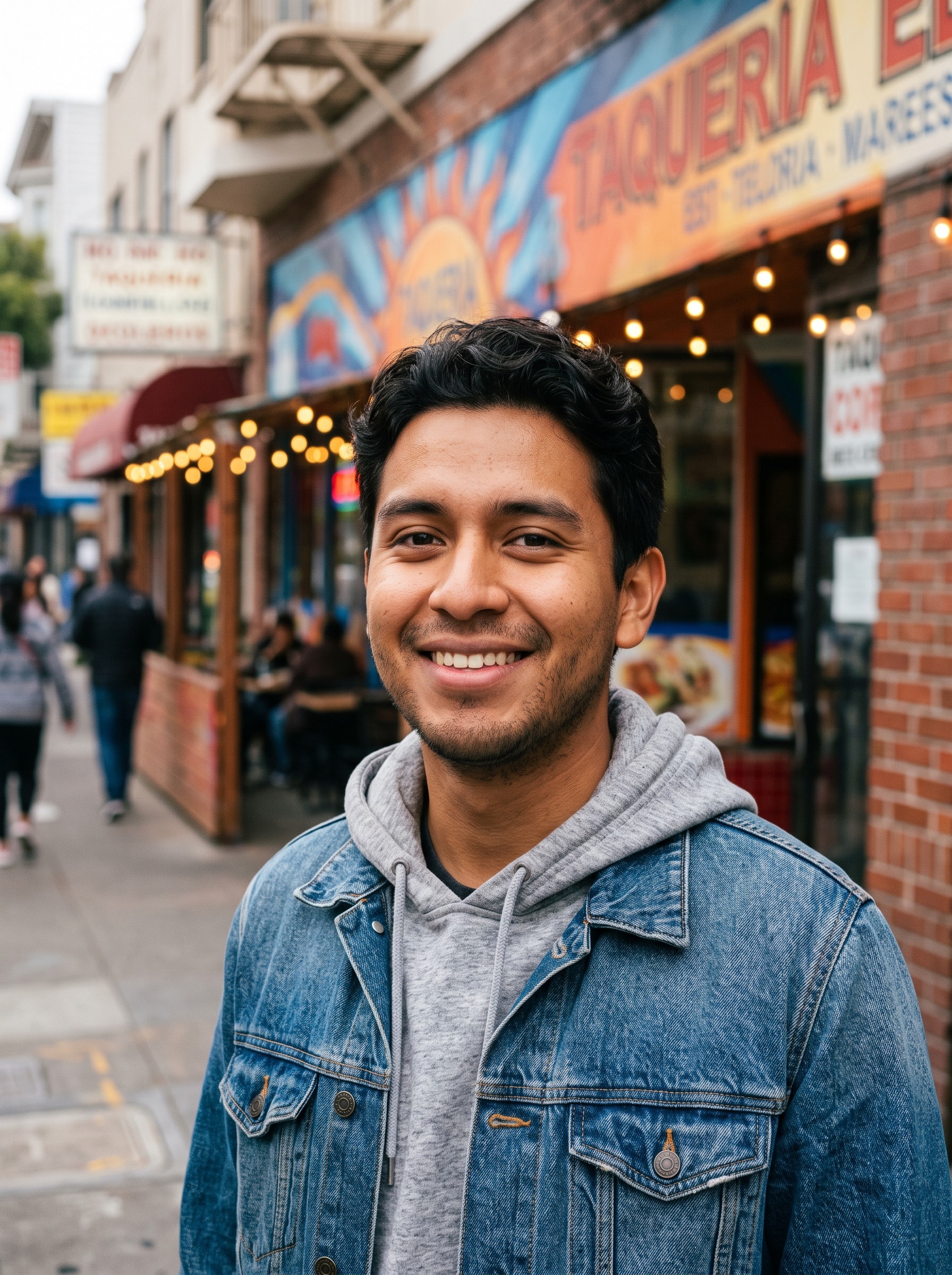 By Mateo Reyes

North Beach wakes up with espresso, garlic and the scrape of chairs on Columbus Avenue. By late afternoon the light starts to slide off Telegraph Hill, the parrots get loud over the gardens, and the neighbourhood settles into the kind of evening San Francisco does best: a little theatrical, a little tipsy, and entirely on foot.
What North Beach is known for
North Beach is one of those San Francisco districts that tells you its story before you’ve even reached the first corner. It is a wedge of a place, pressed between Telegraph Hill and Chinatown, with Columbus Avenue cutting through it on the diagonal like a blade that left all the good stuff hanging off the sides. For more than a century this has been Little Italy in the city’s sense of the phrase: delis curing their own salumi since the 1890s, cafés with old machines and older regulars, waiters calling menus across the room, Sunday mass in Italian at Saints Peter and Paul, and bocce in Washington Square as if the calendar had politely declined to move on.
Then there’s the Beat layer, which never quite washed away. In the 1950s, Jack Kerouac, Allen Ginsberg and Lawrence Ferlinghetti turned the neighbourhood into a kind of American literary crossroads, reading in back rooms and arguing over what poetry could do in public. City Lights Booksellers, founded in 1953 at 261 Columbus Ave, was hauled into court over Ginsberg’s Howl and won; the place is still trading daily, still a pilgrimage site, still one of the few bookstores in America that can make you feel as if you’ve wandered into a living chapter rather than a retail address.
Washington Square Park is the neighbourhood’s green pause button, a lawn where the twin white spires of Saints Peter and Paul rise behind the benches and the bocce courts. Telegraph Hill climbs behind it to Coit Tower, that fluted concrete landmark from 1933, visible from all over the city like a signal flare. And then there’s Broadway, which kept its risqué edge from the 1960s topless-club era and still glows after dark, a strip of neon and bar light where the night doesn’t really start until the rest of the city has gone home.

This is not a neighbourhood for rushing. It rewards the person who pauses for a coffee, detours down an alley, then ends up staying for a second drink because the room is too good to leave. Come hungry, wear shoes that can handle hills, and let the streets decide your pace.
Where to eat & drink
The first rule of eating in North Beach is simple: follow the locals’ queues, but don’t let them intimidate you. This is a neighbourhood where lunch can be a sandwich wrapped in paper, dinner can be a bowl big enough for two, and the best advice is often to stop by one place, then immediately wonder if you should have gone two blocks over instead.
Tony’s Pizza Napoletana at 1570 Stockton St is the headline act, and it earns the billing. Tony Gemignani runs seven ovens and a dozen styles here, which is the sort of detail that sounds exaggerated until you’re standing outside with everyone else on the waitlist, deciding whether to browse a bookshop or just surrender to the line. The point is not only pizza; it’s the idea that one room can hold so many versions of a city’s favourite food and still feel like a neighbourhood joint.

Golden Boy Pizza at 542 Green St is the opposite mood: thick Sicilian squares sold by the slice, best eaten standing up after a few drinks, grease caught on the paper and the city moving around you. If Tony’s is the pilgrimage, Golden Boy is the snack you remember later because it fit so perfectly into the night.
For seafood, Sotto Mare at 552 Green St is the move. Order the giant cioppino, that tomato-and-shellfish stew built for sharing, and, if they have them, the sanddabs. It’s the kind of meal that turns a table into a small event. You lean in, you pass bowls, you wipe your hands, and suddenly the neighbourhood’s old Italian-American heart feels less like heritage and more like dinner.
Original Joe’s at 601 Union St has been doing this since 1937, overlooking Washington Square in a leather-booth room that understands the value of a good wall and a reliable plate. The Joe’s Special — ground beef, spinach and egg — is the sort of dish that doesn’t need a speech. Neither does the old-school ravioli. You sit down, the room hums, and the whole thing feels like a scene that has been running for decades without losing its timing.
For a more formal turn, Firenze by Night at 1429 Stockton St, open since 1987, brings white-tablecloth Tuscan cooking and is known for its gnocchi. Bocconcino at 516 Green St, opened in 2024, is newer and more pointedly Tuscan, with a much-praised spaghettini with burrata. North Beach can be stubbornly old-school, but it is not frozen; it still makes room for a fresh plate if the cooking is right.
Then there are the places that make the neighbourhood feel like a pantry you can walk through. Molinari Delicatessen at 373 Columbus Ave has been curing meats since 1896 and builds enormous sandwiches on house focaccia; get the Renzo and don’t overthink it. Liguria Bakery at 1700 Stockton St has been focaccia-only since 1911, cash only, and often sells out by noon, which is the kind of fact that sounds like a dare and behaves like one too.

Breakfast, meanwhile, belongs to Mama’s on Washington Square at 1701 Stockton St, where the family has been serving for more than 50 years and the line outside is part of the ritual. The French toast and the Monte Cristo are the reasons people queue, but the real appeal is the stubbornness of the place: North Beach is still willing to make you wait for breakfast if breakfast is worth waiting for.
For a sweet finish, Stella Pastry & Café at 446 Columbus Ave, open since 1942, is where you go for cannoli and the signature sacripantina cake, a rum-and-cream sponge that feels like it belongs to a more formal, slower version of the city.
Going out
Night in North Beach has a texture. The rooms are dark, the bars are low-lit, and history hangs in them like smoke that never quite cleared. Start with Vesuvio Cafe at 255 Columbus Ave, opened in 1948, right beside City Lights. This is the Beat-era bar where Kerouac drank instead of driving to meet Neal Cassady, and it still has that slightly unruly, literary energy — the sense that someone at the next table might be halfway through a poem or a fight with a publisher.

Across the alley, Specs’ Twelve Adler Museum Café at 12 Adler/William Place is gloriously cluttered, a dive packed with maritime junk, ship models and even a mummy case. Order a beer, add a plate of cheese and Saltines, and let the room do the rest. It’s the sort of place that doesn’t ask you to perform sophistication; it just asks you to look around.
Comstock Saloon at 155 Columbus Ave brings a different kind of old-world confidence. Since 1907, with a mahogany bar from the 1890s and live jazz most nights, it pours precise classics in a room that understands how to make a cocktail feel like a small ceremony. If you want the Barbary Coast pulse without the chaos, this is where you go.
15 Romolo at 15 Romolo Place is tucked up a steep alley off Broadway and does the serious drinks-and-late-night-food thing with a sure hand. It’s the sort of place that catches people who meant to have one drink and then discovered they were hungry, or vice versa. Tony Nik’s at 1534 Stockton St, since 1933, is smaller and moodier still: a tiny film-noir cocktail lounge where a martini in a red-lit booth feels exactly right.
For a rougher, more musical edge, The Saloon at 1232 Grant Ave claims to be the city’s oldest bar, running since 1861, and keeps live blues nightly in a room that looks its age in the best possible way. Gino & Carlo at 548 Green St, going since 1942, is the unpretentious cash-only neighbourhood dive where the regulars actually live here, which may be the highest compliment you can pay a bar in this part of town. And when the mood is bigger than a bar can hold, Bimbo’s 365 Club at 1025 Columbus Ave gives you the glamorous 1930s supper-club-style version of a night out and still books touring acts.
Things to do / what to see
If you do only one physical thing in North Beach, climb Telegraph Hill to Coit Tower in Pioneer Park. The 1933 landmark was funded by Lillie Hitchcock Coit, and inside are WPA murals of California life, a Depression-era time capsule in paint. Pay to ride the lift up to the observation deck and you get the full reward: a 360-degree sweep over the bay, the bridges and the city grid, with North Beach itself tucked below like a dense little map of appetites.
The best approach is on foot, up the Filbert Steps or the Greenwich Steps on the eastern slope. These wooden staircases thread through the Grace Marchant Garden and clifftop cottages, and if you’re lucky — or just early enough — you’ll hear the wild green cherry-headed conures before you see them. They’re the neighbourhood’s loudest unofficial residents, most active in the mornings and late afternoons, and they turn the whole ascent into a small piece of theatre.

Back at street level, do the literary circuit properly. City Lights Booksellers at 261 Columbus Ave is still a working bookshop and pilgrimage site, and the upstairs poetry room is free to browse. Next door, Jack Kerouac Alley is painted with quotes underfoot, linking Columbus to Chinatown in a narrow strip that feels like a footnote you can walk through. The Beat Museum at 540 Broadway rounds out the story with manuscripts, photos and Beat-era memorabilia.
Then slow down in Washington Square Park. Watch the bocce, catch tai chi in the mornings, and look up at the twin spires of Saints Peter and Paul. It’s also a very decent place to eat that focaccia you picked up two blocks earlier, which is about as North Beach as it gets.
{{ATTRACTIONS}}
Shopping & markets
North Beach is not a fashion district, and that is a gift. The shopping here is edible, literary and old-fashioned, which suits the neighbourhood’s temperament far better than glossy storefronts ever could. Columbus Avenue and Stockton Street are lined with specialist food shops, and the best souvenirs are the ones you can eat on the walk home.
Molinari Delicatessen at 373 Columbus Ave is where you stock up on house-cured salumi, olives and imported pantry goods, and it’s easy to understand why people treat it like an institution rather than a deli. Liguria Bakery at 1700 Stockton St is the daily focaccia errand that can become a missed opportunity if you arrive late; it sells through fast and closes around noon, so go early and bring cash. Stella Pastry & Café at 446 Columbus Ave is the sweet stop, with cannoli and that sacripantina cake waiting like a small argument for dessert after lunch.
City Lights Booksellers at 261 Columbus Ave is the cultural anchor, and the poetry and Beat sections alone justify a slow browse. The shop’s own imprint publishes titles you’ll struggle to find elsewhere, which means the place remains a bookstore in the fullest sense: not just a shelf of inventory, but a point of view.
Beyond the named stops, the pleasure is in wandering. Independent record and gift shops, old barber shops, cafés selling their house-roasted beans — North Beach still prefers the side street to the mall. If you want a market feeling, the food shops here and the produce stalls at the edge of Chinatown, two minutes south, do the job better than any covered market could.
Where to stay in North Beach
North Beach is one of San Francisco’s best bases if you like walking more than navigating transit maps. You’re close to Chinatown, Fisherman’s Wharf and the waterfront, and the cable car will haul you up to Union Square when you need it. The accommodation is mostly mid-range boutique and small independent hotels rather than big-brand towers, which fits the neighbourhood’s scale: characterful rooms, older buildings, and the occasional staircase that reminds you where you are.
For the quietest nights, aim for a block up around Washington Square, the Stockton Street side, or the residential slopes toward Telegraph Hill. Broadway is the place to avoid if you’re sensitive to noise, because the neon and bar traffic can run well past 2am. Prices are mid-range for San Francisco — not cheap, but usually gentler than Nob Hill or the Financial District, and the trade-off is a location that puts you inside the atmosphere rather than just near it.
{{HOTELS}}
Getting around
North Beach is compact and made for walking, with the whole neighbourhood roughly a 15-minute stroll end to end, though the climbs up Telegraph Hill are genuinely steep. It’s also the one central San Francisco district without its own Muni Metro rail or BART stop, so buses and cable cars do the heavy lifting.
The Powell-Mason cable car from Union Square trundles right up Columbus and drops you a block from Washington Square. It’s touristy, sure, but it’s also one of the most fun ways to arrive. The 8, 30 and 45 buses connect North Beach to Union Square, Chinatown and the Caltrain/SoMa area, while the 39 is the little bus that grinds up Telegraph Hill to Coit Tower if you’d rather save your legs.
Chinatown is a five-minute walk south, and the Central Subway’s Chinatown-Rose Pak station is a short walk away, linking you to the T Third line and the wider Muni Metro. Fisherman’s Wharf and the Embarcadero waterfront are a flat 10-15 minute walk north and east. For the airport, plan on roughly 30-45 minutes to SFO by car or rideshare, or take a bus to Powell Street and connect to BART. And no, you do not want a car here: parking is scarce, pricey and steep.
FAQs
Is North Beach a good area to stay in San Francisco?
Yes — if you want an atmospheric, walkable base with great food, old bars and big sights like City Lights, Coit Tower, Chinatown and Fisherman’s Wharf close by. Most stays are mid-range boutiques or small independents, and you’ll rely on buses, the cable car and your feet rather than BART or Metro.
Is North Beach safe?
It’s one of central San Francisco’s livelier, more walkable neighbourhoods and is generally safe day and night. Use normal city sense after dark, especially around the Broadway neon strip and near the Kearny Street/Financial District edge, and keep an eye on belongings in busy tourist spots.
What is North Beach best known for?
Two things: its long life as San Francisco’s Little Italy, with century-old delis, cafés and red-sauce restaurants, and its Beat Generation legacy, centred on City Lights and bars like Vesuvio. Coit Tower, the wild parrots and world-champion pizza are part of the same story.
How do I get around North Beach without a car?
Walk as much as you can — the neighbourhood is compact — and use the Powell-Mason cable car, the 8/30/45 buses, or the 39 up to Coit Tower. Chinatown is a short walk south, and Fisherman’s Wharf and the Embarcadero are reachable on foot.