San Francisco guide
Mission District, San Francisco: burritos, murals and late-night heat
A sun-warmed valley of burritos, murals, cocktail bars and old San Francisco character, the Mission District is where the city eats, drinks and argues best.
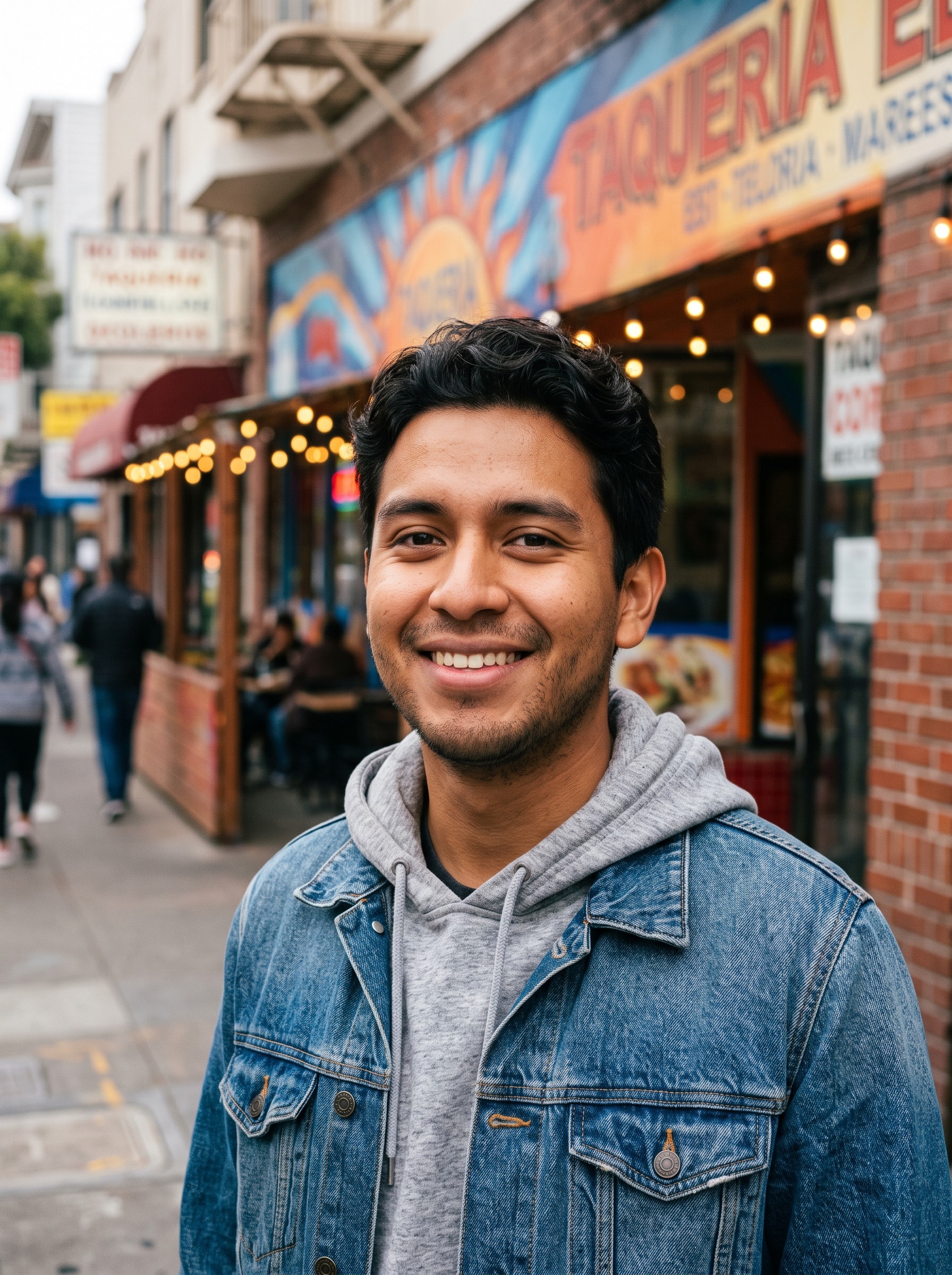 By Mateo Reyes

The first thing you notice in the Mission is the light. Walk east from the Castro and the hills flatten, the air warms, and the city seems to exhale. On Mission Street and 24th, Spanish starts to outnumber English, tacos steam behind glass, and the day feels a little more generous than it does anywhere near the fog line. This is San Francisco’s sun-trapped valley: a place where a Salvadoran pupuseria, a two-Michelin-star tasting menu and a 1937 dive can all sit within a few blocks of one another, and where the argument over the best burrito is basically a civic pastime.
What the Mission is known for
Two things, above all, define the Mission: food and murals. The food story is the one travelers arrive chasing first. This is the neighborhood that gave the world the Mission-style burrito — oversized, foil-wrapped, stuffed with rice, beans and everything else — and the local debate over who does it best has never really cooled. La Taqueria makes the rice-less, griddled version that devotees defend with the kind of intensity usually reserved for sports teams. El Farolito goes bigger, heavier, more late-night, and the line outside can feel like part of the ritual. Taqueria Cancún has its own following thanks to the saucy burrito mojado. These are not museum pieces. They are living arguments, eaten standing up, wrapped in foil, with salsa on the tray and a little heat still rising off the tortilla.

The murals are the other half of the neighborhood’s identity, and they are not decoration so much as public memory. Since the mid-1980s, artists have painted the Mission’s walls, garage doors and alley fences with hundreds of works, beginning as protest art against U.S. policy in Central America and widening over time to cover immigration, gentrification and social justice. Balmy Alley is the densest, oldest concentration; Clarion Alley is the more chaotic younger sibling, always changing, always saying something. You can feel the neighborhood thinking out loud on these walls.
At the center of it all sits Mission San Francisco de Asís, better known as Mission Dolores. Its 1791 adobe chapel is the oldest intact building in San Francisco and the namesake of the district itself. That fact alone gives the neighborhood a strange and satisfying depth: this is one of the city’s most restless places, but it is also one of its oldest.

Where to eat & drink
If you come to the Mission hungry, you are already doing it right. Start with the burrito question, because the neighborhood insists on it. La Taqueria, at 2889 Mission St, has been at it since 1973 and is a James Beard "America's Classics" winner. The burrito here is controversial in exactly the way great neighborhood food should be: rice-less, griddled golden, with the meat doing the heavy lifting. Two blocks north, cash-only El Farolito at 2779 Mission St takes the opposite approach. Its super burrito is the late-night classic, the kind of thing you order after the bars when you want the Mission to steady you before you head home. Taqueria Cancún at 2288 Mission St adds its own loyal crowd with the burrito mojado, saucy enough to demand a fork and a little patience.
If you want to see how wide the neighborhood’s appetite runs, keep walking. Foreign Cinema at 2534 Mission St screens films onto the wall of a heated courtyard while serving California-Mediterranean plates and oysters, and has been doing so since 1999. It is one of those Mission places that feels both date-night polished and unmistakably local. Flour + Water at 2401 Harrison St is the pasta benchmark. Ernest at 1890 Bryant St is one of the city’s most talked-about tables, all chef’s-choice modern-American momentum. Lazy Bear at 3416 19th St is the splurge, the neighborhood’s two-Michelin-star communal-table tasting menu, the one you book when you want dinner to become the main event.

And then there are the places that remind you the Mission is not only about fine dining and famous burritos. Reem’s Mission at 2901 Mission St is an Arab bakery where mana’eesh and a standout falafel sandwich keep the line moving. Tartine Manufactory at 595 Alabama St brings sourdough pizza, breakfast sandwiches and the city’s cult bread into the picture. These are the kinds of places that make the neighborhood feel like a complete meal rather than a single dish.
Going out
The Mission drinks hard and drinks well, and it does not force you into one mood. Trick Dog at 3010 20th St is the show-off, in the best way: a cocktail bar that reinvents its entire menu every six months around a theme, whether that theme is Pantone colors, astrology or a Chinese takeout menu. It was named Best US Cocktail Bar in 2025, which feels like the sort of accolade the Mission would accept with a shrug and then order another round.
True Laurel at 753 Alabama St, from the Lazy Bear team, is more restrained on the surface and more obsessive underneath; the drinks look simple until you realize how much precision is hiding in them. ABV at 3174 16th St is where locals send you for a Paloma, and the fact that people say it might be the city’s best tells you everything about how seriously this neighborhood takes a drink.

For the other end of the night, the Mission has no shortage of places that feel like they’ve seen every version of you. Zeitgeist at 199 Valencia St is the legendary gravelled beer garden: dozens of taps, picnic tables, blunt bartenders, and every kind of person in the city sharing the same noisy patch of air. Pop’s at 2800 24th St has held down its corner since 1937, part dive and part cocktail bar depending on the hour. Lone Palm at 3394 22nd St is the dive that dressed up, with white tablecloths, candles and an Art Deco hush. El Rio at 3158 Mission St is the beloved queer bar with a huge back patio and salsa afternoons, the sort of place where the music spills out before you even see the door. Bear vs. Bull at 2550 Mission St, tucked into a historic restored theatre, keeps the crawl moving with beer and cocktails under a roof that has already lived several lives.
Things to do / what to see
The mural alleys are the Mission’s open-air galleries, and you should treat them like a slow walk rather than a quick stop. Balmy Alley, running between 24th and 25th near Harrison Street, holds the densest, oldest block of protest murals in the neighborhood, begun in the mid-1980s and still being added to today. Clarion Alley, between 17th and 18th off Valencia, is the younger and looser sibling, with more than 700 works cycling through since 1992 on themes of social and environmental justice. One alley is history layered onto plaster; the other is a conversation that refuses to close.

If you want the backstory rather than just the pictures, Precita Eyes Muralists at 2981 24th Street runs guided neighborhood walking tours, with adult tours from around $25. That is the smartest money you can spend here if you want the murals to read like a language instead of a blur of color. The Mission’s street art is not random. It is political, personal and stubborn, and the guides know how to translate it.
Then there is Dolores Park, the neighborhood’s living room. It is a sloping lawn with the best free skyline view in the city, and the moment the sun comes out it fills with sunbathers, dogs, homemade edibles and improvised picnics. The park is part theater, part commons, part weather report. On a clear afternoon, it can feel like the whole city has decided to take the same break.
Before or after the park, make a small pilgrimage to Bi-Rite Creamery at 3692 18th St for salted-caramel ice cream, then drift into the flagship Bi-Rite Market for picnic supplies. It is a classic Mission move: a cone in one hand, a bag of provisions in the other, and no real hurry.
Mission Dolores itself deserves the time too. The 1791 adobe chapel at 3321 16th Street is the oldest building in the city, and the quiet cemetery and rose garden behind it offer a pause that the rest of the neighborhood rarely does. The contrast is part of the point. The Mission can be loud, gritty and full of appetite, but it also remembers where it came from.
{{ATTRACTIONS}}
Shopping & markets
Valencia Street is the Mission’s shopping spine, a long run of independent boutiques, vintage clothing shops, design stores, ceramics studios and bookshops that gets busier and more polished as you head north toward 16th Street. It is the kind of street that rewards wandering more than planning. You do not conquer Valencia; you drift it, ducking into the places that catch your eye and letting the neighborhood decide your pace.
Dog Eared Books at 900 Valencia St is one of the Mission’s beloved indies, open late daily and stacked with new, used and discount titles, plus zines, maps and oddities. It is the sort of bookstore where anarchist magazines can sit on the same shelf as Vanity Fair and nobody seems surprised. The Mission is also a major literary address in a very San Francisco way: every October, the neighborhood hosts Lit Crawl, billed as the world’s largest literary pub crawl, when hundreds of authors read in bars and shops up and down these blocks.
Parallel to Valencia, 24th Street keeps the older Latino character intact. Panaderías, produce markets, quinceañera and party shops line the street, and La Palma Mexicatessen at 2884 24th St remains a touchstone, where you can watch masa being pressed at the tortilla factory. For food shopping, Bi-Rite Market on 18th Street is a small, fiercely curated grocer that has become a destination in its own right for picnic provisions, local cheeses and prepared food before a Dolores Park afternoon. This is a neighborhood built for browsing on foot, for letting one errand become three blocks and a snack.
Where to stay in the Mission District
The Mission has fewer traditional hotels than downtown, so most visitors end up in short-term rentals, guesthouses or a handful of boutique and budget properties. It is not a neighborhood that rewards generic booking decisions. Pick your block carefully, because the feel changes quickly.
The stretch near Dolores Park and Valencia Street, roughly 18th to 22nd, is the calmest and nicest base for most travelers. It is leafier, closer to the best cafes, cocktail bars and restaurants, and easier on the nerves after dark. The area around 16th and Mission is the most central for transit, but it is also the roughest and loudest late at night. 24th Street puts you in the middle of the Latino heart of the neighborhood, close to the taquerias and mural walks, with a more residential feel a block or two off the main drag.
Many travelers simply sleep downtown or near Union Square and take BART over in about ten minutes, which is a perfectly sensible way to do it if you want hotel comforts at night and the Mission’s food and bars by day. Whichever route you choose, the neighborhood is compact enough that no part of it is a long walk from the two BART stations.
{{HOTELS}}
Getting around
The Mission is one of the easiest neighborhoods in San Francisco to reach and to walk. Two BART stations sit on Mission Street — 16th St Mission and 24th St Mission — putting you two or three quick stops from downtown and Union Square, and on a direct line to SFO airport in roughly 30 minutes with no transfer. The Muni J-Church streetcar runs along the western edge by Dolores Park, and buses cover Mission, Valencia and 24th Streets.
Once you are here, walk. The neighborhood is famously flat, and almost everything worth doing sits within about a 15-minute stroll between the two BART stations. Valencia has protected bike lanes and city bike-share docks are plentiful, so cycling is a good option too. If you are heading out late after the bars, rideshare is easy to hail. The Mission is not a neighborhood that asks you to rush. It asks you to keep moving, keep tasting, and keep one more block in reserve.
FAQs
Is the Mission District a good area to stay in San Francisco?
Yes — if food, nightlife and neighborhood character matter more to you than polished quiet. It’s walkable, well connected by BART, and full of the city’s best eating and drinking. The Dolores Park/Valencia end is the calmest and nicest base, while 16th & Mission is more central but rougher and louder at night.
Is the Mission District safe?
By day, the core areas — Valencia Street, Dolores Park, 24th Street and the mural alleys — are busy and generally safe. Around 16th and Mission, you’ll see more visible homelessness and some drug activity, especially after dark. Stick to well-lit, busy streets, keep an eye on your belongings, and use rideshare late at night.
Where do I find the best burrito in the Mission?
That depends who you ask, and the argument is half the fun. La Taqueria does the famous rice-less, griddled burrito; El Farolito is the huge, cash-only late-night classic; and Taqueria Cancún is the saucy burrito mojado contender. Try two and pick a side.
What should I do first in the Mission District?
Start with the mural alleys and a burrito, then work your way to Dolores Park if the sun is out. If you have time, add Mission Dolores and a drink on Valencia or Mission Street later in the evening.