Valletta guide
Sliema & St. Julian's: Malta After Dark, With the Sea Between the Noise
Across the harbour from Valletta, Sliema and St. Julian's split the island's after-dark life between a civilised seafront and one of the Mediterranean's loudest club strips.
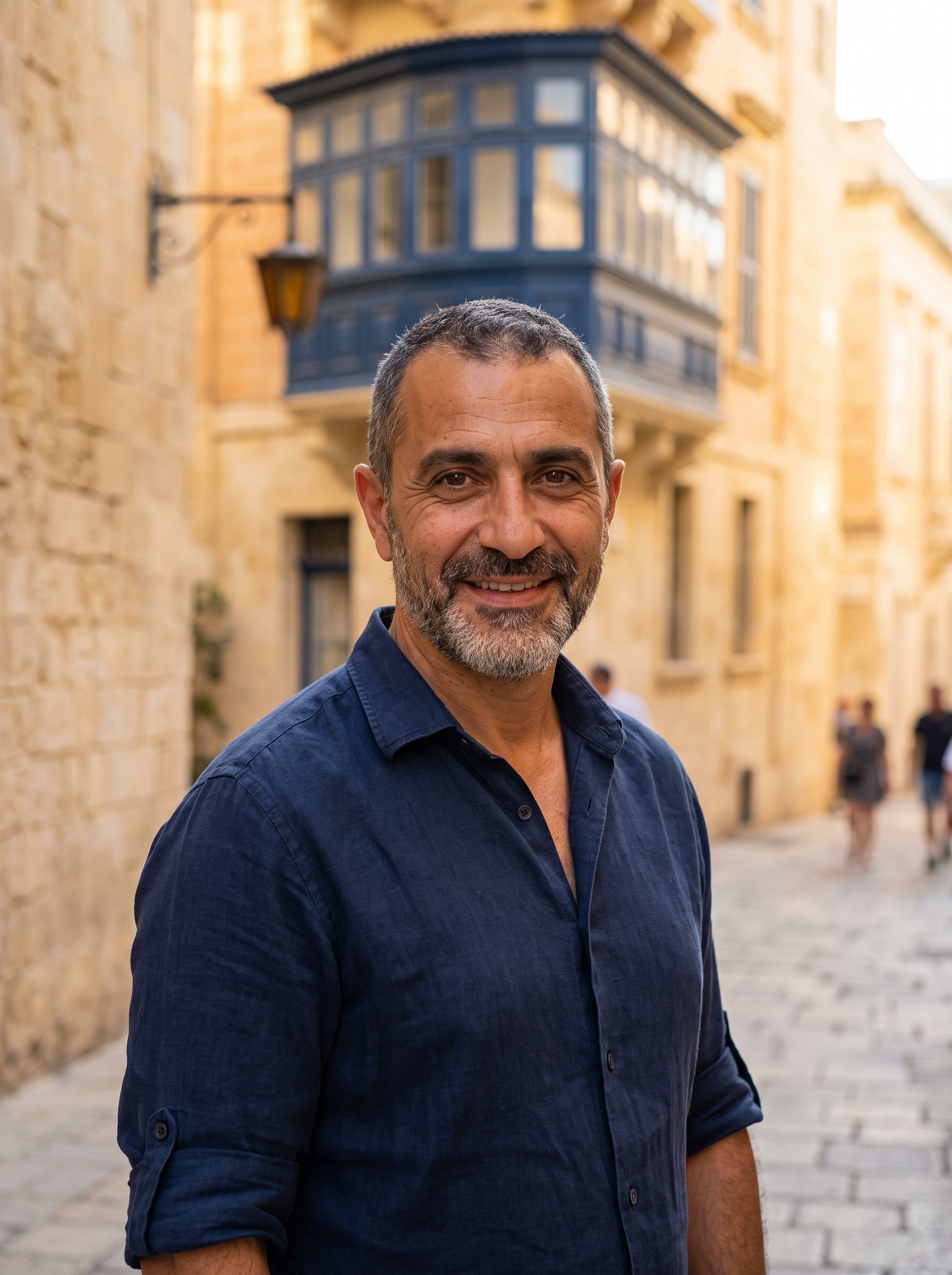

Malta’s evenings may still belong to Valletta on paper, but the island’s actual after-dark pulse has long drifted across the harbour. By sunset, Sliema’s Tower Road is already doing its calmer trick: joggers, swimmers, coffee cups, the Valletta skyline sitting there like a painted backdrop. A short walk north-east and the mood changes. St Julian’s tightens around Spinola Bay, pretty enough to make a cynic pause, then gives way to Paceville, where the music starts late and goes on with the kind of persistence that makes hotel windows feel personal.
What Sliema & St. Julian's are known for
Two things, really: Malta’s nightlife and its most convenient modern seafront. That is the honest pitch, and it is why people keep coming back even when they pretend they are here for “the island” in general. Sliema is the polished half, the place for a promenade, a swim, a ferry, a terrace lunch and a room that does not require you to climb a staircase to reach it. St Julian’s is where the night has a pulse. Paceville, the compact grid behind St George’s Bay, is the island’s clubbing capital — roughly forty licensed venues squeezed into a central six-block area around St George’s Road, most of them open until 4 or 5am. It is cheap, walkable and shameless about its purpose. The streets fill from about 11pm and really wake up after midnight.

The odd thing — and the useful thing — is that this is also one of the easiest areas in Malta to use. The Sliema–Valletta ferry crosses the harbour in about ten minutes, so you can sleep by the sea and still be in the capital quickly. That matters because Valletta, for all its beauty, keeps a quieter night. Here, the island splits itself neatly: baroque in one direction, bass in the other.
Sliema handles the day with a sort of practical grace. Tower Road curves for about a kilometre along the water, and the promenade is lined with cafés, terraces and people who have decided that a long lunch is a perfectly respectable day plan. The Victorian rock-cut baths — the Sliema Roman Baths — are one of the area’s best small pleasures: free, shallow and cut straight into the limestone shore, with swimmers dropping in as if the sea were a municipal amenity. They have nothing to do with the Romans, despite the name, which is a very Maltese kind of joke.

Then there is Spinola Bay, St Julian’s prettiest face, a horseshoe of moored luzzu boats and waterfront restaurants that looks especially good at golden hour. It is the sort of place that can make a resort feel briefly Mediterranean rather than merely functional. A few streets back, the music starts, the taxis arrive, and Paceville does what it has always done: absorb everyone who wants a loud night without having to think too hard about geography.
Where to eat & drink
The best eating cluster sits on the water at Spinola Bay, because St Julian’s knows how to soften the edges before dark. Gululu is the bay’s Maltese institution, the sort of place people point to when they want to reassure visitors that yes, the local food still exists among the cocktails. Rabbit-sauce spaghetti, braised rabbit, pan-fried baby calamari and a loaded Maltese platter are the point here, and the room fills enough that booking ahead is wise, especially on Friday.

A few doors along, Zest takes the bay in a different direction entirely. It is the area’s fine-dining pick, a Japanese-Peruvian Nikkei kitchen with a Michelin Plate in the 2025 Malta guide. Think sashimi, black cod and pisco-fuelled fusion, all with the water in view. Peppino’s has held the bay down for over two decades with Italian-French cooking, and the upstairs terrace has the best view of the moored boats — not because it is trying to be romantic, exactly, but because the bay does the heavy lifting for it. Two Buoys, right on the waterfront, is where the morning after gets repaired: Australian-owned, with proper flat whites and eggs, and the blessed absence of anyone asking you to be more energetic than you are.
Sliema eats more like a town that lives in real time. Along Tower Road, Ta’ Kolina is the Maltese stalwart, doing rabbit, fresh fish and a generous Maltese platter of goat’s cheese, bigilla bean paste and cured bits. Near the Exiles end, Peppi’s keeps its terrace over the blue bay and leans into fresh fish and burgers, which is exactly the sort of practical menu a seafront neighbourhood needs. If you want a drink with the view but not a full meal, Lounge 360 atop AX The Palace is the polished end of the day: cocktails, Asian bites, an infinity pool and a panorama across the rooftops to Valletta’s harbour. It is seasonal, evening-only and very aware of the skyline, which is fair enough — the skyline is doing a lot.
Going out
This is the reason most people pick the area, and there is no point pretending otherwise. Paceville is the engine, and it is built for volume. Sky Club is Malta’s largest indoor venue, a 2,000-plus-square-metre room with a big stage and sound system that runs house, techno, reggaeton and hip-hop nights, pulling in touring DJs when the calendar allows. It is not subtle, but then neither is the district it belongs to.
Havana Club on St George’s Road is the veteran of the bunch, the island’s long-running hip-hop and chart institution, the sort of place that earns its reputation by simply surviving long enough to become the default answer. Toy Room brings a glossier R&B, hip-hop and Afrobeats night, while Clique, tucked by the main staircase, is the small serious techno room for local and visiting DJs — the kind of place that feels like a secret until half the room is nodding in recognition.

If you want the night with a view instead of a mosh, TwentyTwo sits on the 22nd and top floor of the Portomaso Tower, Malta’s tallest building. It is a 360-degree glass club-lounge with a capped capacity of around 400, smart-casual door policy and premium prices. Arrive late-ish, take in the harbour panorama and accept that some nights are meant to be watched as much as danced. Down at street level, Hugo’s Terrace & Rooftop opposite St George’s Bay gives you the stylish two-floor version of the same impulse: cocktails, daily DJs and a retractable roof, useful when the evening decides to become weather.
Paceville is also refreshingly honest about the economics of a night out. Bellini Bar and the strip’s other shot bars do the bulk deals that keep the evening affordable, because entry to most clubs is free or cheap and it is the drinks inside that add up. If you want a pint away from the neon, City of London Bar on George Borg Olivier Street claims to be Malta’s oldest bar, running since 1914, with a terrace and none of the club noise. It is a useful reminder that not every evening has to end with your ears ringing.
Things to do
Daytime here is a beach-and-water affair, and the simplest pleasure may be the best one. The Sliema Roman Baths are the signature swim: free Victorian rock-cut pools along Tower Road, only about a metre deep, so you can float in the sea without committing to open water. The largest cluster sits near the tower, with more toward the Exiles end, and the whole setup is a very Maltese compromise between beach and infrastructure.

The Sliema promenade itself is the other essential. It runs for about a kilometre, with ladders down to the water, joggers, café chairs and the Valletta skyline in front of you the whole way. It is not dramatic in the sense of cliffs or coves or any of that tourism brochure nonsense. It is better than dramatic. It is usable.
The Sliema–Valletta ferry is the move that makes the whole area make sense. It crosses Marsamxett Harbour in roughly ten minutes and drops you under the walls of the capital — faster and prettier than driving around, and cheap enough to use as a daily commute into Valletta’s sights. If you are the sort who likes a boat ride with your errands, a Grand Harbour cruise will give you a lap of Valletta’s bastions and the Three Cities. Back on land, Spinola Bay is the classic St Julian’s photo stop: the horseshoe of painted boats and waterside restaurants, five minutes from Paceville and a useful place to remember that this district does, occasionally, want to be looked at rather than merely consumed.
{{ATTRACTIONS}}
Shopping
Sliema is Malta’s default shopping town, and most of it is concentrated at Tigné Point, the redeveloped peninsula at the northern end. The Point is the island’s flagship shopping mall — the biggest concentration of high-street and mid-range fashion, beauty and homeware brands in Malta, with a supermarket, food court and cafés, all a short walk from the seafront. It is not exciting in the romantic sense, but it is useful in the way a good suitcase is useful: you stop noticing it because it does its job.
Around it, Tigné Point is a modern pedestrianised quarter of apartments, promenade and open-air terraces that is pleasant to wander even if you are not buying. Beyond the mall, Sliema’s main commercial streets — around Bisazza Street and the roads running back off the front — carry the usual mix of chain stores, opticians, pharmacies and everyday shops. For independent shops, vintage and one-off finds, you are better off crossing on the ferry to Valletta’s Republic Street and the lanes around it. Here the appeal is simpler: everything you need sits in one air-conditioned, walkable stretch by the sea.
Where to stay in Sliema & St. Julian's
This is the practical base for a party-and-beach trip, but where you sleep within it matters enormously. Central Paceville puts you in the middle of the clubs — unbeatable if you want to roll out of a venue and into bed, but genuinely loud until 4–5am, so only book here if that is the point of the trip. St Julian’s proper, around Spinola Bay and toward Portomaso, is calmer and still a short walk or quick taxi from the strip — a good compromise of nightlife-adjacent and sleepable, with some of the area’s smarter hotels. Sliema is the quietest and most all-round option: seafront and boutique hotels line Tower Road and the promenade, you get the swimming, the ferry and the restaurants on your doorstep, and Paceville is a cheap ten-minute taxi away when you want it.
The general rule that locals and repeat visitors follow is to stay in Sliema — or St Julian’s away from the strip — for sleep, and taxi the short hop into Paceville to go out. The live hotels for the area render directly below.
{{HOTELS}}
Getting around
The area is walkable end to end — the Sliema seafront to St Julian’s and Paceville is a pleasant 20–30 minute stroll along the coast, and most people cover it on foot. The single best move is the Sliema–Valletta ferry, which crosses Marsamxett Harbour in about ten minutes for a couple of euros each way; use it as your route into the capital instead of the car. Buses tie the whole strip into Malta’s Tallinja network and run frequently to Valletta’s terminus at Floriana and out to the rest of the island, though traffic on the coast road can be slow at peak times.
For the short late-night hop between a Sliema hotel and the Paceville clubs, grab a Bolt or eCabs ride-share — cheap, quick and the sane way home at 3am. From here it is roughly 20–30 minutes to Malta International Airport by taxi or ride-share; there is no rail on the island, and if you are leaving at a peak hour it pays to pre-book because the airport road backs up.
The useful truth about Sliema and St Julian’s is that they let you choose your own Malta. You can have the ferry, the swim, the shopping and the quiet terrace, or you can have the strip and the club queue and the 4am slice of something regrettable. Most people end up taking both. That is the trick here: sleep on the calm side, cross the short distance when you want noise, and let the harbour do the rest.
FAQs
Should I stay in Sliema or St Julian's?
Stay in Sliema if you want a calmer seafront base with swimming, restaurants and the Valletta ferry close by, and you do not mind a short taxi into Paceville. Stay in St Julian's if late-night clubbing is the whole point, especially central Paceville. Around Spinola Bay is the middle ground: lively, but more sleepable than the strip itself.
Is Sliema and St Julian's good for nightlife?
Yes — it is Malta's best nightlife area by a distance. Paceville in St Julian's packs around forty bars and clubs into a few blocks, from Sky Club and Havana Club to TwentyTwo on the Portomaso Tower, and most places stay open until 4–5am. Entry is usually free or cheap, and the usual move is to pre-drink at a shot bar like Bellini Bar.
How do I get from Sliema to Valletta?
Take the Sliema–Valletta ferry. It crosses Marsamxett Harbour in about ten minutes, lands you below Valletta's walls and is faster and more scenic than driving around. It costs only a couple of euros each way, with buses as the backup if the ferry is not running.
Is Paceville safe at night?
Generally yes, but it is busy, loud and very touristy, so use ordinary city sense: keep groups together, watch drinks and avoid the messiest end of the strip at closing time. If you are staying nearby, a Bolt or eCabs ride home is the sensible option.