Tel Aviv guide
The Old North, Tel Aviv: Quiet Beaches, Bauhaus Streets and Slow Fridays
A residential slice of Tel Aviv where the city’s best beaches, brunch tables and tree-shaded boulevards all sit within a flat ten-minute walk.
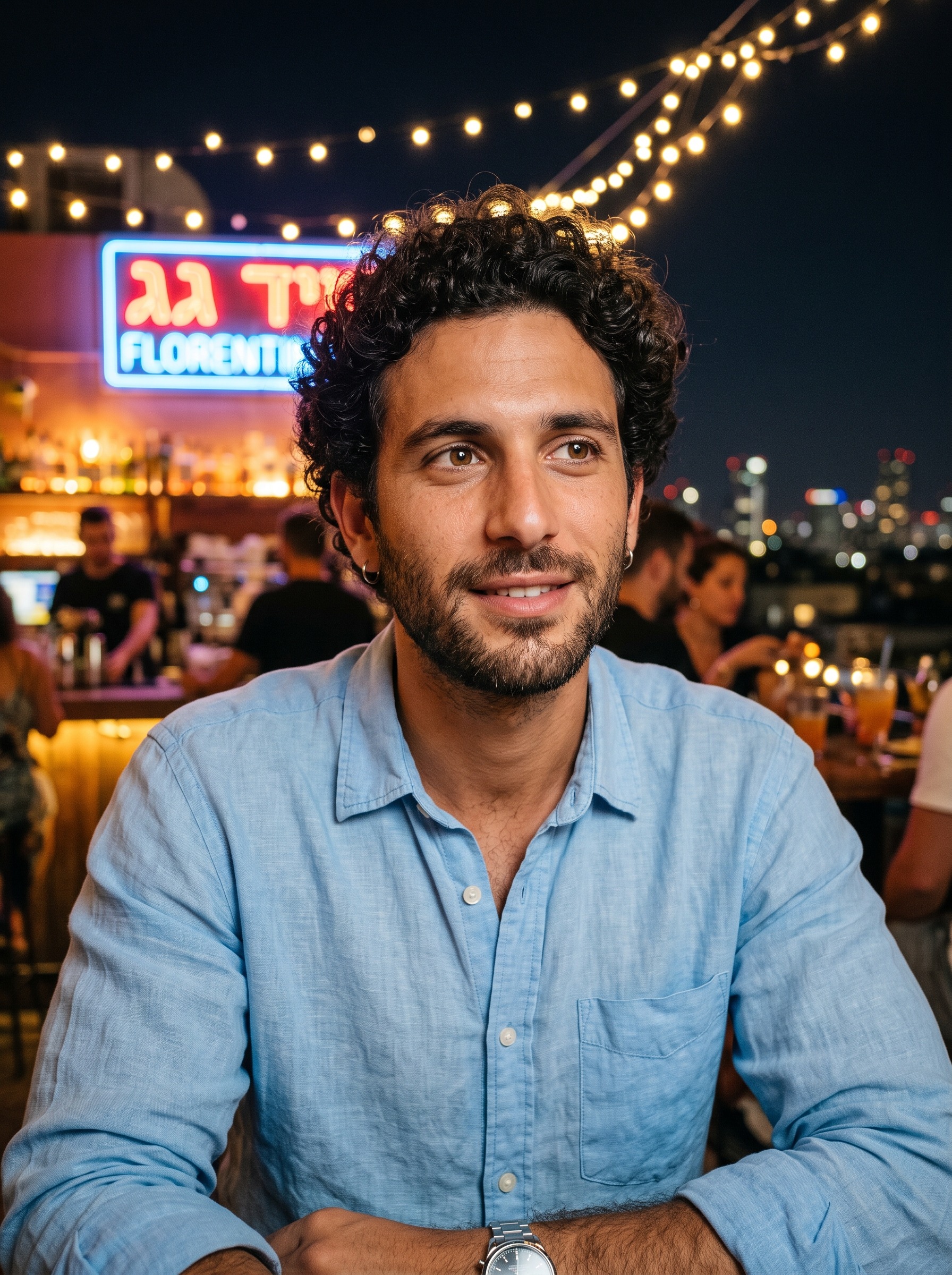

Draw a rectangle between Arlozorov Street, the Yarkon River, Ibn Gvirol Street and the sea, and you get the Old North: the part of Tel Aviv that learned early how to make a life out of ordinary pleasures and never really stopped. It is a neighbourhood of dog walkers and coffee grinders, of Friday breakfast queues and bicycle bells, of salt on the air before noon. The city feels a little softer here, not less Tel Aviv so much as Tel Aviv after the volume has been turned down. You come for the beach, but you stay because the streets are calm, the cafes know your face by the third morning, and the day can still begin at the water and end under ficus shade without ever needing a taxi.
What the Old North is known for
The Old North runs on a different tempo from the bar-crawl south. Its streets were laid out in the pre-state years as calm, tree-shaded residential boulevards, and that DNA still holds in the cracked Bauhaus facades, rounded balconies and the steady domestic hum behind the doors. This is the residential heart of the White City, and you feel it in the geometry: boxy 1930s apartment blocks, long pavements, palms and ficus canopies, the occasional cracked stucco wall that has been left to age honestly. The neighbourhood’s centre of gravity is not a monument but a habit. Ben Gurion Boulevard, pedestrianised down its middle, works like a living room. Basel Square is where Saturday mornings gather themselves. Yarkon Park is the back garden. The sea is never far enough away to be abstract.
The western edge is the reason a lot of people settle here and never quite leave. Gordon Beach is the flagship: an outdoor gym, matkot on the sand, the saltwater lido nearby, and that particular Tel Aviv rhythm where exercise and leisure blur into the same sweaty, sunlit hour. Hilton Beach is the more complicated, more open-ended stretch: the city’s main surf and SUP break, its official gay beach, and, at the northern end, the dog beach. A little farther up the coast sits Metzitzim, family-friendly and calmer in tone, close to the port. These are not beaches you “do” once; they become part of the week, part of the route home, part of the reason a neighbourhood starts to feel like a second skin.

Inland, the mood shifts from salt to shade. The pedestrianised spine of Ben Gurion Boulevard carries cafe tables along its middle, and the side streets radiate out in that measured 1930s logic: residential, walkable, unshowy. The result is a neighbourhood that feels lived in rather than performed. There are families pushing strollers, academics with tote bags, tech workers on laptops, long-term expats who know which bakery opens first, and the kind of residents who can tell you exactly where the breeze catches in the afternoon. It is unmistakably Tel Aviv, with the same appetite for good food and sea air, just turned down a notch and pointed toward daily life.
Where to eat & drink
This is brunch-and-bakery territory before it is anything else, and the Old North wears that truth without apology. Friday morning is the neighbourhood’s set piece, when the tables fill, the queues lengthen and everyone seems to be moving toward eggs, bread, coffee or juice. Benedict on Ben Yehuda, at No. 171, is the all-day breakfast institution that still draws a weekend queue for shakshuka and a full Israeli spread. It is the sort of place that tells you exactly what the neighbourhood values: consistency, abundance and the luxury of not rushing. Benedict’s dining room may be familiar to anyone who has spent time in Tel Aviv, but here it feels especially on-brand, a breakfast anchor in a district that likes to start late and well.

A few streets over, Zorik Cafe on leafy Kikar Milano is the bohemian local answer to the same question. It is the place for stews, omelettes, fresh bread and Israeli breakfasts, and on Saturdays it gets mobbed in that slightly reassuring way that tells you the neighbourhood still eats together. The setting matters: Kikar Milano is one of those squares where the shade and the timing do half the work for the cafe. You sit, you wait, you watch the morning drift by. If that sounds leisurely, it is. The Old North makes a virtue of time spent over coffee.
Along the pedestrian median of Ben Gurion Boulevard, Eats Cafeteria turns out fresh pastries and toasted sandwiches, with the spinach tart singled out for good reason. It is the kind of stop that works at any hour a person is passing through the neighbourhood on foot, because the boulevard encourages exactly that kind of grazing. Nearby, the fruit-draped Tamara juice kiosk on the Dizengoff/Ben Gurion corner has been squeezing strawberry-banana for beach-bound locals more or less around the clock for years. There are places in Tel Aviv that feel like fixtures; Tamara is one of them. It is not polished in a precious way. It is simply there, serving the city in liquid form.
For plant-based eating, Anastasia on the Dizengoff/Frishman corner is one of the city’s original serious vegan cafes, known for smoothie bowls and raw dishes. It sits in the neighbourhood’s social circuit without trying to dominate it, which is part of the point. The Old North has room for every version of breakfast, from the full Israeli spread to the bowl that looks as if it was assembled by someone who lives on a yoga mat and a deadline.
At the higher end of the scale, Shila on Ben Yehuda is the long-running seafood destination from chef Sharon Cohen, with Catalan-influenced Mediterranean cooking best eaten at the bar. Book ahead. That last part matters here because the Old North may be relaxed, but the good tables still fill. Shila is the kind of restaurant that reminds you the neighbourhood is not just about quiet streets and early coffee; it also knows how to do dinner with precision.

Basel Square rounds out the picture with the coffee-and-croissant crowd at Cafe Basel and Arcaffe, both of which fit the square’s role as a daytime meeting point rather than a nightlife address. This is where the neighbourhood’s rhythm becomes visible: people arriving with strollers, laptops, shopping bags, dogs, plans for later that may or may not survive the heat.
Going out
Nightlife in the Old North is grown-up and drinks-led rather than club-heavy. If you want the late, loud version of Tel Aviv, people will point you south to Lev HaIr or Florentin. What the Old North does have is one genuinely great bar and a waterfront scene that knows how to stretch a summer evening. 223 on Dizengoff, at No. 223, is Tel Aviv’s oldest and most decorated cocktail bar, opened in 2008 by mixologist Ariel Leizgold. It has a relaxed speakeasy feel and a signature Passion Fruit 2006, with calamari and burgers on the food side if you want to make a night of it. The room is part of the appeal: low-key, a little hidden in spirit, and confident enough not to shout about itself.

The other pole is the Tel Aviv Port, where Shalvata runs as an easy Mediterranean-facing restaurant-bar by day and turns into one of the city’s longest-running open-air dance spots after 21:00 in summer. That transformation is very Tel Aviv and very much the Old North’s style: the same place can hold lunch, sunset drinks and a late-night crowd without changing its address. Beyond that, the neighbourhood is full of wine bars and cafe-bars that stay open late, plus the occasional hotel rooftop, but not a strip of clubs. It is a place you drink well in, not one you rave in.
Things to do / what to see
Start with the water, because that is where the neighbourhood makes its case most clearly. The Old North’s beaches are its main attraction, and the logic of the place becomes obvious the moment you stand on the sand and look back at the blocks behind you. Gordon, Hilton and Metzitzim each serve a slightly different version of the same coastal life. Gordon is the classic city beach with the outdoor gym and matkot. Hilton is where the surf and SUP crowd gathers in the calmer morning hours, and where the city’s social map becomes more visible: surfers, dog walkers, swimmers, regulars. Metzitzim, up by the port, is the family-friendly one, less performative, more practical.

If you want green space, head behind the port to Yarkon Park, the neighbourhood’s vast green lung. It covers some 350 acres, with lawns, playgrounds and roughly 5km of separated bike and running paths along the river. You can rent a rowboat or pedalo for around 70-80 ILS for half an hour to an hour, or a small motorboat, and the Daniel Rowing Centre on the riverbank is home to Israel’s national rowing team. It is one of those places that quietly expands the city’s sense of itself. The river softens the edges of Tel Aviv, and in the early morning the park feels almost provincial in the best possible way: runners, cyclists, parents, rowers, dogs, all moving at their own pace.
The Tel Aviv Port, or Namal, is another essential stop, though it works less like a landmark than a public room by the sea. The renovated boardwalk is car-free, made of weathered wood over the water, and it anchors the northern end of the neighbourhood with its indoor food market, waterfront restaurants and Friday-morning farmers’ market. On market mornings, the port becomes a practical ritual for locals stocking up before Shabbat. Walk through it slowly. The place is at its best when it is full of errands.
For architecture, the best thing to do is simply walk. Ben Gurion, Nordau and the side streets are an open-air museum of 1930s Bauhaus, and the neighbourhood’s residential heart is part of the UNESCO White City ensemble. This is not architecture as spectacle. It is architecture as background, which is often more interesting. The rounded balconies, the deep shade, the boxy facades and the long lines of apartments tell you how the city imagined domestic life before it became the city people now photograph from the beach.
{{ATTRACTIONS}}
Shopping & markets
The northern stretch of Dizengoff Street is the neighbourhood’s retail spine, with independent fashion, jewellery, homeware and design boutiques threaded between the cafes. It is a street for browsing rather than conquering. The rhythm here is slower than in the city centre, and the shops are part of the everyday fabric rather than a separate destination. At the southern end near the boulevard, Dizengoff Center adds the weekly food bazaar, which gives the whole area a practical pulse.
Ben Yehuda and Ben Gurion add smaller design shops, while Basel Square clusters bakeries and boutiques around its little plaza. This is one of those corners where a neighbourhood’s identity becomes visible in the window displays: not flashy, but considered, with enough local foot traffic to keep things honest. On the eastern edge, where Ibn Gvirol closes the neighbourhood, Kikar HaMedina is Tel Aviv’s luxury-fashion address, a ring of international designer flagships around a square currently mid-redevelopment into a park-and-towers scheme. It is a sharper, more expensive note at the edge of an otherwise domestic district.
For food shopping, the indoor market at the Tel Aviv Port, Shuk HaNamal, is the go-to for produce, cheese, wine and bread, and its outdoor farmers’ market runs Friday mornings, roughly 07:00 until early afternoon. That timing matters because the market is not just a shopping stop; it is part of the neighbourhood’s Friday choreography. People come early, before the heat and before Shabbat compresses the day.
Where to stay in the Old North
The Old North rewards longer, calmer stays, and where you base yourself changes the shape of the week. Near the water, on the streets between Ben Yehuda, HaYarkon and Gordon, you are minutes from Gordon and Hilton beaches, with a mix of mid-range seafront hotels and holiday apartments. This is the classic choice for a beach-led trip: wake up, cross a couple of streets, and you are at the sand. Around Ben Gurion Boulevard and Dizengoff, you trade a little beach proximity for a leafy, cafe-lined residential feel and quick walks to restaurants and shops. That pocket works especially well for a week or more, when the neighbourhood starts to function as a routine rather than a base.
Further north and east, Basel Square and the streets towards the port are the quietest and most local, better for families and remote workers than for anyone chasing nightlife. Prices skew mid-to-upper across the board, and genuine budget beds are scarce here compared with the south. That is part of the trade-off. You pay for calm, for trees, for the beach being close enough to ignore and then use anyway. Wherever you land, everything is flat and walkable, and the sea is rarely more than ten minutes on foot.
{{HOTELS}}
Getting around
The Old North is small, flat and made for walking. Most of it is a 10 to 15 minute stroll end to end, and the beach is close from almost anywhere. Cycling is the local default, with dedicated lanes running along the boulevards and continuously along the Yarkon and the seafront promenade, the Tayelet, which you can ride south all the way to Jaffa. That route says a lot about the city and even more about this neighbourhood: the Old North is where the sea becomes part of the daily commute.
For public transport, the Red Line light rail, opened in 2023, skirts the southern edge with useful stops at Arlozorov, the city’s main transport hub linked to Savidor Central train station, and Dizengoff Center. Buses run frequently along Dizengoff, Ben Yehuda, Arlozorov and Ibn Gvirol, and app-based e-scooters are everywhere. Public transport largely stops for Shabbat, from Friday afternoon to Saturday evening, when shared taxis and ride-hailing fill the gap. Ben Gurion Airport is about 20 to 30 minutes by car or a direct train from Savidor. In other words: arrive, drop your bag, and let the neighbourhood do the rest.
FAQs
Is the Old North a good area to stay in Tel Aviv?
Yes, especially if you are a repeat visitor, a family, a remote worker or someone who prefers the beach and a quieter, local feel over nightlife. You get Gordon and Hilton beaches, Yarkon Park, leafy Bauhaus streets and excellent cafes, all walkable and close to the sea. If clubs and bars on the doorstep matter more, central Lev HaIr is a better fit.
When is the best time for brunch in the Old North?
Friday and Saturday mornings are the peak. Fridays have a special buzz as locals eat out and shop before Shabbat, and places like Benedict on Ben Yehuda and Zorik Cafe on Kikar Milano fill fast, so arrive early or expect a wait. The Tel Aviv Port farmers’ market also runs Friday morning from about 07:00, which makes a neat market-and-breakfast loop.
Which beaches are in the Old North, and are they good?
The western edge covers three of the city’s best: Gordon, with its outdoor gym, matkot and nearby saltwater lido; Hilton, the main surf and SUP break, the official gay beach and the dog beach at the northern end; and family-friendly Metzitzim up by the port. They are generally calmer and cleaner than the crowded central beaches, and mornings are best for swimming and surf before the wind and crowds pick up.
Is the Old North lively at night?
It has good drinks and a few strong destinations, but it is not a club district. 223 on Dizengoff is the standout cocktail bar, and Shalvata at the port can turn into a summer open-air dance spot after 21:00, but the neighbourhood is mostly about dinners, wine bars and late cafe-bars. For a big night, people still head south.