Tel Aviv guide
Neve Tzedek, Tel Aviv: the city’s prettiest old quarter after dark
A slow walk through Tel Aviv’s first neighbourhood, where restored sandstone houses, serious restaurants and candlelit evenings still feel lived in rather than staged.
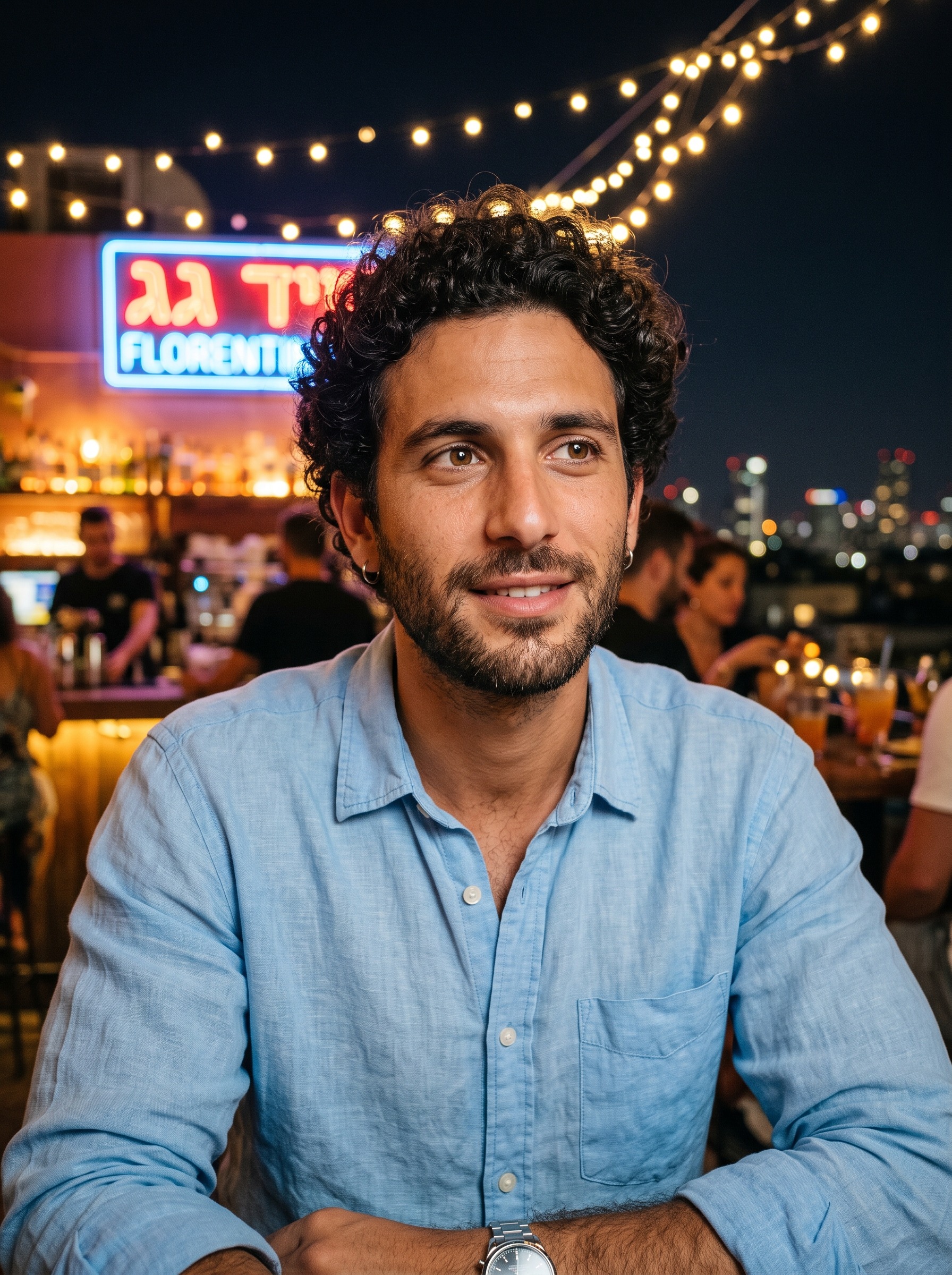

Neve Tzedek begins with a contradiction that never quite resolves: the oldest part of Tel Aviv, and yet also the neighbourhood most likely to be photographed as if it had been arranged for the frame. The lanes are narrow and brick-paved, the houses low and ochre or cream, the shutters wooden, the balconies iron, and the bougainvillea so abundant it looks almost theatrical until you notice it doing the same thing three streets over. This is the original 1887 settlement, twenty-two years before anyone drew a line and called the sand to the north Tel Aviv. It was built outside the walls of old Jaffa, nearly lost to neglect, then restored into the city’s prettiest, priciest square kilometre — a place that trades on charm the way Florentin next door trades on grit.
Shabazi Street is the quarter’s spine, but the better way to understand Neve Tzedek is to let it come at you in layers: the morning bakery smell, the midday quiet, the dinner tables gathering candlelight, the slow drift of well-dressed people who seem to have nowhere urgent to be. It is walkable end to end in about ten minutes, and you can be on the sand in five. That proximity to the sea matters. So does the fact that the neighbourhood still reads as human-scaled, low-rise and held in a kind of elegant suspension, even while the rest of Tel Aviv hammers, cranes and honks around it.
What Neve Tzedek is known for
Neve Tzedek is known first for being the oldest part of Tel Aviv, and for the original 48 houses of 1887 that still carry the story of the place in their walls and plaques. It is known second for what it is not: not the white Bauhaus grid the city sells to the world, but an earlier and more ornamental architecture, with low sandstone homes, some Art Nouveau flourishes, and the sense that the neighbourhood was built for people who intended to sit on a balcony and look out rather than rush through.
The single most photographed building is Rokach House at 36 Shimon Rokach Street, built in 1887 for Shimon Rokach, one of the founders, and now a small museum topped with a copper dome. It is one of those rare city landmarks that does not try to overwhelm you. Instead it sits there with its history visible in the brickwork, a founding story made concrete.

The neighbourhood’s cultural anchor is the Suzanne Dellal Centre on Yehieli Street: three restored 1890s schoolhouses knitted together in 1989 around a courtyard of orange trees and water channels. It is the home stage of the Batsheva Dance Company, and that detail changes the atmosphere of the whole quarter. An evening here can mean world-class choreography two minutes from your hotel, with people drifting into the courtyard before the show and lingering in it after, as if they are reluctant to let the night move on.
Round the corner, the Nahum Gutman Museum at 21 Rokach Street occupies the old Writers’ House, where the early-20th-century periodical Hapoel Hatzair was edited and figures like Y.H. Brenner lodged. The building gives the neighbourhood another of its useful truths: this is not only a pretty district, but a place where the city’s literary and artistic memory was actually lived.
Where to eat & drink
Neve Tzedek’s food scene is compact but serious, and most of the good tables sit on or just off Shabazi Street. The neighbourhood’s grande dame is Dallal, built into three restored 19th-century buildings by the Suzanne Dellal Centre. It is polished French-Mediterranean bistro cooking, with a patio, seasonal vegetables, handmade pasta and its own patisserie. There is a certain confidence in the place that comes from being embedded in the quarter rather than merely occupying it. Go in the morning and you feel the patisserie side of the operation more than the dinner room: croissants, éclairs, quiches and the quiet choreography of a bakery doing exactly what it should. Dallal Bakery next door is a morning institution in its own right.

For a more ambitious dinner, Popina at 3 Ahad Ha'Am Street is the reservation people book well ahead for Chef Orel Kimchi’s small room. The menu is organised by cooking method — cured, steamed, baked, roasted, slow-cooked — rather than by course, which is the sort of idea that can feel gimmicky elsewhere and feels persuasive here, because the room is small enough to support it. Popina is one of those places that reminds you Neve Tzedek is not only about atmosphere; it also knows how to make a table feel worth planning around.
If you want something rooted and unfussy, Suzana at 9 Shabazi has anchored its corner for more than two decades. Its leafy pavement terrace is as useful for people-watching as any in the neighbourhood, and the home-style Levantine menu is built on stuffed vegetables and a much-loved pumpkin kubbeh soup. This is the sort of place where lunch can stretch without apology, especially if you are watching the street and letting the quarter reveal itself in passing faces, dogs under chairs, and the mild performance of people who have decided to stay for another coffee.
Meshek Barzilay is the plant-based standard-bearer, an organic kitchen sourcing from named Israeli farms. It is the restaurant you send people to when you want to make the point that vegetarian food here is not a compromise. Even omnivores forget it is vegetarian.
And then, because Neve Tzedek knows how to end an evening without fuss, there is Anita — La Mamma del Gelato at 40 Shabazi. Hand-made gelato, well over a hundred rotating flavours, Pavlova among them, plus organic sorbets: the pavement outside fills with the kind of crowd that has just eaten well and is not ready to go home yet.

Going out
Set expectations correctly: Neve Tzedek does evenings, not nights. There are no clubs here, and little of the sweaty, until-dawn energy that defines Tel Aviv further south. The move is a good bottle of wine, a candlelit terrace and a slow dinner that drifts into a nightcap. That is not a limitation so much as a local agreement.
The neighbourhood’s default late spot is Nana Bar, tucked just off the Shabazi corner in an old courtyard. It is warm, low-lit and reliably the date-night choice. The room has the easy confidence of a place that knows exactly who it is for, and the people who arrive there tend to look as if they came dressed for a quieter, more considered version of Tel Aviv.
A short walk down to HaTachana puts you under the oldest ficus tree in the city at Vicky Cristina, a Spanish-styled operation split into a tapas restaurant on one side of the patio and a wine bar — Cristina, opening around 7pm — on the other. There is sangria, Barcelona-inspired garden sculpture, and on warm nights bats overhead, which is the sort of detail that sounds like a flourish until you are actually standing there and looking up.
The cultural version of a night out belongs to the Suzanne Dellal Centre, which programmes dance and theatre most evenings. Its courtyard fills before and after shows, and the whole place has the feeling of a neighbourhood living room scaled up to stage size.

If you genuinely want bars till late, Florentin is five to ten minutes on foot south. That is where the real Tel Aviv nightlife lives — grittier, younger, louder. Neve Tzedek’s advantage is that you can have the quiet base and still walk out into the noise if you want it, then walk back when you are done.
Things to do
The neighbourhood is small enough that the doing is mostly wandering, and that is part of the point. Start at the Suzanne Dellal Centre on Yehieli Street and walk into the orange-tree courtyard even if there is no show. The restored 1890s schoolhouses have a calm, almost domestic dignity, and the centre’s role as home of the internationally acclaimed Batsheva Dance Company gives the whole quarter a cultural seriousness that is easy to miss if you only come for dinner.
{{ATTRACTIONS}}
Two minutes away, the Nahum Gutman Museum at 21 Rokach Street pairs the work of one of Israel’s best-loved 20th-century artists with the history of the building itself, the old Writers’ House. It is a small museum, but the scale suits the neighbourhood. You do not come here to be overwhelmed; you come to see how a city remembers itself in rooms like this.
From there, Rokach House at 36 Shimon Rokach Street is the obvious next stop. One of the original 1887 homes, copper dome and all, it tells the founding story through the family that helped build it. There is something satisfying about moving through the quarter in that order — from the cultural present to the artistic memory to the founding house — because it makes the neighbourhood feel less like a postcard and more like a sequence of lives.
Then drift south to HaTachana, the restored Ottoman-era railway station where the first train from Jerusalem arrived in 1892. Today its 20-odd stone buildings and platforms hold boutiques, galleries, cafes and, on weekends, designer and organic markets. It is one of the few parts of the area where the old infrastructure is not merely decorative; you can still feel the logic of the station in the way the spaces open and connect.
The classic itinerary is to time HaTachana for late afternoon, then step straight onto the Tayelet boardwalk and walk the seafront south to old Jaffa, ten or fifteen minutes away, with the sunset on your right the whole way. That walk is one of the neighbourhood’s simplest pleasures, and maybe its best argument: the old quarter, the station compound, the boardwalk, the sea, the ancient port — all within one unhurried stretch.

Shopping
Shopping in Neve Tzedek is one of the reasons to be here, and it is almost entirely independent. Shabazi Street is a run of small ateliers, jewellers, galleries and design shops rather than chains, and the pleasure is in the browsing. You do not come looking for bargains. You come because the quarter has a particular eye, and because the things on sale often feel as curated as the streets themselves.
The standout jeweller is Agas & Tamar, whose signature look blends precious stones with antique coins and gems into pieces that read like small heirlooms. For a more contemporary edge, Ivshin Jewellery Design works colourful stones and diamonds into 18-karat gold on the main street. Even if you are not buying, the shopfronts reward a slow pass.
Design and homeware lean expensive and curated — organic-cotton clothing, handmade textiles, imported European labels — and the side lanes hide galleries such as Chomer Tov among them. Down at HaTachana, Made in TLV is a souvenir shop worth the name, with city-street-art wall clocks and design-led T-shirts rather than the usual fridge magnets. On weekends, the designer and organic-produce markets there are the closest thing the area has to a proper market day.
Where to stay in Neve Tzedek
Neve Tzedek is one of the most desirable — and most expensive — places to sleep in Tel Aviv, and the stock is overwhelmingly small: boutique suites, design apartments and a few tiny hotels tucked into restored houses rather than big-brand towers. The trade-off is atmosphere and location over facilities. Many buildings are 19th-century and low-rise, so lifts are not a given, rooms can be characterful rather than large, and you will not find a sprawling resort pool.
What you do get is a genuinely quiet, pretty base with the beach five minutes west, HaTachana and Jaffa a short walk south, and Rothschild Boulevard and the Carmel Market minutes to the north-east. For maximum quiet, aim for a room on or just off the smaller lanes rather than directly over a busy Shabazi Street restaurant terrace. For the shortest hop to the sand, favour the western edge of the neighbourhood toward the boardwalk.
{{HOTELS}}
Getting around
Neve Tzedek is a walk-everywhere neighbourhood — roughly ten minutes end to end on foot, and best explored with no plan and comfortable shoes for the brick paving. The Mediterranean beach and the Tayelet boardwalk are about five minutes west, and old Jaffa is a 10–15 minute stroll south along the seafront. Rothschild Boulevard, the Carmel Market and the White City sit just to the north-east, all comfortably walkable.
For longer hops, Tel Aviv’s Red Line light rail runs nearby, and Allenby station on Allenby Street is the most convenient stop, a few minutes’ walk from the northern edge of the neighbourhood. The city is well covered by bus, plus Bolt and Gett for door-to-door trips. Ben Gurion Airport is about 20 km south-east: reckon on 20–30 minutes by taxi outside rush hour, or take the train from a nearby station.
A car is more hindrance than help here. Parking in the lanes is scarce, and the neighbourhood rewards being on foot.
FAQs
Is Neve Tzedek a good area to stay in Tel Aviv?
Yes, if charm, quiet and a walkable base matter more than price or big-hotel facilities. It is one of the prettiest neighbourhoods in the city, five minutes from the beach and a short walk from Jaffa, Rothschild and the Carmel Market, with strong restaurants and boutiques on your doorstep. The catches are that it is the most expensive part of Tel Aviv, accommodation is mostly small boutique suites and apartments in old low-rise buildings, and the mood is genteel rather than lively at night.
Where should I eat in Neve Tzedek?
For a special dinner, Dallal or Popina at 3 Ahad Ha'Am Street. For something more relaxed, Suzana at 9 Shabazi has anchored the corner for over two decades with its pumpkin kubbeh soup and stuffed vegetables, and Meshek Barzilay is the go-to for excellent plant-based food. Finish with gelato at Anita on Shabazi, or head to Vicky Cristina at HaTachana for tapas and wine.
Is Neve Tzedek good for nightlife?
Not in the club sense. Neve Tzedek is about wine bars, candlelit dinners and a cultural evening at the Suzanne Dellal Centre rather than late-night dancing. Nana Bar is the signature date spot. If you want the real Tel Aviv nightlife, Florentin is a five-to-ten-minute walk south.
What are the main things to see in Neve Tzedek?
The key stops are the Suzanne Dellal Centre, the Nahum Gutman Museum, Rokach House and the HaTachana compound. The neighbourhood is also best experienced just by walking Shabazi Street and the surrounding lanes, which are the heart of its atmosphere.