Split guide
Gripe, Split: the quiet district with a fortress, markets and a proper local pulse
A lived-in Split neighbourhood of fortress walls, market mornings and residential calm, Gripe is where you come for the museum, the shopping and a quieter night’s sleep.
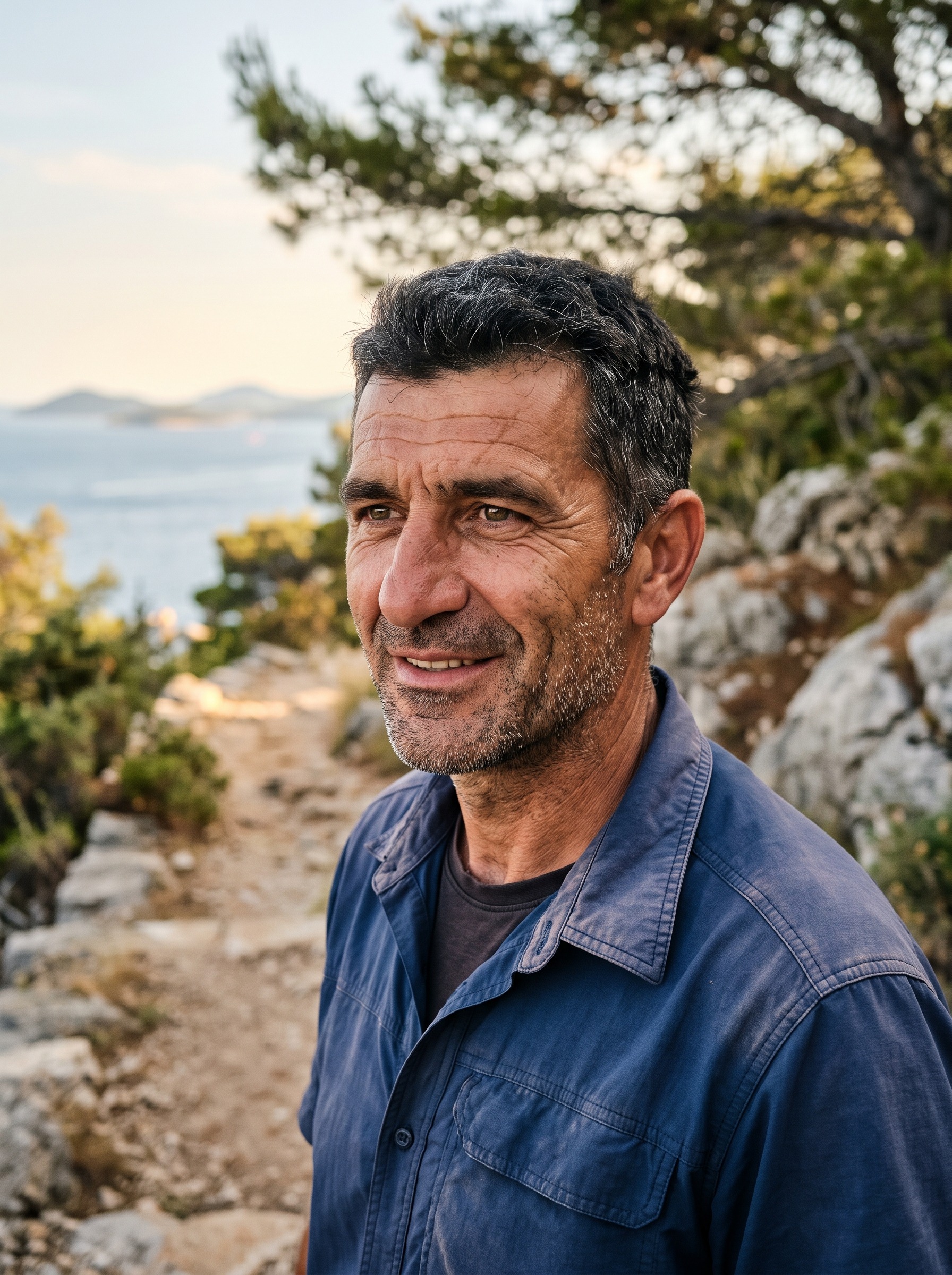 By Ante Buljan

A ten-minute walk uphill from the Silver Gate, the noise of the palace starts to thin out. The cruise-ship scrum falls away, the market stalls begin to take over the morning, and then the ground rises to Gripe Fortress — squat, Venetian, and still carrying itself like it has a job to do. That’s Gripe in a nutshell: not Split posing for visitors, but Split at work, with peacocks on the lawns, a torpedo museum in the belly of the fort, and a sports arena big enough to swallow a crowd whole. It’s an everyday district wrapped around a couple of serious landmarks, and that is exactly why it works.
What Gripe is known for
Gripe is known for two things that sit almost side by side, which is handy because you can see both without crossing the city. The first is Gripe Fortress, or Tvrđava Gripe, a Venetian Baroque stronghold built in five stages between 1647 and 1682 on the hill east of Diocletian’s Palace. It was raised after the Candian War made Split’s old defences look tired, and the Turks attacked it in 1657 while it was still unfinished. Today it’s the only fully preserved fortified building in the city, and it’s freely accessible. You can wander the grounds, walk the ramparts, and look out over the rooftops to the harbour while peacocks stalk across the lawns like they own the place, which, in their way, they do.

Inside the fort are the Croatian Maritime Museum, a branch of the Croatian State Archive, and the Art Academy of Split, which gives the place a slightly odd but appealing double life. One minute you’re looking at a fortress built to keep out the Ottomans, the next you’re passing students with portfolios on the paths. That mix — old military stone, quiet scholarship, and a bit of birdlife — gives Gripe its tone. There’s history here, but it doesn’t feel embalmed.
The second landmark is the Gripe Sports Center, also billed as Arena Gripe, a hulking multi-hall complex built for the 1979 Mediterranean Games. It was designed by Živorad Janković and Slaven Rožić, and it still does the job it was built for. The big hall seats around 6,000, the small hall 3,500, and across four indoor halls it hosts basketball, handball, futsal, judo, table tennis and shooting, plus concerts through the year. This is home court for KK Split, and for the MNK Split Tommy futsal team too. On game nights, the district picks up a different pulse. It’s not the terrace-and-cocktail kind. It’s the sound of a ball hitting varnished floor, the shuffle of people arriving late, and the low, local thrill of a match that matters.
Between the fort and the arena, Gripe also butts right up against Split’s food markets. That matters more than it sounds. In this part of town, the morning rhythm is set by people buying lunch, not by people hunting for brunch. You feel that as soon as you arrive.
Where to eat & drink
Gripe itself is grills-and-bakeries territory, not a restaurant strip, and that’s part of the charm. The best eating sits where the district meets the old Lučac lanes, just east of the palace, where the streets are still practical and nobody is trying to impress you with a menu in six languages.
Bakra – Steak & Pizza Bar on Ulica Majstora Radovana 2 has been trading on this spot since 1947, which is about as local as a restaurant gets without moving into folklore. It’s known for thin, blistered pizza from its wood-fired “Marana” oven and grilled steaks, and it’s the sort of place families use rather than tour groups. That’s the tell. The room is built for repeat business, not for a one-time selfie.

Next door, Konoba – Pizzeria Lučac on Ulica Svetog Petra starog 2 has been serving Dalmatian tavern food since 1982, now run by the Bakra family. This is where you go for grilled fish, black risotto, pašticada and gnocchi with truffles, in a rustic room that feels a world away from the Riva. The pace is slower, the food is more rooted, and the whole thing has that reassuringly unshowy feel of a place that knows exactly what it is.
If you’re staying in Gripe and want to eat like a local, the morning market run is the way to do it. Kruščić at Obrov ulica 6, a few steps from the fish market, was the first bakery in Split to take “artisan” seriously. It makes small-batch French- and German-style loaves, baguettes and pastries with unbleached flour and no preservatives, plus a cult wholegrain croissant. It’s cash only, mornings only, and the good stuff sells out well before the 14:00 close. That’s not a marketing quirk; that’s just how good bread works.
Fill a bag there, cross to the Pazar, and you’ve got lunch sorted. Figs, cheese, prosciutto, a bit of olive oil, maybe something sweet if the mood takes you — it’s all there, and it costs less than a sit-down meal in the centre. The city’s chefs shop here at dawn, including Villa Spiza over in the palace, which says enough. The best plates in Split are often built from this market, not from some glossy tasting menu on the waterfront.
Things to do
The obvious half-day in Gripe is the fortress and its museum, and there’s no reason to overthink it. The Croatian Maritime Museum at Glagoljaška 18 inside Gripe Fortress is genuinely good and, blessedly, often near-empty. After the palace crowds, that alone feels like a small luxury. The museum runs across a 19th-century building within the fort and covers seafaring from ancient galleys to 20th-century liners. Expect rooms of ship models, navigation instruments, lighthouse lanterns and naval uniforms, plus outdoor boat displays in the grounds. The highlight is a room devoted to the Whitehead torpedo, developed in nearby Rijeka in the 1860s — a neat reminder that Split and the northern Adriatic had a hand in inventing something that changed the world, for better or worse.
Summer hours, June to September, run roughly Monday to Saturday from 09:00 to 20:00. In winter it drops to about 09:00 to 15:00, with a late Thursday. Admission is a few euros, so check the current price at the door. It’s the kind of museum that rewards a slow hour, not a sprint.

After that, walk the ramparts. It costs nothing, and it gives you the view that makes the fort feel less like a relic and more like a lookout that never really stopped working. You get rooftops, harbour, a bit of sky, and the peacocks doing their own thing in the grass below. It’s one of the calmer walks in central Split, and you can feel the city loosen a little as you move along the stone.
The sporting side of Gripe is worth your time too, especially if there’s a KK Split game on or a concert in the arena. The Gripe Sports Center is not pretty in the polished sense, but it is alive, and that counts for more. A local night out here means you’re in with people who live in Split, not passing through it. The arena calendar is worth checking before you come.

Everything else worth doing is close by and mostly downhill. The Pazar and Peškarija are the obvious pair, and Diocletian’s Palace is close enough that you can wander there after coffee without needing to plan it. Start most mornings at the markets if you want to see Gripe properly. The Pazar opens around 06:30, and the produce sellers with the best homegrown fruit and veg wind down by early afternoon. That’s when the district feels most itself: baskets, plastic crates, old men choosing tomatoes with irritating precision, and the sense that the day has already been under way for hours before the tourists catch up.
{{ATTRACTIONS}}
Shopping
Shopping in Gripe means the markets, and that’s a compliment. Just outside the palace’s Silver Gate, on the district’s western edge, the Pazar is Split’s big open-air green market, trading daily from around 06:30. This is where the city buys its food. You’ll find mountains of Dalmatian figs — fresh in summer, sun-dried and pressed into bay-leaf wheels the rest of the year — plus cherries, tomatoes and greens, and stalls of homemade cheese, cured prosciutto, olive oil, honey, jams and lavender oil and soaps from the islands. Go early for the freshest produce and the growers selling from their own gardens. By early afternoon, the fruit-and-veg sellers thin out, though the covered stalls carry on later.
A minute’s walk toward the water is the Peškarija, Split’s fish market, housed in a handsome white-stone Secession-style hall opened in the 1890s. It’s famous as the fish market with no flies — the story goes that sulphur springs beside it keep them away — and even if you’re not buying fish, it’s a fine free spectacle. The light in there is hard and clean, the counters are all business, and the whole place has the briskness of a city feeding itself properly.

Pair the Pazar and the Peškarija with Kruščić a few steps off and you can shop a full Dalmatian larder in fifteen minutes. Bread, fruit, cheese, fish, a little oil, maybe something sweet — done. For actual retail, meaning clothes, chemists and phone shops, you’re better off walking the main streets toward the centre or heading to the malls further out. Gripe is for food and atmosphere, not fashion. Which, frankly, is a relief.
Where to stay in Gripe
Gripe is one of Split’s smarter value plays if you want to walk everywhere without paying, or hearing, Old Town prices. It sits roughly a kilometre and a half east of the historic core, about a 15–20 minute walk to Diocletian’s Palace and only a little more to Bačvice beach, yet the rates are residential rather than tourist. What you get here is mostly apartments and small guesthouses in ordinary Split blocks. That means kitchens — useful with the market on your doorstep — more space for your money, and a real shot at parking, which is a rare thing this close in.
The sweet spot is the streets around the fortress and along the Lučac edge to the west, which put you near the markets, the konobas and the shortest walk into town while still staying quiet after dark. Be honest with yourself, though: there’s little on the street itself at night, some blocks are plain rather than pretty, and a room near the sports arena can get lively when there’s an event on. If that sounds like a drawback, fair enough. If what you want is sleep, a kitchen and a decent walk to breakfast, Gripe makes a lot of sense.
{{HOTELS}}
Getting around
Gripe is compact and walkable, and that’s the whole point. From the fortress down to the Silver Gate and Diocletian’s Palace is about 15 minutes on foot, and the Riva or Bačvice beach are only a little further. You don’t need much more than your legs in this part of Split. There’s no tram or metro in the city; Split runs on Promet Split local buses, and several lines pass the Gripe and markets area on their way between the Old Town, the suburbs and Bačvice. Tickets are bought from the driver or a kiosk for a euro or two.
In practice, you’ll walk almost everywhere in the centre and only need a bus for the farther beaches or the bus, ferry and train hub, which sits a short ride or 20-minute walk southeast. Driving in is easier here than in the pedestrianised core, and Gripe is one of the better central areas for parking, though it fills up in peak summer. For onward travel, the main bus station, ferry port and train station cluster together by the harbour about 15–20 minutes’ walk south. Split Airport, SPU, is out at Kaštela, roughly 25 km away, or about 30–45 minutes by airport shuttle bus, city bus 37 or taxi or ride-share.
Gripe doesn’t try to seduce you. It just gives you a fortress, a market, an arena, and a quiet bed a sensible walk from the centre. In Split, that’s more than enough.
FAQs
Is Gripe a good area to stay in Split?
Yes, if you care more about value and a quiet, local base than sleeping inside the palace walls. Gripe is residential Split, about a 15–20 minute walk east of Diocletian’s Palace and close to Bačvice beach, with apartments that usually cost less, offer more space and often include a kitchen. The trade-off is a calmer street scene at night, so it suits travellers who want to explore by day and sleep properly.
What is there to do in Gripe?
The two main draws are Gripe Fortress, a freely accessible 17th-century Venetian fort with rampart views and peacocks, and the Croatian Maritime Museum inside it, which is genuinely worth time for its ship models and torpedo room. The district also sits beside Split’s Pazar green market and the Peškarija fish market, and the Gripe Sports Center hosts KK Split basketball games and concerts.
How far is Gripe from Diocletian’s Palace and Bačvice beach?
Very close. Gripe sits just east of the Old Town, roughly a kilometre and a half from Diocletian’s Palace, which is about a 15-minute walk downhill via the Silver Gate and the green market. Bačvice, Split’s sandy city beach, is also a short walk to the south.
Can you eat well in Gripe?
Yes, though the best spots cluster on the Lučac edge rather than deep inside the district. Bakra – Steak & Pizza Bar is a long-running local favourite for wood-fired pizza and steaks, Konoba – Pizzeria Lučac does classic Dalmatian dishes, and Kruščić bakery is excellent for bread and pastries before a market run.