Seville guide
El Arenal, Seville: bullring shadows, sherry hours and the old riverfront
A walk through Seville’s most self-possessed old-quarter, where the Maestranza, the Torre del Oro and a handful of family taverns still set the tempo.
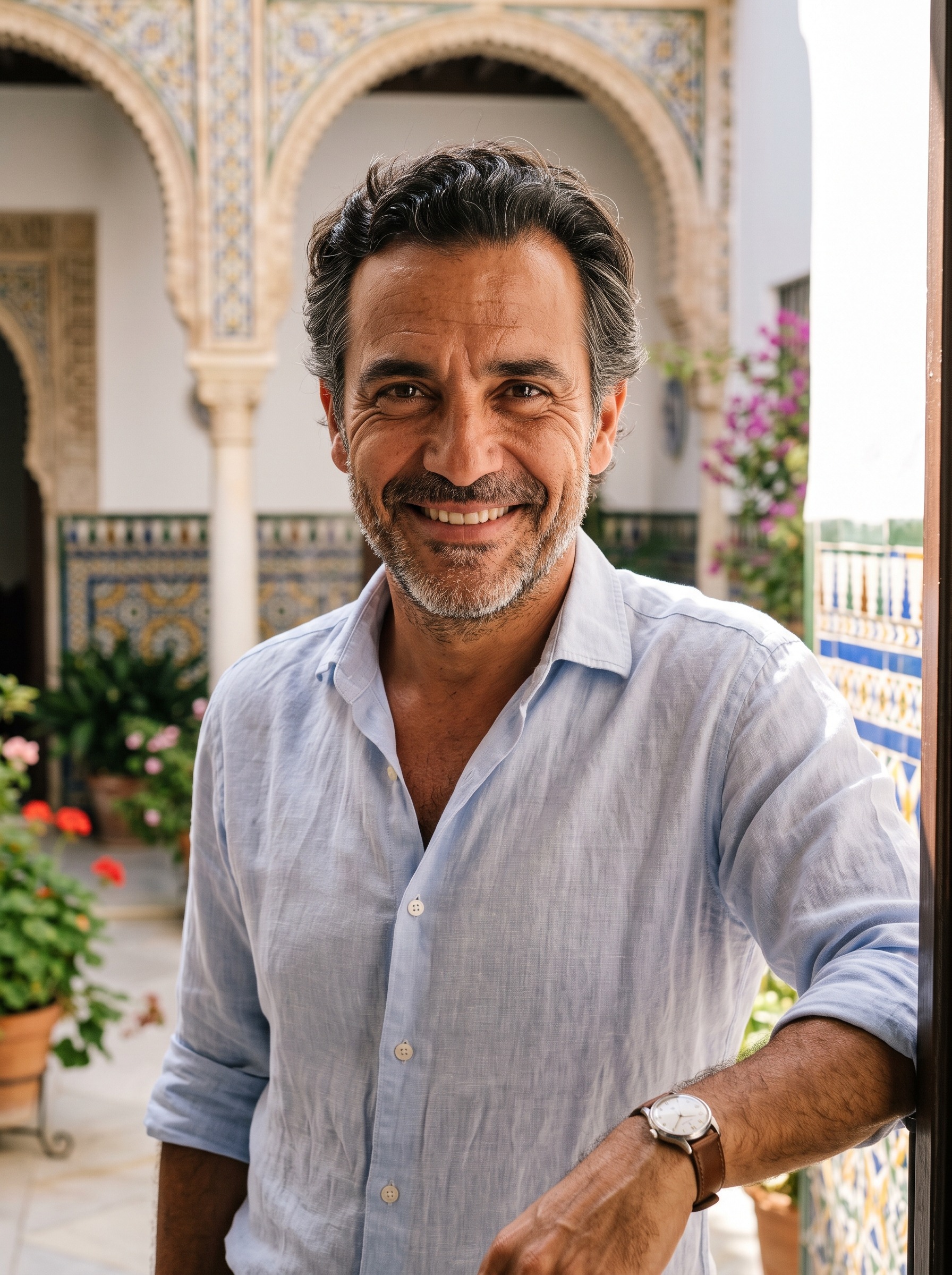

El Arenal begins with the sound of a glass being set down on marble and the river breathing against its wall. Stand on Paseo de Colón late in the afternoon and you get the district in one glance: the ochre-and-white bulk of the Maestranza, the Torre del Oro catching the light, and a run of bars where the first fino of the evening arrives before the trams have quite finished their clatter on Avenida de la Constitución. This is not the Seville of souvenir rattles and hurried selfies. It is older, steadier, and a touch more self-assured — a quarter that still knows what it was for before it learned to sell itself to visitors.
What El Arenal is known for
The name says it plainly enough: the sandbank. This was the working riverfront, the place where Seville loaded and unloaded the fleets that sailed to the New World, and the district still carries that mercantile muscle in its bones. The Torre del Oro is the first thing that reminds you of it. Built by the Almohads in the early thirteenth century, the twelve-sided watchtower once guarded the river with a chain stretched to the Triana side; now it keeps a smaller, quieter watch as a naval museum. The stone is warm in the sun, the river below always moving, and the whole scene has the calm authority of a monument that has outlived its purpose and become, in the process, more beautiful.

A few streets inland stands the other great anchor, the Plaza de Toros de la Real Maestranza. Begun in 1761, it is one of Spain’s oldest and most storied arenas, and whether you admire bullfighting, detest it, or simply prefer your history without the blood, you cannot deny the architecture its drama. The yellow-and-white facade throws long shadows in the afternoon, and on spring bullfight days the quarter tilts toward it as if pulled by a magnet. Even when nothing is happening inside, the building gives the neighbourhood its posture: upright, formal, slightly theatrical, very Sevillano.

Between those two monuments, El Arenal grew into a district of taverns. Not the polished sort with menus trying to be clever, but family-run bodegas, abacerías and freidurías where the counters have been worn smooth by a century of elbows and the wine vats are as much furniture as storage. That is the district’s real inheritance. It is also why the neighbourhood feels so compact and so legible: a river, a bullring, a theatre, a few old streets, and a dense little map of places where Sevillanos still come to eat and talk as if the day’s work has not quite ended until the second glass.
There is culture here too, but it never struts. The Teatro de la Maestranza, on Paseo de Colón 22, sits right on the river and gives the quarter a more polished note: opera, flamenco, dance and orchestral concerts in a building that looks toward the water as if it knows the city’s old and new selves must share the same bank. And then there is the Hospital de la Caridad, home to a celebrated cache of Murillo and Valdés Leal paintings, a reminder that this district has always been more than a place to eat and pass through. It is on the list of things to see, though the practical note matters: it has been closed for major restoration from 2025 for around two years, so check before you go. El Arenal rewards those who read the small print.
Where to eat & drink
If you want to understand El Arenal, start with lunch and let the neighbourhood explain itself through the plate. Bodeguita Romero, on Calle Harinas, has been in the Romero family since 1939 and still serves the city’s benchmark papas aliñás and a pringá montadito that knows exactly what it is doing: slow-cooked pork, chorizo and morcilla in a hot bun, no fuss, no lecture. The tapas hover around €2–3, which is one of the few prices in central Seville that still feels like a friendly handshake. The room has that easy old-bar rhythm — a place where the service is brisk because the locals do not need a performance.

A short walk away on García de Vinuesa is Casa Morales, opened in 1850 and still run by the same family. The menu is chalked onto giant cement tinajas in the back room, which is exactly the sort of detail that tells you a bar has survived because it remained itself. Here you eat cheese, cured meat and tortilla off a marble counter while manzanilla appears with the inevitability of a local custom. Next door at number 13, Freiduría La Isla has been frying cazón en adobo and hake since 1938, serving the fish in paper cones like a proper Andalusian freiduría. You can smell it before you see the counter. That is usually a good sign.

On Calle Gamazo, Casa Moreno hides a tiny standing-room bar behind the deli counter, and that little trick is worth the squeeze. It is a working grocer’s, an abacería, with €2.50 tapas among the tinned-seafood shelves. There is something deeply Sevillano about eating under the gaze of jars, tins and hanging provisions; the city has always liked its bars to pretend, just a little, that they are still shops first. A few doors and decades away in spirit, Enrique Becerra at Gamazo 2 plays the more formal card without losing its roots: a third-generation restaurant known for lamb meatballs in mint sauce and a deep sherry list. If Casa Morales is the old uncle, Enrique Becerra is the cousin who learned to wear a jacket.

The newer end of the neighbourhood’s appetite lives at Petit Comité on Calle Dos de Mayo, where modern gastro-tapas come in the shape of octopus with truffled potato and egg yolk, or retinto beef meatballs. It is more polished, but not precious. And if you want to dine with a little grandeur, Taberna del Alabardero on Calle Zaragoza is a restored nineteenth-century mansion that has been a restaurant since 1992 and is also home to the city’s hospitality school. The patio dining room is the point: Andalusian, measured, and just formal enough to make a lunch feel like an occasion rather than an interruption.
Then there is La Brunilda on Calle Galera, the neighbourhood’s most fought-over table. It takes no bookings and opens at 1pm and 8.30pm, which in Seville is a polite way of saying you had better arrive early or be prepared to queue like an adult. The menu leans creative — duck confit, mushroom-and-Idiazábal risotto — but the room still belongs to the city’s tapas instinct rather than to any imported trend. Right by the bullring, Bodeguita Antonio Romero on Calle Antonia Díaz claims the title of home of the piripi, Seville’s pork-loin-and-bacon montadito. Claims in this city are often made with a wink, but the sandwich is famous enough that you should at least hear the argument before deciding the winner.
For a market wander and a coffee, the Mercado del Arenal on Calle Pastor y Landero is the useful old hall beside the arena, a 1947 glass-roofed market with around 25 stalls of fish, meat and bread. Open Monday to Saturday, it is less a destination than a neighbourhood habit, which is why it matters. Markets tell you what a district eats when no one is trying to impress anyone.
Going out
El Arenal does not pretend to be a party district. If you want clubs at your doorstep, go elsewhere; the locals will not be offended, only relieved. Its evenings are built around long tapas crawls and one very good flamenco tablao. The headline is Tablao Flamenco El Arenal on Calle Rodo 7, running since 1975 and one of the best-known tablaos in Seville. The show lasts roughly an hour, and you can book anything from a drink package at around €45 to a full Andalusian dinner served before curtain at around €86. Book ahead in high season, and note the house rule that photos and video are not permitted during the performance. That is not a cruelty; it is a mercy. Flamenco is better when the audience stops trying to archive it and starts listening.
Beyond the tablao, the night here is a slower burn. After 8pm, the sherry hour at Casa Morales, Bodeguita Romero and Casa Moreno bleeds into dinner, and the wine bars and terraces around Calle Arfe and Calle García de Vinuesa keep a genial, mixed-age crowd going until late. It is the sort of evening that begins with one glass and ends with a discussion about whether to have another plate of cheese, which is to say it begins exactly as Seville intends. If you want cocktails and a real late night, walk ten minutes to Alameda de Hércules or across the Triana bridge to Calle Betis. El Arenal will already be winding down while those quarters are just warming up.
Things to do / what to see
The single must-do is the Plaza de Toros de la Real Maestranza. Even if a bullfight is not on your list, the guided tour — roughly €10–14, audio guide included — takes you into the arena, the Patio de Caballos, the bullfighters’ chapel, the Capilla de los Toreros, and the museum of costumes and posters. It is one of Spain’s oldest rings and the architecture alone justifies the ticket. You come away with a better sense not just of bullfighting’s place in Seville, but of how deeply ritual is embedded in the city’s public life.
On the river, climb the Torre del Oro for its small naval museum and the rooftop view up and down the Guadalquivir. Entry is free, with a suggested donation of about €3. The point is not scale — the tower is modest enough by modern standards — but perspective. From up there, the river reads as the city’s old road, the one that made this district matter in the first place.
The Teatro de la Maestranza, opened in 1991, sits right beside it on Paseo de Colón and programmes opera, dance and flamenco. If you are in town on the right night, it is worth checking the listings. Seville can be wonderfully traditional and still make room for a stage that looks outward instead of inward.
And then there is the simplest pleasure in the quarter, which costs nothing: the Paseo de Colón / Muelle de la Sal riverside promenade. Walk it at golden hour, when the low sun lights the Torre del Oro and the Triana bridge and the river turns the colour of old brass. This is the hour when El Arenal seems to show its best hand without trying too hard.
The Hospital de la Caridad is still a highlight of the quarter, with its Baroque church of Murillo and Valdés Leal masterpieces, but it has been closed for major restoration from 2025 for around two years. Check whether it has reopened before you plan a visit; in Seville, patience is often the more useful guidebook.
{{ATTRACTIONS}}
Shopping & markets
El Arenal is not where you come to shop, and that is part of its charm. The main retail arteries, Calle Sierpes and Calle Tetuán, sit just north in Centro, a two-minute walk from the top of the neighbourhood. Here the shopping is more incidental, more local, and therefore more interesting. The Mercado del Arenal is the obvious place to begin if you like markets that still serve the neighbourhood rather than the algorithm. Around it, along Calle Adriano and Calle Antonia Díaz, you will find small specialists — bullfighting outfitters, wine shops and the odd ceramics or antiques dealer trading on the district’s traditional character. For serious souvenir hunting, drift into Centro or cross the river to Triana’s ceramics workshops. El Arenal is for buying what you need, not what Instagram tells you to collect.
Where to stay in El Arenal
This is one of the smartest bases in central Seville because it gives you the city without the scramble. You are a five-minute walk from the Cathedral and the river, but a step removed from the crush of Santa Cruz, so nights tend to feel calmer while the neighbourhood stays completely walkable. The quieter, more residential pockets sit along Calle Dos de Mayo, Calle Arfe and around Calle Gamazo, close to the tapas bars but off the busiest through-routes. Streets nearer Avenida de la Constitución and Paseo de Colón are livelier, with tram noise and river traffic, but they put you right on top of the sights and the transport.
Expect an upper-mid-range price feel: this is a central, well-heeled quarter with a mix of characterful boutique hotels and apartment stays rather than hostels. Couples and culture-led travellers tend to do best here; if you want nightlife on your pillow, look to Alameda instead. The neighbourhood’s live hotel availability and prices render directly below.
{{HOTELS}}
Getting around
El Arenal is small and flat, so you will walk almost everywhere within it. The whole district is barely ten minutes end to end on foot, and the Cathedral, Alcázar and Plaza Nueva are all within a five-to-ten-minute stroll. That is the great luxury here: you can cross from river promenade to bullring to dinner without ever needing to think about a taxi.
For the rest of the city, the T1 MetroCentro tram runs along Avenida de la Constitución at the eastern edge of the quarter, linking to Plaza Nueva and San Bernardo. The Metro Line 1 stops at Puerta de Jerez, just south of the neighbourhood, with quick connections toward Triana, Nervión and the university. From the airport, the EA airport bus runs roughly every 15–30 minutes and stops at Paseo de Colón on the river, right on El Arenal’s doorstep, before continuing to Plaza de Armas. It is the easiest, cheapest arrival; a taxi is a fixed-tariff ride of around 20–25 minutes. Santa Justa mainline station, for AVE trains to Córdoba and beyond, is a short taxi or bus hop away.
The practical truth is simple: El Arenal is central, well lit and safe day and night, with the usual big-city care needed around valuables in busy tapas crowds. It is also one of the few parts of Seville where the city’s old working riverfront, its ceremonial bullring and its most reliable bars still sit within a five-minute stroll of each other. That is not a museum trick. It is the neighbourhood doing what it has always done: feeding people, staging rituals and watching the river keep moving.
FAQs
Is El Arenal a good area to stay in Seville?
Yes. It is one of the best all-round bases: five minutes from the Cathedral, the river and the tram, but noticeably calmer and more local at night than Santa Cruz. It suits couples and culture-led travellers especially well; for later nights, Alameda de Hércules is livelier.
Where are the best tapas in El Arenal?
For the classics, start at Bodeguita Romero on Calle Harinas, Casa Morales on García de Vinuesa and Casa Moreno on Calle Gamazo. For modern tapas, La Brunilda on Calle Galera and Petit Comité on Dos de Mayo are the standouts — and La Brunilda takes no bookings, so arrive at opening.
Do you have to watch bullfighting to visit the Maestranza?
No. The Plaza de Toros de la Real Maestranza offers guided tours for about €10–14 with an audio guide, taking you into the arena, the horse patio, the chapel and the museum. You can visit for the architecture and history alone.
What is the easiest way to get to El Arenal from Seville airport?
The EA airport bus is the simplest and cheapest option. It runs roughly every 15–30 minutes and stops at Paseo de Colón, right on the edge of El Arenal, before continuing to Plaza de Armas.