Seville guide
Centro & Alfalfa, Seville: the city at full volume
A walk through Seville’s working core, where shopping streets, tiled bars and late-night tapas spill from the Cathedral’s shadow to the Alfalfa lanes.
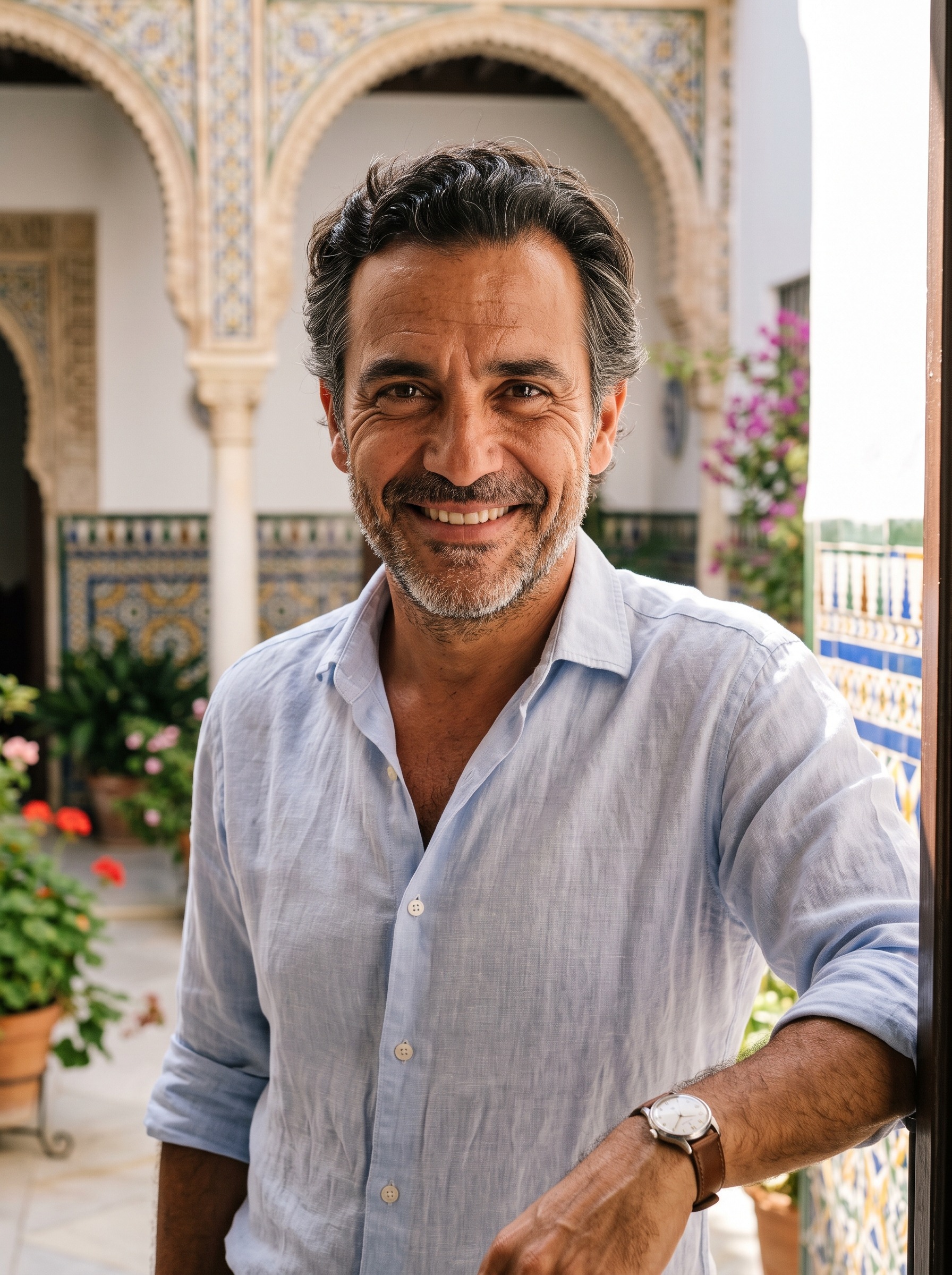

Centro begins with footfall. On Calle Sierpes, the city moves in a steady stream — shoppers, office workers, couples on a paseo, and the occasional pilgrim who has wandered in from the Cathedral side and suddenly found himself among Zara and Mango. A few streets away the mood changes again, and then again: the broad retail spine gives way to the tiled hush of old bars, then to the tight, talkative lanes around Plaza de la Alfalfa, where the evening tends to loosen its collar and stay out too late. This is Seville at practical speed, the old city doing what it has always done — trading, drinking, gossiping, praying, and making a very decent meal of the whole thing.
What Centro & Alfalfa is known for
Centro is the part of Seville that refuses to behave like a museum district, which is precisely why it works. It is the working core of the old city, the place Sevillanos actually use day to day. In the morning, Calle Sierpes and Calle Tetuán are all polished glass, shopping bags and brisk steps; by early evening the same streets become a promenade, and the bars start drawing people in for a caña and something fried before the night stretches out. The area’s modern landmark is impossible to miss: the Setas de Sevilla, that improbable timber canopy lifting itself over Plaza de la Encarnación like a giant piece of carpentry that got ideas above its station. It finished in 2011, and even now it still looks as if someone has parked a future on top of the old city.

The neighbourhood’s older bones show up in the plazas. The Iglesia del Salvador, built in Baroque style between 1674 and 1712 on the site of a former mosque, anchors one of the city’s classic open-air drinking spots. A little south, Plaza de la Alfalfa carries a different memory: once a Moorish silk market, then a food market, then home to a Sunday bird-and-pet market that lasted until 2005. Today it is less about commerce than appetite, and the square’s compact grid of streets makes a fine little maze for people who like their evenings dense with stops.
The trick here is not to race. Centro rewards the walker who lets the city change texture block by block. One minute you are under the broad retail light of Sierpes; the next you are in the shade of church stone and tiled bar fronts; then you are in the Alfalfa knot, where the conversations come louder and the tables get smaller. Seville likes a room with a counter, and this is where it gives you several.
Where to eat & drink
Start with a place that knows its own age. El Rinconcillo on Calle Gerona 40 has been serving since 1670 and is widely called the oldest bar in Seville, which is the sort of claim that would be tiresome if the room were not so gloriously convincing. The tilework is old enough to have opinions, the mahogany counters have been polished by more elbows than a cathedral pew, and the bill is still chalked on the wood. Order the espinacas con garbanzos and the pavía de bacalao, and let the room do the rest.

Down in the Alfalfa knot, Bar Alfalfa on Calle Candilejo 1 is the opposite in scale and just as useful in spirit: a tiny corner bar hung with hams, best for salmorejo, ham croquetas and bruschetta. It is Italian-owned, which explains the bruschetta and, in Seville, counts as a perfectly sensible bit of cosmopolitan mischief. Go before 5pm if you want a place to stand without developing a permanent relationship with the doorframe. Around the corner, Sal Gorda on Calle Alcaicería de la Loza is the sort of creative tapas counter that makes local diners raise one eyebrow and then order again. The oxtail doughnut is the headline, and the cod fritters with honey foam are the sort of thing that sounds like a dare until the plate arrives and the room goes quiet for the duration of the first bite.
For a more old-school pause, La Bodega on Plaza de la Alfalfa 4 does montaditos and wine by the glass, which is often all a person needs before deciding whether to continue the crawl or sit very still and let the evening come to them. Casa Antonio, better known as Bar Los Caracoles, on Calle Pérez Galdós 13 has fed the neighbourhood for more than fifty years and fills up for caracoles in season, chocos fritos and adobo. That is the kind of place that keeps a district honest. On the same street, Beodo gives craft-beer drinkers something to think about, with shareable plates and the backing of the Sal Gorda team.
At Plaza del Salvador, La Antigua Bodeguita del Salvador has been an institution since 1986, and it knows exactly why people are there: a beer, Andalusian stews, and the pleasure of sitting under the Baroque church while the square does its evening theatre around you. If you want to finish on sugar rather than salt, Confitería La Campana, at the top of Calle Sierpes, has been doing pastries, hot chocolate and ice cream since 1885. It is one of those places where the city remembers its sweet tooth in public.

Going out
Night in Centro does not begin with a bang; it begins with a chair scraping back on a terrace and a first beer arriving in the cool of the square. Plaza del Salvador is the set-piece. From spring onwards, people crowd its steps and the pavement outside La Antigua Bodeguita del Salvador with a beer in hand, the church floodlit above them, and the whole thing has the easy confidence of a ritual repeated enough times to become local weather. There are worse ways to spend an evening than watching the square fill and empty while the light drops off the Baroque stone.
Plaza de la Alfalfa runs on a tighter current. The bars stay busy until late, especially at weekends, and the tapas crawl often turns into a drinking crawl without anyone announcing the change. That is the charm and the warning. The district is lively and safe, but it is not shy, and the noise can travel. Calle Pérez Galdós, in particular, turns into a student botellón on weekend nights — cheap, harmless and very loud, which is useful to know before you book a room over it and spend Saturday inventing new feelings about double glazing.
For something more contemporary, Ovejas Negras on Calle Hernando Colón runs a proper cocktail list alongside its fusion tapas, and it gives the centre a slightly more polished late-night edge without pretending to be anything other than a bar that likes a crowd. If you want a bigger, later night with more bar-and-club energy, the bohemian Alameda de Hércules is only a ten-minute walk north. But many evenings in Centro are best left unforced: one terrace, one bar, one more, then home by way of whatever square has become the loudest room in the city.

Things to do / what to see
The obvious thing to do here is climb. The Setas de Sevilla rooftop walkway on Plaza de la Encarnación is the neighbourhood’s signature modern spectacle: 250-odd metres of undulating timber path with skyline views back to the Cathedral and Giralda. Standard entry is around €15, and a guaranteed sunset slot around €18; the ticket includes the walkway and a multimedia show, which is worth booking a couple of days ahead in high season if you want the golden hour rather than the leftovers.

Beneath the same plaza, the Antiquarium keeps the city’s older layers visible. Roman, Visigothic and Islamic remains lie here — mosaics and street foundations from the 1st to 6th centuries — discovered by accident when a car park was dug and opened as a museum in 2011. It is a small ticket at about €2, and a useful corrective to anyone who thinks Seville only became interesting once the terraces were installed.
Near by, step into the Iglesia del Salvador and look up. Cayetano de Acosta’s soaring gilded Baroque retable is the reason to come inside, though the building itself already carries the weight of its history, erected between 1674 and 1712 on the site of a former mosque. A combined ticket sold here also covers the Cathedral and Giralda, which is a neat way to avoid one of the city’s more predictable queues.
{{ATTRACTIONS}}
But the real pleasure in Centro is often less formal. Wander Plaza de la Alfalfa and the lanes around it, then drift back toward Sierpes and let the streets decide your pace. This is a quarter made for aimless movement between coffees, church bells and the first round of tapas. It is not a district that asks to be conquered. It asks to be walked, and walked again, until you understand why Seville’s centre still feels like the city’s working pulse rather than a postcard backdrop.
Shopping
Centro is Seville’s main shopping district, and it wears that role with the kind of confidence that comes from being useful every day. Calle Sierpes is the broad, busy artery lined with Spanish and international high-street names — Zara, Mango, Massimo Dutti, Stradivarius and the rest — running between La Campana and Plaza de San Francisco. It is pedestrianised, which means the whole street belongs to feet, window displays and the occasional determined local with three bags and no patience.
Parallel Calle Tetuán, linking Plaza Nueva to La Campana, is the more upscale strip and consistently ranks among the most expensive retail streets in Spain. It is the place for polished browsing rather than bargain hunting, and the mood shifts accordingly: fewer voices, more intent, a little more silk in the shopfronts. For everything under one roof, El Corte Inglés spreads across buildings around Plaza del Duque and Plaza de la Magdalena. If you want a department store to solve a practical problem, this is the place to let it.
Away from the chains, the side streets still carry older trades — fan makers, hat shops and confectioners like Confitería La Campana at the head of Sierpes, which has been here since 1885. And it is worth remembering that Plaza de la Alfalfa’s old market life is gone. The Sunday pet-and-bird market closed in 2005, and the square now belongs to eating and drinking rather than browsing. Which, on balance, is probably the better trade.
Where to stay in Centro & Alfalfa
This is the most central all-rounder in Seville, the sort of base that makes transport feel optional. Stay here and the Cathedral, Alcázar, Setas and the river are all inside a 15–20 minute walk. That convenience is the point, but it comes with a price: you are paying for location, and the location is lively. Streets right on Sierpes, Tetuán and Plaza del Duque put you on top of the shopping and the paseo, but they stay busy and lit until around midnight, so soundproofing and air conditioning are not luxuries here; they are the difference between a good day and a long night.
The lanes around Plaza de la Alfalfa and Plaza del Salvador are more atmospheric and excellent for eaters, though they are loud after dark. A room over Calle Pérez Galdós may catch the weekend street party, which is either a story or a complaint depending on how much sleep you require. If you want a calmer night in the same walkable core, look for a quieter interior street or a place with a patio set back from the plazas.
{{HOTELS}}
Getting around
You walk. That is the honest answer, and in Centro it is the only answer that feels natural. The whole district is largely pedestrianised, and everything worth seeing sits within a 15–20 minute stroll. If you want a tram, the MetroCentro line T1 runs from Plaza Nueva, on the edge of the district, down past the Cathedral and Archivo de Indias to Puerta de Jerez and San Bernardo, which is handy for the southern sights and the regional-train station. Single fares are around €1.40.
Seville’s Metro line L1 does not reach the historic core; its nearest central stop, Puerta de Jerez, sits by the Alcázar. City buses, the C-lines, circle the centre if your feet give out, though frankly the streets are kinder than the timetable. For the airport, the EA airport bus runs to San Bernardo and Plaza de Armas for about €4, and from either stop it is a short taxi or walk into Centro. Santa Justa mainline station, for AVE trains to Córdoba and Madrid, is a 20-minute taxi or bus ride away.
The practical truth is that Centro rewards light packing and decent shoes. The pleasures here are close together, but they are not all the same. One corner is for shopping, another for a late beer, another for a tiled bar with a chalked bill and a room that has seen more history than most guidebooks can hold. That is the point of staying in this part of Seville: you do not just visit the centre. For a few days, you live at its pace.
FAQs
Is Centro a good area to stay in Seville?
Yes — it is the city’s most convenient base. You can walk to the Cathedral, Alcázar, the Setas and the river in under 20 minutes and usually forget about transport altogether. The trade-offs are higher prices and street noise, so a soundproofed room helps, especially on the busiest corners.
Where should I go for a tapas crawl around Plaza de la Alfalfa?
Keep it short and mobile: El Rinconcillo for the classics, Bar Alfalfa for salmorejo and croquetas, Sal Gorda for more creative plates, and La Antigua Bodeguita del Salvador for a beer under the church. One tapa and one drink per bar, then move on — that is the local rhythm.
Do I need to book the Setas de Sevilla rooftop walkway?
For sunset, yes. Standard entry is around €15 and a guaranteed golden-hour slot around €18, and those sunset times can sell out a couple of days ahead in high season. The ticket includes the rooftop walkway and a multimedia show; the Antiquarium below is a separate, cheap ticket.
Is Centro quiet at night?
Not especially. The area is lively well into the evening, especially around Plaza del Salvador, Plaza de la Alfalfa and Calle Pérez Galdós on weekends. It is safe and very walkable, but light sleepers should avoid the noisiest streets and look for soundproofed rooms.