Santiago guide
Santiago Centro, Santiago: the civic core that still eats lunch on the Plaza de Armas
A walk through Santiago Centro, where the city’s founding square still runs on lunch hours, office crowds and memory sites, with colonial stone, market steam and the odd terremoto for courage.
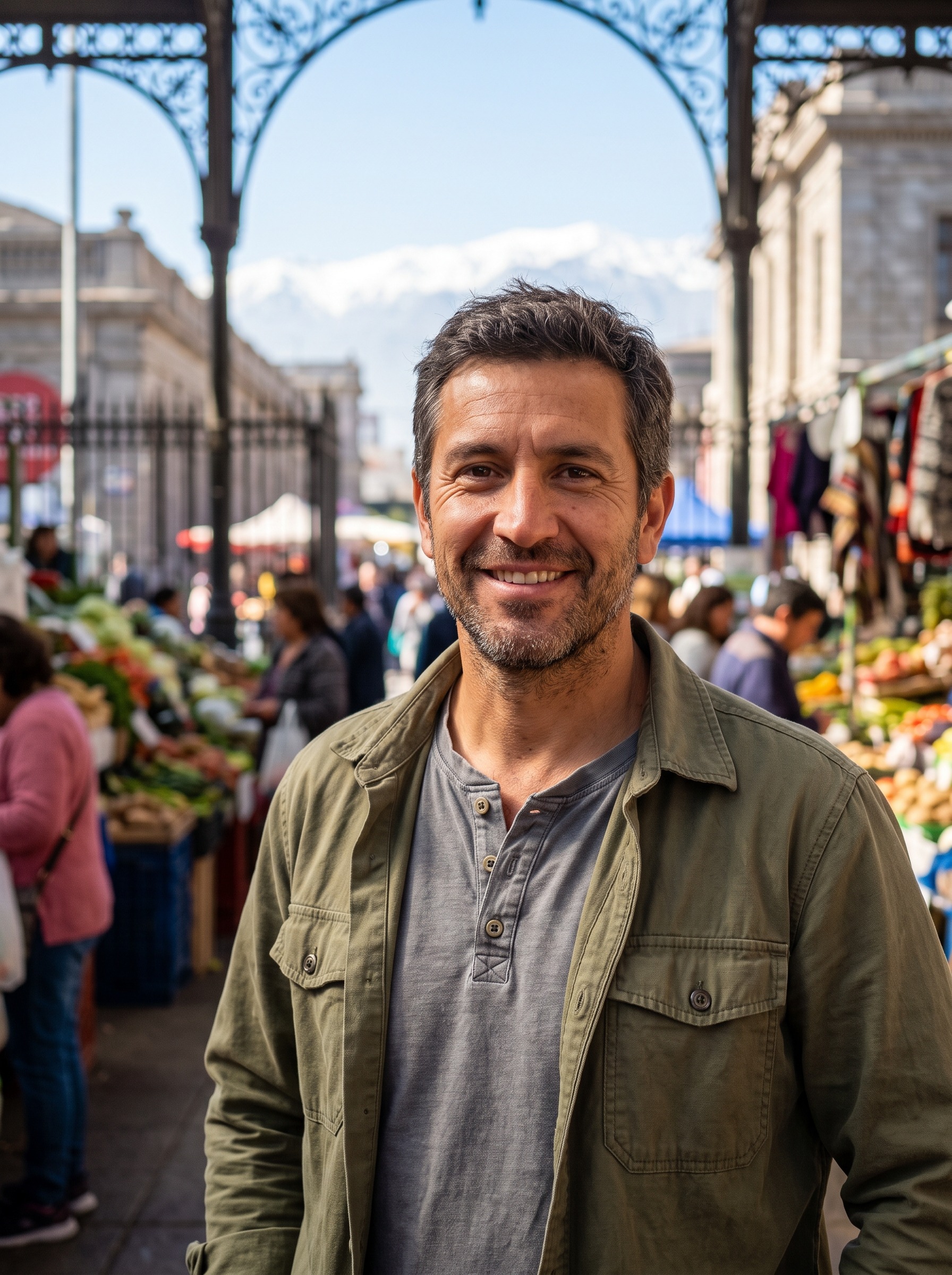

Santiago began on the Plaza de Armas in 1541, and the square still behaves like the city’s old pulse: people argue under the trees, lottery tickets change hands, shoes get shined, and lunch is eaten in plain sight. Santiago Centro is the commune wrapped around that square, a place where government palaces, colonial churches, seafood halls and pedestrian shopping streets sit shoulder to shoulder between the Alameda and the Mapocho. It is not polished, and that is part of its honesty. The centre works for a living.
What Santiago Centro is known for
If you want the city’s origin story without the varnish, start at the Plaza de Armas. This is where Pedro de Valdivia laid out Santiago on a grid in 1541, and where the city still performs its daily civic theatre. The Metropolitan Cathedral dominates one edge, the Correo Central sits on the old plot of Valdivia’s house, and the former Royal Court Palace now houses the National Historical Museum. A block away, the Museo Chileno de Arte Precolombino gives the whole district a deeper spine: the pre-Columbian world did not begin with the republic, and this museum quietly insists on that fact.

The square is best understood in motion. In the morning, office workers cut through it on their way to the pedestrian axes. Around lunch, the benches fill, the shoe shiners settle in, and the centre starts to smell faintly of coffee, dust and hot bread. It is a working civic capital, not a preserved postcard. The facades are grand — Beaux-Arts, neoclassical, many of them National Monuments — but below them are cheap footwear shops, money-changers and the sort of storefronts that make a downtown feel useful rather than decorative.
Two blocks west, the mood changes from civic memory to executive power. Palacio de La Moneda sits there, presidential and severe, with the changing of the guard roughly every second morning at 10am. The underground Centro Cultural La Moneda below the Plaza de la Ciudadanía adds a more contemporary layer, with art exhibitions strong enough to justify the detour even if you have already seen the palace from the outside. In Santiago Centro, the state is not hidden away; it is on display, and then it expects you to move along.

South of the Alameda, the centre grows more reflective. The Barrio Cívico and the memory sites remind you that this is not only the city’s founding core but also one of its most contested stages. That tension is part of the appeal. Santiago Centro gives you the oldest square, the biggest palace, the most serious museum and the most ordinary lunch in the same few blocks. Few neighbourhoods are so frank about being useful.
Where to eat & drink
Eating in Santiago Centro is a lesson in lunch as civic ritual. The centre runs on the almuerzo hour, and if you arrive at the wrong time you will feel the whole district lean toward the dining room. The classic move is the Mercado Central, the 1872 wrought-iron seafood hall where Donde Augusto anchors the middle of the market with congrio, machas and paila marina. It is touristy, yes, but also genuinely part of the city’s food memory, and the market kitchens are strictly a daytime affair — roughly 10am to 5pm — because nobody here pretends seafood halls are meant for midnight romance.

For a more discreet lunch, Salvador Cocina y Café on Bombero Adolfo Ossa is the sort of place locals keep in reserve. The changing daily market menu — starter, main, iced tea and coffee or dessert for around 9,900 CLP — is the kind of value that makes the centre worth crossing town for. It is weekday-only and low-key, which is exactly the point. You do not go there to be seen; you go there to eat well and return to the street with your dignity intact.
Then there is Confitería Torres on the Alameda, open since 1879 and still carrying the red-leather booths and chandeliers of a place that knows it has history. It is reckoned Chile’s oldest restaurant, and it has the confidence of somewhere that does not need to prove it. The Barros Luco sandwich — beef and melted cheese — is the signature, and if the city invented it here, that feels about right: simple, sturdy, slightly shameless.

Bar Nacional, with rooms on Huérfanos and beside the Pre-Columbian museum on Bandera, is the downtown diner in full Chilean mode. Pastel de choclo, cazuela, empanadas and lomo a lo pobre all belong to the same comforting family, the kind of food that does not ask for applause. If Santiago Centro has a kitchen-table conscience, this is it.
For coffee and cake, Café Colonia on Enrique Mac Iver brings the long-running German bakery-café tradition into the centre, and Emporio La Rosa near Santa Lucía is where many locals go for what they call the city’s best helados. That is a claim people in Santiago make with a straight face, which is how you know they care about it.

Going out
Let’s be honest: Santiago Centro is not a nightlife district. By early evening the offices empty toward Providencia and Las Condes, the pedestrian paseos thin out, and the centre resumes its less glamorous life. If you want a proper night out, you cross the river to Bellavista or head a few blocks east to Lastarria for wine and cocktail bars. The centre is for lunch, not lingering.
What it does have is one glorious exception, and it is worth the pilgrimage. La Piojera, on Aillavilú near Cal y Canto since the early 1900s, is the rough-and-ready cantina where you order a terremoto — cheap pipeño wine crowned with pineapple ice cream and a hit of fernet or grenadine — and stand shoulder to shoulder with students, office workers and everyone else who has decided that decorum is overrated. It is loud, sticky, cash-friendly and absolutely Chilean. It also winds down by early evening, which is the right kind of discipline for a place that has spent a century teaching people how to misbehave in daylight.
Things to do / what to see
The essential museum is the Museo Chileno de Arte Precolombino on Bandera, one block from the Plaza de Armas. It is superb, English-labelled and, as with so many things in Santiago, easier to appreciate if you resist the temptation to rush. Many visitors skip it and later regret that they did. The collection gives the centre a long memory, and the building itself sits neatly inside the older civic fabric.
Round the plaza, the sequence is almost too good: Cathedral, Casa Colorada, Correo Central. The Museo de Santiago – Casa Colorada reopened in 2024 after a long earthquake restoration, with maps, dioramas and interactive displays on the city’s story. That matters. Santiago is a city that has rebuilt itself repeatedly, and Casa Colorada wears that fact without melodrama.
From there, walk two blocks west to La Moneda and catch the changing of the guard if the timing works. The ceremony happens roughly every other morning at 10am, and even if you are not a flag-and-brass person, the choreography gives the city a pulse you can see. Below the palace, Centro Cultural La Moneda keeps the area from feeling frozen in protocol.
South of the Alameda, Barrio París-Londres is one of the centre’s more surprising pockets: cobbled, cinematic 1920s streets built on the old orchard of the San Francisco church and convent. It is lovely in the way old city fabric often is, but the loveliness is not the whole story. Embedded in those cobbles is Londres 38, a Pinochet-era detention and torture site now preserved as a free-to-enter memory space with victims’ names set into the pavement. The place is sombre, essential and impossible to reduce to a neat tourist note. It should unsettle you a little.
For fresh air and the sort of view that reminds you the city has mountains for a backdrop, climb Cerro Santa Lucía from the Terraza Neptuno entrance on the Alameda. It is free, and on a clear day the Andes appear behind the rooftops like the city has finally remembered to look up. The hill is landscaped, ornate and mercifully close to the centre’s main streets, so you can go from museum to panorama without needing a taxi.
{{ATTRACTIONS}}
Shopping & markets
Shopping in Santiago Centro is functional and frenetic rather than boutique. The pedestrianised spines of Paseo Ahumada and Paseo Huérfanos are lined with department stores, footwear shops, pharmacies, fast-food counters and street vendors, and at midday they become exactly what a downtown should become: crowded, efficient, slightly frayed at the edges. It is good for people-watching and cheap odds-and-ends, less so for souvenirs. Keep your bag zipped and in front of you. The centre is busy enough to be fine by day and careless enough to punish the distracted.
The real shopping here is food. Mercado Central doubles as a fish-and-shellfish market you can browse before lunch, and that is part of its charm: the lunch is not separate from the market, it grows out of it. Across the river, the enormous Vega Central in Recoleta — technically outside the commune, but close enough to matter — is where the city actually buys its fruit, vegetables and cheap eats. If you want something more gift-worthy, the Centro Cultural La Moneda has a well-stocked design and artisan shop, and the museum stores at the Pre-Columbian museum and Casa Colorada sell better-quality keepsakes than anything on the pedestrian streets.
The centre is not elegant retail territory, and that is fine. Its commerce is practical, not curated. It gives you socks, sandwiches, stamps, shoes, fruit and museum catalogues. In a city that can sometimes overperform its own image, that kind of plain usefulness feels almost radical.
Where to stay in Santiago Centro
The centre is the cheapest central base in Santiago and the best-connected. Nearly every metro line touches it, and you can walk to the headline sights without thinking too hard about transport. That value comes with trade-offs, so choose the block rather than the postcode. The most comfortable pockets are around Cerro Santa Lucía and the eastern edge near Universidad Católica, which sit within easy reach of leafier Lastarria, and the quieter Barrio Cívico / La Bolsa streets south of the Alameda. Avoid the noisier, emptier-after-dark stretches at the far ends of Ahumada, Estado and Calle Puente.
Expect budget-to-mid-range hostels, apart-hotels and a handful of business and heritage hotels rather than design boutiques. If you want polished terraces and a lively evening scene at your doorstep, this is not the place; Lastarria and Providencia do that better. But if your trip is built around landmarks, museums and the pleasure of walking to the Plaza de Armas in the morning, Santiago Centro earns its keep. It is the kind of base that makes the city legible.
{{HOTELS}}
Getting around
Santiago Centro is the city’s transport heart and, mercifully, eminently walkable. Most sights sit within a 20-minute stroll of the Plaza de Armas, and Metro Line 1 runs under the Alameda with the key stops Universidad de Chile, Santa Lucía, La Moneda and Los Héroes. Plaza de Armas and Puente Cal y Canto stations sit on lines 3 and 2 to the north. From here it is about 5 to 10 minutes east on Line 1 to Providencia and roughly 15 to 20 to Las Condes, while Bellavista and Patronato are a short walk or one metro stop north over the river.
Buy a rechargeable Bip! card for the metro and Transantiago buses. The carriages are packed and best avoided with luggage during the 7–9am and 6–8pm rush, when pickpocketing is most likely. For the airport, official taxis, transfer vans and the airport bus to Pajaritos or Los Héroes are the standard options. Ride-hail apps work well and are worth using after dark rather than walking quiet blocks.
The practical truth is simple: by day, Santiago Centro is lively and generally fine, with the usual big-city caution around crowds. By night, it empties and becomes a place to pass through rather than to wander. That is not a flaw so much as a rule. Learn it, and the centre pays you back with history per block, lunch per hour and enough civic drama to make the rest of the city feel a little overdecorated.
FAQs
Is Santiago Centro a good area to stay in Santiago?
Yes — it is the best-value, most central base, with landmarks, museums and transport all within walking distance. It is gritty and quiets down in the evening, so stay here if you are sightseeing-led and want to walk to the Plaza de Armas; choose Lastarria or Providencia if you want a livelier, leafier evening scene.
Is Santiago Centro safe?
By day it is busy and generally fine, but keep the usual big-city caution around crowds: pickpocketing and bag-snatching happen at the Plaza de Armas, Mercado Central and on the rush-hour metro. After about 9pm the streets thin out and feel less secure, so plan evenings elsewhere and use a ride-hail rather than walking quiet blocks.
What is the best thing to do in Santiago Centro?
Make a morning of the Plaza de Armas — the cathedral, Casa Colorada and the Museo Chileno de Arte Precolombino are all close by — then walk to La Moneda for the changing of the guard. Add lunch at Mercado Central or Confitería Torres, and if you have time, Londres 38 and a free climb up Cerro Santa Lucía.
What should I eat in Santiago Centro?
Go for the centre’s old-school classics: seafood at Mercado Central, the Barros Luco at Confitería Torres, a comfort-food lunch at Bar Nacional, or the value menu at Salvador Cocina y Café. For dessert or coffee, Café Colonia and Emporio La Rosa are the dependable stops.