Santiago guide
Providencia, Santiago: the calm, connected district that does everything well
From the glass height of Sky Costanera to the bookshop hush of Drugstore and the wine-bar drag of Manuel Montt, Providencia is Santiago at its most livable, best-fed and easiest to base yourself in.
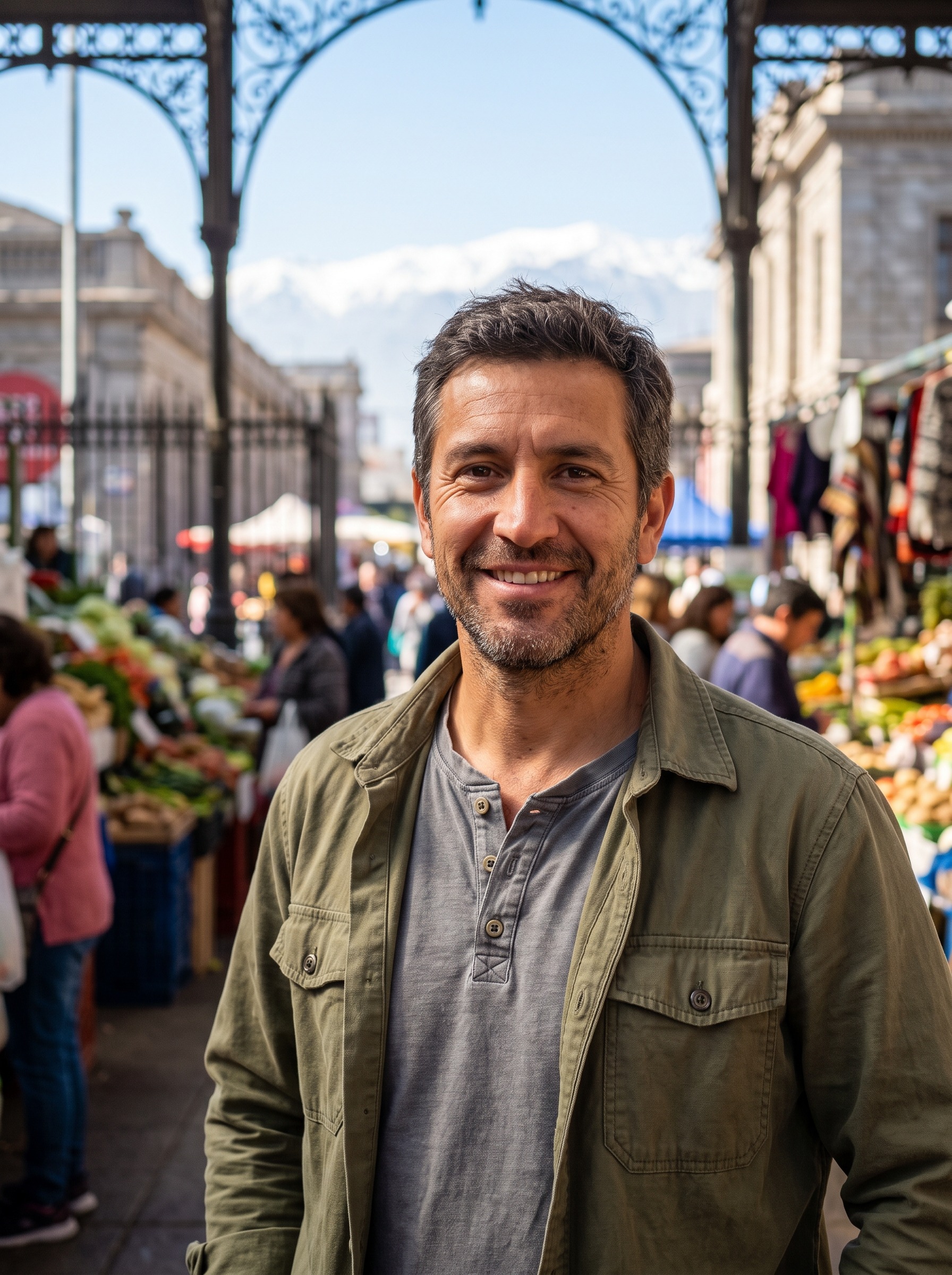

Providencia begins with a practical promise and keeps it. One metro stop east of downtown, it stretches toward the foot of San Cristóbal hill with the sort of calm confidence Santiago reserves for places that know they are useful. The streets are leafy, the apartment blocks mid-rise, the cafés full by 6pm, and the whole district seems to understand that a city can be both orderly and alive. You feel that first on Avenida Providencia, the broad spine under Metro Line 1, where traffic hums, office workers spill onto terraces, and the snow-dusted Andes sometimes appear between buildings like a reminder that the city has not forgotten where it lives.
Providencia is not trying to be edgy. That is part of its charm. It trades the graffiti-and-grit theatre of other Santiago quarters for jacaranda shade, clean pavements and a lived-in confidence that comes from being the neighbourhood locals actually use. Families, architects off the clock, remote workers, visiting couples — they all fit here without changing costume. You can eat well, drink well, sleep easily and be across town in fifteen minutes flat. In Santiago, that is not a small thing.
What Providencia is known for
Two landmarks define the district’s silhouette and much of its reputation. The first is the Costanera Center, the glass-and-steel complex on Andrés Bello that holds the tallest building in Latin America, the Gran Torre Santiago. It is the kind of structure that makes the city look briefly modern in a way that feels almost impolite. Ride up to Sky Costanera, on the 61st and 62nd floors, and the whole basin opens out beneath you: Andes to one side, coastal range to the other, the city laid out in a hard, clear geometry. Go late in the day if you can, when the mountains start to blush and the lights come on below.

The other defining fact is less flashy and more revealing: livability. Providencia is one of Santiago’s benchmark districts for being clean, safe, well-run and easy to move through. That may sound dry until you spend a day here and realise how much a city depends on such things. Metro Line 1 runs beneath Avenida Providencia, so the neighbourhood never feels stranded. The streets are broad enough to breathe, but not so broad that they lose their human scale. Even the public spaces have a certain calm authority. The Parque de las Esculturas, on the north bank of the Mapocho, opened in 1986 as Latin America’s first sculpture park after the 1982 floods, and it remains one of those places that quietly improves a city’s self-respect. Forty or so Chilean sculptures stand out in the open air with the river and mountains behind them, as if the landscape itself had agreed to be a gallery wall.
And then there is La Chascona, at the barrio’s northern edge, where Pablo Neruda built his ship-cabin-and-lighthouse house for Matilde Urrutia. It feels appropriately whimsical for the foot of San Cristóbal: literary, eccentric, slightly theatrical, but never fake. Providencia’s trick is that it can hold both the polished and the poetic without becoming precious.
Where to eat & drink
Providencia is Santiago’s most reliable district for eating properly. Not extravagantly, not in the look-at-me sense, but reliably and well. It is a place where the classics still matter, and where the newer bistros know they are standing on solid ground.
Start with Fuente Alemana on Avenida Pedro de Valdivia, the city institution where the order is the lomito sandwich. It comes as it should: slow-cooked pork loin, mashed palta, tomato and house mayo, all assembled with the discipline of a kitchen that has done this a thousand times and still respects the ritual. Chase it with a cold schop and you will understand why Santiago keeps returning to this place when it wants lunch without nonsense.
A few streets away, Liguria plays a different but equally local tune. Open since 1992, with branches on Avenida Providencia and Luis Thayer Ojeda, it is the barrio’s living room: part restaurant, part bar, part social weather system. The menu leans Chilean and bistro-ish — braised carne mechada over pasta, countryside rabbit in mustard, and the strawberry-and-red-wine jarra that regulars defend with the zeal of people who have found their house drink. Liguria is the sort of place where you can arrive for dinner and find yourself still there when the terrace has turned into a happy-hour crowd.

For a more modern register, Ambrosía Bistro near Los Leones is Carolina Bazán’s counter-seat operation, and it feels exactly as disciplined as that sounds. There are only fourteen stools, the kitchen is in view, and the plates are market-driven without becoming fussy. Ceviche brightened with grapefruit and ginger. Dry-aged beef. The room has the concentration of a good atelier and the appetite of a neighbourhood that knows what it wants.
Wine people make a beeline for Baco Vino y Bistro on Nueva de Lyon, where the list runs to more than 200 bottles and 25 by-the-glass options from a French-Chilean cellar. It is one of those places where the evening can begin with a quick glass and accidentally become dinner. If you go, go before 7.30pm or accept that you may be waiting while everyone else has the same idea.
For lighter appetites, Holm Ensaladería on Padre Mariano keeps things fresh with daily-changing salads and weekend brunch, while Café Melba on Pedro de Valdivia remains the New Zealand-run brunch pioneer of the neighbourhood, famous for eggs benedict. There is a certain cosmopolitan ease to both places, but neither loses sight of being useful first and fashionable second.
And for coffee done properly, Café Altura on Avenida Manuel Montt roasts single-origin Peruvian and Ethiopian beans, with espresso from around CLP 2,400. That price matters. Providencia can be polished, but it is not trying to empty your pockets for the privilege of a decent flat white.

Going out
Providencia’s night life is not about late warehouse mayhem; if that is your mission, Bellavista is next door and waiting. Here, the evenings are more social than feral, more about drinks with friends than the heroic pursuit of dawn. That makes the district better for most people, and far less exhausting.
The centre of gravity is Barrio Manuel Montt, a compact cluster of bars around the metro station of the same name, officially recognised by the municipality as a nightlife pocket. The mood is relaxed and grown-up. Cantina Montt pours fourteen taps of Chilean craft beer from more than 25 small producers, with weekly rotating kegs. That is the sort of detail beer people notice and everyone else benefits from. Begoña Bar, at Manuel Montt 808, leans into wine, Belgian and Spanish beers and classic cocktails from 5pm to 2am, squarely aimed at the after-work crowd. Bar el Bosque, at Manuel Montt 186, is the low-key option — the place for an unhurried pint, no drama, no performance.
Liguria, again, deserves a second mention because it changes character after dark. By evening the terrace fills with colleagues and couples, and the restaurant’s daytime solidity gives way to a more easygoing bar energy. Baco works the same way. It is one thing to have a serious wine list; it is another to make it feel like a natural extension of the neighbourhood rather than a lecture on terroir.

The pleasure here is that nobody is in a hurry to become a legend. A cold schop, a pisco sour, a glass of carignan, a second round if the conversation deserves it — that is the rhythm. Providencia understands that good nights do not always need to end late.
Things to do / what to see
Begin high, because Providencia obliges you to. Sky Costanera is the district’s most obvious spectacle and still worth the price of admission. The observation deck sits on the 61st and 62nd floors of the Gran Torre, 300 metres above the city, and it is open daily from 10am to 10pm, with last entry at 9pm. Adult tickets run CLP 23,000. That is not pocket change, but the view earns its keep, especially in the late afternoon when the Andes turn pink and Santiago begins to switch itself on below you.
Come back down and walk north to the Parque de las Esculturas, which is free and all the better for that. It is one of those rare urban spaces that feels both curated and easygoing. Forty-plus works by Chilean masters like Federico Assler and Marta Colvin sit on the Mapocho’s north bank with the river, the trees and the mountains as backdrop. You reach it by walking north from Pedro de Valdivia metro, and the route itself gives you a nice transition from commerce to calm.
At the barrio’s northern tip, La Chascona is a necessary stop if you care about Santiago’s literary memory. Neruda’s house is whimsical in the way only Neruda could manage: a museum-house at the foot of San Cristóbal that looks as though it was assembled from a poet’s private weather system. From there, ride the funicular up San Cristóbal and take in the citywide panorama. Santiago can be sprawling and a little stern at street level; from above, it becomes legible.
For something less monumental and more everyday, wander the Drugstore gallery on Avenida Providencia 2124. It is a revamped vintage arcade with independent bookshops, record stores and cafés, and it gives the district a quieter, more intellectual pulse. Contrapunto and Nueva Altamira are among the literary landmarks here, which tells you a lot about the neighbourhood’s self-image: serious enough for books, relaxed enough for coffee, and not in a hurry to prove either.

If you have a free afternoon left, spend it in Barrio Italia at the southern edge. This is where old Italian-immigrant workshops have turned into design studios, antique dealers and slow, tree-shaded cafés. It is best on a Saturday, when the place fully wakes up and the browsing becomes part of the pleasure. Providencia is not a neighbourhood of dramatic discoveries; it is a neighbourhood of good habits. Barrio Italia is one of its best ones.
{{ATTRACTIONS}}
Shopping
Providencia covers the whole retail spectrum, from the mass-market to the genuinely one-off. If you want the big, familiar consumer machine, the Costanera Center mall is your answer: more than three hundred stores over seven floors, including Zara, H&M and the Chilean department-store giants Falabella, Paris and Ripley, plus a vast food court and cinemas beneath the tower. It is not subtle, but it is efficient, and in a city that prizes practicality, that counts for something.
For more character, the Drugstore gallery at Avenida Providencia 2124 is the better browse. Its four floors hold independent boutiques, vinyl shops and half a dozen bookstores, including Contrapunto and Nueva Altamira. It is the sort of place where you can drift from a record crate to a novel to a coffee without ever feeling herded.
But the most rewarding shopping is at Barrio Italia. There, Italia Street and its side lanes open into courtyards full of independent design studios: handmade leather, ceramics, jewellery, bespoke furniture, antique dealers digging through old workshops. This is where you buy something with a story and a maker behind it, not just another off-chain rail object that will look tired by next season. Weekends are the liveliest days, and many independents keep shorter hours — or close — early in the week, which only adds to the sense that you are shopping in a real neighbourhood, not a retail concept.
Where to stay in Providencia
Providencia makes sense as a base before you even unpack. It is the safest, most convenient upscale district in Santiago, and for first-time visitors it is the default recommendation for good reason. The sweet spot lies between Pedro de Valdivia and Los Leones, where you get the best combination of metro access, cafés, wine bars and proximity to the sculpture park. If you want mountain-view high-rises, business-district convenience and quick access to the Costanera Center, stay closer to that end. If you prefer a leafier, more local feel, Manuel Montt is the better bet.
Prices here run mid-to-upper. You are looking at polished four-star hotels and design-led boutiques rather than hostels, though a few budget guesthouses do exist. Rooftop terraces with Andes views are a recurring perk, which is the sort of amenity that sounds like marketing until you actually stand there with a glass and realise the city has given you a proper horizon.
Whichever pocket you choose, the trade-off is the same: a little edge for comfort, quiet nights and excellent connectivity. In Providencia, that is rarely a compromise.
{{HOTELS}}
Getting around
Providencia is stitched together by Metro Line 1, the red line that runs beneath Avenida Providencia with stations at Salvador, Manuel Montt, Pedro de Valdivia, Los Leones and Tobalaba. Line 5 clips the south at Santa Isabel, and Line 6 brushes the area as well. The practical upshot is simple: nothing in the barrio feels far from a station, and downtown landmarks like Plaza de Armas and La Moneda are only 10 to 15 minutes west by train.
Walking is better here than in many parts of Santiago because the avenues are wide and shaded, and the district has enough residential calm to make a stroll feel like part of the day rather than a logistical task. Tap a rechargeable bip! card for metro and buses. From the airport, there is still no direct metro line: you take an official taxi, a ride-hailing app or the airport bus to a Line 1 station such as Los Héroes or Pajaritos, then ride east. By cab, the trip is roughly 45 to 60 minutes depending on traffic. A dedicated airport rail line was announced in 2025, but it is still years away.
The short version? Providencia is the place you choose when you want Santiago to behave itself. And most days, it does.
FAQs
Is Providencia a good area to stay in Santiago?
Yes. It is the standard recommendation for first-time visitors because it combines safety, tree-lined streets, strong Metro Line 1 access and Santiago’s most dependable spread of restaurants, wine bars and hotels. The best base is usually between Pedro de Valdivia and Los Leones.
Is Providencia safe?
It is among the safest districts in Santiago: clean, orderly and comfortable to walk in day or night. Use normal city caution on busy Avenida Providencia and around the Costanera Center, especially after dark.
How is Providencia different from Bellavista and Lastarria?
Bellavista, across the Mapocho, is the louder nightlife-and-clubbing quarter. Lastarria is smaller and more artsy near downtown. Providencia is calmer, greener and more residential, which makes it the better multi-night base.
What is the best way to get around Providencia?
Metro Line 1 is the easiest answer, with stations at Salvador, Manuel Montt, Pedro de Valdivia, Los Leones and Tobalaba. The neighbourhood is also very walkable, and downtown is only 10 to 15 minutes away by train.