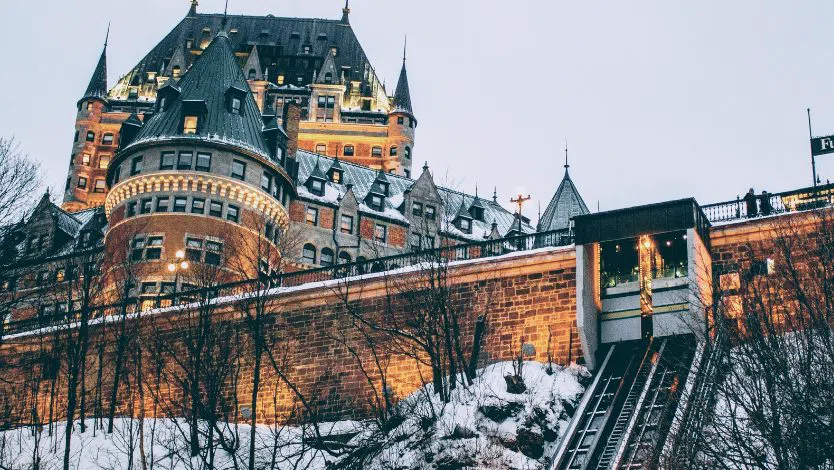

Quebec City doesn't so much sit on its cliff as split itself in two along it. Above the escarpment: convents, ramparts, and the grey turrets of a hotel visible from the St. Lawrence. Below: chandlers' warehouses, a stone church older than the country around it, and the wharves they once served. For three and a half centuries the only way between the two halves has been a set of brutally steep wooden steps — or, since 1879, a cable car that does the climbing for you. Both still run today, a few dozen metres apart, and riding one down while walking the other up is the quickest way to understand how this city actually fits together.
The Funicular: Ninety Seconds Between Two Worlds
The Funiculaire du Vieux-Québec (the Upper Town/Petit-Champlain link) is the mechanical version of the shortcut locals have been taking since the city first rigged a cargo hoist up the cliff face in 1879. The cabins are small — room for ten to twelve riders standing — and they run continuously in both directions, so there's no schedule to check and no departure to miss. Groups don't need to book ahead; you queue at whichever end you're starting from and split across cars if you don't all fit in one. A one-way ticket runs around $6 CAD. Cash has historically been preferred at the turnstiles, though card readers are increasingly in place — carry a few dollars in coins as backup regardless of which end you board at.
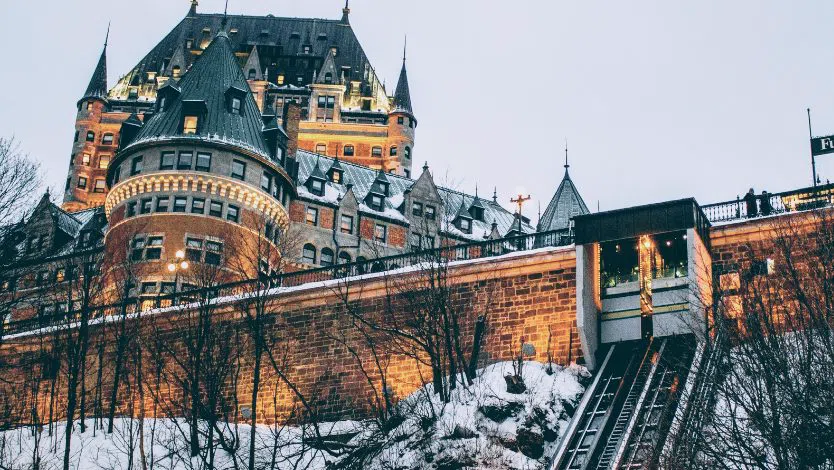
The upper station opens onto Terrasse Dufferin (Upper Town, along the cliff edge), the boardwalk that runs the length of the bluff in front of the Château. This is the one spot in the city where you can stand still and see the whole split in a single frame — the fortified plateau behind you, the rooftops of the Lower Town and the river beyond the railing. It's a fully open public promenade with no capacity limit, so it absorbs tour groups, wedding parties and the summer street performers without ever feeling as tight as the streets below.
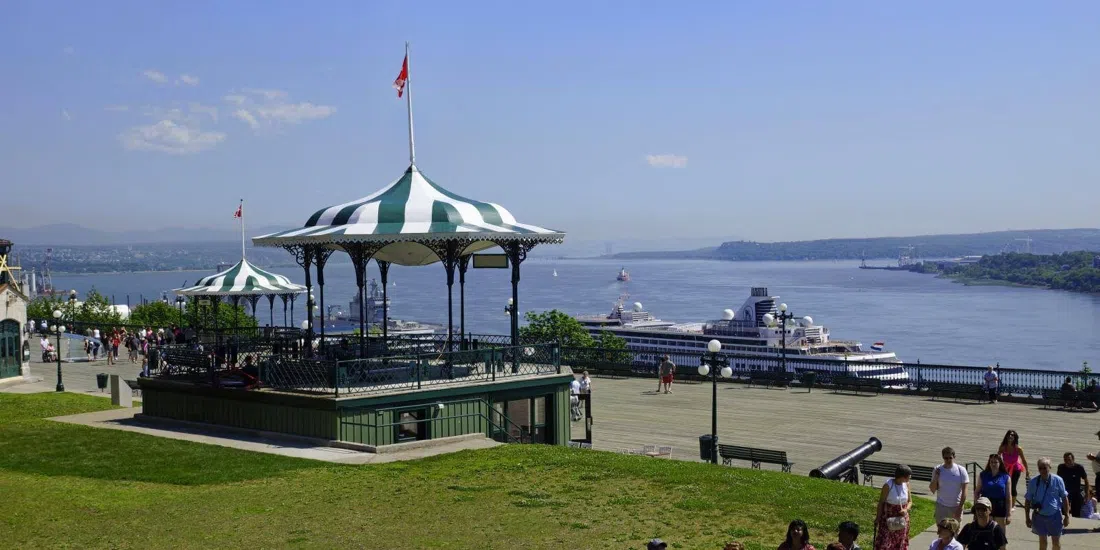
At the bottom, the funicular's lower doors open directly onto Quartier Petit-Champlain (Lower Town), the pedestrian shopping street that supplies most of the city's postcards. It's an easy district for groups to drift through — nobody's rushing anyone past the shopfronts — but it's narrow enough that a party of fifteen will notice each other. Travelling as a couple or solo, go early morning before the day-trippers arrive from the cliff above.
The Breakneck Steps: The Same Trip, On Foot
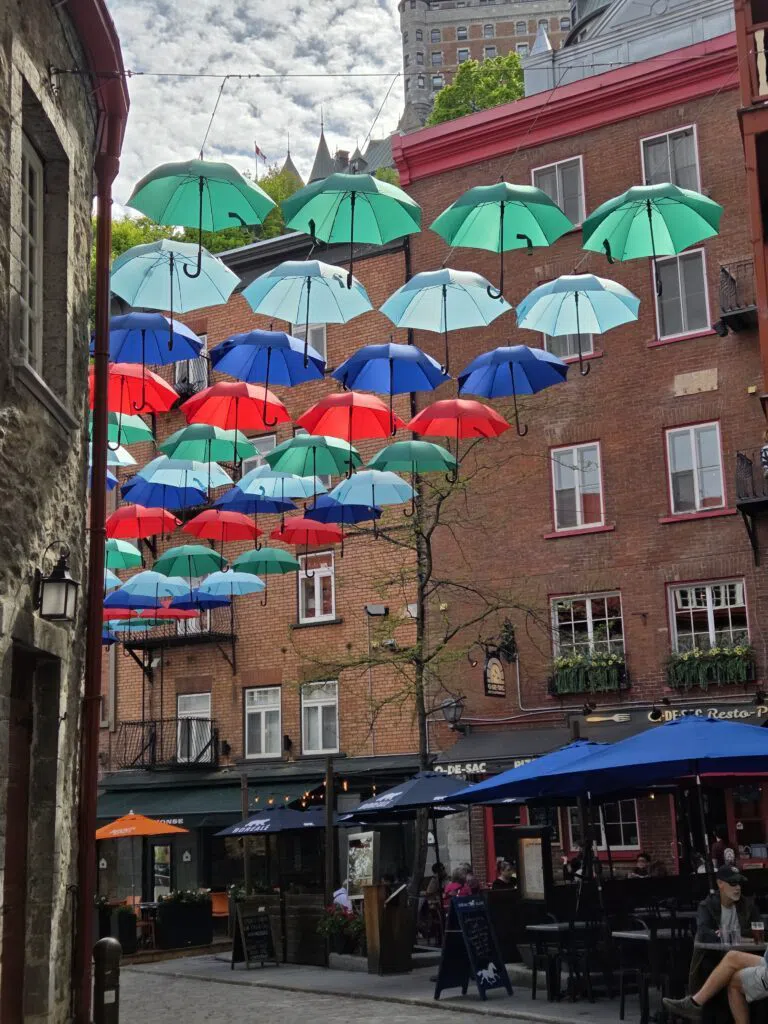
A hundred metres from the funicular's lower entrance, the Escalier Casse-Cou (the Breakneck Steps, linking Petit-Champlain to the Upper Town) does the identical climb with nothing mechanical involved. Built in 1680, it's the oldest staircase in the city, cut first into the raw slope and rebuilt in wood and stone since. The name isn't a marketing flourish: the pitch is steep, the risers are narrow by modern building-code standards, and in winter maintenance crews salt them constantly because ice on a staircase this angled is a real hazard, not an inconvenience.
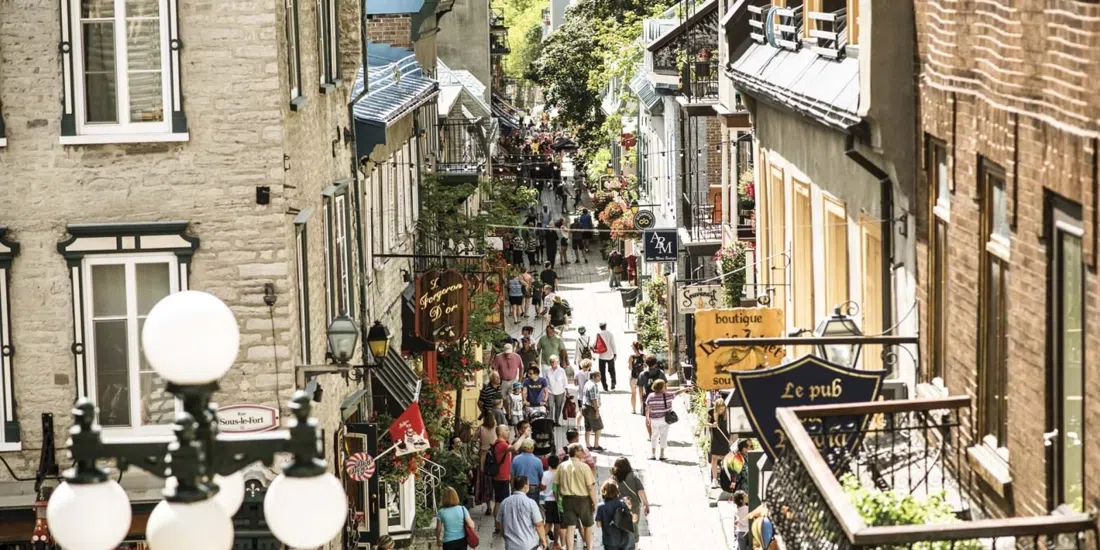
It's open-air, public and free around the clock, with no capacity limit and nothing to book. That makes it the honest counterpart to the funicular: where the cable car is measured, timed and costs money, the steps are unregulated and ask nothing of you but your legs. Take them down rather than up if you can — the view opens in front of you rather than behind, and your knees will thank you. Groups tend to bottleneck at the landings where the staircase doubles back on itself, so travelling with more than four or five people, expect to re-form at the bottom rather than stay single file the whole way.
The Upper Town's Historic Core
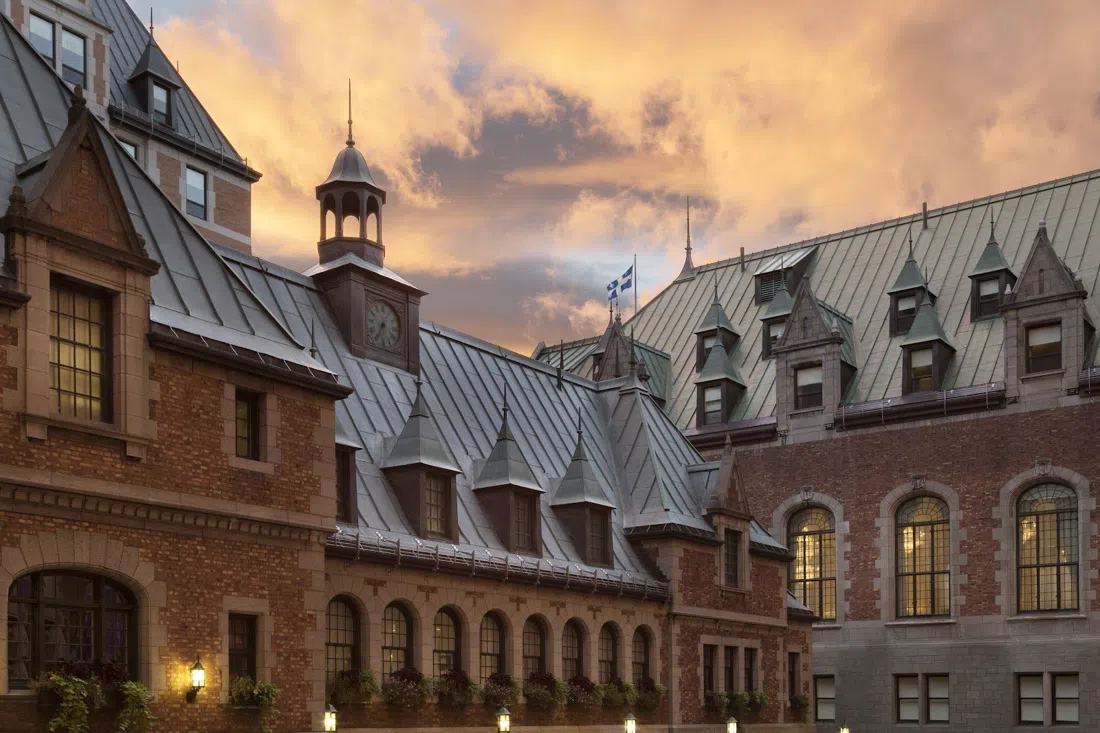
Most first-time visitors reach the top of the cliff at the Château, and there's a reason for that. Fairmont Le Château Frontenac (Upper Town, above Terrasse Dufferin) is the building that gives Quebec's skyline its silhouette from the river, and its public areas — lobby, restaurants, bar, exterior terraces — are open to anyone, hotel guest or not. What's disappearing is the classic guided interior tour for non-guests; it's being phased out, so if walking the hallways and hearing the hotel's history matters to you, book a third-party tour through GetYourGuide or Viator (roughly $25–30 CAD) while it's still on offer, rather than assuming you can arrange one at the front desk. If no tour is running when you visit, the fallback is simple and arguably just as good: look at the building from the terrace, then go in for a drink at the bar.
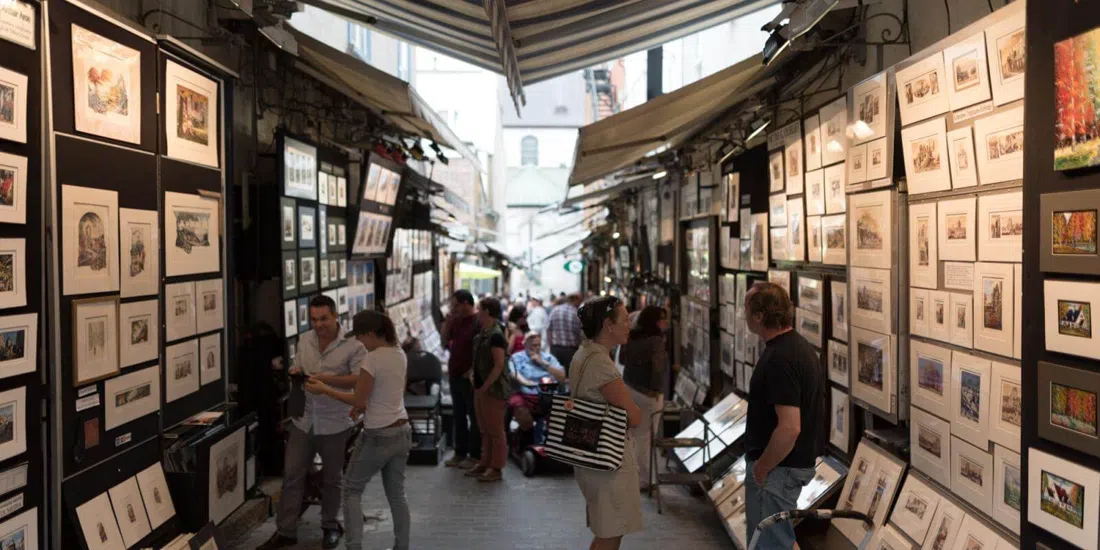
A few minutes' walk away, Rue du Trésor (Upper Town, off Rue Sainte-Anne) is a narrow alley that's operated as an open-air art gallery since the 1960s — self-employed local artists hang and sell work here daily from mid-May to mid-October. It photographs like a European old town because it more or less is one: buildings close enough to touch on both sides, no cars. Groups browse easily since there's nowhere to get lost, but it's genuinely narrow, so a large party will string out rather than move as a block.
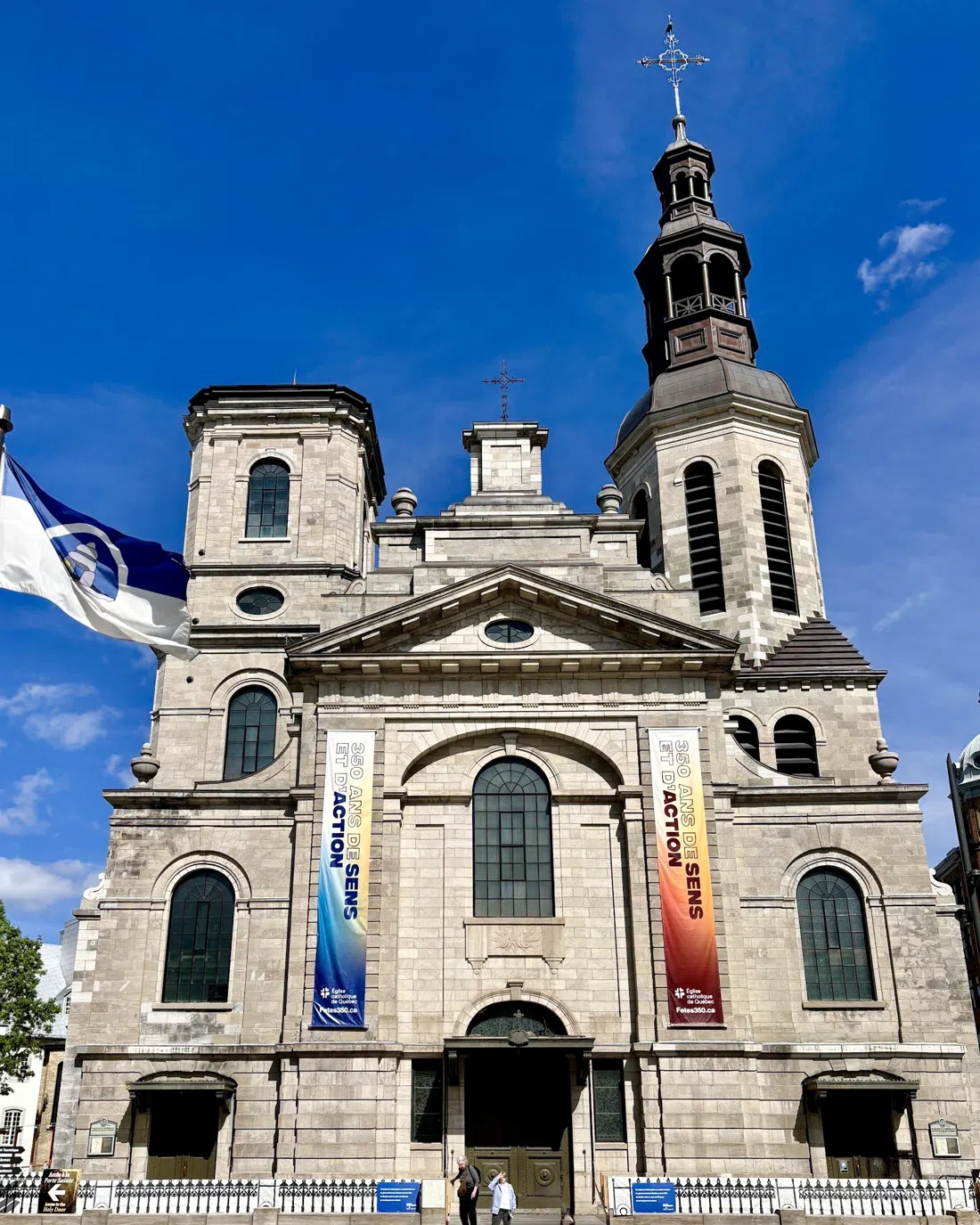
Round out the core with the Basilique Notre-Dame de Québec (Upper Town, near the funicular's top station), a short walk from Terrasse Dufferin. Entry is free and the church runs guided tours in the summer season; it's not the dramatic reason people come to Quebec, but it anchors the historic quarter and is worth the fifteen minutes it takes, particularly if the Château tour isn't running that day.
Behind the Wall: The Citadel, the Ramparts, and the Battlefield
What makes the Upper Town's layout make sense — why it sits where it sits, walled and elevated — is easiest to understand from inside the fortifications, not just looking at them from below.
La Citadelle de Québec – Musée Royal 22e Régiment (Upper Town, the plateau's highest point) is still an active military base, which means visits are guided-only; there's no wandering the grounds solo. Groups are accommodated with advance booking, and adult entry runs about $20–22 CAD. It sits at the highest, most fortified point of the whole plateau, and it's what makes the idea of two worlds sharing a single wall literal rather than a figure of speech — the wall you're standing on is the reason the Lower Town below ever needed defending in the first place.
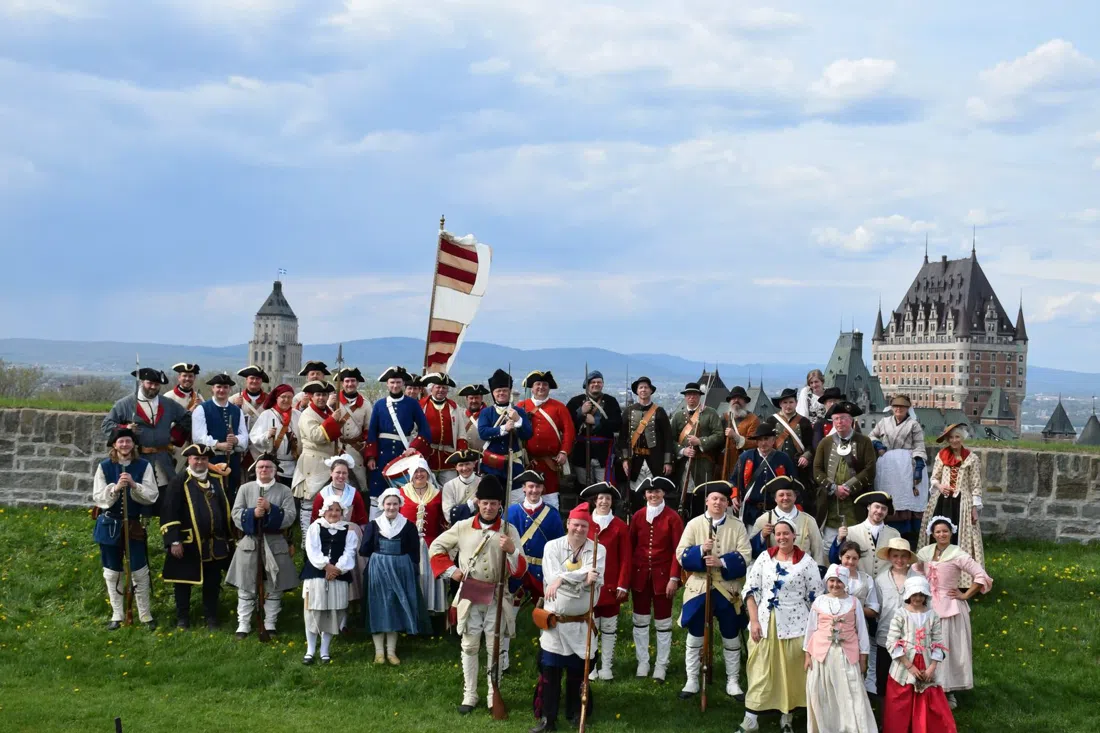
For the wall itself, the Fortifications of Québec National Historic Site rampart walk (Upper Town, departing from the Frontenac kiosk on Terrasse Dufferin) is a Parks Canada–guided tour running June 19 through October 12, 2026, with English departures at 10am and 2pm and French at 10:30am and 2:30pm. Tickets run around $20 CAD. This is the only way inside the Governor's Garden Pavilion and the Casemate, both normally closed to the public — worth prioritising if your dates fall in that window, since there's no other way to see those two spaces.
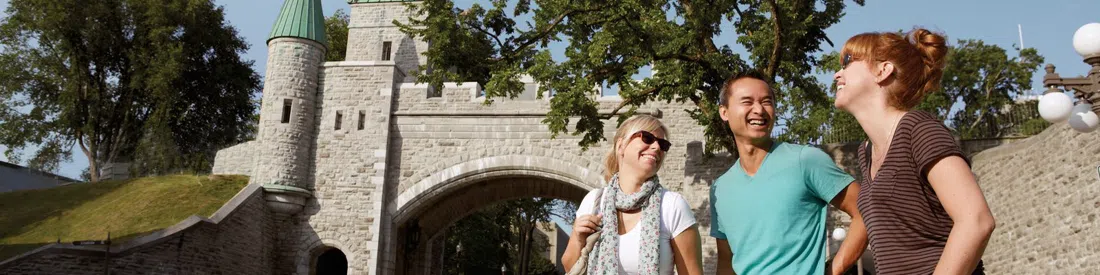
For context on why any of this was worth fighting over, Plains of Abraham (Upper Town, the plateau's far end) — officially Battlefields Park, with its Musée des Plaines d'Abraham — sits at the edge of the fortified ground. Park access is free; scheduled bus tours (English and French slots, discounted for youth in summer 2026) run about $18–24 CAD and depart at set times. It's less a single sight than the open ground where the 1759 battle for the whole cliff was decided, useful to have seen once you understand what the wall above the Lower Town was actually for.
The Lower Town: Where the Steps and the Funicular Both Land
Both routes down the cliff put you in more or less the same few blocks, and it's worth spending as long here as you did on top.
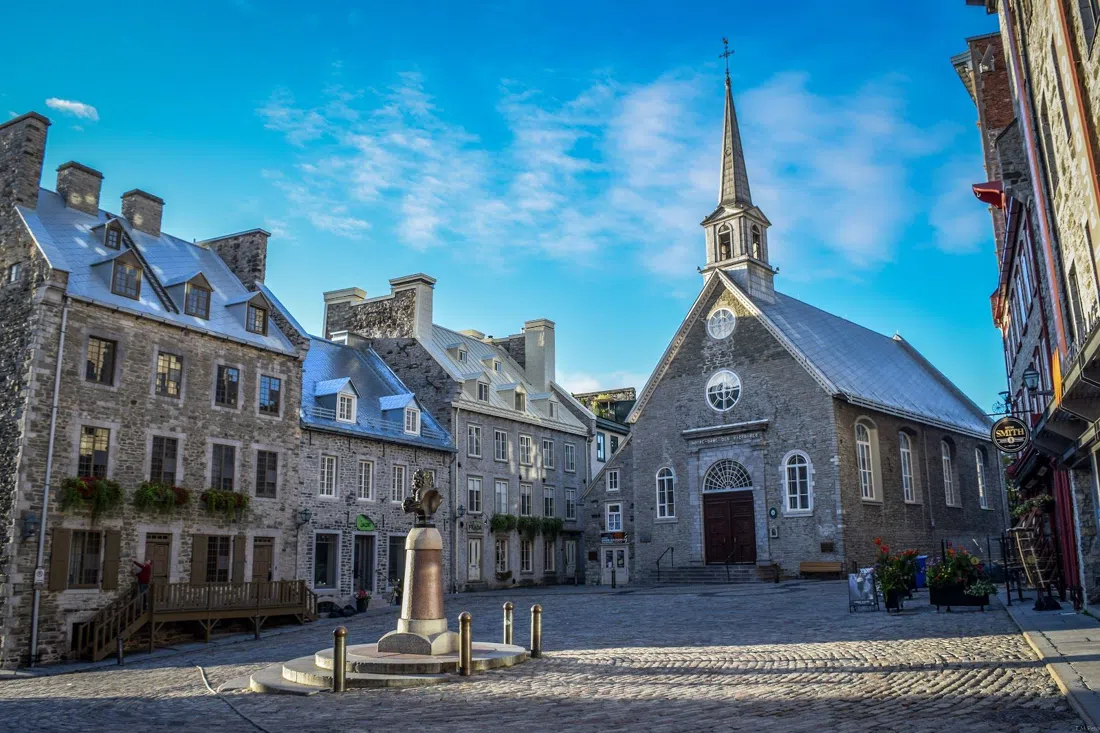
Place Royale (Lower Town, two minutes from the base of the Breakneck Steps) is the square where the Lower Town began — Champlain's original settlement, hemmed in by stone rowhouses rebuilt to their 17th- and 18th-century appearance. It's open and public with no entry fee; guided tours run weekends through June 24, 2026, then daily through the summer, for a small fee. It's compact enough that even a large tour group fits without spilling into the surrounding lanes, though you'll be sharing the space with everyone else who's just come down the same staircase.
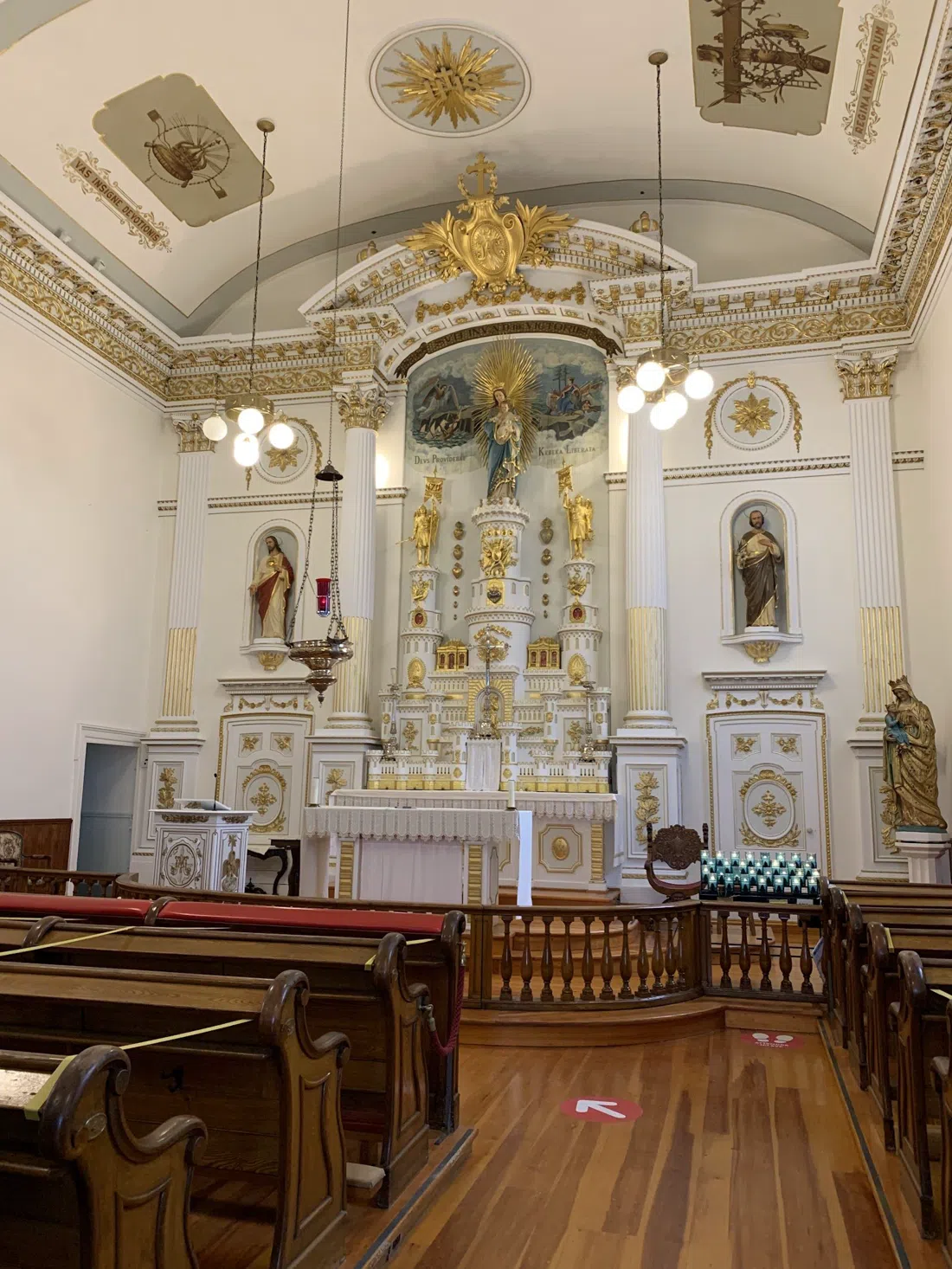
On the square's edge stands Notre-Dame-des-Victoires Church (Lower Town, Place Royale), the oldest stone Catholic church in Canada. Entry is free and groups are welcome, but check the hours the day you go — it was closed through the 2025–26 winter over a funding shortfall and only reopened on May 29, 2026. That kind of closure has happened before here, so treat opening hours as something to verify rather than assume, particularly outside peak summer.
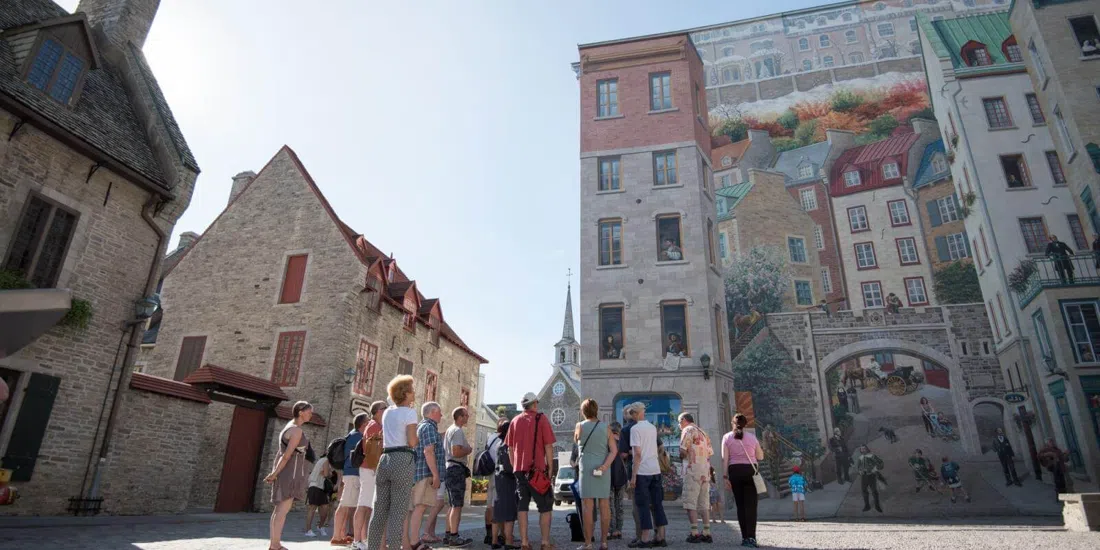
A few streets over, La Fresque des Québécois (Lower Town, Rue Notre-Dame) is a large mural depicting figures from the city's history layered onto a real building façade. It's free, outdoors, handles any size of group, and takes about five minutes — a natural stop between Place Royale and the port rather than a destination in itself.
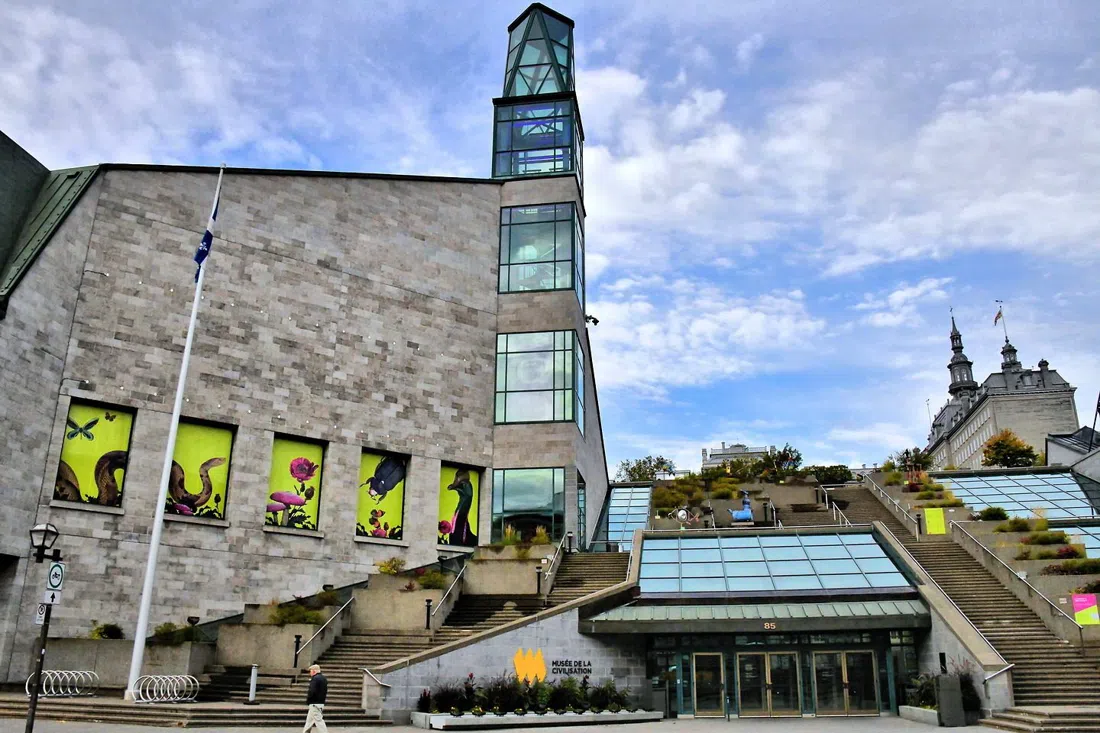
If the weather turns, or you want a counterpoint to an afternoon of climbing, the Musée de la civilisation (Lower Town, near the port) is the district's main indoor anchor. Adult entry runs roughly $18–22 CAD, and while individual visitors can generally just walk in, larger parties should reserve ahead — it's a working museum with real capacity limits on its galleries, not an open plaza.
Getting Up, Getting Down, and What to Bring
Getting here: Both the funicular's upper station and the top of the Breakneck Steps sit inside Old Quebec, a compact walking city — you won't need a car or a transit pass for any of this. Coming from outside the walls, city buses stop within a few minutes' walk of Terrasse Dufferin.
Cash: Carry small bills and coins. The funicular's ticket machines have historically leaned on cash, and while card acceptance is spreading, it's not universal yet — the same goes for the artists on Rue du Trésor, most of whom prefer cash for a quick sale.
Timing: Go up by funicular early, while Terrasse Dufferin is still quiet, and come down by the Breakneck Steps once the morning light has moved round — it's the kinder direction for both knees and photos. The Fortifications rampart walk and the Plains of Abraham bus tours run on fixed 2026 schedules, so check departure times before you plan a day around them, not after.
Budget: A funicular ride and the steps together cost under $10 CAD for the pair, since the steps are free. Add the rampart walk (~$20), the Citadelle (~$20–22) and the Musée de la civilisation (~$18–22) and a half-day across the Upper and Lower Towns runs somewhere around $60–70 CAD per person before food. None of it needs booking weeks out except the Château's third-party tour, worth reserving as soon as you have dates.
Where to stay: Basing yourself in the Upper Town puts the Citadelle, the Basilica and the ramparts on your doorstep; basing yourself below puts Petit-Champlain and Place Royale closest, with the funicular as your commute uphill. Either works — compare both halves of the city through the Quebec hotel search, and see the full Quebec guide for what else the city offers beyond this stretch of cliff.