Quebec guide
Saint-Jean-Baptiste, Quebec City: the hill just outside the walls
A walk up Rue Saint-Jean reveals Québec City’s most lived-in quarter: independent shops, honest cooking, craft beer, and the city’s inclusive nightlife, all on a steep slope above the old town.
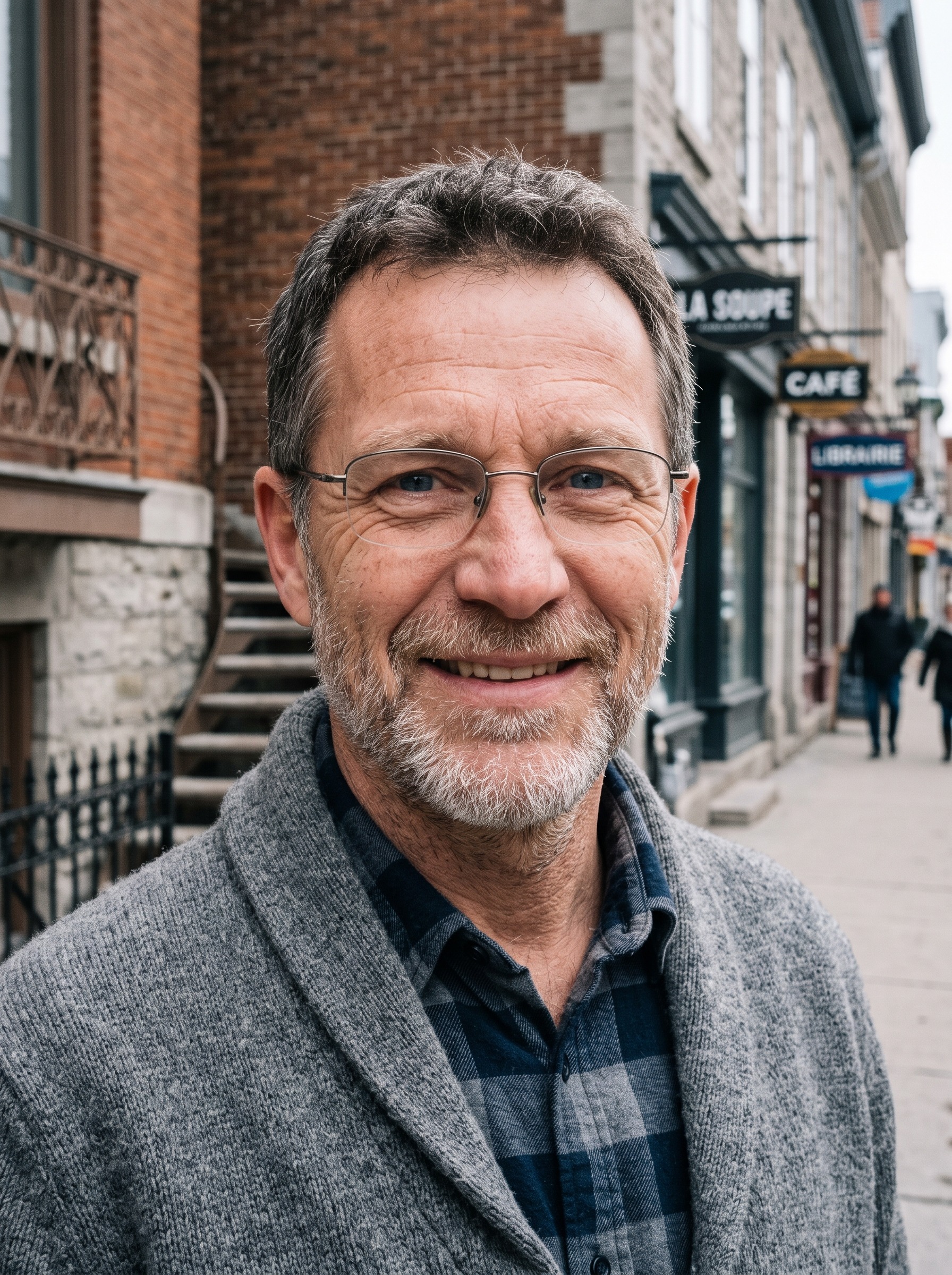

Walk out through the Porte Saint-Jean and the city changes its tone within a block. The postcard walls fall behind you, Rue Saint-Jean starts climbing, and the street gets on with the ordinary business of being a neighbourhood: a record shop, a taqueria, a Breton crêperie, a micro-roastery, a bar with 19 Québec beers on tap and a courtyard hidden like a local secret. Saint-Jean-Baptiste is not trying to charm you from a distance. It is too busy living.
What Saint-Jean-Baptiste is known for
Saint-Jean-Baptiste is the faubourg that grew up outside the old walls and never quite learned to perform for them. It sits on the steep flank between the fortifications and the Grande Allée, and the slope gives the whole district its character: colourful timber houses stacked up the hillsides, staircases that remind you to take your time, and a main street that feels less like a tourist corridor than a working artery. Rue Saint-Jean is the whole point here, one of Québec City’s oldest commercial streets, and the Saint-Jean-Baptiste stretch is where locals come to shop, eat, drink and gossip without the château in the middle of the conversation.
The neighbourhood’s history is written into that street. It was once a district of craftsmen and merchants, burned and rebuilt in the 19th century, and it settled into a reputation for being lively, tolerant and open. That reputation still matters. Saint-Jean-Baptiste is the heart of Québec City’s LGBTQ scene, and the mood on the street reflects that: easy, mixed, unpretentious, with students, thirty-something creatives, longtime residents and the occasional visitor who has finally figured out that the good, cheap, interesting food is up here, not in the château’s shadow.
The landmark that rises over all this ordinary life is the Église Saint-Jean-Baptiste, a soaring 1884 Second Empire church built from several Italian marbles with a spire around 73 metres tall. You can admire its facade and the hilltop silhouette, but the nave has been closed to worship since 2015 and the building was sold to the City of Québec in 2024. It is a presence more than a destination now, which somehow suits the neighbourhood: Saint-Jean-Baptiste likes its monuments to stay in their lane.

There used to be another name everyone sent you toward: J.A. Moisan at 685 Rue Saint-Jean, long billed as North America’s oldest grocery, founded in 1871. It closed in early 2025, so it belongs to the street’s memory rather than its present tense. That matters here, because Saint-Jean-Baptiste is a neighbourhood that wears its continuity lightly. Things change, shutters come down, new kitchens open, and the street keeps its stride.
Where to eat & drink
If you come here hungry, you are in the right place. Saint-Jean-Baptiste is compact, but the cooking has range and backbone. Start with Buvette Scott, just off Rue Saint-Jean on Rue Scott, where the room is small, the copper bar gleams, deer-print wallpaper does its own quiet bit of theatre, and vinyl turns on the player while the kitchen sends out a daily-changing terroir menu. This is the kind of place that makes you book ahead without complaint. The wine list leans natural, the scale is intimate, and the whole thing has the confidence of a room that knows exactly what it is doing.
A few streets away, Sinsemilla keeps things tighter still. In a 30-seat room at 665 Rue Saint-Jean, the cooking is seafood-forward and the mood is owner-run and unpretentious, with the sort of tasting menu that asks you to trust the room and then rewards you for doing so. There is no grandstanding here; just careful plates and the sense that someone is actually paying attention from the first course to the last.
For something warmer and easier on the wallet, Le Billig at 481 Rue Saint-Jean is the Breton crêperie locals keep in their back pocket. The room is cosy, with brick and a fireplace, and the galettes are the reason to come: duck confit if you want richness, or the Savoyard with cheddar and potato if you want the kind of comfort that feels earned after a climb. Cider fits naturally here, as it should.

Saint-Jean-Baptiste is also a neighbourhood of old-world comfort food that has survived because people still want it. La Grolla on Côte d’Abraham has been serving Swiss fondue and raclette for decades, and it feels very much like a place that has outlasted dining trends by simply sticking to the point. Nina Pizza Napolitaine at 764 Rue Saint-Jean goes in a different direction: VPN-certified Neapolitan pizzas fired in 90 seconds, with natural wine and a summer terrace. It is the sort of room that can be lively without becoming noisy about it.
Then there is Chez Rita, the tiny 15-seat taqueria from the Épicerie Scott crew at 469 Rue Saint-Jean. It is compact enough to feel like a neighbourhood favour, and the tacos and Mexican small plates give the street a welcome jolt of spice. For late nights, Snack Bar Saint-Jean at 780 Rue Saint-Jean is the poutine-and-burger casse-croûte locals actually rate. On weekends it serves poutine until 4 to 5 a.m., which is less a detail than a civic service.
Coffee is not an afterthought here either. Cantook at 575 Rue Saint-Jean is a micro-roastery and casual café roasting its own beans on the street, and deTerroir at 752 Rue Saint-Jean does the same with communal tables and a position across from the library. That is the Saint-Jean-Baptiste rhythm in miniature: a place where a morning coffee, a late lunch and a midnight snack all belong to the same walk.

Going out
This is one of the city’s best casual drinking strips, and its appeal is that it never pretends to be a grand night-out district. It is a bar-and-cabaret quarter, not a mega-club zone. The pleasure is in drifting from one room to the next on foot, keeping the evening loose and letting the street do the linking.
Le Sacrilège, at 447 Rue Saint-Jean, is the anchor, and has been since 1992. The room has church-pew seating and mosaic tables, about 19 Québec craft beers on tap, and a hidden four-season courtyard reached through a discreet passage off the street. Even in winter, under glass and heat, the patio keeps going. That combination of ordinary front room and secret back room is very Saint-Jean-Baptiste: a little sly, a little generous, and not interested in making a fuss.
Nearby, Le Projet at 399 Rue Saint-Jean pours roughly two dozen Québec microbrews as a beer-focused gastropub with pub fare. Ninkasi at 811 Rue Saint-Jean is the more expansive option, a two-storey bar with a patio, karaoke and live music, plus craft beer and espresso, because apparently the night can still have another gear. Fou Bar at 525 Rue Saint-Jean is smaller and brick-walled, the sort of neighbourhood pub where the regular live sets feel like part of the furniture.
And then there is Le Drague Cabaret Club at 815 Rue Saint-Augustin, the multi-level LGBTQ institution that has run drag shows, karaoke and a late dance floor for more than thirty years. It remains the heart of the city’s gay scene, and the wider neighbourhood’s inclusive mood is impossible to separate from it. Saint-Jean-Baptiste does not merely tolerate difference; it has built part of its identity around it.

Things to do
The best thing to do here is simple: walk. Rue Saint-Jean is the neighbourhood’s kilometre-long spine, and in summer the pedestrianised stretch fills with terraces and buskers. That is when Saint-Jean-Baptiste really shows its character, because the street holds the warmth of the day well past dark and the crowd spills out into the road as if the whole block has agreed to be a living room. Walk it slowly, from the Porte Saint-Jean end up toward Montcalm, and let the slope tell you where you are.
The Église Saint-Jean-Baptiste is the landmark to keep in view even if you never step inside it. The marble facade and hilltop spire are the neighbourhood’s signature, and they make a fine anchor point as you move along the street.

For a small and sweet stop, Érico Choco-Musée at 634 Rue Saint-Jean is a working chocolatier with a viewing window and a little chocolate museum. You can watch the artisans at work and taste as you go, which is a very good way to spend ten unhurried minutes and an even better way to buy a souvenir that will not survive the walk home unless you are disciplined.
The neighbourhood also makes a useful base for seeing the wider city. It is a five-minute walk back through the gate into the walled Old Town, and a short stroll the other way up to Montcalm for the Musée national des beaux-arts du Québec and the Plains of Abraham. If you are in Québec City in summer, timing matters too: Saint-Jean-Baptiste plays a big role in the city’s summer events and in the province’s Fête nationale on 24 June, which takes its name from Saint-Jean-Baptiste himself. The neighbourhood feels most itself when the street is busy enough to absorb a crowd without losing its local grain.
{{ATTRACTIONS}}
Shopping
Rue Saint-Jean is where you shop for things you will not find in the château gift shops, and that is part of the pleasure. The strip has a flea-market-meets-designer mood in places, but it never turns precious. Jupon Pressé at 790 Rue Saint-Jean leans into Québec-made fashion, while Boutique Point d’Exclamation at 762 offers Québec-made clothing and jewellery with that same slightly rummaged, happily individual feel. You can browse for curated second-hand denim, coats and retro dresses along the way, and the street rewards anyone who is willing to look rather than rush.
Music people have their own pilgrimage stop at Musique Chez Sonny, at 664 Rue Saint-Jean, dealing vinyl, LPs and used CDs since 1992. It is the sort of shop you go to on a record dealer’s tip, and the kind of place that reminds you neighbourhood commerce still has personality when it is left alone long enough.
For edible souvenirs, Érico at 634 Rue Saint-Jean doubles as a place to buy artisan chocolate, with a viewing window onto production. There are also bakeries, delis and épiceries dotted along the slope for cheeses, preserves and Québec pantry goods, so the rhythm here is browse-as-you-climb rather than one big market hall. Give yourself an unhurried afternoon and let the hill set the pace.
Where to stay in Saint-Jean-Baptiste
This is a smart base if you want to be walking distance from Old Québec without paying old-town prices or sleeping in the thick of the crowds. Stay on or just off the lower, flatter end of Rue Saint-Jean near the Porte Saint-Jean and you are a five-minute walk from the walls, the boardwalk and the château, with the neighbourhood’s best casual bars and restaurants right on your doorstep. Château des Tourelles sits at the gate end of Rue Saint-Jean, and there are gîtes tucked on the quieter residential side streets like Rue Saint-Gabriel.
The trade-off is the topography, which is not a small thing. The neighbourhood climbs, and it climbs honestly. If stairs and steep grades are a problem, choose a room low on the hill. If you are a light sleeper, avoid the block right above a late-night bar. The upside is that you are still getting a mid-range price feel that undercuts the walled city for comparable proximity, and you are staying in a quarter that feels like a real place rather than a museum annex.
{{HOTELS}}
Getting around
Saint-Jean-Baptiste is small and walkable, but it is genuinely hilly, threaded by the two big slopes of Côte d’Abraham and Côte Sainte-Geneviève. From the lower end of Rue Saint-Jean it is about a five-minute walk through the Porte Saint-Jean into the walled Old Town and Dufferin Terrace. Head the other way and you climb into Montcalm and onto the Grande Allée and the Plains of Abraham in 10 to 15 minutes. Everything worth doing in the neighbourhood is on foot, though your calves may file a complaint.
The city’s RTC buses run along and near Rue Saint-Jean if you want to skip the hills or reach Saint-Roch and Limoilou, and taxis and rideshares are easy enough to find. For Montmorency Falls, the seasonal tourist and regular bus network links from the old town nearby. Jean Lesage International Airport, YQB, is roughly 20 to 25 minutes by car. There is no metro in Québec City. This is a walking-and-bus town, and Saint-Jean-Baptiste is built for the former.
FAQs
Is Saint-Jean-Baptiste a good area to stay in Quebec City?
Yes, if you want a local, non-touristy base within a five-minute walk of Old Québec. You get independent restaurants and casual bars on your doorstep, with mid-range prices that usually undercut the walled city. The trade-off is the hill, so it suits visitors happy to walk rather than people who want to be beside the Château Frontenac.
What is Saint-Jean-Baptiste known for?
Rue Saint-Jean, the neighbourhood’s kilometre-long spine of shops, cafés and terraces, plus the landmark Église Saint-Jean-Baptiste. It is also known for craft beer, independent businesses, and being the heart of Québec City’s LGBTQ scene around Le Drague Cabaret Club.
Is Saint-Jean-Baptiste safe at night?
Generally, yes. It is a lively, inclusive residential neighbourhood with busy bar blocks on Rue Saint-Jean. Use normal big-city care late at night, and if you are a light sleeper, avoid rooms right above the late-night poutine spots and bars.
What is the best way to get around Saint-Jean-Baptiste?
On foot. The neighbourhood is compact, but it is steep, with Côte d’Abraham and Côte Sainte-Geneviève shaping the walk. RTC buses also run along and near Rue Saint-Jean if you want to skip the hills or head toward Saint-Roch and Limoilou.