New York guide
Lower East Side, New York: pastrami, tenements and 4am bars
A downtown Manhattan neighbourhood where immigrant food institutions, tenement history and a bar scene that runs to 4am still share the same few stubborn blocks.
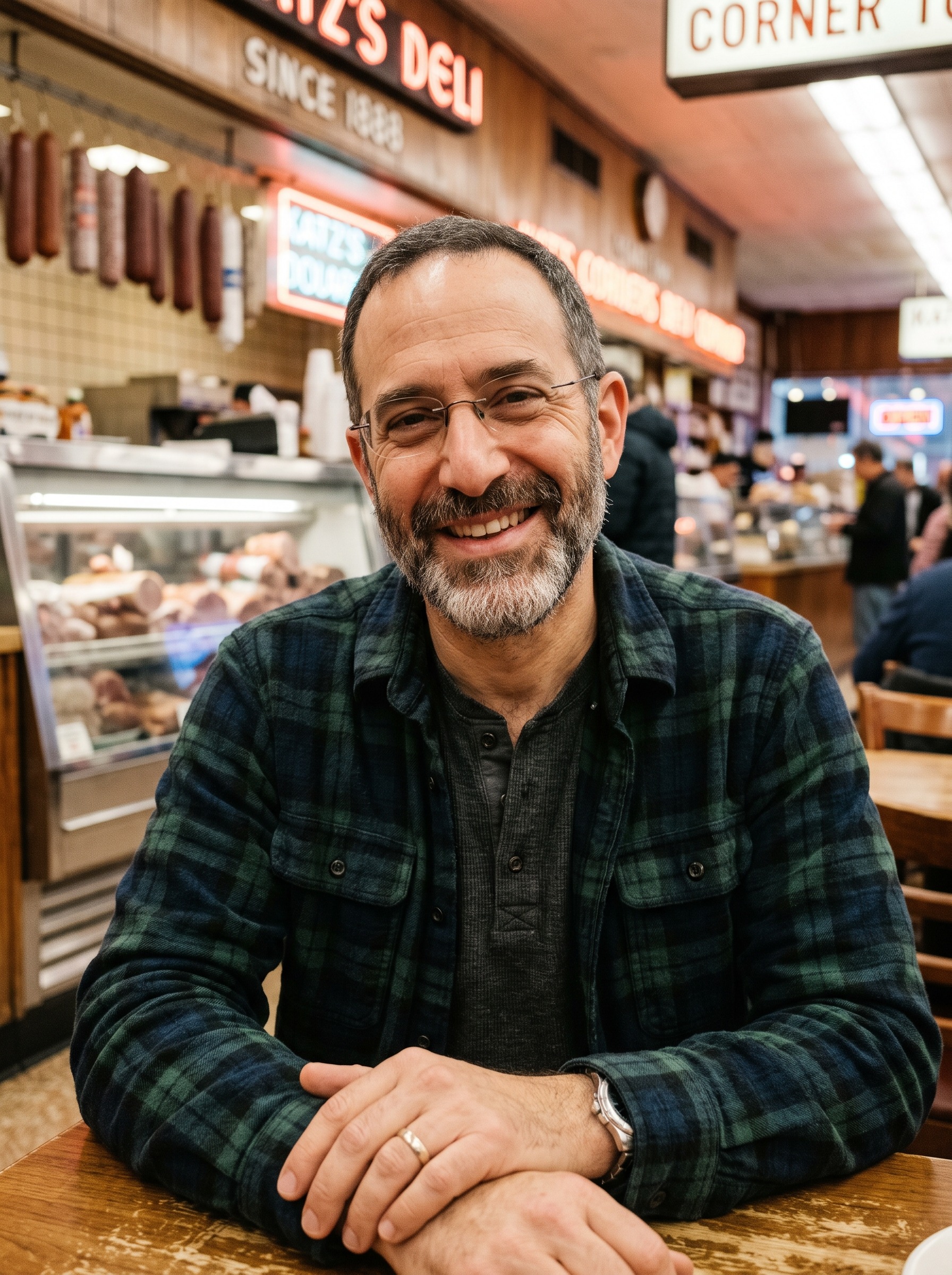

The pastrami counter at Katz's has been carving since 1888; the newest tenant on the block is a soju-only cocktail room where the whole menu comes without gin. That gap of 137 years, squeezed into a few blocks of old tenement walk-ups, is the Lower East Side in one bite.
What the Lower East Side is known for
The Lower East Side still feels like a neighbourhood that never agreed to be one thing. It was the densest immigrant quarter in the world at the turn of the twentieth century, and you can still read that history in the street life if you keep your eyes open and your pace slow. The old grid here is tighter and more intimate than uptown Manhattan's numbered avenues, which is why people still navigate by name: Orchard, Ludlow, Rivington, Delancey, Essex. The buildings help tell the story too — five- and six-storey tenements, fire escapes hanging over sidewalks, storefronts that can flip from a century-old knish bakery to a natural-wine bar within one doorway. By day the light is flat and a little sun-bleached; by night the block density turns into a kind of urban pressure cooker.
The food history is the obvious headline, but it is not a museum piece. Katz's Delicatessen on East Houston Street has been slicing pastrami since 1888, and it still works like a temple with grease on the floor. Russ & Daughters, the appetizing shop on the same street, has sold smoked fish and bagels since 1914. Yonah Schimmel Knish Bakery has been turning out knishes from its narrow storefront since 1910. None of that is nostalgia for its own sake; it is the neighbourhood's operating system.

What makes the Lower East Side more than a food-history district, though, is that it never stopped mutating. The same blocks now hold the sort of drinking rooms that make bar-crawlers plan entire evenings around a single street. It is one of the densest concentrations of dives, cocktail bars and music rooms in Manhattan, and after 11pm the sidewalks fill with the kind of crowd that skews young, art-school and finance-adjacent, loud but rarely menacing. You will hear four languages on one block, smell frying garlic and cheap beer, and pass a Michelin-listed Indian restaurant on the way to a dive that has poured shots for decades. The neighbourhood is gritty in the way New Yorkers now mean nostalgically rather than literally, but it still has more edge than anywhere else this far south.
Where to eat & drink
Start with the institutions, because the Lower East Side punishes anyone who skips the classics and goes straight to the shiny stuff. At Katz's Delicatessen (205 E Houston St), you are handed a paper ticket at the door, order pastrami on rye or the three-meat platter at the carvers' counter, and pay on the way out. Lose the ticket and you pay a replacement fee, which is as New York as a honking cab. The room is loud, crowded and gloriously unromantic; that's the point.
Russ & Daughters (179 E Houston St, with a sit-down café at 127 Orchard St) is the gentler counterpoint, all lox, bagels, latkes with salmon roe and egg creams. It is one of those places that still makes the old appetizing tradition feel alive rather than embalmed. A few blocks away, Yonah Schimmel Knish Bakery (137 E Houston St) keeps the price of entry low and the history high: potato and kasha knishes for about two bucks, still coming out of a 1910 storefront like a minor miracle.

The new guard is not here to play supporting actor. Dhamaka inside Essex Market (88 Essex St) is chef Chintan Pandya's fierce regional Indian kitchen, Michelin-listed and not shy about it, with goat-neck biryani and champaran mutton that arrive with the sort of confidence most restaurants only fake. Scarr's Pizza (35 Orchard St) does house-milled-grain slices that regularly land on best-pizza lists, and the place deserves the attention because the crust tastes like somebody meant it. Una Pizza Napoletana (175 Orchard St) goes the other way: stripped-back, minimal, a Margherita that has topped world pizza rankings by doing less and doing it properly.
For vegetables without the sermon, Dirt Candy (86 Allen St) still matters because it made vegetable-forward tasting menus feel like a serious proposition before the rest of the city caught up. If you want wine and small plates with a little more looseness, Wildair (142 Orchard St) brings the natural-wine-bar energy from the Contra crew, while Cervo's (43 Canal St) leans Iberian and seafood-forward, and Wayla (100 Forsyth St) serves bold Thai with a whole fried branzino worth ordering without overthinking it.

The thing about eating in the Lower East Side is that the old and new are not opposites; they are neighbours. You can start with smoked fish and a knish, then end with a tasting menu or a natural-wine plate and not feel like you have crossed into a different city. You have not. You have just walked a few blocks and let time catch up with itself.
Going out
This is where the neighbourhood earns its late-night reputation without apology. Double Chicken Please (115 Allen St) is the marquee cocktail bar — a fixture on The World's 50 Best Bars list — with a casual front room and a reservations-only back room called The Coop. The drinks there are the sort that make people talk in metaphors: food-inspired cocktails that taste like cold pizza or mango sticky rice in a glass. That sounds like a gimmick until you taste one and realise the bar is not kidding around.
Attaboy (134 Eldridge St) is the menuless speakeasy with Milk & Honey lineage, which means the bartender wants your taste profile, not your speech. There is usually a wait behind the unmarked door, because good things in this neighbourhood are often queued for. Bar Goto (245 Eldridge St) keeps things precise with Japanese-influenced cocktails and miso wings, a combination that sounds tidy on paper and feels even tidier when the room is busy.
For the grittier end of the spectrum, 169 Bar (169 E Broadway) is the century-old dive with cheap drinks and mismatched decor, and it has the kind of character that cannot be designed into existence. Parkside Lounge (317 E Houston St) adds pool, live acts and a 4am close, which is exactly the sort of sentence that tells you what kind of night you are in for.

Live music still runs through the Lower East Side like a wire. Pianos (158 Ludlow St) has booked emerging bands across two stages since 2002, and it remains the sort of room where you can catch a group before they graduate to bigger bills and worse sound. Mercury Lounge (217 E Houston St) is the intimate 250-cap indie room that has launched countless careers since 1993. Arlene's Grocery is the scrappy rock institution that keeps the downtown myth from going soft. And for the wine crowd, The Ten Bells remains the long-running organic-wine stop with small plates, the place you drift into when you want to slow the evening down without leaving the block.
The rhythm here matters. By late evening the sidewalks thicken, and by 11pm the Lower East Side becomes one of the densest drinking strips in the city. If you want to understand the place, do not arrive early and complain it is quiet. Wait for the bars to open their shoulders.
Things to do / what to see
The essential stop is the Tenement Museum at 103 Orchard Street, and it is not essential because someone said so on a list somewhere. It is essential because it is the neighbourhood telling on itself through the actual apartments families lived in. The museum is accessible only by guided tour through recreated apartments in two genuine tenement buildings, and the stories it tells are the ones this district was built on: Jewish, Italian, Irish, German, and, in newer tours, Chinese and Puerto Rican households. Book ahead. Popular tours sell out weeks in advance, which is fair enough when the room itself is doing the teaching.

The New Museum at 235 Bowery is the contemporary-art anchor, and its long-awaited OMA-designed expansion opened in March 2026. That roughly doubled the exhibition space and added a bigger Sky Room with downtown views, three new terraces and a full-service restaurant off the lobby. It is the sort of addition that tries to keep one foot in the neighbourhood's rough-edged present while looking hard at its future.
The film crowd has its own temple at Metrograph (7 Ludlow St), the two-screen arthouse that shows 35mm repertory prints and new releases, with a lobby bar and a commissary restaurant upstairs. It is one of those cinemas that reminds you movies can still be an outing rather than a streaming decision. Beyond the fixed sights, the neighbourhood itself is the activity: wander the small galleries and vintage shops along Orchard and Rivington, browse Essex Market on Delancey, and read the layered street life the way you would read a crowded table.
{{ATTRACTIONS}}
Shopping & markets
Shopping in the Lower East Side is less about conquest than about browsing with a sharp eye. Orchard Street was once the old garment-and-fabric bargain strip, and while most of that trade is gone, the block still holds vintage clothing shops, independent boutiques and a run of contemporary art galleries between Houston and Delancey. Rivington and Ludlow bring record stores, skate and streetwear shops, and design-led one-offs. This is not a place for mall logic. It is a place for drifting.
For food shopping, Essex Market at Essex Crossing on Essex and Delancey Streets is the anchor. It is a city-run hall of independent grocers, butchers, bakers, cheesemongers and prepared-food stalls that traces its lineage to the pushcart markets Mayor La Guardia moved indoors in the 1930s. That history matters because it explains why the market still feels like a working place, not a lifestyle prop. Come with time rather than a list; the pleasure is in the browsing, not the errand.
You can graze here, pick up smoked fish or fresh pasta, and eat lunch at a counter like Dhamaka's. Or you can just watch the traffic of the place, which is half the point. In a neighbourhood that has always traded on movement — people arriving, people staying, people leaving late — Essex Market is the indoor version of the same story.
Where to stay in the Lower East Side
This is a buzzy, nightlife-heavy base that rewards younger travellers and repeat visitors who want to be in the thick of downtown rather than near the postcard sights. Boutique hotels cluster around the Bowery and along the western edge near the New Museum, with a scattering of stylish independents on and around Orchard and Ludlow. Price-wise it runs mid-range to upper-mid by New York standards — generally friendlier than SoHo or the West Village next door, pricier than an outer-borough stay.
Street choice matters more than usual here. A room over the Ludlow or Rivington bar strip puts you seconds from the action but exposes you to street noise until 4am, so light sleepers should aim a block or two off the loudest corners — toward Grand Street or the quieter blocks near East Broadway — or book a higher floor facing away from the street. The neighbourhood's live hotels render directly below.
{{HOTELS}}
Getting around
The Lower East Side is compact and flat, and you'll walk almost everywhere within it. The main subway hub is Delancey Street / Essex Street, served by the F, J, M and Z trains. The F runs up Sixth Avenue through Midtown, while the J/M/Z cross the Williamsburg Bridge into Brooklyn and run up to the Financial District and back toward Midtown via Nassau Street. That puts you roughly 10–15 minutes from SoHo, the West Village and the Financial District, and about 20 minutes from Midtown. The B/D trains stop at Grand Street on the neighbourhood's southern edge.
For the airports, budget 45–60 minutes: the J/Z toward Jamaica connects to the AirTrain for JFK, and a taxi or ride-hail to LaGuardia typically takes 30–45 minutes depending on traffic. Citi Bike docks are plentiful, and the East River waterfront paths make cycling pleasant. Cabs and ride-hails are easy to find, especially at night when the bars empty out.
If you are the sort who likes a neighbourhood to reveal itself in layers, the Lower East Side does the job better than most. It gives you pastrami, then a cocktail room that tastes like dessert, then a tenement staircase, then a 4am bar, all within a few blocks and without much ceremony. That is the trick here: nothing feels packaged. The place still argues with itself in public, and New York is better when it does.
FAQs
Is the Lower East Side a good area to stay in New York?
Yes, if you want downtown energy and a strong bar-and-restaurant scene on your doorstep. It works especially well for younger travellers and repeat visitors, and it is walkable to SoHo, Chinatown and the East Village with good subway links via the F and J/M/Z lines. It is less ideal for families or light sleepers, since the core bar streets can stay noisy until 4am.
Is the Lower East Side safe?
Broadly, yes. It is a busy, well-trafficked neighbourhood day and night, and violent crime is not a typical concern for visitors. The main streets feel lively late, which generally adds to the sense of safety, but normal big-city awareness still applies: watch your belongings in packed bars and stay alert on quieter side streets in the small hours.
What is the Lower East Side famous for?
Two things above all: immigrant food history and nightlife. It is home to century-old institutions like Katz's Delicatessen, Russ & Daughters and Yonah Schimmel Knish Bakery, plus the Tenement Museum that tells the immigration story. After dark, it is one of Manhattan's densest strips of dive bars, cocktail dens like Double Chicken Please and Attaboy, and small live-music venues.
What should I not miss in the Lower East Side?
The Tenement Museum is the essential cultural stop, and Katz's is the classic food pilgrimage. If you have time for one modern contrast, add a cocktail at Double Chicken Please or a movie at Metrograph, then wander Orchard, Ludlow and Rivington after dark when the neighbourhood really shows its face.