New Orleans guide
Treme, New Orleans: Brass, Gumbo and the City’s Oldest Black Neighbourhood
A walk through Treme is a walk through the roots of New Orleans itself — from Congo Square and St. Augustine to red beans at the Candlelight and Creole plates at Dooky Chase’s.
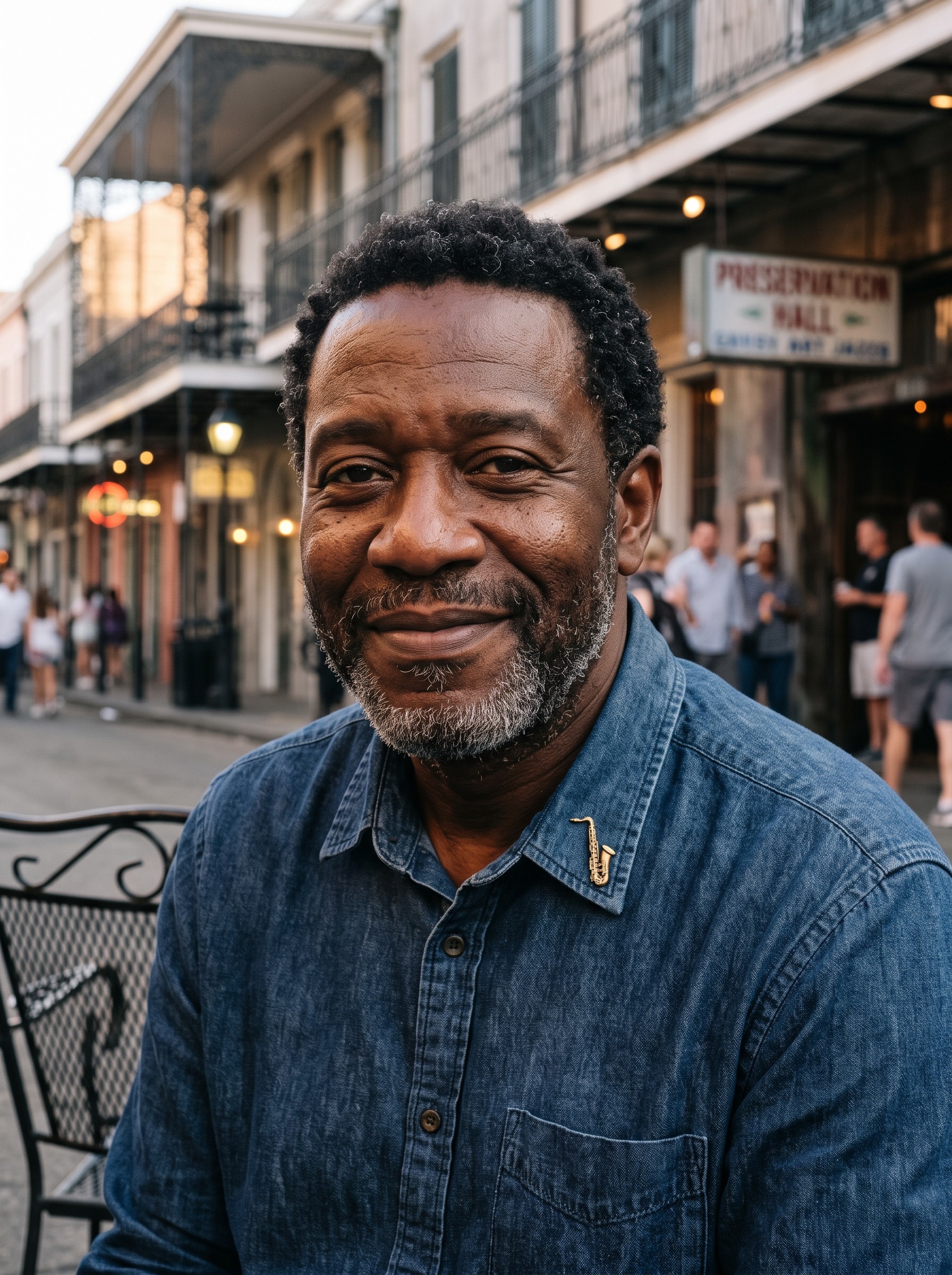

On a Wednesday night at the Candlelight Lounge, the cover buys you a bowl of red beans and rice and a front-row spot as the Treme Brass Band tears into the low-ceilinged room. That’s as good a thesis statement for Treme as any: this is a neighbourhood that doesn’t perform its history behind glass. It eats it, plays it, and sends it down the block on a snare drum. The streets are quiet by day, almost shy, with pastel Creole cottages and shotgun houses keeping watch while the Claiborne Avenue overpass cuts its grey line through the middle. But when the music starts, the old neighbourhood wakes up in a hurry.
What Treme is known for
Treme — properly Faubourg Tremé — was carved out of Claude Tremé’s plantation in the early 1800s and became one of the first places in America where free people of colour could own property. That fact alone would make it consequential. Add Congo Square, brass-band tradition, second lines, Mardi Gras Indian masking, Creole cooking and the oldest African-American Catholic parish in the country, and you’ve got the city’s cultural engine room rather than a sightseeing district.
The neighbourhood’s border with the French Quarter is Rampart Street; Esplanade Avenue, Broad Street and Canal frame the rest. It reads residential first: kids on porches, corner grocers, church bells, people minding their business and expecting you to do the same. That’s part of the charm and part of the deal. Treme rewards patience. Come curious, stay respectful, and the place opens like a trumpet case.
The most important ground here is Congo Square, now inside Louis Armstrong Park, where enslaved Africans were permitted to gather on Sunday afternoons in the 1700s to drum, dance and trade. Those rhythms are not a museum caption; they are the ancestor line for jazz, rhythm and blues, the second line and Mardi Gras Indian chants. When people call Treme the birthplace of the music, they’re not reaching for a slogan. They’re naming a source.

The neighbourhood’s history is also carried in its churches and streets, in the places where free Black New Orleanians built lives that outlasted the systems that tried to contain them. You feel that less in monuments than in sound: a trumpet drifting from an open bar door, a snare drum starting up on a Sunday afternoon as a social aid and pleasure club rolls through, somebody on a stoop nodding along like this is all as it should be. And in Treme, for better or worse, it is.
Where to eat & drink
If you come to Treme hungry, you’re in the right parish of the city. This is serious food country, and the names here are not decorative. Dooky Chase’s Restaurant at 2301 Orleans Ave has been serving Creole cooking since 1941, and under the late Leah Chase it became a Civil Rights meeting place as much as a dining room. She was the Queen of Creole Cuisine for a reason. The kitchen is credited with popularising gumbo z’herbes, the greens-heavy gumbo traditionally served on Holy Thursday, and the restaurant was named a James Beard America’s Classic in 2025. The walls carry a serious African-American art collection, which means lunch comes with a side of history that actually belongs there. Book ahead, then order like you mean it.

A few blocks away, Lil’ Dizzy’s Cafe at 1500 Esplanade Ave is the Baquet family’s soul-food corner spot, the kind of place that reminds you New Orleans cooking is not a costume. It’s famous for fried chicken, gumbo and trout Baquet, and it’s open for lunch Monday to Saturday. That’s the rhythm here: lunch, not late-night theatrics. The food comes out with the confidence of a family recipe that has survived every trend so far.
Then there’s Fatma’s Cozy Corner at 1532 Ursulines Ave, serving Turkish and Mediterranean breakfasts and Turkish desserts out of the former Joe’s Cozy Corner, a bar that was central to the 1990s brass-band renaissance. That’s a lovely Treme twist: a room with music history in its bones now pouring breakfast and sweets instead of beer and brass. The neighbourhood has always been good at repurposing a corner without losing the corner’s memory.
One honest note, because honesty matters here: the beloved Willie Mae’s Scotch House on St. Ann Street, the James Beard-winning fried-chicken landmark, has been closed since an April 2023 fire. The family has run a separate Willie Mae’s downtown on Baronne Street in the meantime, so do not show up at the Treme address expecting a plate. That’s not a culinary detour; that’s a wasted walk.
Going out
Treme is not a Bourbon Street bar crawl with a brass-band playlist pasted on top. Its nightlife is smaller, older, and better for it. The essential night is Wednesday at the Candlelight Lounge at 925 N. Robertson St, a low-ceilinged dive where a small cover gets you red beans and rice and the Treme Brass Band. They take the tiny stage late — musician time, roughly 9 to 10pm — and they rarely let anyone stay seated. It is one of those rooms where the band doesn’t need to announce itself; the room is already listening.

Kermit’s Treme Mother-in-Law Lounge at 1500 N. Claiborne Ave is another essential stop, and a particularly important one because it is one of the city’s few Black-owned music venues. Ernie K-Doe opened it in 1994, and trumpeter Kermit Ruffins revived it. Ruffins stepped back from day-to-day management in May 2025, but he still owns it and plays with the Barbecue Swingers most weeks, typically Mondays, Tuesdays and Saturdays. That’s the sort of continuity New Orleans understands in its bones: ownership, memory, and a horn player who still knows how to turn a room loose.
Then there’s Little People’s Place at 1226 Barracks St, a family-run corner bar going since 1952, beloved for its welcome, cold beer and fried fish. It hosts brass and DJ nights, which is exactly the sort of sentence that tells you a place has remained itself through several eras of city fashion. The crowd is overwhelmingly local. That’s not a warning; it’s a clue. Show up curious, not loud, and you’ll be treated like a guest rather than a mark.
Things to do / what to see
Start at Congo Square inside Louis Armstrong Park off N. Rampart St. This is the open ground where the city’s music was seeded, and on Sunday afternoons a free community drum circle often forms. Stand there long enough and you can feel how the past is not sealed away in Treme; it is still in circulation. The ground is ordinary until you remember what it carried.

A short walk away is Treme’s Petit Jazz Museum at 1500 Governor Nicholls St, a two-room, home-scale collection where a local guide walks you through 200 years of jazz and ragtime in 30 to 45 minutes for about $10. It is one of the warmest small museums in town, which in New Orleans is saying something. The place has the scale of a front room and the reach of a library. You don’t need a full afternoon here. You need attention.
The Backstreet Cultural Museum at 1531 St. Philip St is the keeper of Mardi Gras Indian suits, Baby Doll and second-line and jazz-funeral culture. It reopened in a new home after Hurricane Ida and expanded to a second-floor gallery in April 2025. If you want to understand why Treme’s streets move the way they do on parade days, this is where you begin. The suits are not costumes in the tourist sense; they are works of devotion, labour and neighbourhood memory.
St. Augustine Catholic Church at 1210 Governor Nicholls St was founded by free people of colour in 1841 and is the oldest African-American parish in the country. It holds the moving Tomb of the Unknown Slave, a memorial of chains and grave crosses, and it is known for its jazz Masses. That combination — liturgy, memory, music — is pure New Orleans. The city has always made room for grief and swing in the same breath.

On the Rampart edge, St. Louis Cemetery No. 1 holds the reputed tomb of Voodoo priestess Marie Laveau and Nicolas Cage’s pyramid. Entry is by licensed guided tour only, booked in advance. It sits just beyond the neighbourhood’s musical core, but it belongs in the same story: Treme and the old city around it have never separated the sacred from the strange for long.
{{ATTRACTIONS}}
Shopping
Treme is residential, so nobody should come here expecting boutique rows or a polished retail strip. This is not Magazine Street, and it is not the French Quarter’s Royal Street either. What you find instead is culture with a price tag that actually supports the people keeping it alive.
The gift areas of the Backstreet Cultural Museum and Treme’s Petit Jazz Museum sell books, prints and locally made items. That matters. It means your souvenir can be a contribution rather than a trinket. The New Orleans African American Museum at 1417 Governor Nicholls St has rotating exhibitions and occasional artisan and community-market events on its historic Villa Meilleur grounds, so it is worth checking before you go. If you want proper browsing, the French Market and the antique and record shops of the neighbouring Quarter and Marigny are a short walk south, and the Frenchmen Art Market in the Marigny runs most nights.
Treme is the place you come for music, food and history. Buy accordingly.
Where to stay in Treme
Treme is mostly homes, so hotel options inside its borders are limited. That’s not a flaw; it’s a reminder that people actually live here. The smart play for most visitors is to base in the French Quarter, the Marigny or along Esplanade Avenue and walk or ride the few minutes over. Esplanade, the grand oak-lined avenue on Treme’s downriver edge, has some of the most characterful guesthouses and small inns in the area and puts you within a short stroll of Lil’ Dizzy’s and the Petit Jazz Museum while staying quiet at night.
If you want to be right at Treme’s doorstep with the widest choice of rooms, book on the lake-side, lower-numbered blocks of the French Quarter near Rampart Street. They’re calmer than the Bourbon core and only a five-minute walk from Congo Square. That’s the sweet spot for people who want the neighbourhood without pretending it’s a hotel district.
{{HOTELS}}
Getting around
Treme sits directly behind the French Quarter, across Rampart Street, so from most of the Quarter it is a flat 5 to 15 minute walk. Congo Square is barely 10 minutes on foot from Jackson Square. The Rampart-St. Claude streetcar runs along the neighbourhood’s river edge and stops near Louis Armstrong Park; service was restored in June 2025 after signal repairs. A single ride is about $1.25 or roughly $3 for an all-day Jazzy Pass via the RTA Le Pass app.
The neighbourhood is flat and cyclable, and rideshares are quick and cheap for getting back at night. Louis Armstrong International Airport is about 30 to 40 minutes by car. Streets are quiet and residential, so after dark most visitors take a rideshare the short distance back to the Quarter rather than walking alone. That’s not fear; that’s manners and common sense.
Treme is not built for speed. It is built for listening. The best way through it is on foot, with time in your pocket and your ears open.
FAQs
Is Treme a good place to stay in New Orleans?
It’s a great place to spend your days, but a tricky place to sleep. Treme is mostly residential and has few hotels, so most visitors base in the French Quarter, the Marigny or on Esplanade Avenue and walk over. If you want to be close, the quieter lake-side blocks of the Quarter near Rampart Street are a smart bet.
Is Treme safe to visit?
Yes, with normal city awareness. Treme is welcoming and culturally rich, and plenty of visitors come for the restaurants, museums and Wednesday-night music at the Candlelight. It is a working residential neighbourhood, so keep your wits about you, stick to where the people and music are after dark, and take a rideshare back rather than walking alone late.
Where can I hear real brass-band music in Treme?
Wednesday at the Candlelight Lounge on N. Robertson is the classic. A small cover gets you red beans and rice and the Treme Brass Band plays late. Kermit’s Treme Mother-in-Law Lounge on N. Claiborne hosts Kermit Ruffins and the Barbecue Swingers most weeks, and Little People’s Place on Barracks Street runs brass and DJ nights.
What are the must-see cultural sites in Treme?
Start with Congo Square in Louis Armstrong Park, then go to Backstreet Cultural Museum, St. Augustine Catholic Church and Treme’s Petit Jazz Museum. If you have time, add St. Louis Cemetery No. 1 by licensed tour.