New Orleans guide
French Quarter, New Orleans: where the city learned to sing
From Jackson Square to Bourbon Street, the Vieux Carré is New Orleans in miniature: creole dining rooms, 24-hour beignets, candlelit bars and the kind of architecture that makes you slow your walk without meaning to.
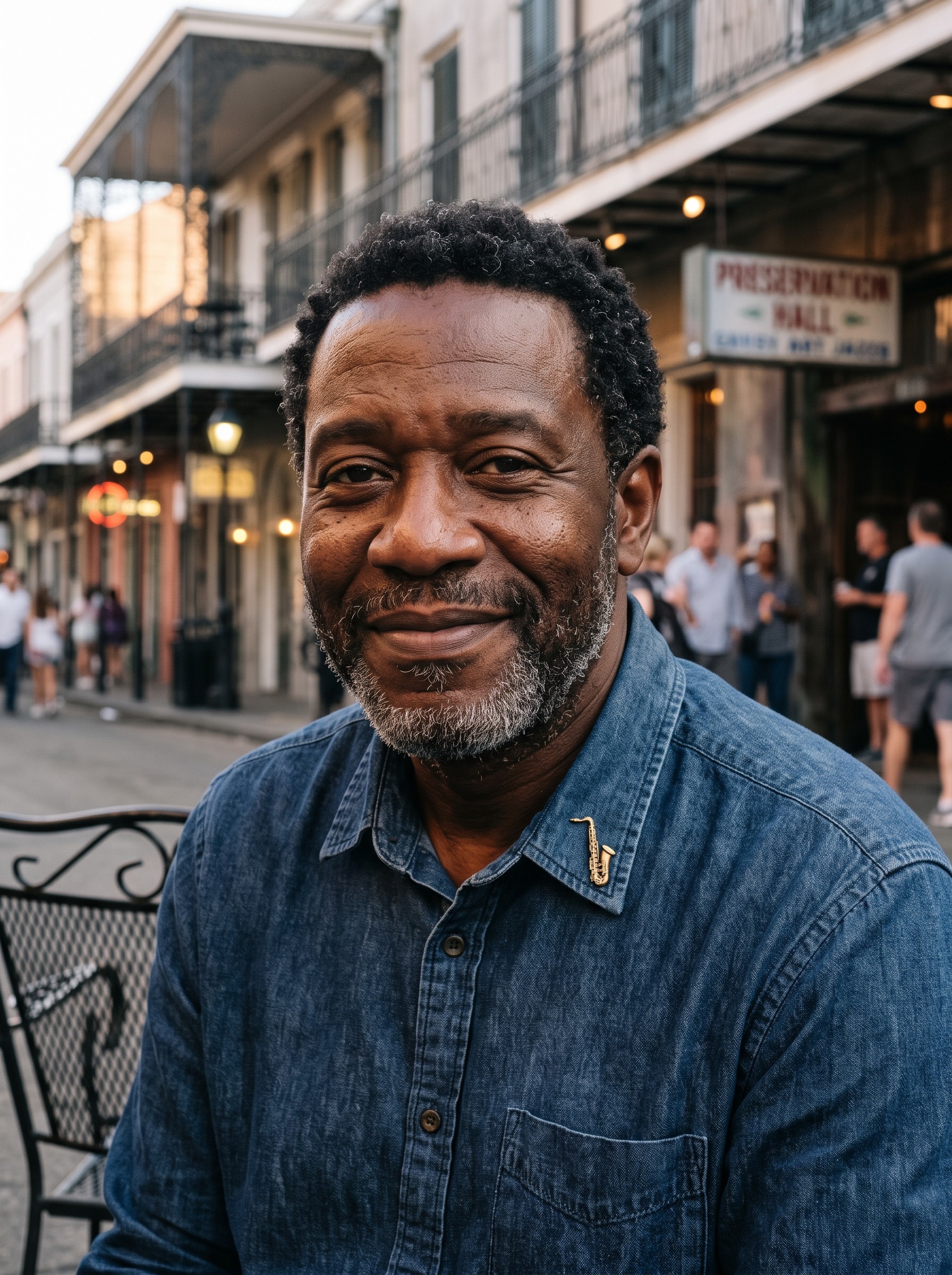

Thirteen blocks by seven, and somehow it holds a whole city’s memory. The Vieux Carré was laid out by French engineers in 1718, rebuilt in brick and stucco after fire, and today you can cross it in about twenty minutes if you don’t get distracted by a balcony, a brass band or a plate of powdered-sugar beignets. That, of course, is the joke: nobody crosses the French Quarter without detouring. The place is built to interrupt you.
What the French Quarter is known for
Start at Jackson Square, because that is where the Quarter tells the truth about itself. The old Place d’Armes faces the river like a stage set, with St. Louis Cathedral at the centre, the Cabildo and the Presbytère on either side, and the Pontalba Buildings framing the whole scene with cast-iron confidence. The square is the neighborhood’s compass point and its postcard, but it is not a museum piece. Portrait artists set up under the oaks. Tarot readers work the edges. Carriage mules clop past in the same rhythm they always have. It can all feel theatrical until you remember that the theatre is the city.

St. Louis Cathedral, whose current building dates to 1850, is the oldest continuously active Roman Catholic cathedral in the United States, and it looks the part without trying too hard. The Cabildo and the Presbytère, the Spanish colonial buildings that now house Louisiana State Museums, stand there like sober old uncles who have seen a few things. The Louisiana Purchase was formalised in the Cabildo in 1803, which is the sort of fact that makes the Quarter feel less like a neighbourhood and more like a ledger of American history, written in brick and stucco.
What defines the place, though, is not only the monuments but the way the streets change block by block. The riverside edge around Jackson Square is genteel and performative; Royal Street one block inland is hushed, lined with antiques and galleries in buildings older than the United States; Bourbon Street, after dark, becomes a neon argument with itself. One minute you are shoulder to shoulder with a bachelorette party. Thirty seconds later you are in a shaded courtyard with a Pimm’s Cup and the sound of a snare drum somewhere down the block. That is the Quarter’s trick: it lets the loud and the quiet sit elbow to elbow.
The architecture helps. The wrought- and cast-iron balconies everyone photographs are mostly a 19th-century addition to Spanish-built brick townhouses, many of them rebuilt after the fires of 1788 and 1794. The whole district is a National Historic Landmark, protected by one of the strictest preservation commissions in America, which is why it still looks like itself instead of a theme park pretending to remember one. Even the tourists, bless them, are part of the scenery now.
Where to eat & drink
The Quarter feeds on ritual, and the grand old dining rooms know it. Galatoire’s on Bourbon has been doing the same elegant dance since 1905: mirrored walls, tuxedoed downstairs room, regulars who book the same waiter, and a Friday lunch that can turn into a long, boozy afternoon if you let it. Order shrimp remoulade, crabmeat Sardou, trout meuniere amandine, and watch the room settle into its own old rhythm. This is not a place that hurries for your benefit; it has been here longer than your manners.

Antoine’s on St. Louis is older still, founded in 1840 and widely regarded as the city’s oldest restaurant. It is the birthplace of Oysters Rockefeller, which is the sort of sentence that makes the Quarter sound like it was invented by a committee of hungry historians. Brennan’s on Royal brings its own theatre to breakfast, and it is hard to argue with a room that invented Bananas Foster and still knows how to make a morning feel ceremonial. Arnaud’s, since 1918 on Bienville, pairs a jazz brunch with the adjoining French 75 Bar, which is about as New Orleans as a sentence gets without adding a trumpet.
If you want refined Creole without the museum dust, Bayona on Dauphine is Susan Spicer’s courtyard-set answer to the old guard: plant-filled, polished, and serious about the plate. Sylvain on Chartres shifts the mood again, into a carriage-house setting where cast-iron cornbread and fried chicken do the heavy lifting. The Quarter has no shortage of places trying to look historic; these two actually cook like they mean it.
Then there is the stuff that keeps the place from floating away on its own legend. Cafe du Monde on Decatur has been serving beignets and chicory cafe au lait since 1862, open around the clock and cash only, which means the line is part of the ritual and the powdered sugar gets on your shirt no matter how careful you are. Go at dawn if you can. The light is better, the queue shorter, and the city feels briefly unguarded.

Napoleon House on Chartres, in an 1814 building, is where you go for a warm muffuletta and the Pimm’s Cup it claims to have introduced to America. It has the right kind of half-faded charm, the sort that comes from letting the walls keep their stories. For oysters, Bourbon House a block off Canal shucks close to a thousand Gulf oysters a day under white tablecloths, and Johnny’s Po-Boys on St. Louis still does what locals ask of it: a proper roast-beef po-boy that drips. No ceremony, no sermon, just bread and gravy and the quiet dignity of lunch.
Going out
After dark, the Quarter splits in two. Bourbon Street is the loud one, the one everybody has heard about, the one many locals avoid and every first-timer eventually walks. Treat it like a spectacle, not a lifestyle: a hand grenade or a to-go daiquiri, a brass band on a corner, a few blocks of neon and noise, then out. It is fun once and exhausting twice, which is probably the fairest thing anyone can say about it.
Pat O’Brien’s on St. Peter is the exception worth the crowd. Open since 1933 and in its current 1791 building since 1942, it claims the original Hurricane, and the duelling-piano lounge with the flaming courtyard fountain gives the whole place a kind of easy, rowdy confidence. You can feel the room leaning into its own legend, and sometimes that is exactly what a night out needs.

Lafitte’s Blacksmith Shop on Bourbon takes the opposite tack: a 1720s cottage lit only by candles, one of the oldest bars in America, pouring a purple frozen daiquiri in a room that looks like it has been waiting for a secret. That candlelight does a lot of work. It softens the noise, if only for a minute.
The better cocktails hide off the strip. Jewel of the South on St. Louis, from bartender Chris Hannah in a restored Creole cottage, has been named the best restaurant bar in America by the James Beard Foundation and ranks among North America’s top 50. The room knows what it is doing. Bar Tonique on North Rampart is the locals’ answer to overlit Bourbon bars: three quiet blocks off the strip, everything made from scratch, no nonsense. Latitude 29 on North Peters is Jeff “Beachbum” Berry’s rum room and one of the country’s best tiki bars, while Cane & Table on Decatur hides a big rum-soaked back courtyard that feels like an escape hatch. If the night needs a last note, the Carousel Bar at the Hotel Monteleone on Royal literally rotates — a 25-seat merry-go-round bar turning since 1949. Sit still and the room moves for you.
Things to do / what to see
The Quarter rewards live music above all, and it does not require Bourbon Street to find it. Preservation Hall on St. Peter has been protecting traditional New Orleans jazz since 1961, and the room is exactly what it should be: bare, benches and standing room, no drinks, no phones, just the band and a 45-minute set that feels shorter and fuller than it ought to. Queue early or buy a reserved ticket. Fritzel’s European Jazz Pub, in an 1831 building on Bourbon, is the oldest operating jazz club in the city and keeps trad jazz going from midday into the small hours. That is the Quarter in one sentence: one room preserving the old sound, another letting it spill into the night.

By day, Jackson Square is the place to begin, and the order matters. Step inside St. Louis Cathedral between services — it is free to enter — then pay a few dollars to tour the Cabildo and the Presbytère. The square and its museums turn the city’s history into something you can walk through rather than merely read about. The riverfront walk to the French Market is another essential amble: six covered blocks of produce, prepared food and flea-market energy stretching toward Esplanade. The market’s roots go back to 1791, which gives the whole place a pleasing sense of having outlived several versions of itself.
{{ATTRACTIONS}}
If you want the Quarter at its most photogenic, go in the morning. The light is soft, the streets are still, and the crowds have not yet arrived to stand in front of your view. That is when Royal Street earns its hush and Decatur still feels like a street rather than a corridor of souvenir bags. It is also when the city’s stranger side feels less like a gimmick and more like a thread running through the fabric. Cemetery, voodoo and ghost walking tours leave from the square most evenings, and the New Orleans Historic Voodoo Museum on Dumaine gives context without sanding off the edges. New Orleans has always been comfortable living with its dead, its saints and its stories; the Quarter simply keeps them all on the same block.
Shopping & markets
Shopping in the Quarter is a matter of choosing your mood. Royal Street is the antique and fine-art spine, a hushed, gallery-lined run that invites browsing even if you buy nothing. M.S. Rau on Royal has dealt in museum-grade antiques, jewellery and paintings since 1912, which is to say the place knows the difference between old and merely dusty. Keil’s Antiques, family-run since 1899, stacks three floors with French and English antiques, chandeliers and estate jewellery. Rodrigue Studio on Royal keeps George Rodrigue’s Blue Dog paintings in the neighbourhood where they belong, bright and a little mischievous against all that old brick.
Royal also closes to cars for part of most days, and buskers and jazz trios often work the pedestrian block. That matters. It means the street is not just for shopping; it is for lingering, for stopping in the middle of the day and hearing a trumpet bounce off a gallery wall. Decatur fills the middle ground with music shops, vintage stores and tourist T-shirt emporiums, which is useful if you need a souvenir with less dust on it. For the cheaper, quirkier end of the market, the French Market flea and craft stalls near Esplanade sell Mardi Gras masks, hot-sauce samplers, costume jewellery and cheap sunglasses. Not treasure exactly, but the sort of thing that fits in a carry-on and reminds you where you were.
Pralines and spice blends from the old confectioners and grocers make the most portable, most edible souvenirs of the trip. That is the Quarter’s practical wisdom: if it can be eaten, carried or worn, somebody here has already sold it to a visitor.
Where to stay in the French Quarter
The French Quarter is the most convenient base in New Orleans for a first visit because you can walk to nearly everything and never touch a car. The only decision that really matters is where you land relative to Bourbon Street. Book on or within a block of Bourbon and you are choosing a soundtrack that runs until dawn. Book toward the lower Royal Street end, nearer Esplanade and the river, and the same neighbourhood turns genuinely quiet at night. That difference can save a trip, or ruin a night, depending on your sleep habits and your tolerance for trumpet practice at 2 a.m.
Historic grande-dame hotels cluster here: the Hotel Monteleone on Royal, family-owned since 1886 and home to the rotating Carousel Bar; the Royal Sonesta on Bourbon, whose thick walls and courtyard pool famously tune out the street; and the Omni Royal Orleans at Royal and St. Louis, a block off the noise. Alongside them sit dozens of small courtyard guesthouses and boutique inns carved from 19th-century townhouses. Prices run mid-range to high across the board, and genuine budget beds are scarce inside the Quarter’s borders, so wallet-watchers often stay in the CBD or Marigny and walk in.
{{HOTELS}}
Getting around
Walk. That is the main transport advice and, in this neighbourhood, the only one that feels honest. The French Quarter is one of the most compact historic districts in the country — roughly thirteen blocks long and seven deep, on a simple grid — and you can cross the whole thing on foot in about twenty minutes. Cars are a liability here: parking is scarce and expensive, and many streets are one-way or pedestrianised. Better to keep your shoes on and your shoulders loose.
For getting farther afield, the Riverfront streetcar runs along the levee edge past the French Market and Jackson Square, while the Canal Street streetcar picks up at the downtown boundary and heads toward Mid-City and the cemeteries. The historic St. Charles line to the Garden District boards a couple of blocks up Canal. A single streetcar or bus fare is a few dollars, and a Jazzy Pass gives a day of unlimited rides. Louis Armstrong International Airport is about 13 miles west — roughly a 20 to 30-minute drive in light traffic, longer at rush hour — reached by rideshare, taxi or the Airport Express bus.
If the Quarter teaches you anything, it is that distance here is a feeling, not a measurement. A block can be loud as a parade or quiet as a chapel. A courtyard can hold the whole afternoon. And if you time it right, you can leave a jazz set, cross a square, and still make it to beignets before the sugar melts.
FAQs
Is the French Quarter a good area to stay in New Orleans?
Yes, especially for a first visit. You can walk to Jackson Square, the restaurants, the jazz clubs and the river without using a car, and you’re right in the middle of the postcard New Orleans. The main thing is location: stay toward lower Royal Street or Esplanade if you want a quieter night, and avoid rooms right on Bourbon Street unless you want to hear the party until dawn.
Is the French Quarter safe?
For most visitors, yes. It’s busy, well-policed and easy to navigate on foot, and the daytime and early-evening crowds keep the main streets lively. As in any tourist-heavy district, use normal precautions after dark: watch your drink and belongings, expect Bourbon Street to get rowdy, and stick to well-lit, populated blocks rather than empty side streets late at night.
Can you really walk around with a drink in the French Quarter?
Yes. New Orleans allows open containers in public, so bars will pour your drink into a plastic geaux cup to carry between venues. Glass isn’t allowed on the street, but plastic and cans are fine. It’s one reason the Quarter feels like a rolling street party. Drink responsibly, and remember the rule applies to the pavement, not to driving.
How many days do you need in the French Quarter?
Two full days covers the essentials: Jackson Square and its museums, Cafe du Monde, a landmark Creole lunch, a Preservation Hall set and a slow wander down Royal and Decatur, with time to walk Bourbon Street once. Add a third day if you want cemetery or voodoo tours, more antiquing, or day trips out to the Garden District and beyond.