Luxor guide
Ramlah, Luxor: the quiet West Bank lane with the tombs on its doorstep
A rural Nile-side hamlet of mudbrick homes, rooftop dinners and dawn balloon launches, Ramlah is Luxor’s quietest base for the West Bank tombs.
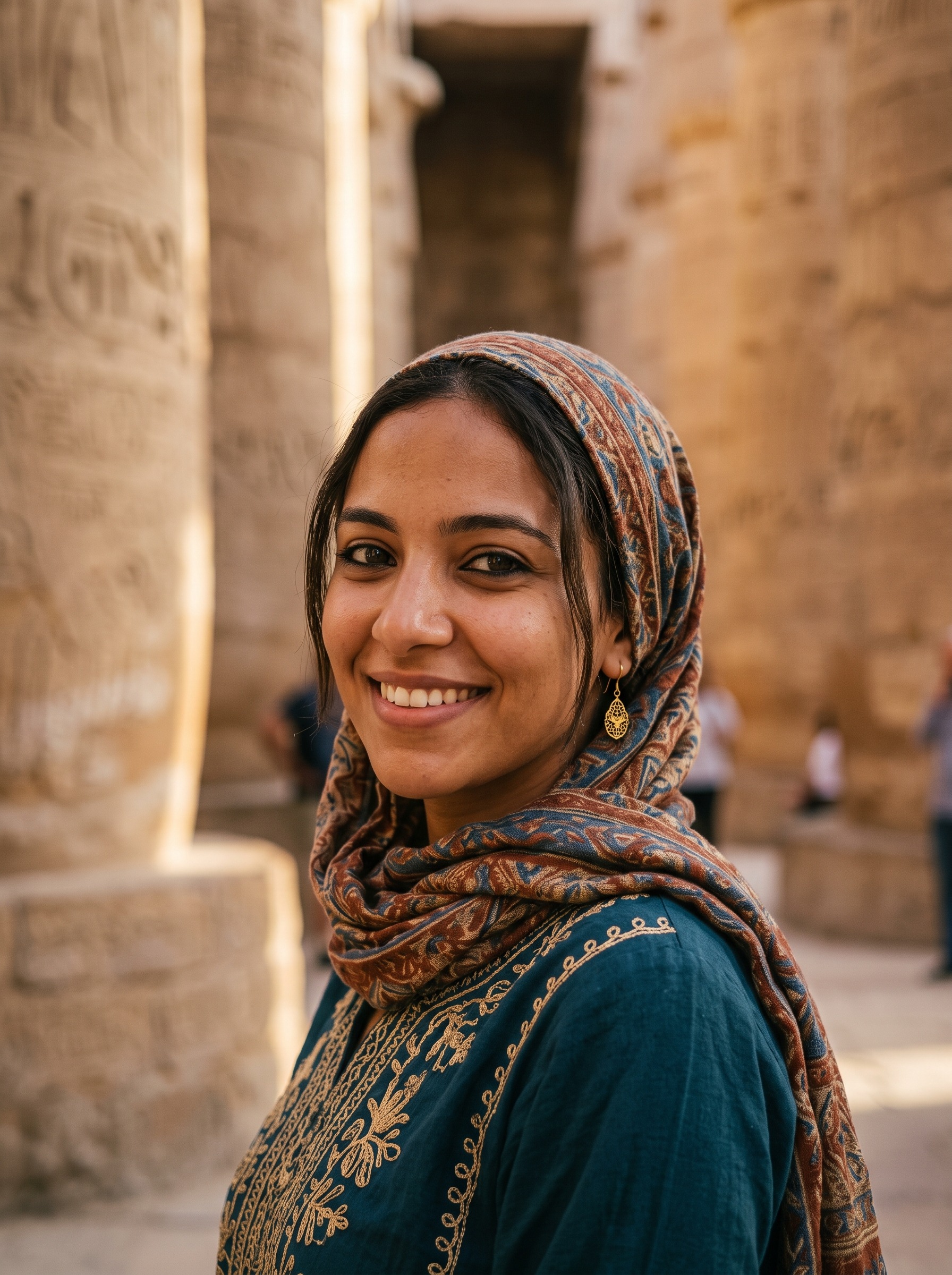

Ramlah is where the West Bank stops pretending to be a tourist strip. The lane is unsurfaced, the traffic is mostly a donkey cart or the occasional motorbike, and the first thing you notice is how the place seems to breathe with the fields: sugarcane, clover, irrigation pumps, birds, then the hard line of the Theban mountains beyond. Across the water, Luxor glitters with the Winter Palace and Luxor Temple; here, the night belongs to dogs, tea glasses and the call to prayer. It is a hamlet, not a scene, and that is exactly the point.
What Ramlah is known for
Ramlah’s reputation rests on a rare Luxor combination: you are close to everything that matters on the West Bank, yet removed from the noise that usually comes with being close. The public ferry landing is less than a ten-minute walk away, but the streetlights, hotel blocks and souvenir drag never make it this far south. Mudbrick homes and breeze-block walls sit low against the dirt lane, and the fields between them run right up to the mountain base. It feels agricultural because it is agricultural, a working stretch of the Nile’s edge where people live with the land rather than perform for visitors.
That proximity is the quiet trick. The Colossi of Memnon sit barely three kilometres away, and the wider temple circuit fans out from there into the hills: Medinet Habu, the Ramesseum, Deir el-Medina, the Valley of the Kings and the Valley of the Queens. If you come for Luxor’s monuments, Ramlah lets you wake up in the landscape rather than commute into it. At sunrise, the same fields become the view from a balloon basket; from 300 metres up, the village is all roofs, green rectangles and dust-soft lanes, with the river catching the first light.

What I like most about Ramlah is that it refuses to dress itself up. There is no attempt to turn the West Bank into a resort here. The pace is slow to the point of being horizontal, and the scenery does the work that bars and boutiques do elsewhere. You come back from the tombs, wash the dust off your feet, and look out across the Nile at the East Bank turning pink in the evening. It is the sort of place that reminds you Luxor is not one city but two moods: one polished and public, the other rural, watchful and almost stubbornly quiet.
Where to eat & drink
Be honest with yourself before you book: Ramlah has no restaurant strip. Meals here are home-cooked, and that is the whole point. Guesthouse kitchens turn out proper Egyptian food — ta'ameya, fuul, koshary, tagines, grilled chicken and stacks of fresh baladi bread — and by evening those plates are usually carried up to the roof, where the day’s heat finally loosens its grip and the river begins to darken.

That roof ritual matters more than any polished dining room could here. In Ramlah, dinner is part meal, part weather report, part pause. You eat slowly because there is nowhere else to be. A pot of tea, a plate of something stewed, the hills going from tan to purple — that is the rhythm. If you are used to ordering from a menu and moving on, the pace may feel almost disarming. If you have spent the day in the tombs, it feels like the right answer.
For a proper table with a menu, you head a short ride south towards Medinet Habu, where the West Bank’s eating is concentrated. Café & Restaurant Maratonga sits opposite the entrance to Medinet Habu, a family-run garden restaurant known for big portions, fresh bread and a proper temple view, with vegan and gluten-free options handled without fuss. The attraction is not just the food, though the food is the point; it is the sense that lunch has been placed directly in the path of history. Habu Hotel’s terrace restaurant faces Medinet Habu directly and serves Egyptian tagines, mezze and grills daily from 08:00 to 22:00, with mains roughly USD 7-18. Nearby, Nour El Balad keeps things simple, while Habou Garden has been doing the West Bank’s rural-Egyptian-and-Western mix for years.

Alcohol on the West Bank is limited, so a cold beer is a bonus rather than a right. A few guesthouses may produce one, but if you want a real evening drink, plan around a licensed hotel or cross back to the East Bank. That is one of Ramlah’s defining truths: you do not stay here for nightlife, you stay here because the nights are already full enough.
Going out
There is, effectively, no nightlife in Ramlah, and travellers who choose it usually would not want any. Once dinner is done, the entertainment is the sky. The lane is dark and unlit, the mountains stand black at the edge of vision, and the Nile catches the scattered lights of Luxor on the far bank. A rooftop here is not a social accessory; it is the main event.
What you get instead of a bar is better than a bar in the only way that matters after a day among tombs: a pot of mint tea or karkade, a chair with your back against a warm wall, and a star field with almost nothing competing against it. The Theban mountains sit like a dark wall on one side, and the East Bank shimmers on the other. You can hear dogs, sometimes a pump, sometimes a cart rolling somewhere in the lane. It is a kind of quiet that city hotels can only imitate.
If you do want an actual drink or a livelier evening, the ferry has you on the East Bank Corniche in about five minutes, where rooftop restaurants and shisha cafés run late. Out towards the desert edge near Gurna, Al Moudira — the Relais & Châteaux hotel named one of the world’s most beautiful hotels by the Prix Versailles in 2025 and listed in the MICHELIN Guide — has a courtyard bar worth a special-occasion taxi. But Ramlah’s default is earlier to bed, earlier to rise, because the balloons and the tombs demand it.
Things to do / what to see
Everything the West Bank is famous for sits within a short cycle or taxi hop of Ramlah’s fields. The closest and simplest outing is the Colossi of Memnon, two 18-metre quartzite statues of Amenhotep III that have stood here for more than 3,000 years. They are free, open around the clock, and best seen at first light before the coaches arrive. Up close, they are less about grandeur than endurance: weathered, enormous, and still somehow patient with the road that keeps bringing people to their feet.

From there, the monuments fan into the hills. Medinet Habu is Ramesses III’s mortuary temple and one of the West Bank’s best places for painted reliefs that still hold colour with startling confidence. The Ramesseum nearby is a different mood altogether, with Ramesses II’s toppled granite colossus lying broken among the columns — the “Ozymandias” that inspired Shelley. Deir el-Medina, the walled village of the artisans who cut and painted the royal tombs, is one of the most affecting sites on the West Bank because it feels lived-in even in ruin; the tomb of Sennedjem is the jewel many people remember for its vivid painted chambers. Beyond them lie the Valley of the Kings, the Valley of the Queens and Hatshepsut’s terraced temple at Deir el-Bahari.

The Ramesseum rewards slower looking. It is easy to arrive expecting another famous ruin and leave struck by the fallen colossus instead, that broken giant that still anchors the site’s mood. The temple is not polished; it is dignified in collapse. That is part of its appeal. In Luxor, some monuments coast on their names. This one does not. It earns its place by the way stone, shadow and scale still hold together after all this time.
Deir el-Medina is where the West Bank gets intimate. The village streets are compact, the history human-sized, and the painted tombs feel like a private conversation across millennia. Sennedjem’s chamber, in particular, has the sort of jewel-bright detail that stops you speaking for a moment. After the vastness of kings and temples, the workers’ village has a different kind of charge: craft, domesticity and a reminder that the people who built the royal afterlife had one of their own.
Ramlah itself has quieter pleasures, and they are not minor ones. Walking or cycling the flat lanes between the cane fields lets you see the West Bank as a working place rather than a sequence of stops. Farmers move in and out of view, the mountains sit close, and the Nile air carries dust, green growth and water in equal measure. At dawn, the balloons lift from these very fields. Sindbad Balloons and Magic Horizon both run licensed sunrise flights over the West Bank fields and temples, with pre-dawn pickup and flights that drift for around 40-60 minutes. If you have ever wanted to see Luxor from above, this is the angle that makes the whole geography legible at once.
{{ATTRACTIONS}}
Shopping & markets
Shopping is not why you come to Ramlah, and the village is honest about that. At most, you will find a small kiosk or two for water, biscuits and SIM top-ups. There is no market, no pharmacy strip and nowhere to buy much of anything after dark. If you need sunscreen, snacks or medicines, stock up before you cross, either in Luxor town or at the bigger shops near the ferry landing.
For alabaster workshops, spice and craft stalls, the tourist bazaars cluster along the road up towards Gurna and near the main West Bank monuments rather than in Ramlah itself. That means the usual haggling rules apply, along with the usual pressure near temple car parks. If you want a proper souk, the answer is simple: take the five-minute ferry to the East Bank and head for Sharia el-Souk behind Luxor Temple. Ramlah is for sleeping, not shopping, and it never pretends otherwise.
Where to stay in Ramlah
Ramlah is a base of small, owner-run guesthouses and apartments rather than hotels, and the pick of them line the Nile at the village’s northern edge, roughly a four-minute walk from the water and under ten minutes from the ferry. The appeal is not just price, though the prices are low; it is the feeling of being hosted in a place that still knows itself as a village. You get terraces, kitchenettes, rooftop meals and, if you choose well, a view that makes the whole reason for coming obvious before breakfast.
Al Ramla Guest House is the anchor here: garden and terrace, well-equipped kitchenettes, rooftop meals with a full sweep across to Luxor Temple and the Winter Palace, and owners who will sort tours, transport and groceries. It sits about 3km from the Colossi of Memnon and is genuinely cheap. El Ramla House and the Apartments at Ramla Nile Street offer similar rooftop-and-Nile-view stays a few doors along, with the same trade-off: quiet, basic, and very much on the West Bank’s terms.
Expect rock-bottom to low prices, home cooking over restaurants and the practical realities of the countryside — the odd power blip, dirt underfoot and a real need to arrange transport ahead. The live hotel cards below will give you the current inventory, but the essential question is simple: ask which way the roof faces. In Ramlah, the Nile-and-hills view is the whole reason to be here.
{{HOTELS}}
Getting around
The public ferry is your lifeline. It crosses from the East Bank Corniche, in front of the Luxor Museum, to the West Bank landing in about five minutes, runs roughly every half hour and costs only a handful of Egyptian pounds — reports range from about 5 EGP on the baladi boat up to 15-20 EGP for foreigners, cash only. From the landing, Ramlah is a short walk south along the Nile lane.
Once you are here, the distances to the monuments are small but too far and too hot to walk in full. Bicycles are the classic West Bank move on the flat lanes, with rentals running roughly 30-150 EGP a day depending where you hire, and they get you between the Colossi, Medinet Habu and the Ramesseum easily. For the Valley of the Kings and Queens, take a taxi or a shared pick-up; a taxi from the ferry area to the Valley of the Kings is around 300 EGP, and a return minibus to a set site is capped near 100 EGP. Luxor International Airport is on the East Bank, about 45 minutes away via the bridge, and you should agree the fare before you set off.
Ramlah works best when you treat transport as part of the stay rather than an inconvenience. The ferry becomes part of your rhythm, the bicycle your best companion, and the taxi something you call for the hills. That is the trade here: a little planning in exchange for a front-row seat to the West Bank at its most unforced.
FAQs
Is Ramlah a good place to stay in Luxor?
Yes, if your priority is peace and easy access to the West Bank monuments. You wake up minutes from the Colossi of Memnon, Medinet Habu and the Valley of the Kings, with rooftop Nile-and-mountain views and home-cooked food for very little money. It is less suitable if you want restaurants and nightlife on the doorstep.
How do I get from Ramlah to the East Bank and the sights?
Walk about ten minutes north to the public ferry, which crosses to the East Bank Corniche in roughly five minutes for a few Egyptian pounds, cash only, every half hour or so. For the West Bank temples, rent a bike for the flat lanes, and take a taxi or shared pick-up for the Valley of the Kings and other hill sites.
Is there anywhere to eat or drink in Ramlah?
Not really within the hamlet itself. Meals are home-cooked at guesthouses, usually on the roof. For a restaurant, head a short ride south towards Medinet Habu, where Café & Restaurant Maratonga, the Habu Hotel terrace, Nour El Balad and Habou Garden serve Egyptian food with temple views.
Is Ramlah safe and practical for first-time visitors?
It is very safe and low-key, but practical planning matters. The lane is unlit at night, taxis are sparse, and shops are minimal, so bring what you need and carry a torch. It suits travellers who want quiet and a rural base more than those expecting an easy walkable city stay.