Lisbon guide
Alfama, Lisbon: Where Fado Still Finds the Staircase
Lisbon’s oldest quarter still climbs the way it always has — through alleys, shrines, laundry lines and fado houses — and the reward is a neighbourhood that feels lived-in rather than performed.
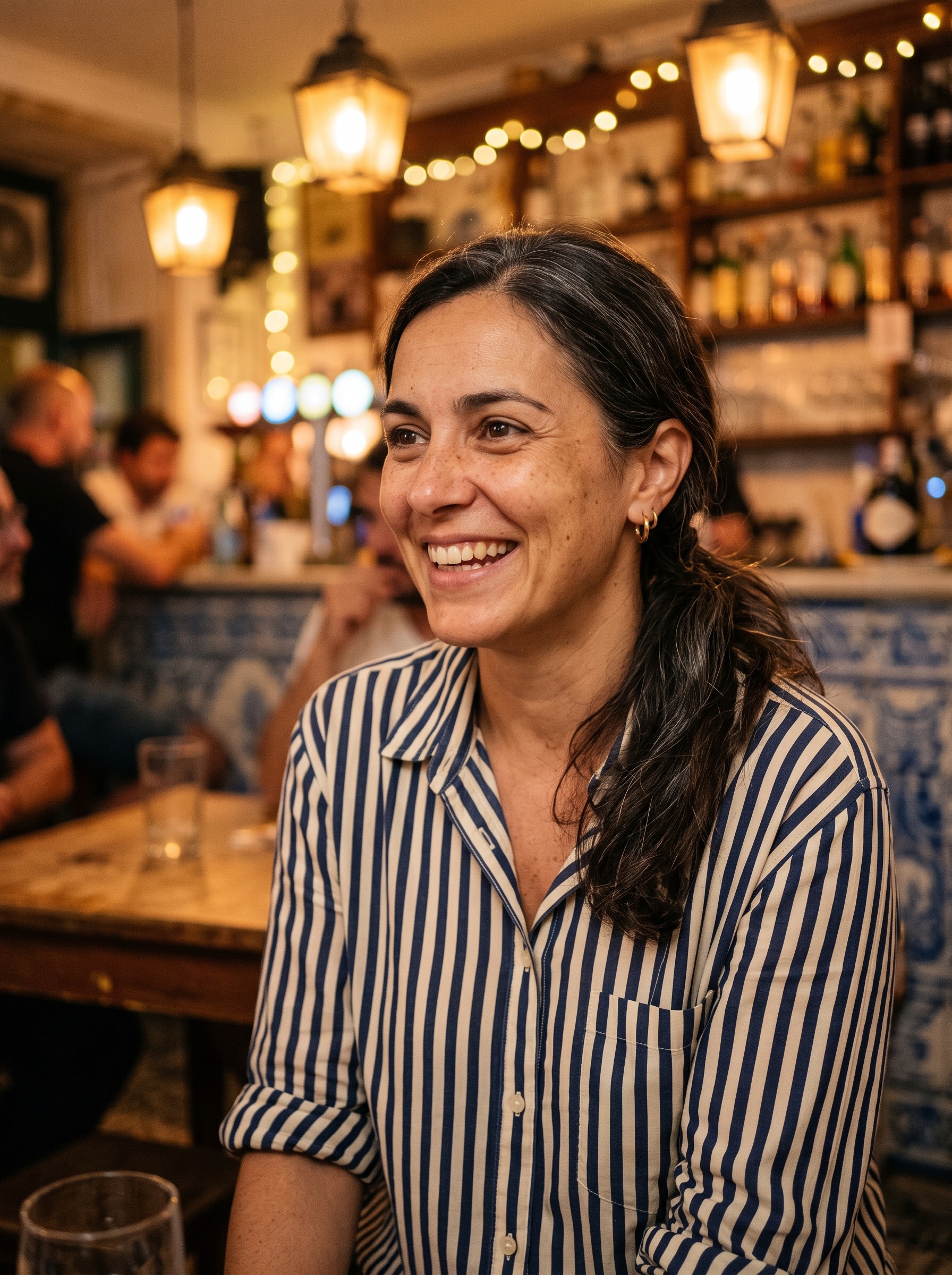

Alfama does not greet you so much as insist on being entered on foot. The first thing you notice is the gradient, then the sound: a tram grinding somewhere above you, a voice from behind a shutter, a spoon against a coffee cup. This is the Lisbon quarter the 1755 earthquake mostly spared, which is why the Moorish street plan survives intact, all becos and staircases and dead ends too narrow for a car. It is the oldest part of the city, wedged between the São Jorge hill and the river, and the map is only a polite suggestion. You come here for atmosphere, not efficiency, and the neighbourhood is happy to make that point repeatedly, preferably uphill.
What Alfama is known for
Alfama is Lisbon at its most legible and its most mythic at once. It is the birthplace of fado, that melancholy, saudade-soaked song the UNESCO people have sensibly left alone except to recognise it as intangible cultural heritage. The quarter still has more fado houses per cobbled metre than anywhere else in the city, which tells you something about the density of feeling here and something else about the density of tourists. But the old bones remain. The streets follow the Moorish plan from before the Christian reconquest of 1147, so they twist, stair-step and vanish in ways a modern grid never would. Crowning the hill is the Castelo de São Jorge, and just below it the Sé de Lisboa, fortress-like and Romanesque and older than most of the city around it. Add the miradouros, the 28 tram, the Feira da Ladra flea market and the domed Panteão Nacional, and you have a quarter that compresses nearly every Lisbon cliché into a few hundred metres of slope.

What makes Alfama more than a museum set is that people still live here, argue here, hang washing here, and shout across balconies as if distance were a minor inconvenience. By day it smells of grilled sardines and drying clothes. By night the register shifts: guitars tuning behind shutters, diners waiting for the room to go quiet, a singer standing and changing the temperature of the place with one note. It is genuinely lived-in rather than staged, though short-term rentals have thinned the local population in the lower lanes. That tension is part of the story now. Alfama is not a postcard that has forgotten its address; it is a neighbourhood trying to remain one.
Where to eat & drink
Alfama eats in two registers: the old tasca and the newer, sharper taberna that knows exactly how hard it is to get a reservation in a place with this much romance. The best of the newer crop is Taberna Sal Grosso, a tiny 27-seat room near Santa Apolónia that works a rotating chalkboard of modern petiscos. There is seared tuna pica-pau, stingray in garlic sauce, pork cheek — dishes that sound modest until you realise how quickly the room fills and how sensible it is to book, then arrive as they open before the popular plates disappear. In a neighbourhood where many places trade on atmosphere alone, Sal Grosso actually cooks.

Deeper in the lanes between the Sé and the castle, O Velho Eurico on Largo de São Cristóvão sits on the Alfama–Mouraria border and has the kind of reputation that makes reservations feel like a minor civic duty. Zé Paulo Rocha’s neo-tasca is famous for bacalhau à brás, and the room has the proper energy of a place that knows exactly what it is doing. If you want a table, turn up before 1pm or prepare to be philosophical. This is not a neighbourhood for spontaneous late lunches unless you enjoy being humbled by a queue.
For a more straightforward, old-school meal, Ó Cartaxeiro at Largo do Chafariz de Dentro 23 faces the Fado Museum and does the sort of honest, always-busy tasca lunch that keeps a quarter like this from becoming a theme park. It opens roughly 8am to 6pm, which is to say: come for breakfast, come for lunch, come because you are hungry and do not expect ceremony. That practical honesty is a kind of luxury here.
If you need a pause rather than a performance, Pois Café on Rua de São João da Praça is the gentlest kind of stop: sofas, secondhand books, and a menu that leans Central European in a way that feels pleasantly unbothered by local fashion. It is the sort of place where one coffee becomes two because the neighbourhood outside is all incline and the room inside is all soft edges.
For drinks, Alfama has a useful refusal to be polished. Outro Lado, hidden down Beco do Arco Escuro, offers a dozen taps, hundreds of bottles and good Neapolitan pizza, which is all the evidence you need that not every good bar needs to announce itself on a corner. Crafty Corner, relocated beside the Sé cathedral, pours Lisbon-brewed craft beer in a stone-walled room and avoids the worst sin of the genre: trying too hard to look casual. And then there is ginjinha, the sour-cherry liqueur poured all over the old town, which is less a drink than a small, sticky ritual. Have one. Then walk uphill and pretend it is exercise.
Going out
Alfama nights are music-led, not clubby, and thank heaven for that. This is fado country, where the evening is built around the moment a room falls silent. At the polished end, Clube de Fado on Rua de São João da Praça 94 is Mário Pacheco’s professional house, with an old Moorish well and centuries-old stone walls giving the room a gravity the set menu around €78 only partly explains. It opens roughly 8pm to 2am and should be booked well ahead, because the city’s appetite for dinner-and-fado is not exactly a secret.

Mesa de Frades on Rua dos Remédios 139 is more peculiar, and therefore more precious: a deconsecrated 18th-century chapel lined with azulejo tile panels, running a fixed dinner menu and then, after midnight, opening up for singers to trade turns in one of the city’s most intimate rooms. This is the sort of place where the architecture does half the work and the singers do the rest.
Parreirinha de Alfama keeps the traditional flame near the river and has been doing so since the 1950s, long tied to veteran singer Argentina Santos. There is comfort in that continuity. It matters in a neighbourhood where so much else has been repackaged.
For raw amateur fado vadio, where anyone in the room might stand and sing, the low-key options cluster on Rua dos Remédios and Rua de São Miguel. A Baiuca, at Rua de São Miguel 20, is tiny, family-run and only has a handful of tables, which is exactly why you reserve. Tasca do Chico and Tasca do Jaime keep the casual, unvarnished tradition alive. The etiquette is simple and non-negotiable: the moment a singer begins, you stop talking. Not because you have been scolded, but because anything else would be barbaric.
Things to do / what to see
Start high and let gravity do the work. The Castelo de São Jorge sits at the summit, with the city’s best all-round panorama, peacocks strutting about as if they own the lease, and archaeological layers underfoot that remind you this hill has been inhabited and defended for a very long time. Admission is about €15 for adults, free for under-12s, and the view is worth the climb even if your calves think otherwise.

Just below, the Sé de Lisboa has stood since 1147, quake-battered and rebuilt, at Alfama’s western gate. It is fortress-like rather than delicate, which suits the neighbourhood. From there the two great terraces are only minutes apart. Miradouro de Santa Luzia is the one with bougainvillea and blue-and-white tile panels, a place where people linger because the view is wide and the bench is there and the light does the rest. Around the corner, Miradouro das Portas do Sol is essentially one enormous balcony over the rooftops toward the river. It is postcard Lisbon, yes, but with enough lived-in texture around the edges to keep it from turning into a screensaver.

Culture-wise, the Museu do Fado at Largo do Chafariz de Dentro is the best primer before a show, which is to say: go before you go out. It makes the songs less mysterious and more human. The Museu de Artes Decorativas sits in a palace on Largo das Portas do Sol, while the Museu do Aljube on Rua Augusta Rosa, once a political prison, tells the sober story of the Salazar dictatorship and resistance. Alfama is not only about nostalgia; it also keeps the harder histories close.
Uphill and east, the white-domed Panteão Nacional and the Igreja de São Vicente de Fora anchor the top of the quarter. The latter’s Braganza royal tombs and rooftop view are a strong argument for climbing even when you think you are done with climbing. And on Tuesdays and Saturdays, the Feira da Ladra flea market spreads across Campo de Santa Clara beside the Panteão, turning the area into a slow-moving bazaar of old vinyl, cameras, azulejo tiles, linens and general junk-treasure. The whole point is to wander, not to optimise.
{{ATTRACTIONS}}
Shopping & markets
Alfama is not a shopping quarter in the retail sense, and that is one of the reasons it still feels like itself. There is no high street, no chain-store march, no sense that the neighbourhood was designed to be consumed in a neat sequence. The main event is the Feira da Ladra, Lisbon’s oldest flea market, held every Tuesday and Saturday morning until mid-afternoon on Campo de Santa Clara. Come early, bring patience and a bit of bargaining nerve, and you may leave with a vintage tile, a record, a brass object whose purpose is unclear, or a pair of Portuguese linens that will make you feel suspiciously smug on the flight home.
Between market days, shopping is incidental: small ceramic and cork studios, conservas shops aimed at visitors, the odd bottle of ginjinha or Portuguese wine. That is enough. Alfama is better at giving you one good object and a story than at offering a retail itinerary. If you want department stores and proper browsing, Baixa and Chiado are downhill and waiting. Here, the real souvenir is usually a thing you didn’t plan to buy because you were too busy looking up a stairway or listening to a singer warm up behind a door.
Where to stay in Alfama
Staying in Alfama is a trade of convenience for character, and it is worth being honest about the climb. The quarter is mostly boutique guesthouses and apartments rather than big hotels, because the streets cannot take coach traffic and the buildings are protected and old. If you want the calmest, most practical pocket, look around Santa Apolónia and the lower lanes near the river. You still get the atmosphere, but the walk to the metro and the drag of your luggage is less punishing. Higher up, toward the castle, Santa Luzia and Graça, you get the best views and the deepest quiet-plus-fado mood — at the cost of staircase approaches every time you come home.
Light sleepers should ask specifically about the number 28 tram line and proximity to fado houses, because both carry late through thin old walls. Everyone should ask whether there is a lift, because many buildings have none. Prices are broadly mid-range, with a spread from simple guesthouses to a handful of design hotels in restored townhouses. The live hotels below are the ones currently tracked inside Alfama.
{{HOTELS}}
Getting around
Alfama is a walking neighbourhood by necessity: most of it is car-free by geometry, all stairs, ramps and cobbles. Two metro stations sit at the bottom of the hill on the waterfront, Santa Apolónia and Terreiro do Paço, both on the blue line. They are handy for arriving or leaving, but they leave you with a steep uphill haul into the core. The famous number 28 tram, and the parallel 12, grind through the quarter and are a sight in themselves, but they are slow, crowded and a notorious pickpocket spot. Board early or late, keep your bag in front of you and treat the ride as sightseeing rather than transport.
The local trick is to get high first, by tram or by the Santa Luzia or castle approaches, then wander downhill on foot. Central Lisbon — Baixa and the river squares — is about a 10 to 15 minute walk or one metro stop away. Humberto Delgado Airport is roughly 15 to 25 minutes by taxi or Uber, or a metro ride with a change. Comfortable, grippy shoes matter more here than anywhere else in the city, because the calçada portuguesa pavement turns into a skating rink in drizzle and the hills do not negotiate.
Alfama rewards people who stop trying to master it. It is a neighbourhood for wandering, for arriving a little early, for letting dinner stretch, for hearing a singer before you understand the words. The map is useless, which is another way of saying the place still has a pulse. Follow the tram, follow the laundry, follow the sound of a guitar warming up behind a shutter, and you will end up where Alfama has always wanted you: slightly lost, and exactly where you should be.
FAQs
Is Alfama a good area to stay in Lisbon?
Yes, if you value atmosphere over convenience. You wake up in Lisbon’s most historic, fado-filled quarter, close to the castle and the best viewpoints. The trade-offs are real: steep hills and stairs, few lifts, thin old walls, and tram or fado noise. Pack light and, if you want an easier approach, look near Santa Apolónia.
Where can I hear authentic fado in Alfama?
For professional dinner-and-fado, Clube de Fado near the Sé and Mesa de Frades on Rua dos Remédios are standouts, with Parreirinha de Alfama for old-school tradition. For raw amateur fado vadio, try A Baiuca on Rua de São Miguel, Tasca do Chico or Tasca do Jaime. Stay silent while someone is singing.
Is Alfama safe?
Broadly yes. It is one of Lisbon’s busiest tourist areas and violent crime is rare, but pickpockets work the crowded 28 tram, the miradouros and the fado-house queues. The bigger everyday hazard is physical: the cobbled hills get slippery in rain.
What is the best way to get around Alfama?
On foot, with patience. Most of Alfama is car-free and built on stairs, ramps and cobbles. Use Santa Apolónia or Terreiro do Paço to arrive, then climb or start high and walk downhill. The 28 and 12 trams are scenic but slow and crowded.