Kuala Lumpur guide
Kampung Baru, Kuala Lumpur: timber houses, satay smoke and the city’s old Malay soul
A short walk from KLCC, Kampung Baru still moves to the rhythm of a Malay village — one where nasi lemak, mosque calls and wooden houses hold their ground beneath the towers.
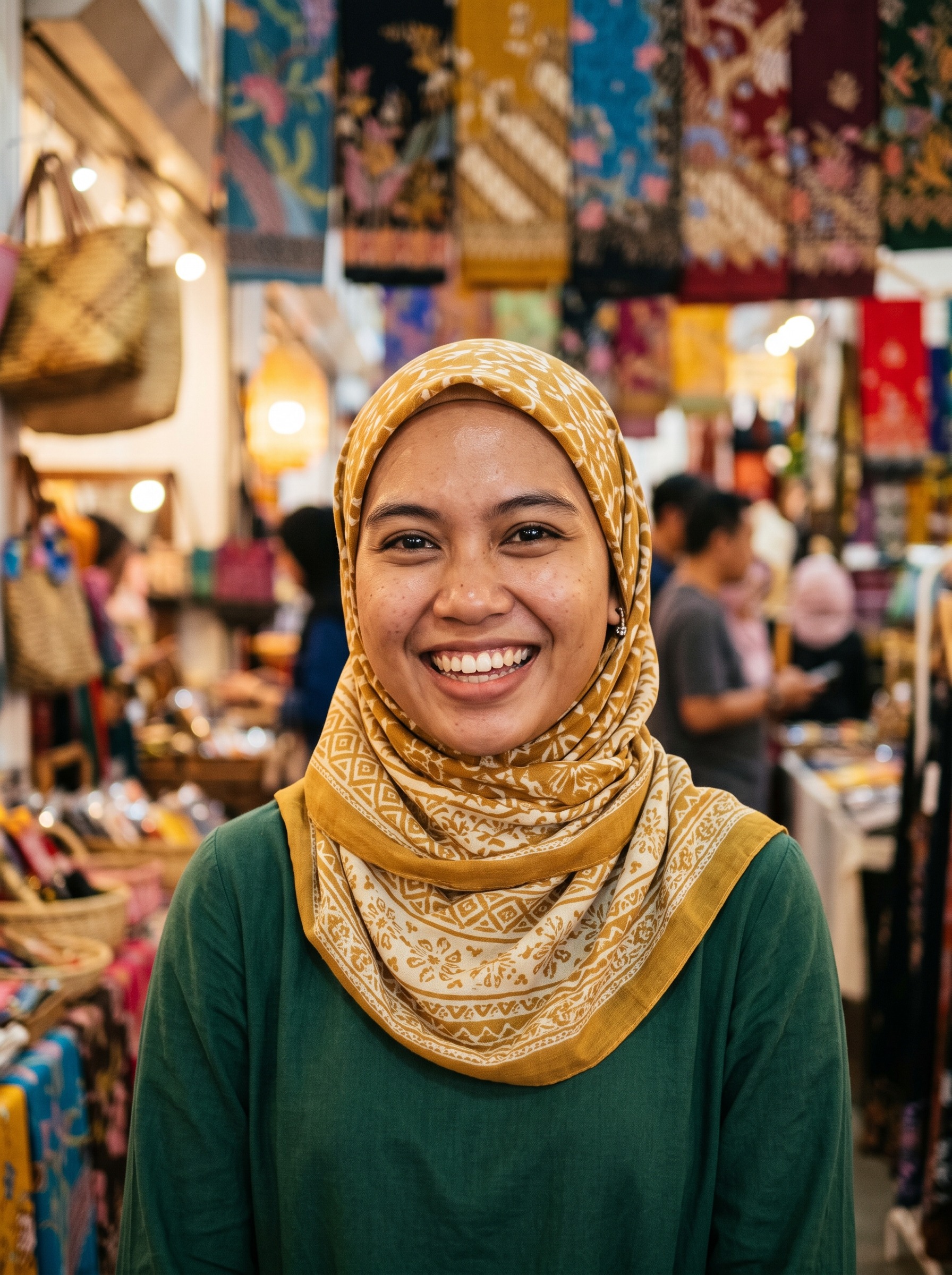

Cross the Saloma Link from KLCC at dusk and the city changes register almost immediately: the towers stay in view, but the mood drops a gear, from polished glass to grilled satay, from traffic hum to the softer sounds of a neighbourhood coming alive. Kampung Baru is not a themed old quarter or a nostalgia project. It is a living Malay settlement, chartered in 1899 and still stubbornly itself, with timber houses, prayer halls and food stalls sitting on land that has become some of the most valuable in central Kuala Lumpur. That tension — between memory and money, between village scale and metropolitan pressure — is what makes the place feel so charged when you walk it properly.
The first thing to understand is that Kampung Baru runs on its own clock. Mornings are quiet and domestic, with cats on verandas and uncles over kopi, and then the neighbourhood gathers heat as the day cools. By late afternoon the grills are smoking, the dessert carts are rolling out, and the streets around Jalan Raja Muda Musa and Jalan Raja Alang start to feel like a long, open-air dinner table. There are no bars here, no club scene, no performative buzz. This is an observant Malay-Muslim area, and the evening pleasures are the honest ones: teh tarik, fresh coconut, sweet kuih, a plate of nasi lemak eaten standing up, maybe another plate after that if you’re sensible enough to stay.
What Kampung Baru is known for
Kampung Baru — literally “new village” — was granted to the Malay community in 1899 by the Sultan of Selangor and formally recognised as the Malay Agricultural Settlement in 1950. That sounds like civic history, but on the ground it reads as something more intimate: a roughly four-square-kilometre pocket of old KL that never fully disappeared into the city around it. The streets are lined with traditional wooden houses, prayer halls and family-run food businesses, and then, just beyond the trees and roofs, the Petronas Twin Towers rise like a reminder of what the rest of the capital became.

That visual contrast is the whole show here. One minute you’re looking at carved fascia boards, tin roofs and homes on stilts; the next you catch the towers through a gap in the lane and remember you’re only a short walk from KLCC. It can feel almost unreal, but that’s the point. Kampung Baru is one of the few places in central Kuala Lumpur where you can still read the old town in the buildings, and not just in a museumified way. People still live here. They still pray here. They still cook here. The place is under constant redevelopment pressure, but it remains legible as a neighbourhood rather than a backdrop.
Food is the other great reason to come, and honestly, it may be the first. Kampung Baru is widely held to be the address for old-school Malay cooking in KL: coconut-rich nasi lemak, Padang satay, kampung-style curries, the kind of dishes that taste like they’ve been made the same way for decades because, in many cases, they have. Once a year, during Ramadan, the whole district becomes even more of a destination, thanks to the bazaar on Jalan Raja Alang and the free bubur lambuk handed out at Masjid Jamek. If you want the neighbourhood at its most communal, that is the season.
Where to eat & drink
The eating in Kampung Baru is concentrated, blessedly, on just a couple of streets. Start on Jalan Raja Muda Musa, where the institution is Nasi Lemak Wanjo at 8 Jalan Raja Muda Musa, a nasi lemak shop that has been trading here since the 1960s. The operation is brisk and almost cafeteria-like, because it has to be: the crowds know exactly what they’re here for. Order the nasi lemak paru, with its crunchy spiced beef lung, or the sotong, squid slicked in sambal, then build out from the counter with whatever sides catch your eye. It’s roughly RM11–13 a plate, open from 6am to midnight, and one of those places that makes the case for arriving hungry and unhurried.

A few doors along, Sate Padang Pak Saf gives the street a different scent entirely. The skewers here are Padang-style beef and chicken satay, grilled in the evening and finished in a thick, savoury peanut-lime sauce that lands quite differently from the sweeter Kajang version most visitors know. It’s the kind of stall that makes you linger a little too long at the pavement edge, watching the smoke rise and the plates move out.
Turn one corner to Jalan Raja Alang and the mood shifts again. Wan Suraya is the place locals point to for big, crowded plates of Kelantanese-Thai food — nasi kerabu with blue rice, ayam percik, som tam, nasi kukus with crisp fried chicken. It’s busy well into the small hours, which tells you everything you need to know about its usefulness to the neighbourhood. This is not a polished dining room experience; it’s a hungry, happy one, with tables full and the kitchen moving fast.

If you want a proper sit-down grilled-fish dinner, locals will send you to Restoran Gerak 23 on Jalan Raja Abdullah for ikan bakar and ayam goreng. It’s the sort of place that anchors a neighbourhood’s after-dark routine: families, friends, plates of fish, fried chicken arriving hot, and drinks that stay firmly in the non-alcoholic lane. In Kampung Baru, the drink list is simple and right: teh tarik, sirap and fresh coconut. That’s the rhythm here. No bar cart, no cocktails, no fuss.

Things to do / what to see
Kampung Baru is best treated as a slow wander with your camera out and your appetite awake. Begin at the Sultan Sulaiman Club, or Kelab Sultan Sulaiman, on Jalan Dewan Sultan Sulaiman. Founded in 1909 as the first club for the Malay community, it is one of the birthplaces of Malay political nationalism, having hosted the 1946 congress that led to the formation of UMNO. The timber building you see today is a 2007 replica of the 1932 clubhouse, reconstructed from old photographs. That detail matters, because it tells you this is not a frozen relic; it is a place where memory has been carefully rebuilt, not casually preserved.

A few streets away, Masjid Jamek Kampung Baru is the neighbourhood’s principal mosque, with Malay-Mughal detailing and a tiled gateway that gives it a stately, welcoming presence. Visitors are welcome outside prayer times if respectfully dressed, and that matters here: cover shoulders and knees, keep your voice down, and move with the kind of courtesy that lets you blend into the grain of the place. During Ramadan, the mosque becomes the source of the famous free bubur lambuk, cooked in enormous pots by volunteers from before dawn and handed out by the thousand-packet after Asar prayers. It’s one of those community rituals that makes a neighbourhood feel like a neighbourhood.
From there, the real pleasure is simply to walk. Take the lanes between the houses and look up often: carved fascia boards, shuttered verandas, tin roofs, timber walls raised on stilts, all of it sitting under a skyline that seems almost rude in comparison. The contrast can be funny, moving, slightly surreal, sometimes all three at once. It is one thing to read about Kampung Baru’s resistance to redevelopment; it is another to stand in a lane where a century-old house and a global icon of modern Malaysia occupy the same line of sight.
Then finish on the Saloma Link, the 69-metre footbridge shaped after a sireh junjung Malay wedding arrangement. It is best crossed after 7pm, when the LED lattice cycles through colour and frames the Petronas Towers head-on. The bridge cut the old 30-minute river-and-highway detour to KLCC down to a five-minute stroll, which is practical enough; but the real pleasure is how theatrical it feels at night, like a piece of public infrastructure that understands the value of a good reveal.
{{ATTRACTIONS}}
Shopping & markets
This is not a shopping neighbourhood in the mall sense, and frankly that’s part of the charm. The Golden Triangle and Pavilion KL are for that. Kampung Baru’s retail life is more modest, more local, and much better suited to grazing than browsing. The big event is the Ramadan bazaar along Jalan Raja Alang, which turns the area into one of KL’s oldest and most famous fasting-month feasts. It runs roughly 3pm to 8pm through Ramadan, and it gets packed — shoulder to shoulder, shoulder to elbow, the full lovely chaos of a city hungry for breaking fast.
Stalls sell everything from ayam percik and murtabak to the kind of viral novelties that always seem to find their way into a bazaar queue. But the everyday version of shopping here is quieter and more useful: warungs, dessert carts and small provision shops along Jalan Raja Muda Musa and Jalan Raja Alang where you can buy kuih, fresh satay to go, or a bag of local coconut-rice desserts. Come with cash. Most stalls don’t take cards, and there’s something pleasingly old-school about that too. You are not here to tap and leave; you are here to buy, wait, eat, and maybe go back for one more packet.
Where to stay in Kampung Baru
Honestly, almost nobody stays inside Kampung Baru itself. It’s a residential Malay settlement with very few tourist hotels, and it is far better visited than slept in. The smart move is to base yourself across the river in KLCC or a short ride away in Bukit Bintang, both of which put you five to fifteen minutes from Kampung Baru’s food streets while giving you the hotel choice, nightlife and connections the village doesn’t have. If you want to be closest, look at the KLCC side around Jalan P. Ramlee and the Saloma Link, from where you can simply walk over the bridge for dinner.
{{HOTELS}}
Getting around
Kampung Baru is compact and flat, which makes it a walking neighbourhood once you’re in it. The trick is timing: the tropical heat is real, and the odd traffic-heavy road can make a short distance feel longer than it is, so late afternoon onward is the nicest window. The Kampung Baru LRT station on the Kelana Jaya line sits on the southern edge and is the easiest arrival. From KLCC it is one short hop, or a 5–10 minute walk across the Saloma Link footbridge. Chow Kit monorail station covers the western side, and Raja Uda MRT the north. Grab is cheap and everywhere if the heat wins.
KLCC and the Petronas Towers are essentially next door across the river, which is why the neighbourhood works so well as an easy evening detour. Bukit Bintang is about 10–15 minutes by car or a couple of transit stops, and KLIA is roughly 45–60 minutes via KL Sentral and the express rail link. But the best way to understand Kampung Baru is still on foot, with no hurry, after the light has softened and the grills have started up.
A final practical note: dress modestly, especially near the mosque, and keep in mind that this is a conservative Malay-Muslim area. That is not a warning so much as a reminder to meet the place on its own terms. Do that, and Kampung Baru gives you something rare in central Kuala Lumpur — not a curated old district, but a working village with a skyline for a neighbour. It is plain, proud and deeply photogenic, and it tastes very good too.
FAQs
Is Kampung Baru worth visiting in Kuala Lumpur?
Yes — especially if you care about food and heritage. It’s the last real Malay village in central KL, with wooden houses, a historic clubhouse and mosque, and some of the city’s best nasi lemak and satay, all a short walk from the Petronas Towers over the Saloma Link. Late afternoon into evening is the sweet spot.
Can you drink alcohol in Kampung Baru?
No. Kampung Baru is an observant Malay-Muslim neighbourhood, so there are no bars or clubs and the stalls don’t serve alcohol. Expect teh tarik, sirap and fresh coconut instead. For nightlife or a nightcap, head to KLCC or Changkat Bukit Bintang.
When is the Kampung Baru Ramadan bazaar, and is it worth it?
It runs daily through Ramadan along Jalan Raja Alang, roughly 3pm to 8pm. It’s one of KL’s oldest and most famous bazaars, and absolutely worth it for the food — just expect big crowds and bring cash.
What should I wear in Kampung Baru?
Keep it modest, especially near Masjid Jamek Kampung Baru: cover shoulders and knees and dress respectfully. The neighbourhood is family-oriented and conservative, so a little care goes a long way.