Izmir guide
Konak, Izmir: clock tower, bazaar and ferry town
From the Saat Kulesi to Kemeraltı’s spice lanes and the Konak Pier ferry deck, Konak is Izmir at its busiest, oldest and most useful.
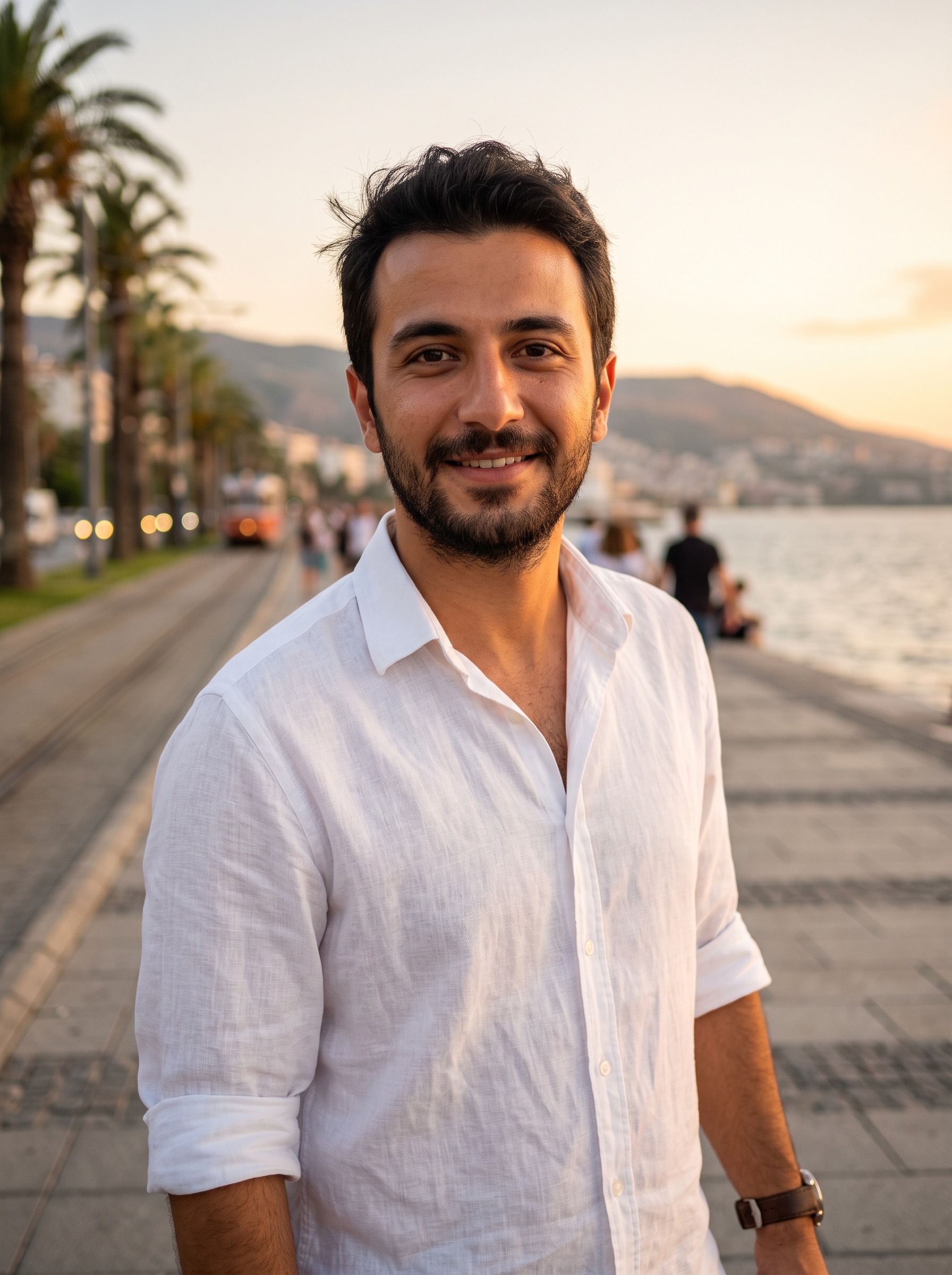

Konak does not introduce itself politely. It arrives with the clang of ferry doors, the smell of cumin on warm boyoz, and the clock tower standing there on Konak Square as if the whole city had agreed to keep time by it. This is Izmir’s working centre, not its polished front room. The square is broad, palm-fringed and full of pigeons; one block inland, the streets tighten, the shouting starts, and Kemeraltı takes over with its numbered lanes, spice sacks, jewellers, butchers and tea glasses clinking in stone courtyards. If you want the city’s old pulse, this is where it still beats hardest.
What Konak is known for
Konak is the symbolic and geographic centre of Izmir, and you feel that before you can properly name it. The İzmir Clock Tower (Saat Kulesi), a 25-metre Ottoman-Levantine confection designed by Raymond Charles Péré and inaugurated in 1901, stands on Konak Square like the city’s official exclamation mark. Its clock mechanism was a gift from Kaiser Wilhelm II, which is exactly the sort of detail Konak likes: imperial, slightly improbable, and still somehow everyday. Beside it sits the tiny Yalı Mosque (Konak Camii), octagonal and tile-clad, a neat little counterpoint to all the market noise around it.

From there, the district fans out in layers. Inland is Kemeraltı, one of Türkiye’s largest bazaars, trading here in some form since antiquity and later arched over in Ottoman times. Up the slope sits the Agora of Smyrna, where the rebuilt Corinthian colonnade, Faustina Gate and vaulted basement galleries keep the Roman city’s civic centre visible in pieces. Higher still, Kadifekale crowns Mount Pagos with the kind of free view that makes you forgive the climb. And down on the water, Konak Pier — the former customs house built to a Gustave Eiffel design in the late 1800s — gives the district a smart, air-conditioned edge, useful when the bazaar heat starts to feel like a dare.
What Konak is, really, is a collision of functions that have never quite stopped functioning. Ferries leave. Shoppers bargain. Office workers cut across the square. Cruise passengers drift through on their way to Ephesus. Locals do errands. Nobody is here for decorative purposes, which is part of the charm. The district is loud, dense and hard-surfaced by day, then it empties out sharply once the shops shut. Konak does not pretend to be a nightlife neighbourhood. It pretends to be useful, and is.
Where to eat & drink
Konak eats like a district that has work to do. Lunch matters here. So does speed. So does knowing which tray to point at before the good stuff disappears. The local religion is the esnaf lokantası, the tradesmen’s canteen where the day’s dishes sit in metal trays and you pay for what you take. The benchmark is Kısmet Lokantası (Urla'lı Hasan Usta), tucked inside the stone courtyard of Küçük Demir Han on 913. Sokak. It has been serving seasonal, olive-oil-based Aegean greens, stuffed artichokes and pot dishes since the 1960s, and it is best at lunch, when the trays are still generous and the room has that focused, mid-service hum of people eating because they must, and because they know better.

If Konak has a dish that tastes like a local signature, it is probably the Manisa kebab at Doyuran Manisa Kebap on 866. Sokak. The skewers are hand-shaped, the beef is grilled over butter-soaked pide, and the whole thing lands in that sweet spot between humble and essential. No one comes here to be impressed. They come because this is what the market end of town eats when it wants something hot, fast and right.
Then there are the street-food rituals that make Konak feel like a lesson you can eat. A kumru from Kumrucu Ahmet on 863. Sokak is the city’s sesame-crusted answer to the sandwich question, stacked with sucuk, cheese and tomato. It is not subtle, and that is the point. The better move, if you are willing to go a little further into local territory, is söğüş at Meşhur Hisarönü Söğüşçüsü in the Hisarönü corner: cumin-dusted head meat wrapped in flatbread, the sort of thing that sounds like a dare until you take the first bite and realise the city has been right all along.

Start the morning the Izmir way with warm, flaky boyoz and a boiled egg from the bakery carts, then let the day arrange itself around lunch, coffee and whatever the bazaar throws at you. Konak is not a place for elaborate reservations or polished tasting menus. It is a place for eating what is moving, what is hot, and what the people around you are clearly ordering again.
Going out
Konak’s evening life is not nightlife in the usual sense. It is more like the bazaar exhaling. The shops begin to close, the lanes thin out, and the district turns from a working engine into a place for lingering. The best example is Kızlarağası Han, the beautifully restored 1744 caravanserai off the market’s core, where tea houses and coffee stalls fill the arched galleries and the courtyard stays busy long after the shopping has stopped. Order a Turkish coffee there in the evening and watch the city settle around you.

There are historic tea gardens and çay evi scattered through Kemeraltı too, and they keep the district from feeling entirely transactional after dark. Around the Hisar Mosque and the clock tower, people still drift through until the light goes. But let’s be blunt: if you want cocktails, live music or late seafood-and-rakı meyhanes, Konak is not your final stop. That sort of night belongs to Alsancak and the Kordon, one tram stop north or a 15-to-20-minute walk along the water. Konak’s job is to feed you, show you a courtyard, and get you on a ferry before the sun drops too low.
The exception worth timing is the evening ferry from Konak Pier. Board an İzdeniz boat across the bay at golden hour, beer in hand, and the crossing to Karşıyaka becomes the cheapest sunset show in the city. No velvet rope, no soundtrack, no performance. Just water turning the colour of old brass while the city slides past in profile.
Things to do and what to see
Start on Konak Square at the clock tower, because that is where the district’s logic begins. From there, drop into Kemeraltı with no fixed route. The bazaar is numbered rather than named, which is either a navigational system or a practical joke, depending on how much sleep you had. Follow the crowds past spice merchants, coppersmiths and jewellers. Let the lanes bend you around. Kemeraltı rewards wandering and getting lost, and you will get lost. That is the arrangement.

Slip into Kızlarağası Han for the courtyard, then head for the Hisar Mosque (Hisar Camii), the city centre’s largest and oldest mosque, built in the 1590s and lined inside with İznik tiles and rare triple mihrabs. It sits at the heart of the bazaar like a reminder that Konak’s history is not something behind glass; it is woven into the route between one errand and the next.
Work east to Havra Sokağı (Synagogue Street), a raucous fish-and-produce lane that fronts Izmir’s dense cluster of historic synagogues. The street has the energy of a market that knows exactly what it is doing and no intention of softening the edges for visitors. Butchers gut fish beside centuries-old synagogues, and the whole thing feels astonishingly intact for a Sephardic Juderia anywhere in the world.
Then climb the slope to the Agora of Smyrna, where roughly €6 gets you the reconstructed Roman civic centre: the colonnade, Faustina Gate and vaulted cisterns. It is not a grand ruin in the Hollywood sense. It is better than that. It is a place where the city’s old bones are legible enough to make the modern noise feel newly placed. Continue up — by bus 33 or a taxi from Konak — to Kadifekale, the “Velvet Castle,” for a free, sweeping view over the gulf. The climb is worth it for the perspective alone, and because every city should have at least one place where the map suddenly makes sense.
Two blocks of atmosphere lie just south in Karataş at the Asansör, the 1907 hillside elevator with a free ride and a bay-view terrace, about a 20-minute walk from the square. It is a neat reminder that Izmir has always been willing to solve geography with engineering. And for the classic Izmir experience, board an İzdeniz ferry at Konak Pier and cross the bay at sunset. That crossing is not an add-on to the neighbourhood. It is part of the neighbourhood’s daily grammar.
{{ATTRACTIONS}}
Shopping & markets
Shopping in Konak is not a curated pastime. It is the bazaar doing what it has always done. Kemeraltı is the shopping: thousands of stalls, working traders, and lanes clustered by trade rather than by theme. Gold and silver jewellers gather in one stretch, spice and dried-fruit merchants in another, with copperware, carpets, textiles, leather, ceramics and haberdashery filling the gaps. The whole thing feels less like retail and more like a city’s practical memory made visible.
Bargaining is expected on jewellery, rugs and souvenirs, less so on food. That matters. Don’t haggle over lunch like a fool. Do haggle over a rug if you must. Come mid-morning when everything is open and the crowds are still manageable; carry small cash, because many stalls don’t take cards; and remember that most of the bazaar closes on Sundays. The reliable way to navigate is by landmark, not by map: the clock tower at the water end, the Hisar Mosque at the centre, the Han for coffee.
For good buys, think Aegean olive oil and dried figs, copper coffee pots, İznik-style ceramics, leather and hand-worked silver. For air-conditioned, fixed-price shopping with international brands and a bay view, head to Konak Pier on the seafront, the restored Eiffel-designed customs hall turned mall. It is the clean, cool counterpoint to the bazaar’s dust and noise, and sometimes that contrast is exactly the point.
Where to stay in Konak
Konak makes sense as a base because it puts you steps from the bazaar, the ferry pier and the metro. That is the whole sales pitch, and it is a good one. You wake up inside the old city and can walk to almost everything. The trade-off is obvious: this is a central, atmospheric district, but it is also busy and hard-edged, with noise by day and a noticeable quiet once the shops shut. If you want the bars and the Kordon on your doorstep, base one tram stop north in Alsancak and visit Konak in daylight. If you want to sleep near the city’s oldest layers, stay here.
Good-value hotels and small boutiques sit around the square and the Kemeraltı fringe, while the pocket near Konak Pier and the seafront is the smartest and easiest for first-timers. The lanes deeper in the bazaar are cheaper and more characterful, but louder. Prices run mid-range and below by Turkish city standards, which is one reason Konak remains practical rather than precious.
{{HOTELS}}
Getting around
Konak is a genuine transport hub, which is part of why it works so well as a base. Konak metro station links the square to Alsancak, the bus terminals and the İZBAN suburban rail. The Konak tram runs along the shoreline connecting Konak Square, Alsancak and the Kordon. İzdeniz ferries leave Konak Pier for Karşıyaka and Bostanlı across the bay. One fare on metro, tram, ferry or bus is cheap — the equivalent of well under a euro in 2025 — and an İzmirimkart works on all of them.
Most of Konak is flat and best explored on foot. The bazaar is walk-only anyway, which is either charming or inconvenient depending on how much you enjoy being swept along by a crowd. Alsancak and the Kordon are a 15–20 minute walk or one tram stop north. For Kadifekale, take bus 33 or a taxi up the hill. Adnan Menderes Airport is about 30–40 minutes away, fastest by İZBAN suburban train from the interchange or by taxi.
Konak is busy and generally safe by day, with the usual big-city care around pickpockets in the crowded bazaar and near the clock tower. After the shops close, the lanes empty and dim, so take a taxi or Uber through the quieter streets late at night. It is not a place to loiter for the sake of it. It is a place to move through, eat well in, and let the city show you its working face.
FAQs
Is Konak a good area to stay in Izmir?
Yes, if you want history, the bazaar and the ferry on your doorstep and don’t mind noise. Konak is the atmospheric old centre, walkable to Kemeraltı, the metro and the pier, with good-value hotels. If you want bars and the Kordon, Alsancak is the easier base.
Is Konak safe for tourists?
Broadly yes by day. Konak Square and Kemeraltı are busy with locals and visitors, but the main issue is pickpocketing in crowded areas around the clock tower and bazaar. After the shops close, the lanes get quieter and dimmer, so use normal city caution and take a taxi or Uber late.
What should I eat in Konak’s Kemeraltı bazaar?
Start with boyoz and a boiled egg, then try a kumru at Kumrucu Ahmet or söğüş at Meşhur Hisarönü Söğüşçüsü. For lunch, Kısmet Lokantası is the classic esnaf lokantası, and Doyuran Manisa Kebap does the regional kebab properly.
What are the main sights in Konak?
The key stops are İzmir Clock Tower, Kemeraltı Bazaar, Hisar Mosque, Havra Sokağı, the Agora of Smyrna, Kadifekale and Konak Pier. If you have time, add the Kızlarağası Han courtyard and the Asansör in Karataş.