Izmir guide
Karataş, İzmir: the cliffside quarter where the elevator still earns the view
A steep old Jewish neighbourhood of stone stairs, Sephardic memory and a free 1907 elevator that still buys the best panorama in İzmir.
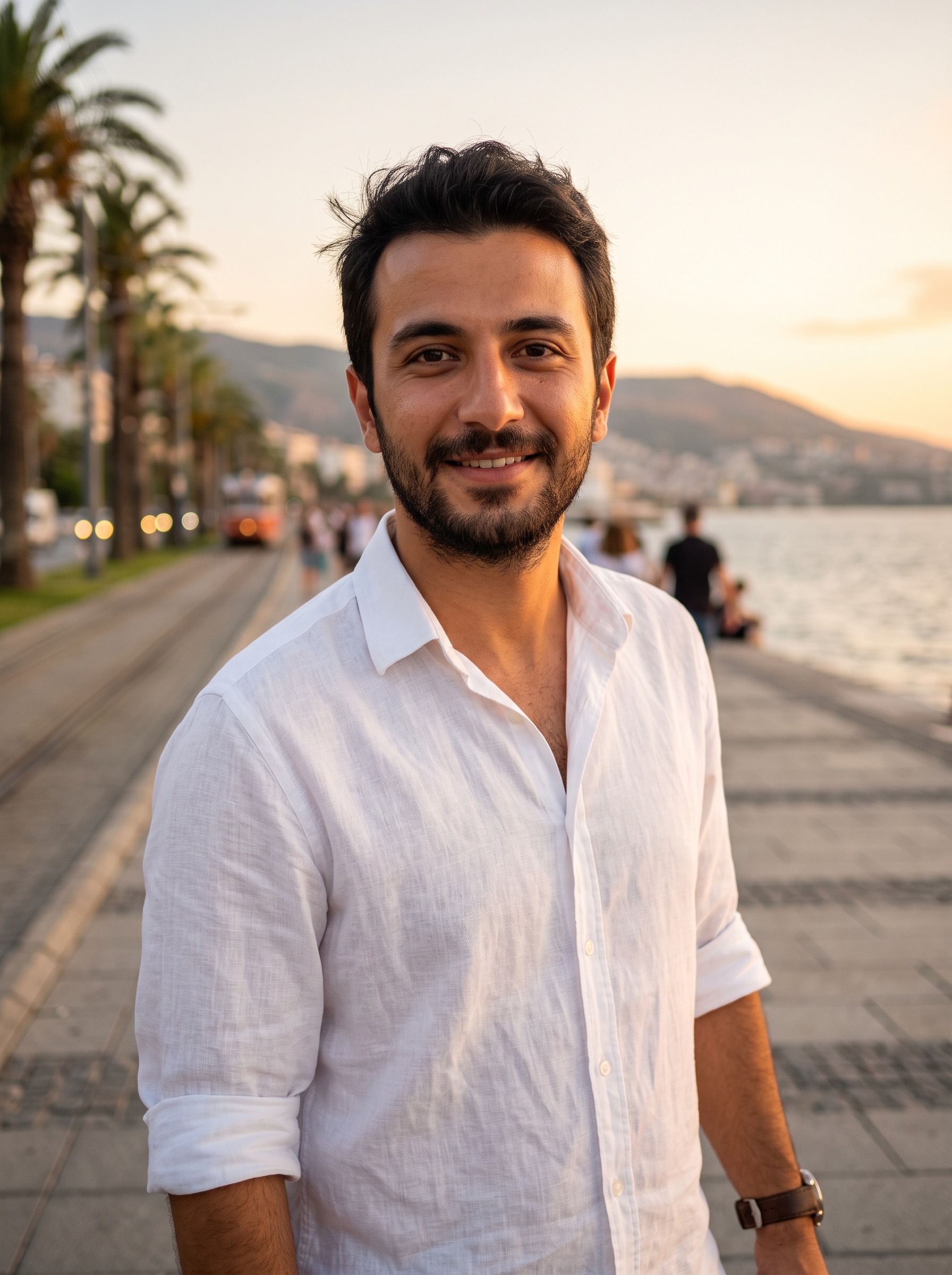

At the bottom of Karataş, the city is all tram bells, palm trees and the flat, salt-bright edge of Mithatpaşa Caddesi; then the ground simply gives up and becomes a cliff. A wealthy banker named Nesim Levi Bayraklıoğlu got tired of watching neighbours haul groceries up 155 stone stairs, so in 1907 he had a water-powered elevator bored through the rock. The Asansör still runs, still costs nothing to ride, and still delivers the kind of view that makes people go quiet for a second, which is rare in İzmir and worth noting.
What Karataş is known for
Karataş is İzmir with its shirt sleeves rolled up: an old Sephardic Jewish quarter that never quite turned itself into a museum. The city’s better-off Jewish families moved here after the land was zoned for building in 1865, and the district still carries that history in the grain of the streets. It is not polished for visitors. It is lived in. Laundry hangs between shuttered stone houses, cats sleep in the shade of doorways, and on the lower streets an old man sells gevrek from a cart as if the morning had nowhere else to be.
The district’s signature is the Asansör, the 1907 street elevator that lifts you 58 metres straight up the cliff face from the waterfront on Mithatpaşa Caddesi to the terrace above. Before it existed, residents climbed 155 stone stairs. That is the sort of local inconvenience that produces civic genius. Nesim Levi Bayraklıoğlu, a Jewish banker and trader, paid for the thing as a public service, and İzmir has kept it as a landmark ever since. The city restored it, the ride is still free, and the terrace still opens out over the Gulf of İzmir with the kind of clean, unarguable horizon that makes rooftop bars look a bit embarrassed.

What gives Karataş its character, though, is not only the lift. It is the way the neighbourhood folds its Jewish heritage into ordinary life. This is the historic heart of İzmir’s Sephardic community, and most of the city’s remaining Jewish population still lives here. You feel that in the synagogue, in the functioning Jewish hospital that has served the community for generations, and in the names on the map. One of those names is Dario Moreno Sokak, the little cobbled lane below the elevator, named for the İzmir-born singer who left for France and made a career with songs like Si Tu Vas à Rio and Brigitte Bardot. It is a street that knows how to lean into a tune.
The district’s mood shifts with the slope. Down by the sea, the Konak tram clatters past on the Mustafa Kemal coastal boulevard. Up above, the streets climb in tight, sun-bleached switchbacks. It is quiet in a way central İzmir is not. The muezzin comes through, and on Friday the synagogue folds into the ordinary noise of a working neighbourhood. Come late afternoon, when the light goes gold over the bay and the terrace crowd gathers at the top of the Asansör, Karataş shows you the exact mixture it is famous for: heritage worn lightly, a spectacular view, and no pretension about either.
Where to eat & drink
Karataş does not try to out-eat Alsancak. It knows its lane, and its lane is the simple stuff done well, with the sea in sight. The obvious meal is the one at the top of the Asansör, where the municipality-run terrace splits into two. Teras Kafe is the casual one, open from around 09:00 into the night, and it is where you go for Turkish breakfast spread across the table — olives, cheeses, jams, warm bread — or for a coffee and a cold drink while the Gulf lies under you like a sheet of beaten metal. Asansör Restoran takes over in the evening, from about 19:00, and asks for a reservation if you want to do dinner properly. Its French-Mediterranean leanings are respectable enough, but the real luxury is not the menu. It is the view at night, which does most of the work and does it without fuss.

Down on Dario Moreno Sokak and along Mithatpaşa Caddesi, the food is İzmir street life in edible form. Warm boyoz, the flaky Sephardic-origin pastry that has become the city’s edible emblem, comes with a boiled egg and a dusting of cumin if you know what you are doing. Gevrek, the local sesame ring, is the thing people buy without thinking and then remember later. Kumru, the toasted sesame sandwich stuffed with sausage, cheese and tomato, is what you eat when you need the day to keep moving. The cafés on the lane also do mussels and bergamot tea, which is a good combination if you like your afternoon with a little salt and a little perfume.

For anything grander — smart seafood, meyhane nights with rakı, the kind of dinner that goes on too long in a useful way — Karataş steps aside and lets Alsancak have the stage. That is not a weakness. It is the neighbourhood behaving like a neighbourhood.
Going out
Set the mood correctly: Karataş is residential, and it winds down early. There are no clubs, little in the way of late bars, and no reason to pretend otherwise. The evening ritual here is a drink at altitude rather than a night on the tiles.
Head up the Asansör before sunset and take a table at Teras Kafe when the bay starts to turn the colour of old brass. A beer or a glass of rakı with the whole city laid out below is about as good as a low-key evening in İzmir gets, and it costs a sight less than a rooftop-bar bill in Alsancak. The point is not to be seen. The point is to sit still long enough for the light to change.

Down on Dario Moreno Sokak, a few cafés keep their chairs out into the evening for tea, coffee and conversation, and the odd live-music night. It is the sort of street where people linger because the chairs are there and because the street itself is doing a bit of the entertaining. If you want proper nightlife — meyhanes, cocktails, DJs — you go one short tram ride north to Alsancak and the Kordon, which is exactly what people living in Karataş do when they want the volume turned up. Quiet streets to come home to, buzz a few minutes away: that is the arrangement, and it works.
Things to do
Start with the thing the district was built around in the tourist imagination: ride the Asansör. The lower entrance sits on Mithatpaşa Caddesi, and the free lift carries you to the terrace with a view over red rooftops and out across the Gulf. It is one of those rare city sights that is both practical and theatrical. The original purpose was to save residents from the 155 stone stairs. The by-product is the best free panorama in İzmir.

Then walk Dario Moreno Sokak. It is short, cobbled and lined with cafés and murals, and it gives you the neighbourhood in miniature: photogenic old façades, a bit of music in the air, chairs out on the pavement, and the slope pulling everything upward toward the elevator. It is one of those streets that would be unbearable if it were trying too hard. Fortunately it is not. It just is.
The deeper heritage stop is Bet Israel Synagogue at 265 Mithatpaşa Caddesi. It is İzmir’s largest synagogue, completed in 1907, and its interior is fitted out in massive Italian mahogany. It is still an active house of worship, which means you do not just stroll in because you have a camera and a sense of entitlement. Visits are by advance reservation only, you must bring your passport for the security check, and the sensible way to arrange it is through a Jewish-heritage tour rather than turning up and hoping the door will admire your curiosity.
If you want something less ceremonial and more local, the Tarihi Karataş Hoşgör Hamamı on 360 Sokak is the neighbourhood bath to know. It is old-school, used by locals, and has separate hours for men and women. No spa gloss, no scented nonsense, just the kind of place where a district keeps one of its older habits alive because it still makes sense.
From Karataş, you can also walk or take one tram stop back to Konak and reach the wider Kemeraltı bazaar and its old synagogue cluster around Havra Sokağı. That is another world, busier and more crowded, but close enough to make the contrast part of the pleasure.
{{ATTRACTIONS}}
Shopping & markets
Karataş is not a shopping district, and thank goodness for that. The commerce here is neighbourhood-scale: bakeries selling boyoz and gevrek, small grocers, and a scatter of souvenir and coffee stalls on Dario Moreno Sokak aimed squarely at day-trippers heading for the elevator. You come here for the atmosphere and buy something small if the mood takes you.
For real market shopping, the district’s proximity to Konak is the point. One tram stop or a flat waterfront walk north takes you to Kemeraltı, İzmir’s sprawling historic bazaar, and the Kızlarağası Han caravanserai. That is where you buy spices, dried figs and Aegean olive oil, browse jewellers and coppersmiths, and drink coffee in a courtyard while the city does its bargaining around you. Karataş is the quiet, characterful base; Kemeraltı is the shopping annexe next door.
Where to stay in Karataş
Karataş is more a place to visit than a place to bed down in. Hotel choice is thin compared with Alsancak or Konak, and most of the district remains residential. What it offers instead is quiet, character and a genuinely local setting a short tram ride from the centre. If you want a neighbourhood that still feels inhabited rather than packaged, this is the trade.
The pockets that suit visitors are the flatter streets along Mithatpaşa Caddesi near the tram line, which keep you walkable to the waterfront, the Asansör and the Konak connections without making every return trip a calf exercise. Budget feel is modest to mid-range, with guesthouses and small apartments rather than big-name hotels. If you specifically want heritage atmosphere and do not mind fewer dinner options on your doorstep, Karataş works. If you want choice, base yourself in nearby Alsancak or Konak and treat Karataş as an easy half-day with a good view.
{{HOTELS}}
Getting around
Karataş is compact and, along the seafront, flat and easy to walk. The hill above the Asansör is the only real climb, and it is not a decorative one. If knees are a problem, the upper streets will not flatter you.
The Konak Tram stops right in the district at Karataş station on the Mustafa Kemal coastal boulevard, running roughly every 6–7 minutes on weekdays. It links Karataş to Konak İskele, the ferry pier and city centre, in a couple of stops, and continues south toward Göztepe, Güzelyalı and Üçkuyular. From Konak İskele you can pick up the metro, İZBAN suburban trains and the İZDENİZ ferries across the bay to Karşıyaka. Getting to Alsancak’s nightlife is an easy tram-plus-walk, about 15–20 minutes. For Adnan Menderes Airport, take the İZBAN train from a central İzmir station; it runs straight to the airport in roughly 30–40 minutes.
Karataş is safe, quiet and residential day and night, with the usual city-street awareness on the steep upper lanes after dark. That is about right for a place that was never trying to be a destination in the first place and became one anyway.
FAQs
Is Karataş worth visiting in İzmir?
Yes. Go for the free 1907 Asansör, the Sephardic Jewish heritage, and the late-afternoon view over the Gulf of İzmir. It makes an easy half-day south of Konak.
Is the İzmir Asansör free?
Yes. The historic elevator is free to ride seven days a week. You only pay if you eat or drink at the terrace café or the restaurant at the top.
Can you visit Bet Israel Synagogue in Karataş?
Yes, but only by advance reservation and with your passport for the security check. It is an active synagogue, so you should arrange it through a Jewish-heritage tour rather than showing up unannounced.
What is Karataş best for?
Karataş is best for Jewish heritage, old architecture, the Asansör view, and slow wandering on steep, characterful streets. It is quiet, residential and not a nightlife district.