Hong Kong guide
Sham Shui Po, Hong Kong: where the city still haggles, fries and hums
A walk through Kowloon’s rough-edged, brilliant bargain district, from bamboo-pole noodles and flea-market lanes to Tai Nan Street’s new coffee-and-design wave.
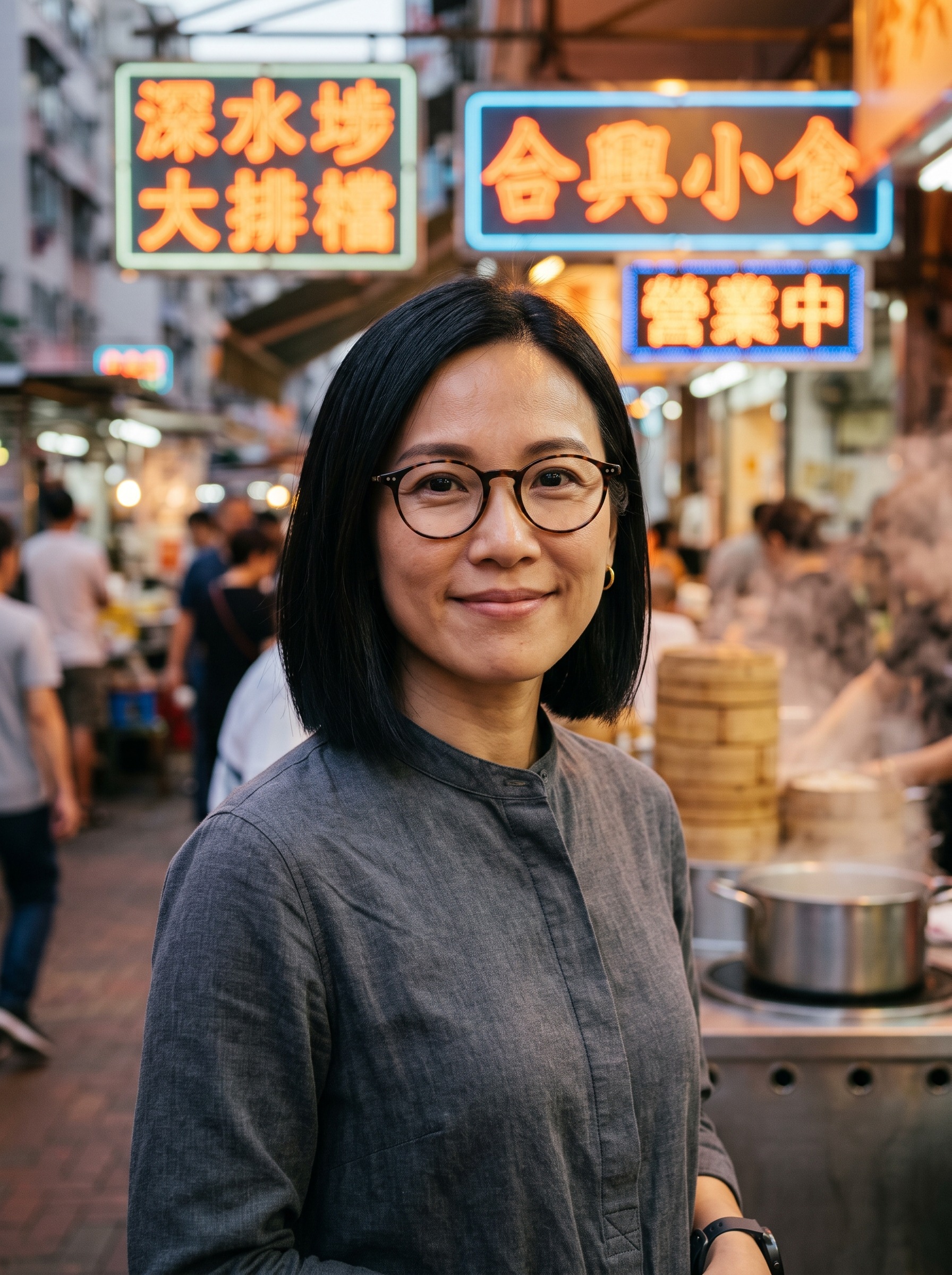 By Carmen Ho

On Fuk Wing Street a bamboo pole still thwacks a slab of duck-egg dough, and two blocks away on Tai Nan Street a former auto-repair shop is pouring single-origin filter coffee to a queue of design students. That is Sham Shui Po in one glance: the poorest district in Hong Kong by median income, and, by most reckonings, its most exciting place to eat. The two facts are not unrelated. Low rents kept the old counters alive. Then the makers arrived, priced out of Central and looking for raw space, and the neighbourhood began to layer itself in public.
What Sham Shui Po is known for
Sham Shui Po is a district of trades, queues and bargains, a place where the pavements are so busy you do not so much walk as negotiate your way forward. The market grid is its engine. Apliu Street is the famous one, a daily electronics-and-everything flea market that runs roughly 9am to late and spills straight out of Sham Shui Po MTR Exit A2. Salvaged phone parts, soldering irons, vintage cameras, cables and outright junk spread across the pavement in a way that feels less like retail than a public argument over usefulness.

The old rag-trade lanes still specialise with the kind of stubborn precision that only comes from decades of doing one thing well. Ki Lung Street is for buttons and zips. Yu Chau Street is for beads. Nam Cheong Street is for ribbon and lace. And on Tung Chau Street, the Pang Jai fabric market has long drawn local and international designers sourcing cloth by the metre. This is not curated nostalgia. It is working inventory, sold cash-first, with the practical briskness of a district that has always made things for other people.
Then there is the food, which is the real reason many of us keep coming back. Sham Shui Po is where Tim Ho Wan began, before the world started calling it the world’s most affordable Michelin-starred restaurant. That origin story matters less than the fact that the neighbourhood still carries a dense cluster of Bib Gourmand counters and family places that survive because the rent did not kill them. Here, the old and the famous still share the same street with no ceremony at all. A sixty-year-old tofu maker can sit a few doors from a design shop and nobody acts surprised.
The newer identity is concentrated on Tai Nan Street, where former garages and fabric warehouses now hold roasteries, record shops, leathercraft ateliers and gallery-cafes. The collision is the point. Locals bristle at the word gentrification, and they are not wrong to. Rents are rising. Rows have been fought over it. But the new wave has not erased the old; it sits uneasily beside it, sometimes in the same block, sometimes in the same breath. That friction is what gives Sham Shui Po its charge.
Where to eat & drink
Come hungry and come with cash. Sham Shui Po does not believe in dainty appetites. It believes in steam, grease, broth, and the small shock of a good bowl arriving in front of you at the exact moment you were about to complain about the wait.
Start with Lau Sum Kee at 48 Kweilin Street, with a second counter at 80 Fuk Wing Street, where three generations have kept the bamboo-pole noodle tradition alive. The shrimp-roe lo mein is the dish to order, and it comes with the sort of springy, intensely savoury bite that reminds you why people still line up for things made by hand.

A short walk away, Tim Ho Wan at 9–11 Fuk Wing Street remains the original branch of the chain that made dim sum famous far beyond Hong Kong. It now holds a Bib Gourmand, but the reason to queue is still the baked BBQ-pork bun, a thing of sugar, crust and molten filling that has lost none of its pull just because the world caught up.
For something more immediate, Hop Yik Tai at 121 Kweilin Street does silky cheong fun rice rolls for about HK$10 a plate, slicked with sweet sauce, sesame and hoisin. It is the sort of snack that disappears in three bites and then leaves you standing there, already plotting a second plate. A few doors away in mood if not in street number, Kung Wo Beancurd Factory at 118 Pei Ho Street has been making tofu on site for over sixty years. The warm tofu pudding is the thing to get, with the fried beancurd close behind. It tastes like the neighbourhood’s plainest miracle.
If you want a proper sit-down and a little theatre with your dinner, Oi Man Sang is one of the last real dai pai dong, a semi-outdoor stall cooking typhoon-shelter crab and stir-fried clams over roaring flame since the 1950s. There is nothing delicate about it. That is the pleasure. Wok fire, shellfish, smoke, heat — the old Hong Kong grammar.
Breakfast, or a late-night rescue, belongs to Sun Hang Yuen, the 24-hour cha chaan teng on Yu Chau Street famous for its French toast and beef-and-egg sandwich. It is the sort of place that tells you Hong Kong has always understood how to feed people without fuss. If you want to build your own meal from the wall of cheap toppings, Man Kee Cart Noodle on Fuk Wing Street lets you do exactly that, and pocket change still goes a long way here.
The newer cafes on Tai Nan Street are not pretending to be old. Café Sausalito at No. 201, founded by a local who grew up here, roasts its own beans and runs weekend live jazz. Openground at No. 198 is a cafe-gallery-bookshop hybrid with cold brew, cheesecake and local-artist shows. Both are part of the same story: Sham Shui Po learning to host a different kind of crowd without forgetting who kept the shutters open first.

Going out
Sham Shui Po is not a bar district in any conventional sense. After the food stalls wind down, most of the action is people eating late rather than drinking. That said, there is one genuine destination: BOUND at 32 Boundary Street, on the neighbourhood’s northern edge where Sham Shui Po meets Prince Edward.
It is a pastel, neon-hung room with a loyal, community feel rather than a scene. The drinks lean on well-chosen local craft beer and a short, inventive cocktail list built around Hong Kong ingredients. It is also one of very few bars pouring drinks made with Yuk Bing Siu, a Cantonese rice liquor, and the food menu is mostly Indonesian-leaning and comforting rather than showy. That is exactly right for this part of town. Nobody needs another bar trying too hard.
Beyond BOUND, going out here means lingering over a late bowl at a 24-hour noodle shop, grabbing craft beer to drink at a Tai Nan Street cafe that stays open into the evening, or crossing into neighbouring Mong Kok and Prince Edward, both walkable, for busier bars. If you want a serious cocktail crawl or clubbing, this is not the postcode. Head to Central or Tsim Sha Tsui. Sham Shui Po gives you atmosphere instead: humid, neon-soaked streets that can feel more alive at 10pm than most of the city’s nightlife strips.

Things to do / what to see
The best thing to do in Sham Shui Po is to walk slowly and let the district keep revealing itself. It is not polished, and that is the point. You are seeing a working neighbourhood as it actually lives, not as it has been packaged for visitors.
The clearest window onto the maker community is the Jockey Club Creative Arts Centre (JCCAC), a converted 1970s factory building with artist studios, small galleries, a craft shop and a tea house. It is the right place to come on a rainy afternoon, when the district’s rough edges feel less like a nuisance and more like texture.

For a very different kind of time travel, the Lei Cheng Uk Han Tomb Museum preserves a brick burial chamber from the Eastern Han dynasty, roughly two thousand years old. It was discovered when the hillside was levelled for housing in the 1950s, and entry is free. The contrast is almost comic: one of the city’s oldest surviving stories tucked inside one of its hardest-working districts.
Design pilgrims should work the ateliers of Tai Nan Street. There are leathercraft suppliers, artisan-soap workshops and independent record shops like White Noise Records at No. 199, which stocks soul, metal and electronica on vinyl. It is the sort of shop that reminds you why people still like to browse in person. You hear a sleeve before you know whether you want it.
At dusk, climb Garden Hill (Nam Shan), a short, steep scramble from the residential blocks. The reward is a close, low panorama of Sham Shui Po’s rooftops and the neon grid lighting up below, a favourite of local photographers and far less trafficked than the Peak. It is a fine place to understand the district’s scale: dense, human, stubbornly vertical.
{{ATTRACTIONS}}
Shopping & markets
Shopping in Sham Shui Po splits neatly into old and new, and the old still does the heavy lifting. The specialist market grid is the reason many visitors come. Apliu Street handles electronics, salvaged parts and vintage cameras. Ki Lung, Yu Chau and Nam Cheong Streets handle buttons, beads, ribbon and haberdashery. The Pang Jai fabric market on Tung Chau Street is where you go for cloth by the metre. Tai Nan Street’s older stretch remains known as a hub for leather.
If the market lanes are the district’s memory, the Golden Computer Arcade at 146–152 Fuk Wing Street is its contemporary nervous system, a multi-floor maze of hardware, components and gaming. The Dragon Centre mall on Yen Chow Street adds a few quirkier independent shops to the mix. It is not glamorous shopping. It is practical, crowded and sometimes slightly chaotic, which is exactly why it works.
The new wave has threaded itself through the same industrial bones: leathercraft ateliers, artisan-soap studios, indie record stores and design-led lifestyle shops along Tai Nan Street, many of them housed in former garages with their roll-up shutters still intact. Prices at the street markets are cash-first and gently negotiable. The creative shops are boutique-priced, but still a world cheaper than Central. Come with a plan or come to browse; either works. Just haggle politely at the stalls, and check secondhand electronics before you pay.
Where to stay in Sham Shui Po
This is a budget base, not a luxury one, and that is the appeal. You trade polish for authenticity and a rock-bottom room rate. The standout is YHA Mei Ho House, a youth hostel built into the last surviving Mark I H-shaped resettlement block from 1954 in Shek Kip Mei Estate, with a small heritage museum on site and rooms from dorm beds to private twins. It is one of the few places in Hong Kong where the building itself tells you as much as the bed.
Beyond that, the area runs to simple guesthouses and small local hotels rather than international chains. Expect functional rooms and honest prices. The best pockets to stay are close to Sham Shui Po MTR station for the markets and food, or up toward Prince Edward on the quieter northern edge near BOUND and the greenery of the Boundary Street sports grounds. If you want more comfort while keeping the district on your doorstep, staying one stop away in Prince Edward or Mong Kok puts you minutes from the action on the same Tsuen Wan line.
{{HOTELS}}
Getting around
Sham Shui Po sits on the MTR Tsuen Wan line, the red line, with two stations serving the area: Sham Shui Po for the markets and food core, and Prince Edward for the northern edge. From Sham Shui Po it is a single ride south to Mong Kok in about 2 minutes, then on to Yau Ma Tei and Jordan, and roughly 15 minutes through to Tsim Sha Tsui by the harbour. The line runs under Victoria Harbour to Central and Admiralty on Hong Kong Island in around 20 to 25 minutes.
The neighbourhood itself is best explored on foot. It is flat, dense and gridded, and the whole market district is a fifteen-minute walk end to end. Taxis are cheap and plentiful, but the streets clog at market hours, so the MTR is almost always faster. For the airport, take the Tsuen Wan line to Lai King and change to the Tung Chung line for the Airport Express interchange, or use a taxi or airport bus. Reckon on roughly 45 to 55 minutes to Hong Kong International Airport.
FAQs
Is Sham Shui Po worth visiting in Hong Kong?
Yes. It is arguably the city’s best neighbourhood for cheap, authentic street food and market shopping, and the emerging coffee-and-design scene on Tai Nan Street adds a modern layer. It is raw and crowded rather than pretty, but for a real taste of working-class Kowloon within a 15-minute train ride of the harbour, few places beat it.
Is Sham Shui Po safe for tourists?
Yes, including at night. Hong Kong overall has very low violent crime. The main things to watch are crowded pavements, traffic and the usual pickpocket caution in packed markets. If you are buying secondhand electronics at Apliu Street, test them and count your change before you leave the stall.
What is Sham Shui Po famous for?
Bargain markets and street food. Apliu Street is a legendary electronics-and-flea market; the surrounding lanes specialise in fabric, buttons, beads and leather; and the food is a roll call of Bib Gourmand counters and decades-old family eateries, including the original branch of Tim Ho Wan. More recently it has become Kowloon’s creative hub, with roasteries, record shops and design studios along Tai Nan Street.
What should I eat first in Sham Shui Po?
Start with the shrimp-roe lo mein at Lau Sum Kee, then the baked BBQ-pork buns at Tim Ho Wan, and if you have room, a plate of cheong fun from Hop Yik Tai and warm tofu pudding from Kung Wo Beancurd Factory.