Hong Kong guide
Sai Ying Pun, Hong Kong: steep streets, old trades and a new dining frontier
Two MTR stops west of Central, Sai Ying Pun is where dried seafood, colonial ghosts and natural-wine bars share the same uphill grid.
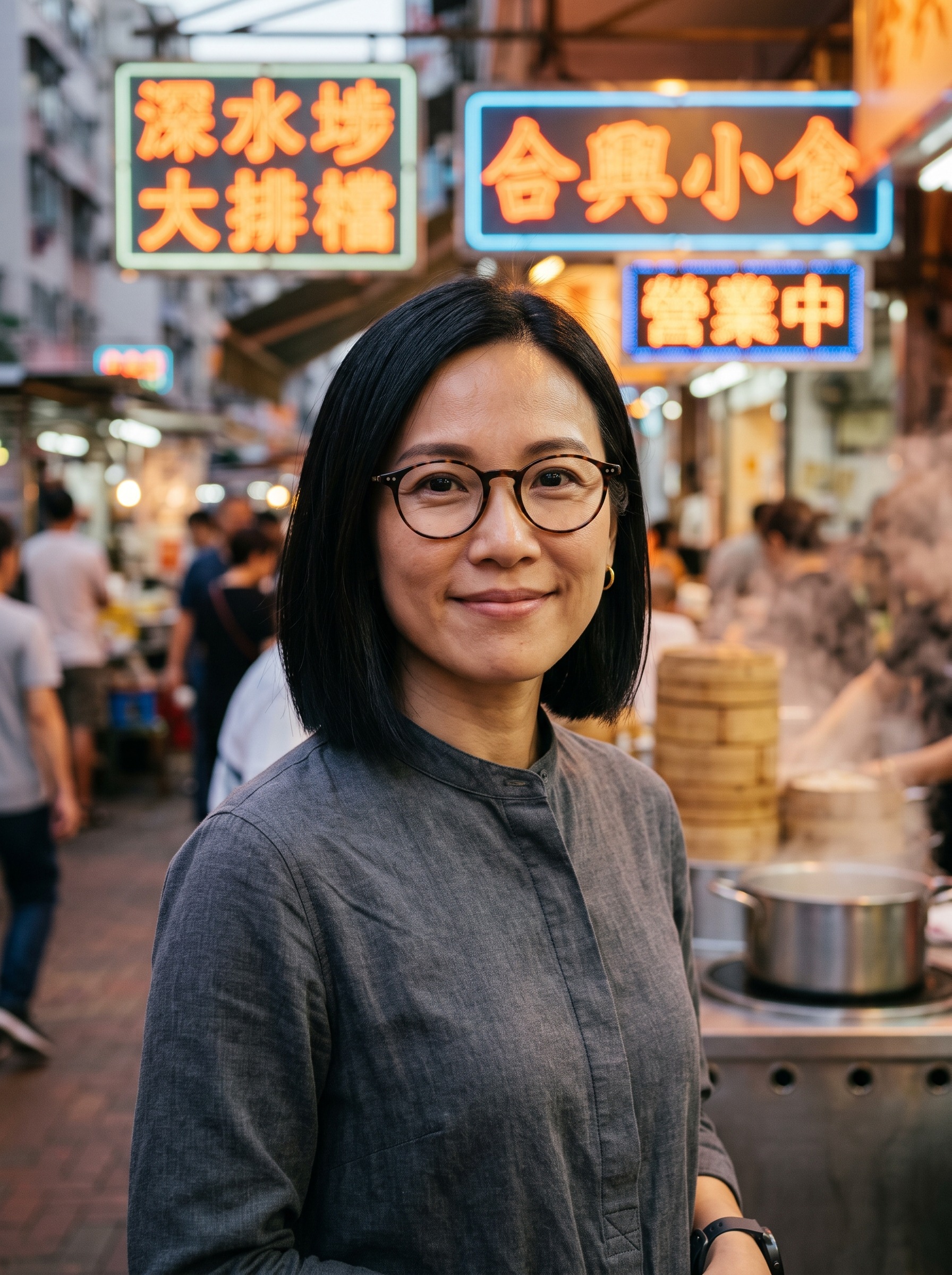 By Carmen Ho

Sai Ying Pun starts with a slope you feel before you understand it. Step out from the MTR and the streets tilt hard enough to make the neighbourhood read like a set of stairs with names: High Street running level along the hillside, First, Second and Third streets stacked above and below it, and every crossing asking something of your calves. Down on Des Voeux Road West, sacks of dried scallops and fish maw spill from nam pak hong wholesalers; a few blocks up, a glass of wine catches the last light on Second Street. That collision is the point here. Sai Ying Pun still belongs, stubbornly, to the people who live and work in it, even as the dining crowd has discovered the view from the pavement.
What Sai Ying Pun is known for
Sai Ying Pun is known for two things pulling against each other. One is the old trade Hong Kong that still does business in plain sight. The district anchors the eastern end of Dried Seafood Street, where wholesalers on Des Voeux Road West sell dried scallops, abalone, fish maw, sea cucumber, ginseng, dried berries and medicinal roots. These are not set dressing. They are working shops, the kind Cantonese kitchens have leaned on for over a century. If you want to understand the neighbourhood, start by looking at what is piled on the pavement.
The other is the newer life that has climbed in over the last decade: independent restaurants, wine bars and small cocktail rooms spreading across High Street, Second Street and Third Street. It is a dining frontier, but not a polished one. The crowd is young professionals, HKU students spilling down from the university one stop west, and long-time residents still doing their daily marketing at the wet-market stalls. Evenings are the hour that tells the truth. Shutters roll down. Warm light leaks from bistros. People stand on the pavement with a glass in hand and the street becomes the room.
And then there is the building that refuses to choose a side. The Sai Ying Pun Community Complex, better known as the High Street Haunted House, sits on High Street with the granite façade and arched verandah of the 1892 Old Mental Hospital, declared a monument in 2015 after years of abandonment and folklore. It is one of those Hong Kong oddities that feels almost rude in its placement: a rare Early-Baroque colonial structure among the wine bars, unbothered by the new scene around it.

Where to eat & drink
High Street is the spine, and it is where you should begin hungry. Uncle Padak at 59 High Street is the sort of Korean fried chicken place people queue for without complaint. Order half-and-half so you get both the spicy glaze and the tteokbokki-style sauce; that is the move, and there is no need to be cleverer than the room. A few doors along, Krua Walaiphan at 64 High Street keeps things modest and clean in a way that matters: a Thai kitchen with no MSG, where the pad ka prao runs around HKD148 and the queue is part of the deal.
For a longer dinner, House of Culture at 335–339 Queen’s Road West is the one that lets the neighbourhood stretch its legs. Chef Gavin Chin runs a genre-blurring room, and the 14-hour rendang short rib with coconut and Thai basil, around HKD478, is the dish people come back for. There is also a Chaos omakase-style menu if you want to hand over control and see where the kitchen takes you. Sai Ying Pun likes that kind of confidence: not showy, just sure of itself.
The French contingent is strong and, in places, gloriously specific. Le Colvert on Des Voeux Road West is the duck specialist, Michelin-listed and proud of it, with chef Guillaume working the bird beak-to-palm across South-West French dishes. Nearby, Bistrot du Vin at 165–166 Connaught Road West reopened inside The Fine Wine Experience with a 1,200-bottle cellar sold at retail prices. Think pâté en croûte and short-rib parmentier at a long communal table, the kind of room where the bottle list can become the evening if you let it.
Sai Ying Pun also knows how to do Cantonese and regional Chinese without fuss. Kwan Kee Claypot Rice at 263 Queen’s Road West is a Michelin Bib Gourmand stop where charcoal-fired claypot rice is served only at night. The rule is simple: order the moment you sit. Ba Yi at 43 Water Street brings punchy Xinjiang cooking and roasted lamb kebabs, another Bib Gourmand name that earns its keep. And for the everyday end of the spectrum, Luen Wah Cafe at 28 Centre Street has fed the neighbourhood for around 60 years. The baked pork-chop rice is about HKD65, which feels almost defiant in a district now better known for natural wine than lunch specials.

Going out
Sai Ying Pun’s after-dark life is a crawl, not a spectacle. It is all about neighbourhood bars and small cocktail rooms, the sort of places that make you stay for one more round because the room has quietly become yours. The signature stop is Ping Pong 129 Gintoneria at L/G, Nam Cheong House, 129 Second Street, a converted ping-pong hall turned Spanish gintonería pouring 150-plus gins over a curated tonic list. Drinks run around HKD130, and the tapas keep the whole thing from becoming a gimmick.
Crushed Wine Bar at 6–8 Second Street re-emerged in early 2025 with an ever-changing, natural-leaning list: sparkling, several whites and reds, a few skin-contact bottles by the glass, plus small plates. Brut! at 11 Second Street is candle-lit and low-key, part bistro, part bar, pairing sharing plates with organic and biodynamic wine. And Mostly Harmless at 2/F, 110 Queen’s Road West runs an omakase-style, sustainability-minded cocktail bar with a rotating seasonal menu and a deliberately unintimidating feel. None of these are destination showpieces. That is exactly why they work. They are the kind of places you end up staying at longer than planned because the next table started talking to you.
The great thing about this strip is that it leaks into Sheung Wan without ceremony. If the night has legs, you keep moving east and the district dissolves into the next one. Sai Ying Pun is not trying to be a nightlife district in the loud, branded sense. It is trying to be a place where the drink is good, the room is small, and you can still hear the person across the table.

Things to do / what to see
The best thing to do in Sai Ying Pun is walk it, and if you are sensible you will plan the route uphill-empty and downhill-full. Start at Art Lane, the cluster of large-scale murals around Chung Ching Street and Ki Ling Lane just outside MTR Exit B3. Local and international artists have painted the walls of old buildings into one of the district’s most photographed corners, and the colour lands hard against all that concrete and slope.
From there, climb High Street to the Sai Ying Pun Community Complex, the High Street Haunted House. The preserved granite verandah of the 1892 Old Mental Hospital is now a declared monument, and it is one of the few places in Hong Kong where a colonial relic can sit in the middle of a contemporary food district without losing the argument. The building does not need to perform. It already has the room.
Work your way down toward the water and Des Voeux Road West for Dried Seafood Street, the working parade of nam pak hong wholesalers where you can browse and buy dried scallops, fish maw and ginseng from shops that have traded for generations. This is one of the neighbourhood’s most useful realities. It is not a heritage display. It is commerce, still active, still practical, still feeding the city.
For a breather from the hill, Sun Yat Sen Memorial Park sits on the waterfront at the northern edge of the district with a lawn, a pool complex and harbour views. It is the place to flatten out your breathing before you go back uphill again. Sai Ying Pun is not generous with level ground, so you take your rest where you can get it.
{{ATTRACTIONS}}

Shopping & markets
Shopping in Sai Ying Pun is about craft and provisions, not malls. The most characterful stop is Tuck Chong Sum Kee Bamboo Steamer Company at 12 Western Street, a fifth-generation workshop and one of the last places in Hong Kong still making bamboo dim-sum steamers by hand. They also make mooncake presses, bamboo ladles and nets. Even if you buy nothing, stand there and look at the work. It tells you more about the city than a glossy retail floor ever will.
For a modern counterpoint, Live Zero at 33 High Street is Hong Kong’s first zero-waste, packaging-free grocery, selling organic bulk goods and plastic-free household and cosmetic products. It is the sort of shop that makes perfect sense in a neighbourhood where residents still do their daily shopping on foot and where the idea of carrying your own containers does not feel like a statement so much as a habit.
The real market experience, though, is the trade streets themselves. Along Des Voeux Road West, the dried-seafood and herbal-tonic wholesalers double as retail. Locals stock up on dried scallops for soup, ginseng for a pick-me-up and the aromatic roots and berries that underpin Cantonese home cooking. Prices vary wildly by grade, which is another way of saying you should look at several shops before buying. Between the wholesalers you will also find wet-market stalls, still the everyday grocery run for many residents. Sai Ying Pun may have become a dining neighbourhood, but it has not stopped being a place where people buy dinner ingredients one bag at a time.

Where to stay in Sai Ying Pun
Sai Ying Pun makes a smart base for a second or third trip to Hong Kong. You are two MTR stops from Central but paying and living at neighbourhood rates, with the restaurants and bars a lift-ride and a short walk away. The stock skews boutique and mid-range rather than luxury towers, which suits the district’s scale. The flatter, lower streets near the station and toward Connaught Road West and the waterfront are the easiest on the legs and closest to transit; the higher numbered streets and the Mid-Levels edge are quieter and more residential but mean a steeper walk home after dinner.
Light sleepers should note that the Second and Third Street bar pockets can carry noise on weekend nights, so ask for a room off the main dining lanes. Budget-wise, the area sits in the mid-range for Hong Kong: cheaper than a harbour-view Central address, dearer than Kowloon’s backpacker districts.
{{HOTELS}}
Getting around
Sai Ying Pun station sits on the MTR Island line between HKU and Sheung Wan, so Central is just two stops east, roughly four to five minutes, and Kennedy Town is two stops west. The station opened in 2015 as part of the West Island line extension and is built deep under the Mid-Levels, which means unusually long exit corridors and, at Exit C and others, some serious escalators and lifts. Factor in a few extra minutes to actually reach the street. Exit B3 drops you closest to Art Lane and the dining streets.
Above ground, the district is very walkable but relentlessly hilly. The numbered streets climb hard from the harbour, so wear comfortable shoes and expect stairs. Sheung Wan is a flat ten-minute stroll east along Queen’s Road West for extended bar-hopping. For the airport, take the Island line to Central/Hong Kong station and change to the Airport Express, about 24 minutes to HKIA; a taxi to the airport runs roughly 35–45 minutes depending on traffic.
Sai Ying Pun is lively and very safe, with the usual big-city care late at night. The main hazard is the hill itself. Everything here is uphill from something, and that is part of the charm as well as the workout.
FAQs
Is Sai Ying Pun a good area to stay in Hong Kong?
Yes, especially for a repeat visit. It is two MTR stops from Central, more residential in feel and strong on independent restaurants and wine bars. The trade-off is boutique-and-mid-range hotel stock rather than luxury towers, plus very steep streets, so lower, flatter streets are easiest.
How do I get from Sai Ying Pun to Central and the airport?
Central is two stops east on the MTR Island line, about four to five minutes. For the airport, take the Island line to Hong Kong/Central station and change to the Airport Express, which takes about 24 minutes to HKIA; a taxi is roughly 35–45 minutes depending on traffic.
Is Sai Ying Pun worth visiting just for dinner or drinks?
Absolutely. It is an easy MTR hop for a meal and a night out, with places like Le Colvert, House of Culture and Kwan Kee Claypot Rice for dinner, then Ping Pong 129, Crushed Wine Bar and Brut! for drinks.
What kind of traveller suits Sai Ying Pun best?
Food-led travellers, wine and cocktail drinkers, and repeat visitors who want somewhere more residential and real than Central. It is less suited to anyone who struggles with steep hills, or travellers expecting big malls and marquee sights at the doorstep.