Havana guide
Vedado, Havana: jazz basements, modern kitchens and the city after dark
From the Hotel Nacional’s clifftop terrace to Calle 23’s small-hours jazz clubs, Vedado is Havana’s modern district with the best nights out and the strongest tables.
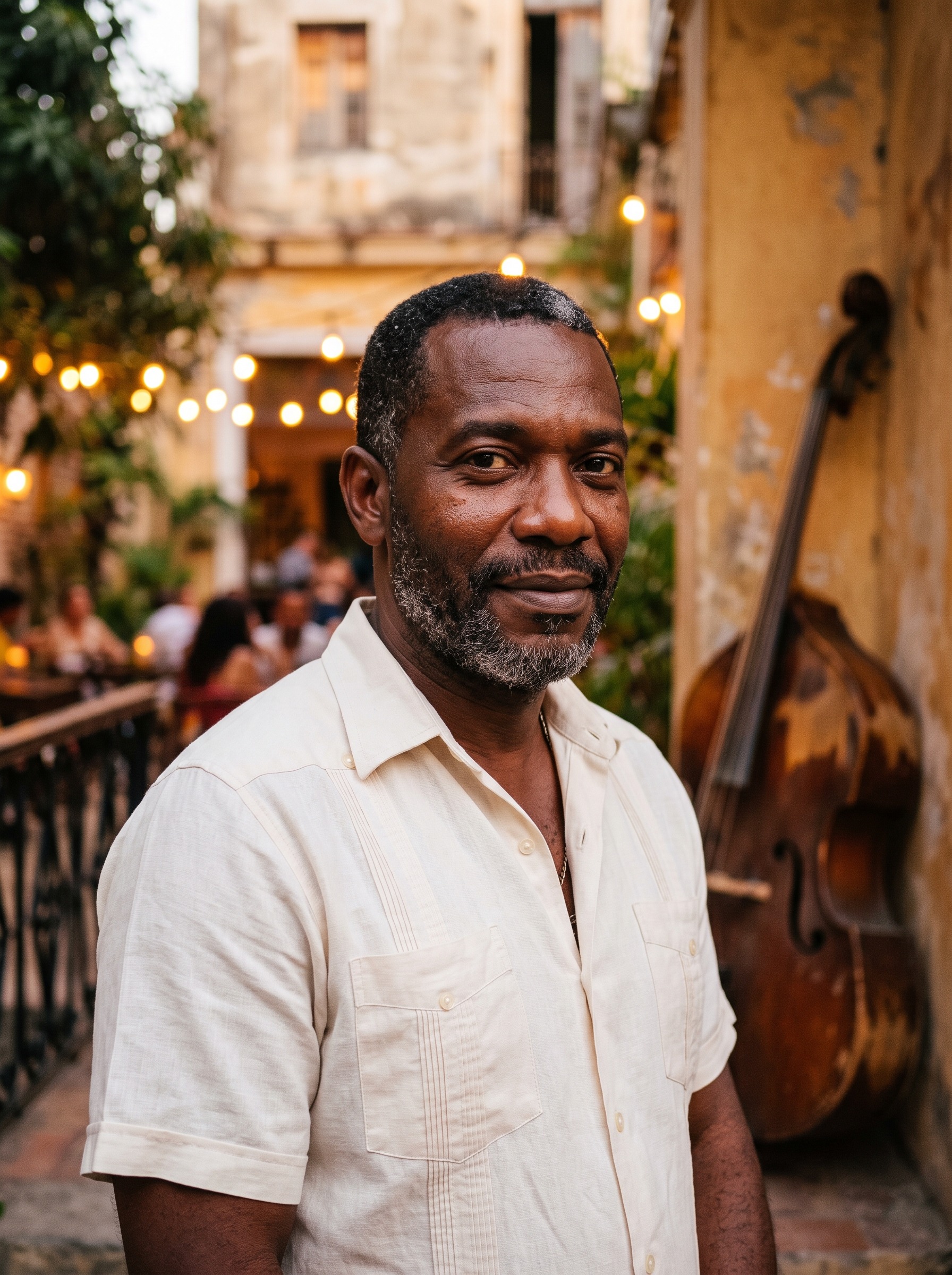

Climb the palm-lined drive to the Hotel Nacional's clifftop terrace, order a mojito, and the first thing you understand is that Vedado is not Havana pretending to be old. It is Havana in a different key. Below you, the district opens in a grid of numbered streets, 1950s towers, shaded mansions and the long silver line of the Malecón. This is where the city stretches its legs after dark. This is where the good bands play late, where the best modern kitchens hide in old houses, and where the sea wall becomes a public sofa once the sun drops.
What Vedado is known for
Vedado was laid out as Havana's smart new district in the early 20th century, and it still carries that confidence in its bones. The streets run on a numbered grid instead of the colonial knot of Habana Vieja, and the architecture has the kind of mixed glamour only time can rough up properly: art-deco blocks, mid-century modernist towers, gardens gone feral, mansions with their paint peeling in the heat. It would look at home in Miami if it weren't so unmistakably Havana — the same ambition, but with more shade, more music leaking through windows, more life lived on the pavement.
Calle 23 is the spine. Everyone calls the top end La Rampa, and if you stand there long enough you can feel the district's rhythm changing by the hour. By day, the air smells of coffee and two-stroke exhaust, and cats sleep on garden walls while students drift down from the hilltop campus. By night, the same stretch fills with people heading for jazz basements, clubs and late suppers. The old city has its postcard romance. Vedado has the working pulse.
Two hotels bookend the story. The Hotel Nacional de Cuba sits on the Taganana bluff, a 1930 Spanish-eclectic pile with mob history and missile-crisis echoes in its walls. A little farther down the slope, the Hotel Habana Libre rises 25 storeys above Calle 23, the old Havana Hilton turned revolutionary headquarters in 1959. Between them are the district's signatures: Coppelia, the ice-cream pavilion that feels like a civic monument; the city’s most dependable jazz rooms; and the Malecón, that long wall where Havana comes to talk, flirt, argue and watch the water go black.

What makes Vedado matter is not one landmark but the way the whole neighbourhood holds together. It is greener and more residential than Habana Vieja. Less stage set. More lived-in. Habaneros come here to eat, to hear music, to meet friends, to stay out until the small hours. If you want a Havana that still belongs to Havana, you start here.
Where to eat & drink
Vedado has the strongest run of privately run paladares in the city, and the best ones feel personal in the right way — not polished for your approval, just cooked with conviction. At Grados, chef Raulito Bazuk works inside the 1913 house he grew up in, which gives the whole place a charge money cannot fake. The dishes carry playful literary names, and the room feels less like a restaurant than a dinner party thrown by someone who knows exactly what he's doing. That matters in Havana, where charm is easy and precision is rarer.
A few streets away, Café Laurent takes the opposite route and lands just as hard. You ride a tiny antique lift to a penthouse and emerge onto a terrace with the city spread below. The signature move here is grilled whole lobster, though the real luxury is the view and the old-school glamour of the ascent itself.
El Cocinero has a different kind of romance. It occupies the rooftop and brick chimney of a former cooking-oil factory, sharing the same complex as the art centre next door. Under string lights, the mood shifts from dinner to night out without asking permission. Duck confit, cocktails, factory bones, a warm roofline above the street — it is one of those places that understands Havana's talent for repurposing industrial ruins into places people actually want to be.

Then there is Atelier, set in a family home hung with Cuban art and spilling into a courtyard garden. The cooking is contemporary, but the setting keeps it grounded. That balance is the point. Vedado's best tables rarely shout. They just know how to make a night feel longer.
For something cheaper and stranger, Topoly on Avenida 23 serves Iranian-Cuban food on a plant-filled balcony. Falafel, kebabs, vegetarian options — the sort of menu that would seem improbable anywhere else in Havana and completely normal here, because Vedado has always been the district most willing to let the city bend a little. And if you need a pause between meals, or a place to sit with a coffee and a book, Cuba Libro at Calle 24 and 19 is the island's only English-language bookshop-café. There are hammocks, real Cuban coffee, chess, trivia nights, and the quiet satisfaction of finding a genuine community space rather than a themed one. It has been run since 2013 by American journalist Conner Gorry, and it shows in the way the room works: practical, welcoming, unforced.
Bring cash. That's not a suggestion. In Cuba, cards rarely work, and paladares are cash-only. In Vedado, as in the rest of the city, the best meals are often hidden in plain sight, in old mansions and apartment towers you would walk past if you didn't know the address.
Going out
This is why people base themselves in Vedado. Not for the postcards. For the after-hours logic of the place. The essential stop is La Zorra y el Cuervo on Calle 23 between N and O, and if you know Havana's live music scene, you know the address already. You enter through a red British phone box and drop into a low basement room that has been one of the city's temples of live jazz for decades. Sets run roughly from 11pm to 3am. The room holds only about a hundred people. Come early or queue. There is no shortcut around that. The music deserves the wait.

A few blocks away on Calle O, near the Hotel Nacional, El Gato Tuerto has been pouring boleros and troubadour ballads since 1960. It is dark, smoky, downstairs, with a restaurant above, and music most nights from around ten. This is not the place for novelty. It is the place for songs that know how to sit still and then cut deep.
For clubbing, King Bar on Calle 23 between D and E is one of the district's most beloved late spots, and one of the most openly LGBT+-friendly. The drinks are strong and cheap, the room stays busy even on a Monday, and the music runs on reggaeton and Cuban pop until roughly 6am. That matters. Some places in Havana are for tourists performing a version of the city. King Bar is for the city itself, in motion, after midnight.
EFE Bar, also on the 23 strip, pulls a student crowd for electronic music and local DJs. It is the sort of room where the night starts with a plan and ends in a conversation you did not expect to have. That is Vedado in miniature.
And then there is the famous one, the place everyone still asks about first: the Fábrica de Arte Cubano. It was the former oil factory turned multi-stage galaxy of galleries, live music and DJ rooms, and for years it was the district's great magnet. But the honest answer now is this: it announced a temporary closure at the end of 2025 and, as of mid-2026, opens only for previously announced special events. Check its Instagram before you build a night around it. Havana rewards improvisation, but it punishes fantasy.
Things to do / what to see
Start with the Malecón. Vedado's stretch of the five-mile sea wall is where the city gathers at sundown, and it is one of Havana's simplest pleasures to walk east toward Centro Habana as the light goes soft. The walk takes about 25 to 30 minutes. It is poorly lit late at night, so most people taxi back, but at dusk the promenade belongs to everyone — couples, fishermen, teenagers, old men with thermoses, friends passing a bottle along the wall. The sea is never far from the conversation.

Above it stands the Hotel Nacional de Cuba, and even if you are not staying there, you should go for the gardens and clifftop terrace. Non-guests can come in for a sundowner and the view of the anti-aircraft guns and mob-era photographs. Ask about the tunnels dug during the missile crisis. Havana likes its history layered, and the Nacional is one of those places where the layers are still visible if you bother to look.
Inland, the Necrópolis de Cristóbal Colón is one of the city's great solemn places: a 56-hectare 19th-century cemetery of extraordinary marble sculpture, open daily from 8am to 5pm. The pilgrimage is to the chapel of La Milagrosa, where visitors knock with a brass ring and, by tradition, leave walking backwards. It is a ritual that feels both intimate and public, which is exactly how Havana handles faith, memory and theatre.
The Parque John Lennon on Calle 17 is a lighter detour, but no less revealing. There is a life-size bronze of the Beatle on a bench, unveiled by Fidel Castro in 2000, and a caretaker guards the glasses that keep getting stolen. It is a small Havana joke with a straight face.

And then there is Coppelia at 23 and L, the flying-saucer ice-cream pavilion that is both a Havana institution and a scene from Fresa y Chocolate. It reopened in February 2025 and serves scoops for a few pesos to a queue of locals. If you want to understand how ordinary delight survives in this city, stand in that line for a minute. The place is not precious. That is the point.
South-west of the district, Plaza de la Revolución spreads out with its José Martí memorial tower and the Che Guevara steel mural. It is best reached by taxi. The square is vast enough to make a person feel small in the old political way. Vedado keeps its distance from grandeur, but the square reminds you how close power has always been.
{{ATTRACTIONS}}
Shopping & markets
Vedado is not a shopping district in the mall sense, and that is a mercy. Cuba's retail economy is thin and cash-based, so the pleasure here is not consumption but browsing. Cuba Libro doubles as the island's best-stocked English-language bookshop as well as a café, which gives it a place in the neighbourhood beyond the obvious. You can sit, read, talk, drink coffee, and stay a while. That is shopping in the Vedado sense.
The galleries do more of the heavy lifting. Galería Villa Manuela, run by the national writers-and-artists union, shows serious contemporary Cuban art. Nearby, there are studios and cultural spaces scattered through the streets near the cemetery, and part of the pleasure is wandering between them without expecting a neat retail narrative.
For everyday life, the private produce and craft stalls around Calle 17 and 21 are where the neighbourhood still feels local in the most useful way. Pay cash in pesos everywhere. The state hard-currency shops are unreliable and best ignored. If you are buying cigars or rum, stick to official shops rather than the street. The fakes are endemic, and Havana has no patience for the gullible.
Where to stay in Vedado
Vedado works as a base because it gives you a cleaner decision than Habana Vieja. Stay here if you want to go out late, eat well and move like a local without giving up a hotel lobby when you need one. The district is walkable in patches, well connected by taxi, and quieter at night than the old town while still close to the action. That combination is hard to beat.
The two icons anchor the top of La Rampa: the Hotel Nacional de Cuba, grand and history-soaked with its garden terrace over the Malecón, and the towering Hotel Habana Libre on Calle 23, big, central and unmistakably 1950s. Around them, the residential streets hold plenty of casas particulares — rooms in old mansions and apartment blocks, cash-only, often the warmest and best-value way to stay in Cuba — plus a growing set of small boutique hotels along the Paseo promenade and the leafier numbered streets to the west.
Choose near Calle 23, Línea or Paseo if you want taxis and restaurants on your doorstep. Choose the quieter blocks toward the cemetery or Avenida de los Presidentes if you want gardens and calm. Vedado can do both. That is part of its appeal.
{{HOTELS}}
Getting around
Vedado runs on a numbered grid, which makes it easier to navigate than Habana Vieja, but do not mistake that for compact. It is a big district. You will walk, yes, but you will also use taxis. The main arteries — Calle 23, Línea, Paseo and Calle G (Avenida de los Presidentes) — are where classic-car and modern taxis are easiest to flag. Agree every price before you get in. That is not paranoia. That is Havana.
Old Havana is roughly a 10 to 15 minute taxi ride east, or a longer walk along the Malecón if the heat and light are on your side. Plaza de la Revolución sits a few minutes south by cab. The open-top hop-on-hop-off tourist bus route T1 links Vedado with Centro Habana and Miramar if you prefer to sightsee without negotiating fares. José Martí International Airport is about 25 to 30 minutes south-west by taxi.
After midnight, take a cab rather than walking the darker, quieter blocks. Vedado is broadly safe and popular with visitors, especially around the hotels and along Calle 23, but the usual city rules apply. Keep your wits. Keep your phone in your pocket. Let the night be loud without letting it be careless.
FAQs
Is Vedado a good area to stay in Havana?
Yes. It is one of Havana’s best bases if you care about nightlife, live jazz, modern dining and a greener, more local feel than Habana Vieja. Stay near Calle 23, Línea or Paseo if you want taxis and restaurants close by.
Is Vedado safe at night?
Broadly yes. It is one of Havana’s safer, more residential districts and stays lively around the hotels and along Calle 23. Use normal city sense: take taxis after midnight, keep an eye on your belongings, and agree fares before you ride.
Is the Fábrica de Arte Cubano open?
Not reliably. It announced a temporary closure at the end of 2025 and, as of mid-2026, only opens for previously announced special events. Check its Instagram or website before planning a night around it.
What is Vedado best for?
Vedado is best for live music, clubs, contemporary Cuban food, galleries and a more everyday Havana feel. It is the district for people who want to stay out late and eat well without living inside the old-town postcard.