Havana guide
Playa, Havana: the city where Havana exhales
A slow, green, residential westward Havana of villa gardens, serious salsa, and some of the capital’s best paladares.
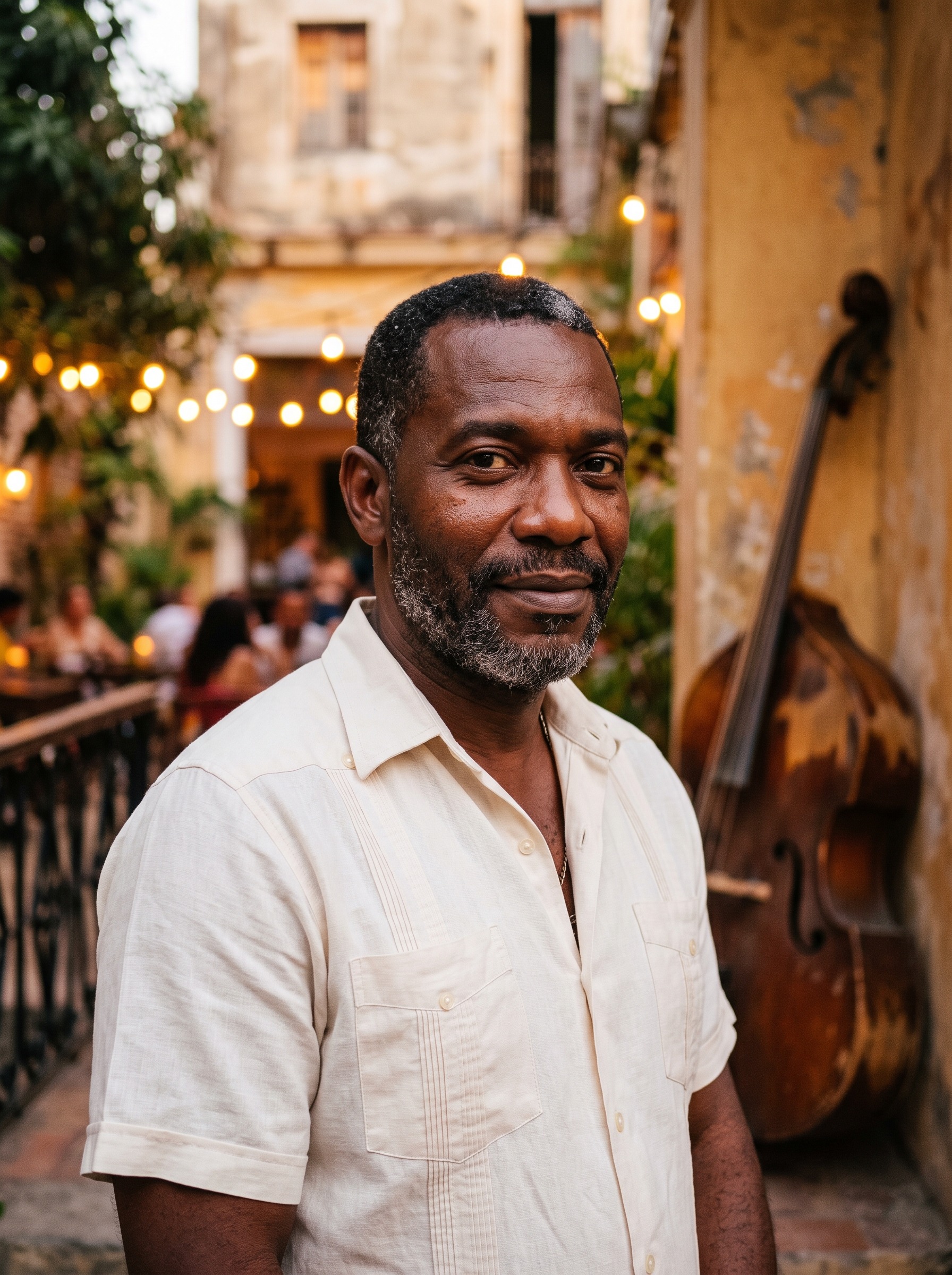

Drive west out of the Vedado tunnel and Havana changes register. The pressed-together urgency thins. The tenements loosen their shoulders. Broad avenues open under shade, and suddenly the city has room for embassy villas behind wrought-iron gates, joggers on the pedestrian strip, and the kind of quiet that makes you lower your voice without meaning to. This is Playa: sprawling, prosperous by Havana standards, and stubbornly unhurried. It is not the city of a postcard bar crawl. It is the city exhaling.
What Playa is known for
Playa’s spine is Quinta Avenida, the ceremonial boulevard of Miramar, and it tells you everything you need to know about the district’s self-image. It runs west from the Vedado tunnel toward Santa Fe, divided by a tree-shaded pedestrian median that becomes, around Calle 110, a proper linear park. In the morning, the strip belongs to joggers. In the evening, to families rolling bikes and skates. The Fountain of the Americas stands at the eastern entrance like a civic exclamation point, while the clock tower gives the avenue a slightly theatrical pulse with bells tuned to echo Big Ben. It is the sort of place where Havana remembers to stand up straight.

That formality is no accident. Playa is Havana’s diplomatic and scientific quarter, the place where the city stores its modern confidence in mid-century villas and institutional campuses. Grand houses on numbered streets have been repurposed as embassies, ministries, and research institutes. Inland, Cubanacán and Siboney hold the heavy machinery of state business: the Palacio de Convenciones, opened in 1979, and the adjacent PABEXPO halls where the Havana International Fair and biotech and computing congresses come and go in a different register from the tourist theatres of the centre.
The mood is calm, but it is not sleepy in a dead way. It is alive with routine. Drivers wait at gates. Scientists cross roads in the shade. Locals use the median like a park. The soundtrack is birdsong, not a barrage. And then, from somewhere deeper in Miramar, a band starts tuning up and the district remembers that Havana is still Havana.
Where to eat & drink
If you know the city by its old-town tables and tourist menus, Playa can feel almost unfair. The paladares here have space. They breathe. They sit in villa gardens, among fountains and tropical plants, or out by the water where the light does half the work for them. The best of them are not trying to be clever for the sake of it. They are trying to cook well, and in Havana that still feels like a small act of defiance.
El Aljibe is the old institution everyone ends up mentioning, because it has earned the right to be mentioned. On Avenida 7 between 24 and 26, this state-run open-air hall has served the same lacquered pollo El Aljibe for more than 60 years: chicken marinaded in a secret orange-and-garlic sauce, then brought out with bottomless rice, black beans, fried plantains, and salad. There is nothing coy about it. You come hungry, and you leave with the feeling that the city has fed you properly.

La Cocina de Lilliam, on Calle 48 between 13 and 15, is a different mood entirely. This is garden dining with fountains and tropical plants, Cuban-international cooking in a setting that knows how to hold a candle after dark. The place once fed Jimmy Carter, which tells you something about its standing without needing the usual tourist fluff. It is the kind of room where the evening slows down around the table.
La Fontana, at Calle 3-A esquina 46, is the celebrity grill, but celebrity in Havana usually means the room has a pulse. Here the charcoal fire is open, the malanga fritters are famously good, the pork ribs come out with a proper edge, and live bands and cocktails keep the place from drifting into mere reputation. You go for dinner and stay because the musicians have found the pocket.
RioMar sits out on La Puntilla at the mouth of the Almendares, and the view does a lot of elegant lifting. Still, the kitchen keeps pace: stylish seafood, river-and-sea light, and the sort of setting that makes a plate of fish feel like part of the landscape rather than a separate event. Paladar Vistamar, on Avenida 1ra between 22 and 24, takes that waterfront ease and turns it toward grilled octopus and black risotto beside a pool that spills toward the water. It is one of those places where the terrace and the menu are in conversation.
Espacios, on Calle 10 between 5ta and 7ma, is the late one. Laid-back garden tapas, cocktails, and a room that understands that not every night needs a full performance. It runs late, which in Playa is already a kind of glamour.

Bring cash. Everywhere here is cash-only, and that is not a detail to discover after dessert.
Going out
Playa does not do nightlife in the Vedado sense. It does not scatter itself across bars and neon and hope. It gathers around music, and specifically around live Cuban bands. That distinction matters. A hotel floor show is one thing. A real dance hall is another. You can hear the difference before you see it.
Casa de la Música de Miramar, at Avenida 35 esquina Calle 20, is the benchmark. This is the state-run hall where top timba and salsa orchestras play to a floor full of serious dancers. The rhythm here is practical. The matinée, roughly 5pm to 9pm, is the one locals prefer: cheaper, less touristy, and alive with the people who know exactly why they came. The night show runs from about 11pm to 3am, when the room tightens and the band leans harder into the groove. If you want the real thing, this is where you come. And no, it is not the Casa de la Música in Centro Habana on Galiano; Havana has more than one room with that name, and only one matters to your taxi driver tonight.

Just over the municipal line in neighbouring Marianao, the Salón Rosado de la Tropical Benny Moré is the other temple. Vast, open-air, garden-floor energy. It reopened in 2019 and draws Havana youth for casino-style salsa and timba, especially on Saturday nights and Sunday matinees, when the crowd skews older. It is not polished. That is the point. The room is alive because the music is.
Beyond those two, Playa is quiet after dark. The villas sleep. The drivers disappear. The district gives the night back to itself. So plan to taxi home. Wear shoes you can move in. And if somebody tells you the party is “just getting started” at 1am in a hotel lounge, smile politely and save your legs.
Things to do / what to see
Start with Quinta Avenida and walk it slowly enough to notice the houses. That is the first mistake visitors make here: they treat Playa like a corridor instead of a neighbourhood. The villas are the point. The median is the point. The way the street widens and narrows, the way the trees soften the sun, the way the city seems to have been measured for dignity rather than speed — that is the point. Stop at the Fountain of the Americas. Stop at the clock tower. Let the boulevard tell its story in architecture and shade.
Then head to the Maqueta de La Habana on Calle 28 between 1ra and 3ra, because this is one of those places that sounds like an academic curiosity until you stand over it. The model covers 144 square metres at 1:1000 scale and maps the whole city. It is one of the largest urban models in the world, and it does something a street map cannot: it makes Havana legible as a whole. You see the distances. You see the sprawl. You understand why Playa feels like a city within a city.

Families drift toward the Acuario Nacional de Cuba at Calle 3ra esquina 62, a research aquarium with sea-lion and dolphin shows open Tuesday to Sunday. It is a straightforward pleasure, and in a district that can feel institutional, straightforward pleasures count. Children love the animals. Parents like the air-conditioning. Everyone leaves a bit lighter.
For green space, the Bosque de La Habana / Parque Almendares is the essential walk. This is Havana’s only true urban forest, laid out in the 1930s by French landscape architect Forestier, and it runs along the river on Miramar’s eastern edge. The banyan and jagüey trees hang with vines, and on the riverbank you often see the traces of Santería offerings. It is not manicured in the way Quinta Avenida is manicured. It is older, wilder, and more intimate. The city lowers its voice here.
At the far western end, Marina Hemingway in Santa Fe shifts the mood again. It is a low-key yachting basin with diving, sport-fishing charters, and waterfront dining, and it marks the edge of the city as much as a marina can. If you want a day on the water, this is where the westward road earns its keep.
And then there is Club Habana, the former 1928 Havana Biltmore Yacht Club, where a day pass opens the door to a private beach, pool, and tennis courts. It is a reminder that Playa has always had a certain idea of leisure baked into it, one that runs parallel to the city’s more public pleasures.
{{ATTRACTIONS}}
Shopping
Shopping in Playa is not an adventure. It is an errand, and that is part of the charm if you live this way long enough. Miramar’s retail concentrates around Avenida 3ra and Calle 70, where the district business centre keeps a cluster of shops, boutiques, and the odd mall-style complex in service of the diplomatic crowd. You go there for what you need: a SIM top-up, imported toiletries, maybe a bottle of decent rum. It is practical retail, more polished than the old town’s patchwork and less theatrical than a market.
The big hotels — especially the Meliá Habana and the Comodoro — have their own shops and cigar humidors, which can be a safer bet if you want a genuine box of Cohibas. That is useful in a city where not every stall is what it claims to be. If you are looking for lively browsing, craft stalls, antiques, the pleasant friction of a market, Playa is not your district. Head back east to Habana Vieja’s Almacenes San José. Playa keeps its commerce indoors and its elbows to itself.
Where to stay in Playa
Playa works best as a base if you understand the trade-off. You get calm, space, greenery, and some of Havana’s best food. You give up the ability to stumble out of your room and land in a plaza scene. That is the bargain. For the right traveller, it is a good one.
The safest, most walkable pocket is Miramar around Fifth Avenue, close to the paladares, Casa de la Música, and the seawall. It is the part of Playa where the neighbourhood’s rhythm is easiest to hear and easiest to manage. Two big resort-style hotels anchor the area: the five-star Meliá Habana on Avenida 3ra between 76 and 80, and the four-star Hotel Comodoro on the Miramar waterfront. Both sit roughly 10 to 15 minutes from the historic centre by car. Do note that some Miramar hotels appear on the US government’s Cuba Prohibited Accommodations List, which matters if you are travelling on a US passport. Check before you book.
The better value, and often the more characterful choice, is a casa particular or self-contained apartment in a Miramar villa. You get fully equipped kitchens, gardens, private terraces, and a fraction of the plaza prices in Habana Vieja. You also get a sense of what it feels like to stay in the city’s residential west rather than its performance centre. Bring cash. Casas are cash-only.
{{HOTELS}}
Getting around
Playa is not a district for improvised wandering. It is big, and the distances are real. From Old Havana, you are roughly 5 to 6 kilometres west — about 10 to 15 minutes by taxi and around USD 10 to 15, or a cheap ride on the P1 or P4 city buses. The P1 links Parque de la Fraternidad with Playa, which is useful to know if you are moving on a budget and have patience. The HabanaBusTour T1 and T2 double-deckers are the easy sightseeing option, crossing the Almendares into Miramar and passing the Maqueta, the aquarium, the shops, and then on to Marina Hemingway.
Within Miramar, the numbered grid keeps you oriented, but the blocks are long and the shade is patchy. That means short hops between paladares and clubs are best done by taxi or bici-taxi. Once you start heading toward Cubanacán, Siboney, or Santa Fe, a taxi becomes essentially mandatory. The city stretches out there. So should your planning.
José Martí International Airport is about 25 to 30 minutes south by car, which is one more reason Playa works neatly for business travellers and conference delegates near the Palacio de Convenciones and PABEXPO. You can sleep in quiet streets, move efficiently, and still get back to the centre when you need the old city’s noise. That is the Playa equation.
FAQs
Is Playa a good area to stay in Havana?
Yes, if you want calm, greenery, and strong restaurants, and you do not mind taking taxis into the historic centre. Miramar around Fifth Avenue is safe, prosperous, and walkable within itself. It suits repeat visitors, food-focused travellers, and anyone who prefers room to breathe over being in the middle of the plaza circuit.
How far is Playa from Old Havana?
About 5 to 6 kilometres west, roughly 10 to 15 minutes by taxi. Budget about USD 10 to 15. The P1 and P4 buses are the cheaper option, and the HabanaBusTour T1 and T2 also cross into Miramar.
Where do people go dancing in Playa?
Casa de la Música de Miramar is the benchmark. The cheaper matinée from about 5pm is where locals go; the late show runs from about 11pm to 3am. Just over the line in Marianao, the Salón Rosado de la Tropical Benny Moré draws a younger crowd for casino salsa and timba, especially on weekends.
Does Playa have a beach?
Not really at the door. Playa is residential and spread out, and the nearest proper strand is out at Santa Fe and the Playas del Este side. Club Habana does offer a private beach with a day pass, and Marina Hemingway gives you waterfront access, but this is not a beach district in the usual tourist sense.