Havana guide
Miramar, Havana: the city’s west side of space, shade and serious salsa
Across the Almendares, Miramar trades Old Havana’s street theatre for embassy mansions, long lunches by the sea and the timba floors that still matter.
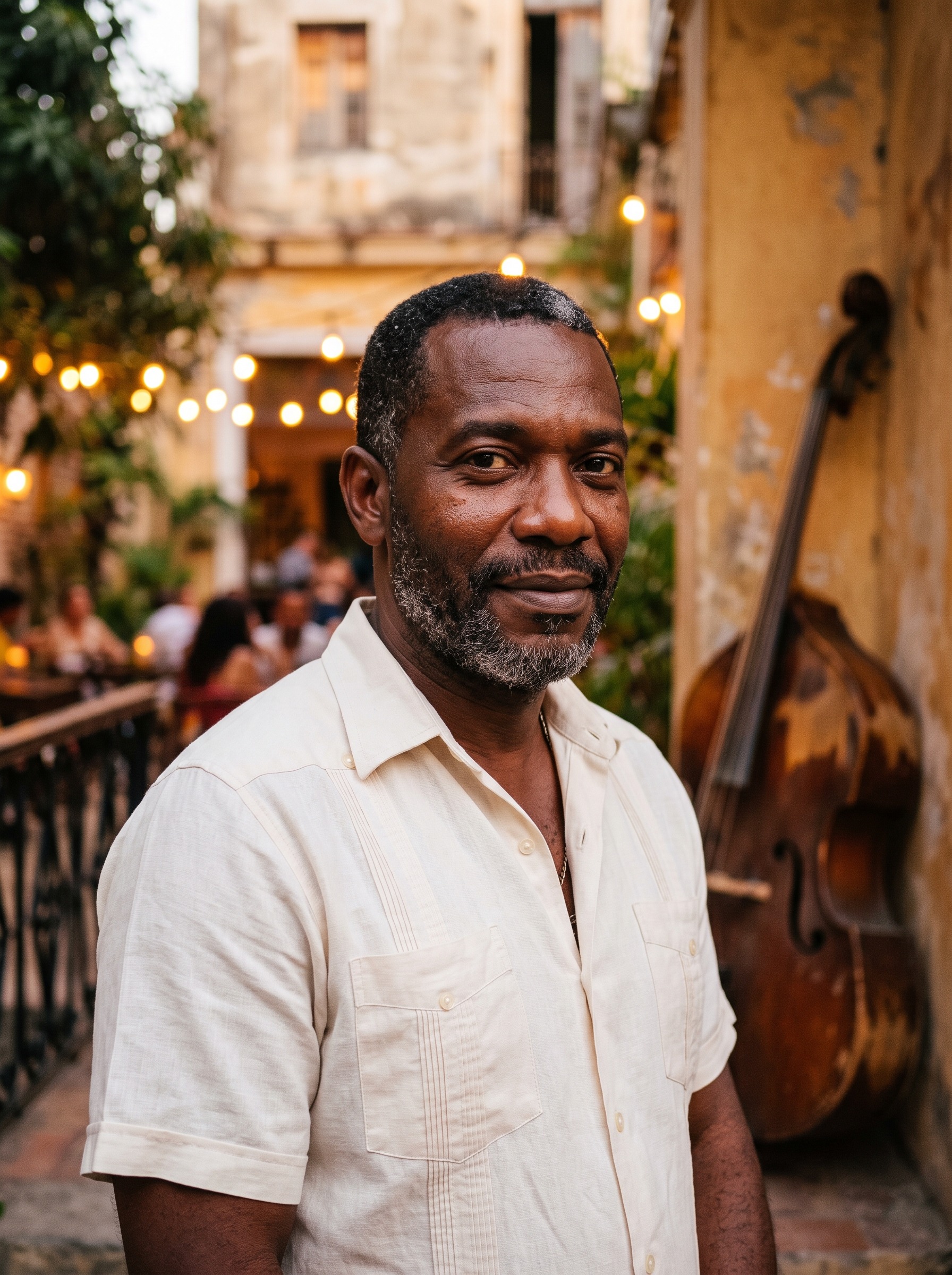

Cross the Almendares River through the short tunnel and Havana changes register. The tenements fall away, the light opens up, and Quinta Avenida comes at you broad and planted, six lanes of movement with a green median down the middle and embassy flags lifting over the hedges. This is Miramar: old money, diplomatic money, returned money. A district built to breathe. A district that still does.
What Miramar is known for
Miramar is Havana’s west-side counterpoint to the old centre. It was laid out in the first half of the 20th century for the city’s wealthy, and the bones of that ambition still hold. The numbered streets are wide and quiet. The villas run from freshly restored to romantically collapsing. Kids in school uniforms cut across the pavement, joggers keep their pace, and somewhere behind a wall someone is selling bread from a doorway. The money here is different from the money in the old town. Diplomatic, commercial, returned, private. That is why the hotels have pools that work and the restaurants can still surprise you.
Quinta Avenida is the spine, and it behaves like one. It runs west from the river tunnel toward Marina Hemingway, and it asks you to keep moving. No stopping. No left turns until the traffic circle at Calle 110. In the middle, the planted pedestrian strip gives the boulevard its softer pulse: jagüey figs, benches, and the kind of shade that makes a long walk feel like a plan rather than an ordeal.

The landmarks along that spine tell the story cleanly. The Reloj de Quinta Avenida is the unofficial emblem of the neighbourhood, a Spanish-Renaissance clock tower from 1924 that gives the boulevard a little civic pride. The Casa de las Tejas Verdes at Calle 2 is the odd one out in the best way: a 1926 American Queen Anne mansion, the only one of its kind in Cuba, now open as a centre for architecture and design. And the Iglesia de Jesús de Miramar, near Calle 82, is all monumental confidence — Romanesque-Byzantine, built in 1953, with 14 huge murals and the largest pipe organ in the country.

This is also a neighbourhood of institutions that give away the local priorities. The Acuario Nacional on Avenida 3ra at Calle 62 is a family favourite because Havana has few places that feel so purpose-built for an afternoon out. The Fundación Naturaleza y el Hombre and the Museo del Aire exist for the curious, not the hurried. And at the far western edge, Marina Hemingway adds water, boats and a sense that the city is loosening its tie for a while.
But if you hear Miramar talked about with any heat, it is usually for two things: the food and the dancing. The neighbourhood has Havana’s strongest concentration of private restaurants, and it also holds the city’s most serious salsa floors. That combination is not accidental. Miramar has space, money and a public that knows the difference between a hotel show and the real thing.
Where to eat & drink
The first rule in Miramar is to eat well and eat early enough to make the night. This is not a district where you stumble into a meal and hope for the best. The restaurants here are destinations, and some of them are worth planning a whole evening around.
The classic seaside answer is Vistamar, a converted villa on Av. 1ra #2206 between Calles 22 and 24, where the open terrace looks straight out over the Straits of Florida. Go at sunset if you can. Order the octopus, the lobster tails, the black-rice risotto, and let the sea do some of the work.

A short walk east, Don Cangrejo on Av. 1ra between Calles 16 and 18 is the old-school water-front seafood house that does not need to pretend to be anything else. It is dependable in the best way: lobster, prawns, the sea in front of you. Later on, it turns into a place where music and dancing can take over, which is very Havana, and very Miramar.
For a sharper edge, Otramanera on Calle 35 #1810, between Calles 20 and 41, is one of the strongest kitchens in the city. The room is cool and modern, the menu changes constantly, and the plating has that clean confidence you notice before you even taste the food. It is open Tuesday to Saturday, closed Sunday and Monday, and it deserves that kind of disciplined schedule.

If romance is the brief, La Cocina de Lilliam on Calle 48 #1311 is the one people whisper about with good reason. It is a family paladar in a lush garden with a fish pond, and the sort of place visiting delegations have been known to book. It is open Tuesday to Saturday, closed Sunday and Monday, and reservations are essential. This is not where you turn up and improvise.
Then there is La Fontana, at 3ra Ave A and Calle 46, the garden grill that Havana regulars mention when they want to talk barbecue without embarrassment. Snapper, octopus, huge pork ribs, fountains, ponds. It has enough theatricality to keep the room alive, but not so much that the food gets lost in it.
And for pure Cuban theatre, El Aljibe on 7ma Avenida is the big palm-thatched ranchón built around one dish: all-you-can-eat roast chicken, marinated in bitter orange and garlic, served with rice, black beans and plantains. It is the kind of place that understands volume, appetite and repetition. Nothing delicate about it. That is the point.
Going out
This is why the dancers cross the river. Miramar is not a bar strip. There is no casual drift here, no square full of troubadours, no chain of open doors carrying music out into the street. You come to a venue. You know the band. You stay late.
The benchmark is Casa de la Música Miramar on Av. 20 #3308, at the corner of Calle 35. This is the salsa institution, the state-run hall that books the country’s best timba and son orchestras. The afternoon matinée starts around 5pm, and the bigger night show lands closer to 11pm or later. The cover is modest, roughly 10–15 CUC for tourists, more when the marquee bands are in. The crowd is mixed. The energy is real. Not a hotel floor show. Not a rehearsal for visitors. Real.

The trick is to treat it like a proper night out. Eat first. Arrive for the band you actually want. Stay patient. The room does not rush for anyone, and that is part of the pleasure. When the timba locks in, it is the kind of floor that reminds you why Havana still matters to dancers.
Down on the water, Don Cangrejo becomes a looser second act after about 9pm, with live music and dancing that pull in a more local crowd than the polished old-town bars. It is not the same as Casa de la Música, and it should not be. Different tempo. Different social code. Both useful.
Just beyond Miramar’s edge, in adjoining Marianao, the restored open-air Salón Rosado de la Tropical — El Palacio de los Bailadores — has come back into the city’s dance conversation with big-band casino nights. It is a short taxi hop, and if you care about the lineage of Havana dance floors, it is worth the ride.
For something more fixed and more spectacular, Tropicana sits at the western edge of the district with a headline cabaret show. It is a set spectacle rather than a club night, and the tickets are pricey. Know what you are buying. Miramar is honest that way.
Things to do
Miramar rewards a slow walk more than a checklist. The neighbourhood is built for looking, not ticking. Start on Quinta Avenida and take the planted median at street level. The boulevard gives you architecture, shade and a sense of scale that Havana’s tighter districts can’t offer. You pass the Reloj de Quinta Avenida, then the Parque de los Ahorcados between Calles 24 and 26, where vast jagüey figs spread their roots, Emiliano Zapata stands in statue form, and Gandhi gets a bust of his own.
The prettiest detour is Casa de las Tejas Verdes at Calle 2. The 1926 Queen Anne mansion, with its green tiles and oddball American vocabulary, is the kind of house that stops even the locals for a glance. It is also one of the most photographed houses in the city for a reason: it looks like a memory from another country that somehow took root in Havana and stayed.
Further west, the Iglesia de Jesús de Miramar is worth the detour for scale alone, but the murals and the huge pipe organ make it linger in the mind. It is a church that knows how to occupy space.
Families head to the Acuario Nacional on Avenida 3ra at Calle 62 for dolphin and sea-lion shows, and it remains one of the neighbourhood’s clearest reminders that Miramar is not only about embassies and dinner reservations. It is lived in. It has regular pleasures.
Design and history hunters can work in the Fundación Naturaleza y el Hombre, the Museo del Aire on Calle 212, and the Maqueta de La Habana near Calle 28, where the whole city is laid out in miniature. If you want a better sense of Havana’s geography before you start crossing it by taxi, the model does the job.
At the western edge, Marina Hemingway changes the pace completely. Boats. Fishing. Waterside dining. It is the end of the district and the beginning of something looser.
Most of all, don’t ignore the streets themselves. The villas along Avenidas 1ra to 7ma are an open-air museum of pre-revolution Havana, and the best way to see them is to keep walking until the light changes.
{{ATTRACTIONS}}
Shopping & markets
Miramar is not where you come to rummage. It is where Havana does its business-district shopping, its diplomatic shopping, its practical shopping. The Miramar Trade Center, with its office towers along Avenida 3ra, anchors the commercial side of the neighbourhood, and Galería Comercial Comodoro is one of the city’s better malls for imported goods.
For cigars, there is an official Casa del Habano, which matters because this is the safe, sanctioned way to buy real Cohibas and Montecristos rather than the fakes that get offered on the street. That distinction is worth respecting.
What Miramar shopping mostly means in practice is a Cadeca exchange booth and a well-stocked supermarket by the hotels for water, rum and snacks before a long taxi day. It sounds unglamorous. It is. It is also useful in a city where supplies can be patchy and planning pays.
Where to stay in Miramar
Miramar makes sense if you want space, a working pool and quiet nights more than you want to be able to step straight into a plaza and hear a band. That is the trade-off, and it is a fair one. The district’s full-service hotel answers are Meliá Habana and H10 Habana Panorama, both on Avenida 3ra near the water, both large and modern, both with sea views and big pools, and both with shuttle buses to Old Havana several times a day.
{{HOTELS}}
Beyond the hotels, Miramar is full of grand casas particulares — restored 1950s villas with high ceilings, gardens and often a pool. You get more room for your money than in the colonial rooms of Habana Vieja, and that matters if you are staying a while. If you want the sea and the restaurants within walking distance, base yourself near Avenida 1ra or 3ra. If you want to be closer to the salsa clubs and the tunnel back to town, stay between Quinta and Séptima Avenida.
The price of all that calm is dependence. You will use taxis. The streets go dark and silent at night. That is not a warning so much as a fact of the neighbourhood’s design. Miramar is residential first, and it behaves like it.
Getting around
Miramar sits across the Almendares River from Vedado, and the short road tunnel that the Malecón feeds into is the cleanest way in. You surface onto Quinta Avenida in a couple of minutes. From Habana Vieja, a taxi takes roughly 15–20 minutes, depending on traffic and your driver’s mood. Private cars, colectivos and classic-car taxis all do the run. Agree the fare before you set off, and carry cash.
Once you are here, Quinta Avenida is easy enough to walk along its planted median, but the district is broad and spread out. That means taxis between the aquarium, the restaurants and Marina Hemingway. It also means you need to think like a local: the avenue is a fast through-road, and stopping and left turns are restricted for its first five kilometres.
The hotel shuttle buses from the Meliá Habana and H10 Panorama are a cheap, easy link back to the old town if you are based out here. José Martí International Airport is about 20–30 minutes south by taxi. Bring cash. Fares are cash-only, cards rarely work, and there is no metro or reliable tourist bus threading the neighbourhood.
Miramar is calm, residential and safe, including at night. The caution is not danger. It is emptiness. Plan your movement. Don’t expect the street to entertain you after dark. That is not what this part of Havana is for.
FAQs
Is Miramar a good area to stay in Havana?
Yes, if you want calm, space, a proper hotel pool or a roomy casa, plus some of the city’s best restaurants and salsa clubs nearby. It is less ideal if your dream is to walk straight out into Havana’s old plazas and live-music streets. First-time visitors often prefer Habana Vieja or Vedado and use Miramar for a long lunch or a night out.
How do I get from Miramar to Old Havana?
By taxi it is about 15–20 minutes. You cross the short tunnel under the Almendares River into Vedado and keep going along the Malecón toward Habana Vieja. Private cars, colectivos and classic-car taxis all make the trip. Agree the price first and carry cash. The Meliá Habana and H10 Panorama also run shuttle buses several times a day.
Where are the best salsa clubs in Miramar?
Casa de la Música Miramar is the headline venue, with live timba and son orchestras, an afternoon matinée around 5pm and a late-night show. Don Cangrejo turns into a music-and-dancing spot after about 9pm. Just beyond Miramar, the restored Salón Rosado de la Tropical in Marianao hosts classic big-band casino nights.
What is Miramar best for?
Salsa clubs, top-end private dining, quiet upscale stays and grand pre-revolution architecture. If you want constant street theatre, this is not your district. If you want Havana with room to breathe, it is.