Dublin guide
Temple Bar, Dublin: the cobbles, the trad and the price of a pint
A walk through Dublin’s most photographed quarter, where the day belongs to galleries and film, and the night to trad sessions, buskers and eye-watering stout.
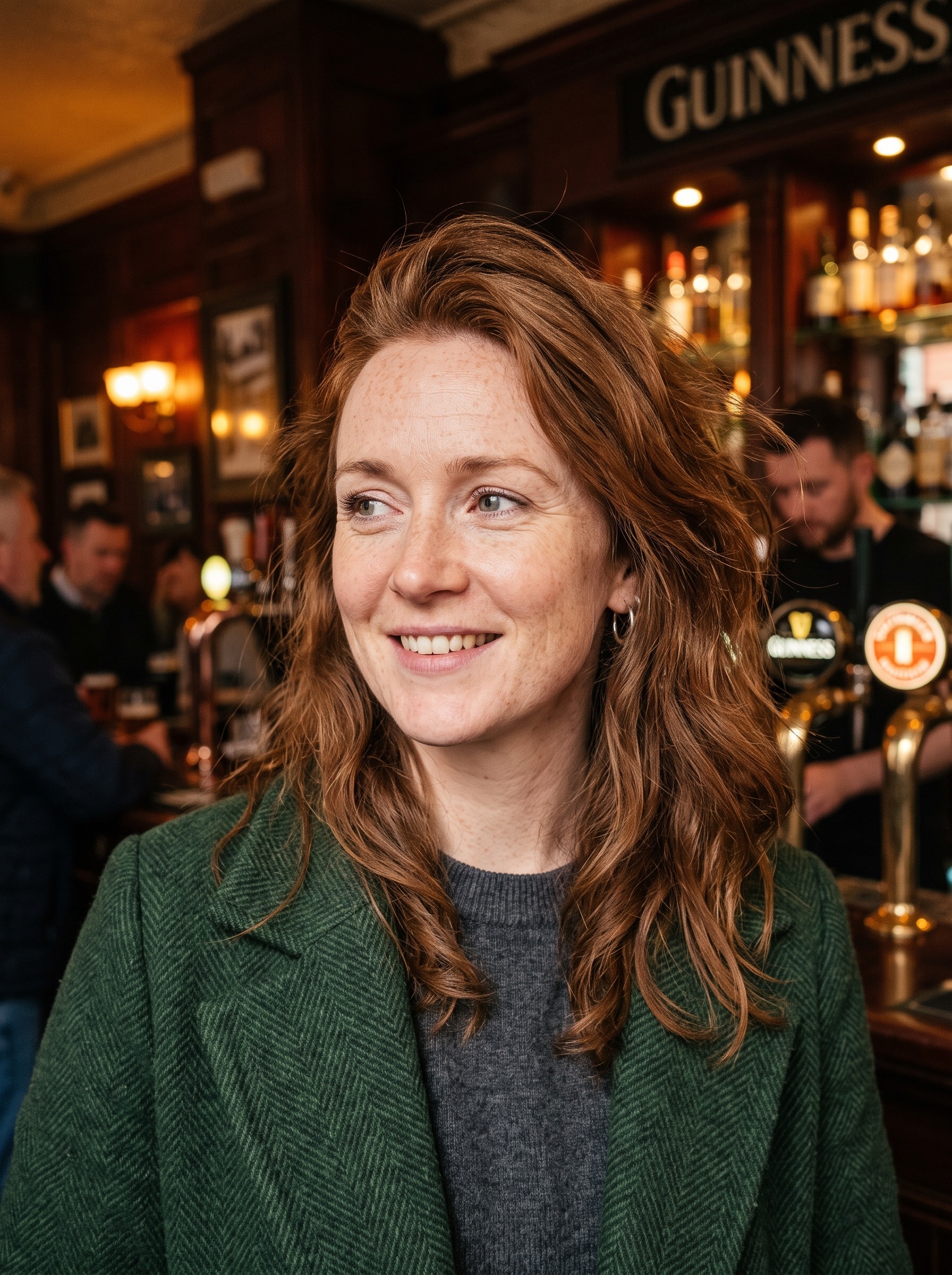

By nine on a Saturday, the cobbles between Fleet Street and the river are already in full voice: stag parties, buskers, phone cameras, and a pint of stout in the red pub on the corner heading towards the guts of a tenner. Come back at two on a Tuesday and the lanes have room to breathe, with a fiddle drifting out of an upstairs bar and the Ha'penny Bridge glinting at the end of Merchant's Arch. Temple Bar is both of those places, and the trick is knowing which one you came for.
What Temple Bar is known for
Temple Bar is the name of a street, yes, but also of the whole cobbled quarter wrapped around it, taking its name from Sir William Temple, who built a house and gardens here in the early 1600s. That history sits under the noise like a bass note. For years this patch of the south bank was nearly flattened for a bus depot; the state transport company had bought up the leases in the 1970s and 80s, only to rent the buildings cheaply in the meantime to artists, galleries and second-hand shops. Dublin, bless it, stumbled into saving something by accident. The plan was scrapped, Temple Bar Properties was set up in 1991, and the lanes were recobbled, restored and handed a new brief as the city’s official cultural quarter.
The result is a place that can feel split in two without ever quite falling apart. By day, it is a serious little cultural district, with galleries, archives, studios and a proper cinema programme. By night it turns brash, loud and expensive, the most photographed drinking strip in the country. The Temple Bar Pub — that bright red, flower-decked corner house at Temple Bar and Temple Lane — has become the shorthand for all of it, for better and for dearer. It is the single most photographed pub in Ireland, and one of the priciest too. That is not a moral failing, just a bill.
The quarter’s other great calling card stands at its northern edge. The Ha'penny Bridge, the delicate white cast-iron footbridge that opened in 1816 as the Liffey’s first pedestrian crossing, is the unofficial front door to the whole place. Cross it and the postcard starts. Stay long enough and you’ll see the machinery behind the postcard too.

Where to eat & drink
The first thing to say about eating in Temple Bar is that the district’s reputation is lazier than its kitchens. If you stick to the most obvious pub grub, you’ll get what you asked for and not a bit more. But there are pockets worth your time, and a few places that know exactly what they’re doing.
Klaw on Crown Alley is the sort of place that makes a virtue of not trying too hard. It’s a tiny 15-seat crab shack from Niall Sabongi, all shucking knives and salt air, with oysters from about €2 apiece, plus lobster, crab and prawns in a room that feels deliberately stripped back. That no-frills approach is a relief in a district where the fit-out often does the heavy lifting. Here, the shellfish is the point.
Elephant & Castle on Temple Bar has been around since 1989 and has earned its city-wide reputation the old-fashioned way: by serving the chicken wings with blue-cheese dip people keep coming back for, and by filling up at weekend brunch until there’s a queue out the door. It is not subtle, but then it doesn’t need to be. If you want a proper sit-down meal, Rosa Madre does daily-delivered fish and Italian seafood with a seriousness that cuts through the area’s more theatrical habits. Sano Pizza, open from noon seven days a week, turns out Neapolitan-style pies with a welcome lack of fuss. Bunsen keeps it gloriously pared back with burgers and chips from local beef, while Eatokyo is the reliable, good-value Japanese option when you want to eat well and leave without feeling mugged.
For daytime, Queen of Tarts has been baking cakes, tarts and proper breakfasts on-site for over two decades, and it still feels like a place that knows how to look after people rather than perform for them. The IFI Café Bar, tucked inside the Irish Film Institute, is another good escape from the crush — calmer, more civilised, and mercifully less interested in shouting over itself.

On the drinking side, the honest move is to have one pint at a landmark pub for the atmosphere and then get strategic. The Palace Bar on Fleet Street has been going since 1823 and still carries its literary old-pub bones with the upstairs Whiskey Palace. It sits a block off the tourist crush, which is the difference between a pleasant drink and a small financial event. The Foggy Dew, near the Central Bank, is another saner bet: a Victorian pub with a better local-to-tourist mix and none of the “we’ve painted the walls, therefore we’re heritage” nonsense that can plague this quarter.

Going out
This is the bit most people come for, and fair enough. Temple Bar after dark is not subtle, but it is rarely dull. The trad-music pubs are the engine room. The Temple Bar Pub runs live Irish music all day, every day, and has clung to the Traditional Irish Music Pub of the Year title for years. It is also no-reservations and elbows-out, with the dearest round in town. There’s a reason people queue for it and a reason locals roll their eyes. Both can be true.
A little further along, Oliver St. John Gogarty on the corner of Fleet Street and Anglesea Street pours daily sessions of trad, ballads and laments across two floors. The Auld Dubliner keeps live music going seven days a week, while The Old Storehouse on Crown Alley gets going mid-afternoon — around 3pm most days, 2pm at weekends — which makes it useful if you want the music before the night turns into a scrum. Merchant’s Arch, right by the Ha'penny Bridge, runs music from lunchtime into the small hours and made headlines as one of the first Dublin pubs to break the €10-pint barrier. That’s one way to become famous, I suppose.
If you’d rather your pint came with a bit more brewery backbone, The Porterhouse on Parliament Street brews its own beer and stacks live music through the week. It’s a better bet if you want a craft pint rather than another tourist stout, and there’s something comforting about a place in this district that still cares what’s in the glass.
For actual gigs and club nights, The Workman’s Club on Wellington Quay is a Georgian townhouse with dancefloors, a cellar stage and a beer garden, while the Button Factory on Curved Street — named Ireland’s IMRO Live Music Venue of the Year for 2025 — books indie, electronic and hip-hop in an intimate room. Temple Bar may sell itself on trad, but the night here has more than one rhythm if you know where to look.

Things to do / what to see
Temple Bar’s daytime self is where the value hides, and that’s not just a nice line. It’s the part of the quarter that still feels like it was saved for a reason rather than a marketing deck. The Irish Film Institute on Eustace Street sits inside a converted 18th-century Quaker meeting house and remains the city’s arthouse cinema, with three screens, a café-bar and free Archive at Lunchtime screenings. It’s one of the best places in Dublin to sit down, cool off and remember that a neighbourhood can be more than its pub fronts.
Around Meeting House Square, the district’s covered cultural courtyard, you’ll find two free-entry photography institutions: Photo Museum Ireland, formerly the Gallery of Photography, and the National Photographic Archive. On summer Saturday evenings, the square also hosts outdoor film screenings. It’s the sort of place that makes the daytime Temple Bar feel like a different district entirely — less shouty, more thoughtful, and much easier on the wallet.
Temple Bar Gallery + Studios on Temple Bar street is another anchor worth your time: free contemporary Irish art Tuesday to Saturday, roughly 11am to 6pm, plus working studios for around 30 artists. You can feel the point of the place in the title. This is not decoration; it is working space.
Music fans should make the pilgrimage to the Irish Rock ’n’ Roll Museum Experience on Curved Street, based in the Button Factory building, where guided tours take in rehearsal rooms used by U2 and Sinéad O’Connor, a dedicated U2 room and the Wall of Fame mural nearby honouring Phil Lynott, Rory Gallagher, Shane MacGowan and more. It’s a bit more self-conscious than the galleries, but the material has real pull if you grew up on the records.
Smock Alley Theatre occupies Dublin’s oldest custom-built playhouse site, while the Project Arts Centre handles contemporary arts, free exhibitions and two theatre spaces. Between them, they remind you that Temple Bar was meant to be more than a drinking district, and occasionally still is.
The simplest pleasure costs nothing: cross the Ha'penny Bridge and wander the cobbled lanes before the evening crowds arrive. In the morning light, the quarter still knows how to behave itself.

{{ATTRACTIONS}}
Shopping & markets
Shopping in Temple Bar is not about the high street; thank God for that. It leans vintage, indie and edible, which makes it feel more like a rummage than a retail plan. The best of it is the Temple Bar Food Market, held every Saturday on Meeting House Square from roughly 9:30am to 4pm and running since 1997. It is the calmest, best-value way to enjoy the area, which tells you quite a lot. You’ll find Irish farmhouse cheeses, artisan breads, oysters, olives, rotisserie meats, fresh produce and hot street food, all under the square’s roof and away from the worst of the weekend noise.
Cow’s Lane hosts a designer-and-vintage market on Saturdays, and the second-hand institutions around the quarter have their own personalities. Lucy’s Lounge is bright pink and retro in the way only a shop in this part of Dublin can get away with. Nine Crows and Tola Vintage keep the rummage going, with Tola Vintage selling by weight rather than by label, which feels refreshingly honest. The Gutter Bookshop on Cow’s Lane is a well-stocked independent bookseller worth a detour even if you weren’t planning to buy anything. And if you’re wandering between the shops, keep an eye out for the small public-art quirks: the mosaic-covered Love Lane off Crampton Court, and the Icon Walk murals celebrating Irish cultural figures around the Fleet Street lanes. They make the walk feel less like a retail corridor and more like a neighbourhood with a sense of humour.
Where to stay in Temple Bar
Staying in Temple Bar puts you dead centre of the action, a few minutes from Trinity College, the Book of Kells, Dublin Castle and both riverbanks. That is the whole appeal, and the whole catch. The trade-off is noise. The core lanes are loud with drinkers and buskers until closing, so if you value sleep, choose your spot carefully and don’t pretend cobblestones are a lullaby.
The fringe streets are your friend here. The Morgan on Fleet Street is a slick 4-star with 168 rooms and its own restaurant, set just off the busiest cobbles. The Temple Bar Inn, also on Fleet Street opposite the Palace Bar, is a comfortable contemporary boutique a short walk from Trinity. The Fleet occupies the former Bewley’s building at the eastern edge and blends period bones with modern rooms. The Clarence Hotel on Wellington Quay — the 1852 riverside hotel once owned by Bono and The Edge — has been undergoing major renovation, so check its status before booking.
Prices run mid-to-upper range across the board, and beds fill fast around weekends, rugby internationals and festivals. If nightlife is the point of your trip, book right in the middle. If you want the location without the 3am singing, aim for a Fleet Street or riverside room, or stay a few streets south around the Creative Quarter and walk in.
{{HOTELS}}
Getting around
Temple Bar is tiny and entirely walkable. You can cross it end to end in about five minutes, and almost everything worth seeing is on foot from here. Trinity College and the Book of Kells are a two-minute stroll east; Dublin Castle, Christ Church Cathedral and the Chester Beatty are five to ten minutes west; and the Ha'penny Bridge drops you straight over the river to O'Connell Street and the north side.
The nearest tram stops are on the Luas Red Line — Jervis just across the river, or Westmoreland and Trinity on the Green Line a couple of minutes east — handy for Heuston and Connolly stations. Dublin doesn’t have a metro, so buses and walking cover the rest. The free TFI Live / TFI Real Time app shows live bus, Luas and DART times.
For the airport, there’s no rail link: the Dublin Express and Airlink 747 coaches stop within a couple of minutes’ walk on the quays and reach Dublin Airport in about 30–40 minutes, with Dublin Express running roughly every 10–15 minutes. A taxi to the airport takes 20–35 minutes depending on traffic. One practical note: the cobbles are charming but hard on wheelie cases and heels, so pack accordingly.
Temple Bar is worth visiting once, properly, with your eyes open. The cobbles, painted pubs, buskers and live trad are genuinely atmospheric, and the daytime culture — the IFI, the free galleries, the Saturday market — is not just a cover story. But it is also the most tourist-heavy and expensive part of Dublin, so treat it as a spectacle to soak up for an afternoon or one drink, then go where locals actually linger. The Liberties, Stoneybatter and Portobello will take you further for less. Temple Bar will still be there when you loop back, bright as a postcard and just as expensive.
FAQs
Is Temple Bar worth visiting?
Yes — once, and preferably with a plan. The cobbled lanes, painted pubs, buskers and live trad are genuinely atmospheric, and the daytime culture is a real draw with the IFI, free galleries and the Saturday food market. It’s also the most tourist-heavy and expensive part of Dublin, so treat it as a one-visit spectacle and then head to places like the Liberties, Stoneybatter or Portobello for where locals actually eat and drink.
Why are pints in Temple Bar so expensive?
Because it’s the most touristed strip in the country and the landmark pubs price accordingly. A stout at places like The Temple Bar Pub or Merchant’s Arch can run around €9.50–€10, several euro more than pubs a ten-minute walk away. Even stepping one block off the main drag to The Palace Bar or The Foggy Dew usually gets you a saner price and fewer elbows.
Should I stay in Temple Bar in Dublin?
Only if being in the middle of the nightlife is the point of your trip. The location is unbeatable for Trinity, the castle and both riverbanks, but the core lanes are loud until closing time. Light sleepers should book on the quieter fringe streets like Fleet Street or the riverside quays, or stay a few blocks south and walk in.
What is Temple Bar best for?
Live trad music, pub crawls, first-timer sightseeing, arthouse cinema, galleries and the Saturday food market. It’s a compact place to get the postcard Dublin in one walkable pocket, provided you don’t mind paying for the privilege at night.