Delhi guide
Hauz Khas Village & Shahpur Jat, Delhi: ruins, rooftops and bridal lanes
A walk through Delhi’s most atmospheric collision of medieval stone, lake sunsets, rooftop bars and couture ateliers.
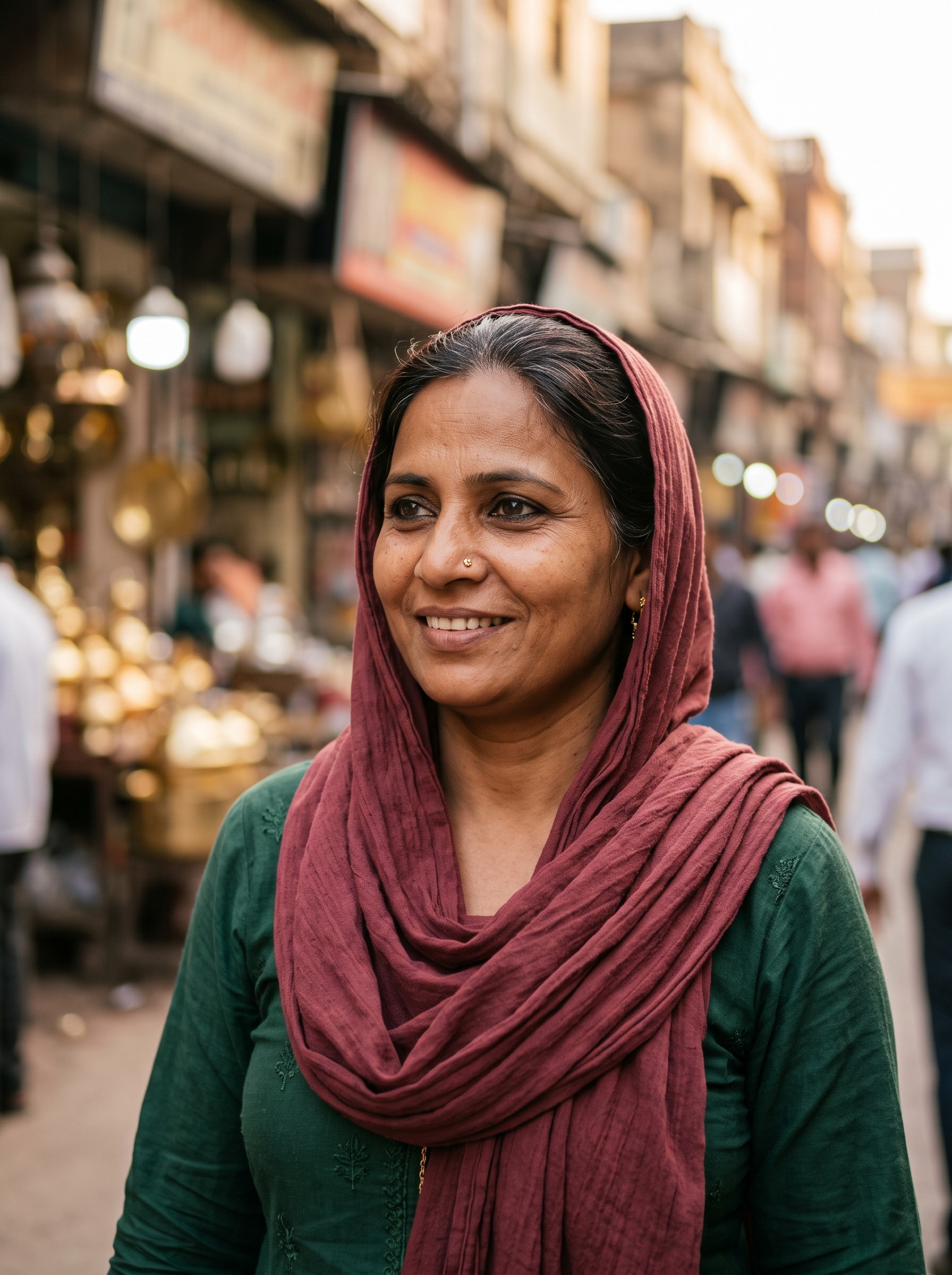

Follow the crooked deer-park lanes of Hauz Khas Village to their end and the pavement simply stops at a 14th-century wonder. The lane has that peculiar Delhi habit of changing its mind halfway through a walk: one minute you are dodging scooters and café tables, the next you are standing before a royal tank that glows gold at dusk, with a tomb, madrasa and mosque stepping down to the water as if they have been arranged for a very serious dinner party. Turn around and the medieval stairwells carry you back up into reggae bars, Kerala-seafood rooftops and the sort of Mediterranean terrace that insists on a sangria pitcher before you have even sat down. Ten minutes north, Shahpur Jat trades the ruins for another spectacle entirely — haveli lanes packed wall to wall with bridal-couture designers, embroidery ateliers and the quiet, moneyed hum of people shopping for a wedding they have not yet finished arguing about.
What Hauz Khas Village & Shahpur Jat are known for
These are two adjoining urban villages that grew up around the 700-year-old walls of Siri, and they still feel like villages that a party and a fashion week wandered into and never quite left. Hauz Khas Village, or HKV as everyone shortens it, is the noisier twin: a single steep spine of a lane, pedestrian and a little theatrical in its climb, with old three-storey homes now stacked with galleries, thrift stores and rooftop bars. At the very end sits the Hauz Khas Complex, the thing that gives the place its spine and, frankly, its permission to be so self-possessed.

This is not a decorative ruin. The tank was first dug in the early 1300s by Alauddin Khilji to water Siri, and later Sultan Firoz Shah Tughlaq desilted it and ringed it with his own domed tomb, an L-shaped madrasa, a mosque and small pavilions. The word Hauz Khas itself means royal tank in Persian, which is the sort of name that lets the place know exactly what it is doing. The odd, lovely thing is how intact the mood remains: peacocks on one side, octagonal tombs on the other, and a low roar of South Delhi traffic circling both as if it were merely the accompaniment.
Wrapped around the complex is Deer Park, officially Aditya Nath Jha Deer Park, a broad green that gives the neighbourhood its breathing room. It is where the village softens. Students come here with books, couples come to walk, and morning regulars use it as a circuit rather than a destination. The resident deer have been progressively relocated since 2023, so the old postcards may promise more antlers than you will actually see, but the park still carries the easy, tree-shaded calm that makes the whole area feel less like a district than a stitched-together mood. Shahpur Jat, just north across a couple of colonies, is the quieter counterpoint: a warren of narrow gullies and studios, built against the ruined ramparts of Siri, now Delhi’s densest concentration of bridal and occasion-wear designers.
Where to eat & drink
The best tables here sell you the view as much as the food, and some are not shy about it. Coast Cafe, above Ogaan, spreads across an upper floor and rooftop with an unobstructed line to the fort and lake, and its Kerala-leaning coastal cooking — fish fry, appams, coconut curries and calamari — is exactly the sort of thing that behaves well at sunset. It is the kind of place where the light does half the work and the kitchen does the rest.

Mia Bella works a similar lakeside angle, but with Italian and European plates and a famous run of mojitos. It sits in the heart of the village and knows the value of lingering. If you want the evening to feel unhurried, this is a dependable way to let the reservoir do its dusk performance while the drinks arrive in their own time.
For something older and cheaper, Naivedyam has been turning out crisp dosas, idlis and thalis for years in a temple-like, brass-lamp interior. It remains the village’s most reliable vegetarian South Indian, the sort of place that does not need to reinvent itself every season because the food already knows what it is. Up on a third floor, Gunpowder serves punchy Andhra and coastal home-style cooking, and it is worth the climb if you like your dinner with a little heat and a view that feels earned.
On the drinking side, the anchors are all rooftops. Imperfecto does Mediterranean-Spanish sharing plates and pitchers of sangria over the Hauz Khas skyline, and it is one of the lane’s busiest weekend spots for good reason. Raasta runs a genuinely different reggae-and-Rastafari theme with a laid-back crowd; it is one of those places that commits to the bit without becoming ridiculous about it. Gypsy Cafe keeps things bohemian and affordable, with live music at weekends and the easy air of a place where nobody is in a hurry to prove they know the DJ.

Over in Shahpur Jat, the food is quieter but no less specific. The Potbelly Rooftop Cafe is a rare specialist in Bihari home cooking, and the litti chokha and sarson machhli are the order. Its rooftop looks over the village rooftops, which is a gentler kind of view than HKV’s lake drama, but no less satisfying when the food is right. Then there is Zuru Zuru, a tiny 12-seat ramen counter in Shahpur Jat where reservations are essential. It is the sort of place that makes you lower your voice as soon as you find it, because anything that small and good deserves a little reverence.
Going out
Hauz Khas Village earned its reputation as one of Delhi’s core going-out districts, but the format is unusual. This is not a strip of standalone clubs. It is a stack of rooftop bars piled into old village houses along a single pedestrian lane, so a night here is really a bar crawl up and down stairwells. There is a pleasing physicality to it: you climb for your drink, and then you climb again for the next one.
The most consistent all-rounder is Social — a co-working cafe by day that flips into a heaving bar-restaurant by night, with reliable food, industrial-cool interiors and no cover charge most evenings. It is the kind of place that catches the broadest crowd because it asks the least of you. From there, the rooftops each pick a lane: Imperfecto for sangria and a Mediterranean crowd, Raasta for reggae and a mellower mood, Gypsy Cafe for cheap drinks and live sets. The scene skews young, loud and unpretentious, with drinks that start well below what you’d pay in central Delhi’s five-stars, which is exactly why students and twenty-somethings pack the lane on Friday and Saturday.

There are two honest caveats, and they matter. The lane genuinely empties fast after last orders, so do not linger to walk out — book a cab from your table. And parking is effectively non-existent on weekend nights, so arrive by auto or Uber. Shahpur Jat is calmer after dark, more late cafe than club, though a handful of its rooftops run open-mic and live-music evenings. That difference is the point. HKV is for the night that wants to keep moving; Shahpur Jat is for the one that would rather talk over its drink.
Things to do / what to see
Start with the Hauz Khas Complex itself. Walk the length of the madrasa’s arcaded ruins, climb up beside Firoz Shah Tughlaq’s tomb and time your visit for late afternoon, when the low sun sets the reservoir alight and cormorants and parakeets work the water. The monuments charge a token fee — roughly ₹25 for Indian visitors and ₹200 for foreigners — and the gates typically close around 7pm, which is just enough time to make the sunset feel like a scheduled appointment with history.

Below and around it, the Deer Park is a big, tree-shaded green with a rose garden, walking loops and its own smaller monuments, including the domed Bagh-e-Alam Ka Gumbad tucked among the trees. The park remains open and pleasant for a morning walk, even if the deer themselves are now more rumor than guarantee. That is Delhi for you: the story remains, even when the cast changes.
For art, the long-established Delhi Art Gallery (DAG) on the village lane is worth a browse of modern Indian works, and the whole HKV strip is dense with smaller galleries, thrift and vintage stores. There is a pleasant looseness to wandering here; you do not need a fixed plan, only enough curiosity to go up one staircase and then another. If you carry on north toward Shahpur Jat, you will pass Chor Minar, the eerie “tower of thieves” studded with holes said once to have displayed severed heads — a quick, strange detour between the two villages, and exactly the sort of thing that reminds you Delhi has never been one place at once.
{{ATTRACTIONS}}
Shopping
Shopping is where these two villages truly diverge. Hauz Khas Village is the browsable, magpie end — its old houses hold thrift and vintage clothing stores, record and print shops, silver-jewellery boutiques and design-led home stores, threaded between the galleries. The flagship fashion name on the lane is Ogaan, a curated multi-designer boutique with Coast Cafe on its roof, good for contemporary Indian labels and festive wear. It is less about conquest than curation, the sort of place that rewards a patient eye.
Walk fifteen minutes north and Shahpur Jat switches register entirely. This is Delhi’s go-to warren for bridal and occasion couture, its gullies packed with the studios of designers turning out lehengas, shararas, sherwanis and hand-embroidered pieces. The best-known resident is Abhinav Mishra, whose flagship mirror-work lehengas draw brides from across the country, but the appeal is the sheer density: dozens of ateliers, embroidery workshops and accessory shops — juttis, potlis, clutches — within a few lanes, where you deal directly with the designers rather than a mall counter. Most Shahpur Jat stores run roughly 11am–7pm and many close on Sundays, so plan a weekday visit; bring cash as a backstop and expect to climb a lot of narrow stairs.
Where to stay in Hauz Khas Village & Shahpur Jat
This is a boutique-and-guesthouse base rather than a big-hotel one. Staying in or right beside Hauz Khas Village puts the ruins, the lake and the entire rooftop-bar lane on your doorstep — brilliant for a nightlife- or culture-led trip, at the cost of weekend noise and steep, car-unfriendly lanes. For a slightly calmer night’s sleep with the same access, look to the surrounding South Delhi colonies — Green Park, Safdarjung Enclave and Gulmohar Park — leafy residential pockets a 10–20 minute walk or short auto ride away, where much of the area’s boutique-stay and serviced-apartment stock actually sits. The overall price feel is mid-range, with genuine budget beds and poshtels available in and around the village and pricier boutique options in the quieter colonies. Wherever you land, you are well connected: Green Park and Hauz Khas metro stations link you across the city, and the airport is a manageable drive.
{{HOTELS}}
Getting around
The nearest metro is a little counterintuitive. Green Park station on the Yellow Line is actually the closest and most pleasant approach — a flat 15–20 minute walk south through the Green Park market and Deer Park brings you to the village. Hauz Khas station, despite the name, is further out but bigger: it is an interchange of the Yellow Line and the Magenta Line, and Delhi Metro’s deepest station, and from its exits it is a 10–15 minute walk or a short auto ride to HKV. Once you are in the village, everything is on foot — the lane is pedestrian-only, narrow and steep, so wear flat shoes and do not count on any parking, especially on weekend evenings.
Shahpur Jat is a 10–15 minute walk north from HKV, or a two-minute auto ride. For getting home after a night out, use Uber or Ola rather than walking, since the lanes empty quickly after the bars close. Autos and cabs reach the rest of South Delhi easily; Indira Gandhi International Airport Terminal 3 is roughly a 30–45 minute drive depending on traffic, and reachable by metro via a change onto the Airport Express at New Delhi or a Magenta-Line ride toward the airport corridor.
FAQs
Is Hauz Khas Village a good area to stay in Delhi?
It is a great base if you want atmosphere over polish: the Hauz Khas ruins, the reservoir, Deer Park and a full stack of rooftop bars are all within one walkable village, and Shahpur Jat’s designer lanes are next door. It suits culture- and nightlife-led travellers. The trade-offs are weekend noise, steep pedestrian lanes with no parking, and mostly boutique or guesthouse accommodation rather than big chains. For a quieter sleep with the same access, stay in Green Park or Safdarjung Enclave.
Is Hauz Khas Village safe at night?
Broadly yes. It is one of South Delhi’s more relaxed, well-trodden districts and is popular with solo and female travellers. The main lane stays busy and lit while the bars are open, but it empties fast after last orders, so keep to the main commercial street, avoid drifting into dark residential gullies, and book an Uber or Ola from your table rather than walking out to find a cab.
What is the difference between Hauz Khas Village and Shahpur Jat?
They are neighbouring urban villages built around the old walls of Siri. Hauz Khas Village is the visitor-facing one: medieval ruins, the reservoir, Deer Park, galleries and a dense strip of rooftop bars and cafes. Shahpur Jat, a 10–15 minute walk north, is quieter and design-focused: a warren of bridal-couture and indie-fashion designers, embroidery ateliers and a few rooftop cafes. Do the ruins and nightlife in HKV; go to Shahpur Jat for shopping.
What is the best time to visit the Hauz Khas Complex?
Late afternoon into sunset. That is when the reservoir turns gold, the cormorants and parakeets are active over the water, and the whole complex feels like it has finally remembered why it was built there. The monuments typically close around 7pm.