Casablanca guide
Habous, Casablanca: Morocco’s Calm New Medina
A 1920s medina of arcades, pastries and brasswork, Habous is Casablanca at its most orderly, photogenic and quietly revealing.
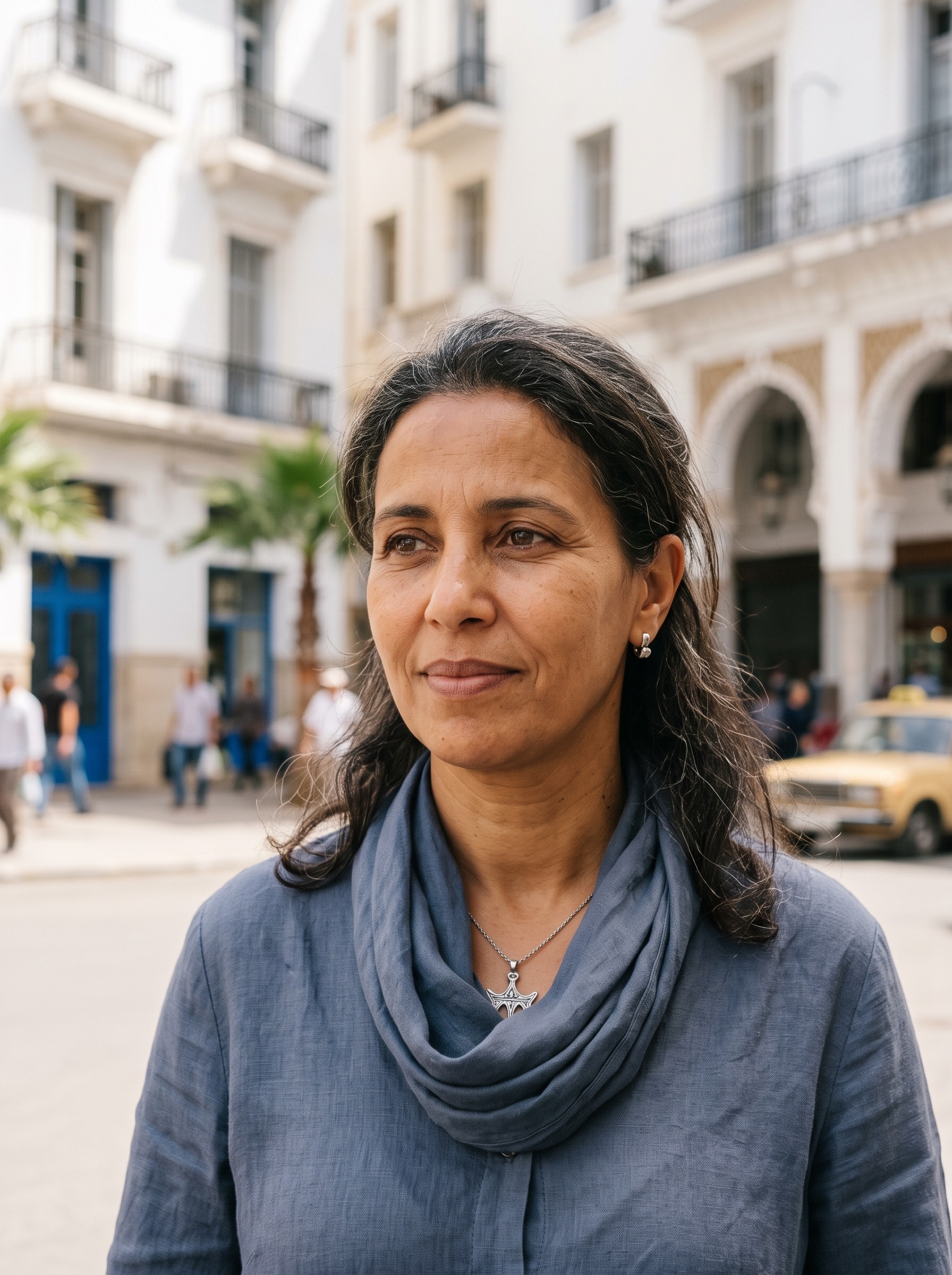 By Leila Tazi

The first thing you notice in Habous is not a landmark but a rhythm: the tap of a coppersmith under stone arches, a tea glass set down on a café terrace, the call to prayer threading through a grid of lanes that were drawn, quite literally, on a drawing board. Place de la Mosquée opens like a pause in the neighbourhood, with a fountain in the middle and the twin minarets of the Mohammedi and Moulay Youssef mosques holding the edges of the square in place. It is a medina, yes, but one with corners you can trust and a map that behaves itself. Casablanca, so often reduced to an argument about business and speed, reveals something gentler here: a quarter built to look old, and to work efficiently, and somehow ended up with its own kind of grace.
What the Habous is known for
Habous is Casablanca's nouvelle médina, the new medina the French planned in the 1920s when the city outgrew the cramped old one by the harbour. The name comes from the habous, the religious endowments that gave the land to the Ministry of Islamic Affairs, and the whole neighbourhood still carries that administrative origin in its bones. Albert Laprade drew the first grid before moving on to Rabat; Auguste Cadet and Edmond Brion carried it through between 1917 and 1926, laying a Moroccan-looking quarter onto a European plan. That is the trick, and the reason the place feels so distinct: arcaded lanes, courtyards, a mosque square, right angles softened by horseshoe arches, carved plaster and zellige. It was designed to be legible, and a century later it still is.

The old medina down by the port is a tangle; Habous is a conversation. You walk under stone arches, past neat kissarias and shuttered shopfronts, and the district keeps offering itself in manageable pieces: a bookseller turning pages, a brass tray catching light, a pastry box tied with string. It is busy without being frantic, traditional without being a maze, and that makes it unusually welcoming for first-timers. The merchants still expect you to haggle, but they do not chase you down the street to do it. That may sound like a small mercy; here it is the whole point.
The quarter's other calling cards are impossible to separate from its design. It is known for shopping, especially crafts and souvenirs; for pastries, especially the Bennis name, which is famous nationally; and for architecture, the 1920s neo-Moorish language of green-tiled roofs, carved plasterwork and horseshoe arches. Threaded through all of it are the civic and religious set pieces the planners placed as anchors: two mosques, the Mahkama du Pacha courthouse, and, just beyond, the gates of the Royal Palace. Habous is not the place to come for improvisation. It is the place to come for a medina that has been arranged, and then lived in.
Where to eat & drink
The most famous address in the quarter is Pâtisserie Bennis Habous, a family bakery working from the same tiled shop since 1930. The name alone draws people in, but the pastries keep them there: cornes de gazelle, those crescent cookies of almond paste scented with orange-blossom water; ghriyba bahla, crumbly semolina-and-almond fondant cookies; fekkas, briouates and chebakia. Everything is still made the old way, and the queue is part of the ritual. Buy by the kilo, ask for a mixed box, and you leave with the best edible souvenir in Casablanca.

If Bennis is the sweet centre of gravity, MaQam gives the square its sit-down dignity. At 9 Place de la Mosquée, it occupies a restored riad with zellige, a courtyard fountain, cedar ceilings and a rooftop terrace called Le Stah. The menu stays in the register the neighbourhood promises: beef-and-prune tagine, seven-vegetable couscous, chicken pastilla and harira, with mint tea, takhlita and spiced coffee in the tea salon through the afternoon. Mains run roughly 90–170 dirhams, which makes it one of those places where you can stop for lunch and linger long enough to watch the square change light.
For a café ritual, Café Imperial has held the arcades at the entrance to the market since 1956. It is touristy, yes, but also genuinely pleasant, with a terrace looking onto the fountains and the Mohammedi mosque. It works well as a breakfast stop before you dive into the lanes, or as the place to sit with mint tea and a pastry when your shopping bag is already full. Café de la Place does the same job from the square itself, less ceremonious and more immediate, a place for tea and people-watching while the market goes about its business.
This is a daytime quarter, and it behaves like one. Think breakfast, lunch, tea and sweets rather than dinner and drinks. Habous is essentially dry and closes early, which means the pleasures here are domestic ones: the clink of glasses, the smell of sugar and mint, the pause before you re-enter the sun.
Things to do / what to see
The showpiece is the Mahkama du Pacha on Rue Moulay Ismail, an ornate Hispano-Moorish courthouse and former residence of the Pasha. Its facade gives the quarter its visual grammar: arcades, horseshoe arches, carved cedar, painted stucco and zellige, all arranged with the confidence of a building that knows it is being watched. Interior access is limited and never guaranteed because it still functions as a government building, so most visitors take their pleasure from the outside. If you do manage a peek, it is usually because a local guide or a taxi driver has negotiated with the guards. Even from the street, though, it is one of those Casablanca structures that seems to hold the whole neighbourhood in its frame.

On Place de la Mosquée, the two mosques bookend the square and give it its calm, civic pulse. The Mohammedi Mosque, begun in 1934 with Sultan Mohammed V laying the first stone, has a minaret modelled on the Koutoubia of Marrakech. The older Moulay Youssef Mosque, from 1923, was also designed by Cadet and Brion in the same Almohad-revival key. Non-Muslims cannot enter either, but both are handsome from the square, and the way they face one another across the open space gives the neighbourhood its architectural balance.
Tucked on a back street behind the Moulay Youssef mosque is Dar Al Ala, a small museum of Arab-Andalusian music set in a restored mansion. It is a quieter stop than the square, and perhaps that is why it lingers in the mind: antique lutes, rebabs and percussion instruments, old manuscripts, a library, and occasional evening concerts that suggest a different Casablanca, one measured by modes and memory rather than traffic.
A short walk east brings you to the ceremonial gates of the Royal Palace of Casablanca, one of the King's residences. Built in the 1920s by the Pertuzio brothers with gardens by Forestier, it is an exterior-only visit, but the hand-worked bronze doors and the esplanade are worth the detour. The palace does not open itself to you; it simply sits there, formal and impenetrable, while the neighbourhood around it goes on selling slippers and sweets.

And then there is the best thing to do in Habous, which is also the least photogenic in a brochure sense: walk. Walk the arcaded lanes, and watch the coppersmiths, calligraphers, potters and slipper-makers at work. Listen for the pages turning in a bookshop under the arches. Let the quarter reveal itself at the speed of a pedestrian, not a car. This is where Habous becomes more than a designed district; it becomes a working one.
{{ATTRACTIONS}}
Shopping & markets
Shopping is the reason most people come, and Habous does it better than anywhere else in Casablanca for a first-timer. Rue Ibn Khaldoun is the main run of shops, thick with babouches, djellabas and kaftans, jewellery, belts and bags. The street has the reassuring density of a place where people actually buy things, not just browse them. You can drift from leather to textiles to brass without losing the sense of the quarter, because each cluster has its own trade and its own pace.
Fan out from the square and the economy of the neighbourhood becomes more specific. There are leather workshops, potters and brassware sellers, spice and argan-oil stalls, and a celebrated stretch of arcaded booksellers. Habous is a genuine centre of the Arabic book trade in Morocco, with stalls of Arabic literature, Islamic texts, old manuscripts and French colonial prints. It is the kind of place where the shopping is as much about looking as buying, though that is not to say you should leave empty-handed.
The Great Habous Olive Market, Souk Zitoun, is one of the loveliest little detours in the quarter: a courtyard of a dozen stalls off Rue Souk Jdid, heaped with green and black olives, preserved lemons, soaked vegetables and regional honeys. It is vividly photogenic and cheap, and it feels like a pocket of the city where colour has been arranged by appetite.

What should you buy? Babouches, first of all, then a tagine or ceramic dish, brass or copper work, spices, argan oil and cosmetics, and a box of Bennis pastries if you have any discipline left. Prices are not fixed, so haggle politely and start low, but remember that the merchants here are markedly less pushy than in the old medina. That matters. Browsing should feel like browsing. Bring cash in dirhams, because many stalls do not take cards. Most shops open around 9am and close by 7pm, and Friday is worth avoiding if you want the full bustle, because many close for midday prayers and the quarter is at its quietest.
Where to stay in the Habous
Honest answer: you do not sleep here. Habous is a shopping, craft and religious quarter with no meaningful cluster of tourist hotels, and it goes quiet and shuttered by early evening. It was built as a merchant medina, not a hospitality district, and that is still how it feels. Come for a half-day, stay for breakfast and a long lunch, then go back to a proper room elsewhere in the city.
For central Casablanca and the easiest transport links, the sensible base is the Centre Ville near Place Mohammed V or Casa-Port. If you want leafier streets, better dining and boutique hotels, Gauthier and Maârif are the reliable modern choices. If the sea is what you want, head to Ain Diab / La Corniche. All of them are a short taxi or tram ride away.
{{HOTELS}}
Getting around
Habous is small and made for walking. That is not a slogan; it is the way the quarter works. The whole point is to wander the arcaded lanes on foot, from square to shops to olive market to museum, with the Royal Palace gates a short stroll east. You do not need a car once you are inside, and you will enjoy the place more if you leave the map in your pocket and follow the shade.
Getting here is easier now that the tram reaches it. The T3 tramway line, opened in September 2024 and running between Casa-Port and Hay Al Wahda, stops at Habous, which drops you right at the quarter. Alternatively, the T2 line stops at Derb Sultan, about a 10-minute walk away. A petit taxi from the Centre Ville or Gauthier is cheap and quick — reckon on 15–25 dirhams from downtown — and the drivers all know les Habous.
For the airport, Mohammed V International is roughly 25–30 kilometres southeast of the city, about a 40–45 minute drive. The airport train runs to Casa-Port and Casa-Voyageurs, from where the tram or a taxi finishes the trip. Because Habous winds down by early evening, plan your visit for the morning or early afternoon, and do not rely on finding taxis or open cafés late in the day.
By the time the light starts to flatten, the quarter has already begun to fold back into itself. Shutters come down. The square empties. The call to prayer hangs for a moment against the arches, and then even that seems to soften. Habous was designed to be practical, but what survives now is something more interesting: a medina with order in its bones, a place where Casablanca slows down long enough to be looked at properly.
FAQs
Is Habous a good area to stay in Casablanca?
Not really. Habous is a daytime shopping, craft and religious quarter with essentially no tourist hotels, and it goes quiet and shuttered by early evening. Come to shop, eat pastries and see the architecture, then base yourself in the Centre Ville, Gauthier, Maârif or Ain Diab.
What should I buy in Habous?
Babouches, ceramics and tagine dishes, brass and copper work, spices, argan oil and cosmetics, and a box of pastries from Pâtisserie Bennis, especially the cornes de gazelle. The Great Habous Olive Market is excellent for olives, preserved lemons and honey. Bring cash and haggle politely.
Is Habous better than Casablanca’s old medina for first-timers?
For many travellers, yes. Habous was purpose-built in the 1920s with wide arcaded streets and a clear layout, so it is much easier to navigate than the tangled old medina by the port, and the merchants are noticeably less pushy.
What’s the best time to visit Habous?
Morning is best, or early afternoon. Most shops open around 9am and close by 7pm, and Friday midday is quieter because many places close for prayers.