Cartagena guide
La Boquilla, Cartagena: drums, mangroves and Blue Flag sand
A working Afro-Colombian beach village north of Cartagena’s walls, where mangrove canoes, kitesurf winds and whole fried mojarra still set the pace.
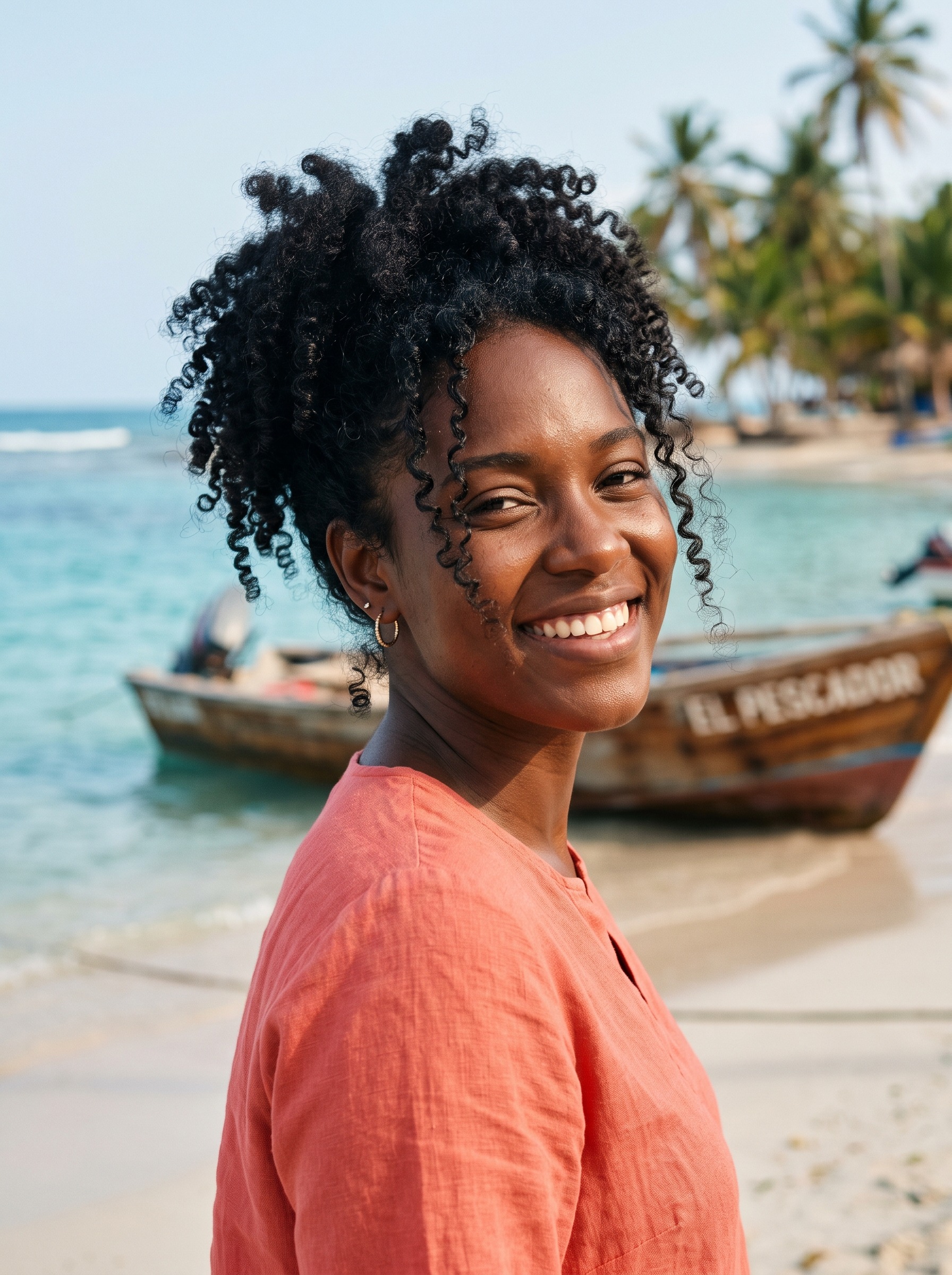

Fifteen minutes north of Cartagena’s walled city, after the airport runway and the last high-rises fade behind you, the road thins and the sea takes over: Caribbean water on one side, a mangrove lagoon on the other, and La Boquilla running down the middle like a village that never bothered to become a resort. The first thing you notice is not glamour but motion — a net being mended, a kite line snapping overhead, a drumbeat leaking from a community hall. This is a place built on fish, rhythm and salt, and it wears that history without polishing it smooth.
What La Boquilla is known for
La Boquilla’s story starts long before the beach clubs and kite schools. It began as a palenque, a refuge for people escaping slavery in colonial Cartagena, and that Afro-Colombian lineage still shapes the neighbourhood’s tempo. You hear it in the cumbia and mapalé that spill out of workshops and celebrations, in the wood-fired kitchens, in the way families still speak about the lagoon as a working place rather than a backdrop. The sea has never been decorative here.
The village’s other great constant is fishing. For well over 200 years, people here have cast nets in the Ciénaga de la Virgen — also called the Ciénaga de Tesca — the shallow lagoon tucked behind the beach. It is the sort of place that makes you slow down without asking permission. Boats go out before dawn. Ice appears in coolers. Lunch is often whatever came in on the morning nets.
And then there is the beach itself: Playa Azul, the organised stretch fronting the village, which holds the distinction of being the only Blue Flag-certified beach in Cartagena. That matters here. It means cleaner water, lifeguards, wheelchair access, orderly vendors and the kind of beach management that keeps the place from tipping into chaos. It is calmer and less hassled than Bocagrande, but it is not sterile. The sand still belongs to a working community first.

What makes La Boquilla feel different from the Old Town is not just the lack of horse carriages or emerald boutiques. It is the soundscape. Roosters. Salsa from a speaker. Church bells. The low thump of tambores. A village can be modest and still feel full of life, and this one does. You are not here for a curated colonial fantasy. You are here to see what the coast looks like when it is still doing its own work.
The mangroves are the other half of the neighbourhood’s identity, and they are recovering beautifully. In the tunnels of the lagoon, red mangrove roots arch overhead like a living cathedral, and the birdlife has returned with them. Herons, egrets, pelicans and kingfishers are common; the most astonishing return is a colony of roughly 200 American flamingos. That is the kind of detail that makes La Boquilla more than a beach stop. It is a place where ecology and livelihood are tangled together in real time.
Where to eat & drink
Eating in La Boquilla is gloriously uncomplicated. You come for fish, and you ask for it the way locals do: whole, fried, crisp at the edges, and served with the proper accompaniments. A classic plate is mojarra frita with arroz con coco, patacones and a simple salad, plus a limonada de coco or an ice-cold Águila beer. It is the kind of lunch that arrives heavy enough to make the afternoon feel optional.
At the beachfront palapas along Playa Azul, the seafood stalls now operate under a standardised price system, which is a mercy. There are dozens of licensed places, and the vibe is less hustled than on many city beaches. Still, I’d say the same thing I’d say to any friend sitting down on the sand: confirm the price before you order. Not because everyone is trying it on, but because a working beach can be a little too improvisational for comfort.
Restaurante Los Guaros is the long-running palapa favourite that locals trust for whole fried fish, mojarra frita and shrimp at prices that would make most Old Town menus blush. Expect to wait 30 to 45 minutes, because the kitchen cooks to order and does not pretend otherwise. That wait is part of the rhythm here; the sea breeze does half the work.

If you join a community mangrove outing with Ecotours La Boquilla, lunch may be cooked in a fisherman’s own home over a wood fire. That is not a marketing flourish; it is the point. The meal is as local as the canoe ride, and it is usually the freshest thing you will eat in Cartagena. Wood-fired fish, coconut rice, plantain — simple food, but the sort that tastes like place.
There is essentially no bar scene here, and that is not a flaw. A beer at your lunch table is about as far as “drinking out” goes. If your idea of a good evening depends on a cocktail list and a DJ, you are in the wrong neighbourhood. If your idea of a good meal is a whole fried mojarra under a palapa with sand on your feet, La Boquilla understands you perfectly.
Going out
La Boquilla’s nightlife is cultural, not club-driven. That distinction matters. There is no rooftop circuit, no reggaeton megaclub, no late-night glamour machine. What the village has instead is live Afro-Caribbean drumming and dance, and it feels older, warmer and more honest than anything you’d queue for in a party district.
Batambora, also known as Somos Batambora, grew out of the free after-school Escuela Taller Tambores de Cabildo and is run by young people from La Boquilla’s Afro-descendant community. Its workshops are hands-on: a little theory, then straight into the tambor alegre, with cumbia, mapalé and champeta moving through the room and into your body. It is sweaty, joyful and very local, and the money helps keep the youth programme alive. That matters in a place where culture is not a performance package but part of the social fabric.

Beyond the organised workshops, drumming often spills into village celebrations and the finale of community tours. If you happen to be here at sundown, take a beer at a beach palapa and watch the kitesurfers pack up while the sky goes copper over the water. It is not a wild night, and that is exactly why it works. La Boquilla gives you rhythm without the hangover.
Things to do
The signature experience here is the mangrove canoe tour through the Ciénaga de la Virgen. The best version is with Ecotours La Boquilla, the fishermen’s community cooperative, on a two-to-four-hour trip that feels like a lesson in how a village survives by respecting its own waters. Local guides paddle you under red-mangrove arches, show you how to cast an atarraya fishing net, set crab traps and spot the birds that have returned to the recovering lagoon. Profits stay in the village and support roughly 40 local families, which is the kind of tourism math I can get behind.
The canoe ride is not just about scenery; it is about seeing the lagoon as work. You learn how the fish move, how the roots hold the banks together, how the birds read the water better than most visitors ever will. If you choose the add-ons, you can fold in a wood-fired lunch and a drumming session, which is a pretty good way to spend a morning and afternoon.

La Boquilla is also Cartagena’s kitesurfing capital, and the conditions explain why. The beach is wide, shallow and warm, and the December-to-April northeast trade winds usually build by late morning to a reliable 15 to 25 knots. That makes it ideal for learning, especially if you like the idea of starting with your feet in warm water instead of a cold, punishing surf break.
Nomad Kitesurf Colombia, on Carrera 9, is the IKO-certified school run by Felipe and Nicolette, with English-speaking instruction and a beginner-friendly reputation. En Colombia Kitesurf is the long-running beachfront nautic school near the Sonesta hotel, and it also does windsurf, SUP and surf lessons and rentals. If you have ever wanted to try kitesurfing without the full-body panic of a more exposed beach, this is your place.

You can also join the fishermen at dawn, take a Caribbean cooking class, birdwatch the lagoon or simply claim a palapa on Playa Azul and do nothing at all. That last option is underrated. La Boquilla is one of those rare places where “doing nothing” still feels like participation, because the village keeps moving around you.
{{ATTRACTIONS}}
Shopping & markets
La Boquilla is not a shopping neighbourhood, and I say that as a kindness. There are no boutiques, no malls, no design stores, no reason to come here with a shopping agenda. What you will find is the everyday commerce of a fishing village: small tiendas selling cold drinks, fruit and sunscreen; women carrying trays of frutas and coconut sweets on the beach; and vendors offering hair-braiding, massages and hammocks along Playa Azul.
The beach vendors here are now more organised and less pushy than on Cartagena’s busier sands, thanks in part to the Blue Flag regime. That makes a difference. You can actually relax without feeling like a moving target. If you want emeralds, hats or souvenirs, save that for the walled city or Getsemaní. The only thing worth “shopping” for in La Boquilla is fish fresh off the morning boats, and even that feels more like joining the village economy than making a purchase.
Where to stay in La Boquilla
Staying in La Boquilla is a deliberate trade. You give up the Old Town’s walk-out-your-door magic in exchange for sea breeze, sunrise over the Caribbean and prices that sit well below Bocagrande or El Centro. That is the bargain, and for the right traveller it is a good one.
Accommodation clusters at the northern, quieter end of the beach and along the sandbar, especially in the Playa Azul / Azul Beach area, where modern apartments sit a short walk from the sand. There are also small beach hotels and simple posadas closer to the village core. It is a smart base if you are here for several days of mangrove time, beach time and kitesurfing, or if you just want to wake up near the water without paying Old Town premiums.
The catch is obvious: you will rely on taxis or the bus to get into the historic centre, which is a 15 to 25 minute ride away. That makes La Boquilla a poor fit if your whole trip revolves around late dinners and walking home under colonial balconies. But if you want quiet, space and a more grounded version of Cartagena, it makes a lot of sense.
{{HOTELS}}
Getting around
La Boquilla sits about 8 kilometres north of Cartagena’s walled city, and only around five minutes from Rafael Núñez International Airport. That proximity is one of the neighbourhood’s quiet advantages. You can be on the beach almost before you would have cleared the Old Town traffic.
A metered or agreed-fare taxi from the centre usually runs roughly COP 20,000 to 40,000, and it is the simplest way in and out. I would still say the same practical thing every local says: agree the price before you set off, and use registered airport taxis for the short hop from CTG. On a budget, TransCaribe and local buses — including the SB100 route and the grey and red Vehitrans buses that run along the beach road — connect the village to the city for a few thousand pesos. They are slower, but they work.
Within La Boquilla itself, everything is walkable along the single beach strip. The sand, the palapas, the kite schools and the tour meeting points are all within a few minutes of one another. To reach the mangroves, you go by canoe from the lagoon side of the sandbar, arranged through your tour. Come and go in daylight where you can, and if you are staying for dinner, ask your restaurant to call a taxi rather than waiting on the roadside after dark.
La Boquilla rewards the traveller who likes a place to feel alive rather than packaged. It is a beach village with drums in its bones, fish on the table and wind in the water, and it never tries to be anything else.
FAQs
Is La Boquilla a good area to stay in Cartagena?
It is, if you want a quiet, authentic beach base with Afro-Caribbean culture, mangroves, kitesurfing and cheap fresh seafood — and you do not mind taxiing 15 to 25 minutes into the Old Town for dinner or nightlife. If walking straight into the colonial centre at night is your main priority, stay in El Centro, San Diego or Getsemaní and visit La Boquilla by day.
Is La Boquilla safe?
Playa Azul is Blue Flag-certified, so the main beach is clean, organised, lifeguarded and policed, with vendors kept more orderly than on many other Cartagena beaches. It is still a working village, though, so use normal city sense: agree taxi and food prices up front, keep valuables low-key, and travel in daylight or by pre-arranged taxi at night.
What is there to do in La Boquilla besides the beach?
Plenty. Take a community mangrove canoe tour with Ecotours La Boquilla through the Ciénaga de la Virgen, learn Afro-Colombian drumming and dance with Batambora, book a kitesurf lesson with Nomad Kitesurf Colombia or En Colombia Kitesurf during the windy season, or join a wood-fired Caribbean cooking session with a local family.
When is the best time to kitesurf in La Boquilla?
The December-to-April northeast trade winds are the sweet spot, usually building by late morning and often blowing in the 15 to 25 knot range. The beach is wide, shallow and warm, which makes it especially friendly for beginners.