Cairo guide
Heliopolis, Cairo: Belle-Époque Calm at the Edge of the Airport
A planned desert suburb turned polished Cairo enclave, Heliopolis pairs the Baron’s palace and El-Korba arcades with café terraces, villa bars and the city’s easiest airport access.
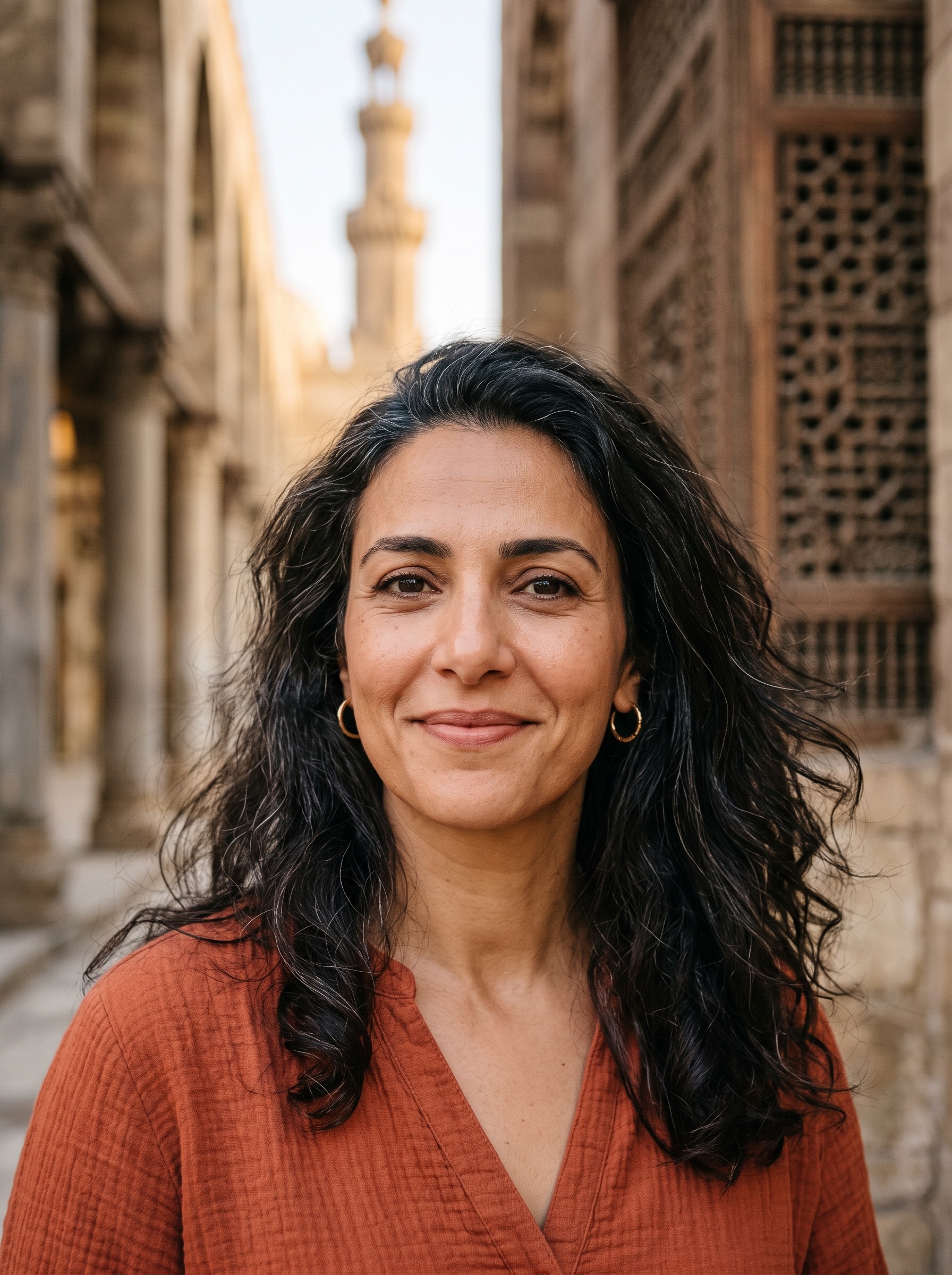

Édouard Empain arrived on a blank sweep of desert northeast of Cairo and decided to build a city from scratch. The result, begun in 1905, is still visible in the bones of Heliopolis: arcaded streets, a palace with Hindu and Khmer echoes, a basilica modelled on Hagia Sophia, and the ghost of a private tramway that once carried the wealthy to their villas. Today the neighbourhood feels like Cairo with the volume turned down. The traffic is still Cairo, of course, but the trees are older, the pavements wider, and the pace around El-Korba has the measured confidence of a place that has spent a century learning how to live with itself.
What Heliopolis is known for
Heliopolis is Cairo’s planned garden suburb, known in Arabic as Masr El-Gedida, “New Cairo,” though nothing about it feels new now except the clean logic of its original design. It was built to be a complete world, and in many ways it still is. The architecture is the first clue: a deliberate blend of Islamic, Moorish, Persian and European detail, imposed by covenant so that the quarter reads as one long composition rather than a jumble of unrelated facades. The centre of gravity is El-Korba, where the streets tighten into a triangular square and the buildings stand shoulder to shoulder beneath continuous ground-floor arcades. Baghdad Street, in particular, remains the neighbourhood’s most persuasive promenade.
The headline sight is the Baron Empain Palace on El-Orouba Street, a startling mansion whose terracotta towers borrow loosely from the temples of Angkor and Odisha. Restored and reopened in 2020 as a museum of the district’s history, it has moved from ghost story to civic icon, which feels like the right fate for a building that was always more dream than house. Step inside and Heliopolis explains itself in rooms, photographs and relics: the original tramcar parked on the grounds, the spiral staircase, the vintage cars, the exhibition on how the district was built. It is an architectural fever dream, but a disciplined one.

A short distance away, the Basilica of Our Lady of Heliopolis offers a different kind of grandeur. Alexandre Marcel, the same French architect behind the palace, gave it a Byzantine-revival silhouette, with a dome that deliberately nods to Hagia Sophia. The Baron and his family lie in a crypt beneath the altar, which lends the church a quiet gravity beyond its architectural interest. Together, the palace and basilica tell the story of a district that was never meant to be ordinary. It was designed to impress, to seduce, to make Cairo’s future look elegant.
The present-day mood is gentler. This is upper-middle-class Cairo, the kind of place where families drift out for Friday lunch, students nurse flat whites on café balconies, and older Cairenes who have lived here for decades treat Baghdad Street as their own promenade. Evenings are genteel rather than wild: coffee and shisha on the pavement, a table under vines, live music slipping out of a villa turned boutique hotel. Heliopolis is greener, quieter and more orderly than almost anywhere else you might base yourself in the city, and the trade-off is distance. The Pyramids, the Nile and the Egyptian Museum are all a long haul across town. What you get instead is a real neighbourhood, not a tourist strip.
Where to eat & drink
Heliopolis eats best around Baghdad Street and El-Korba, where the old architecture does as much of the work as the menus. The marquee table is SACHI Heliopolis, on 3 Cleopatra Street just off Korba, a Mediterranean-and-Japanese restaurant-bar that has made it onto MENA’s 50 Best list. By day it is polished and composed; by night, after dinner service winds down, it becomes one of the district’s few proper cocktail spots. The food moves from salmon tataki and nigiri to short ribs, and the room has the clean sheen of a place that knows exactly what kind of neighbourhood it is serving.

For a very different kind of continuity, Le Chantilly on 11 Baghdad Street has been serving Swiss-Alpine comfort food since 1976. Dark wood panelling, painted milkmaids, a leafy garden: it is the sort of restaurant that feels inherited rather than opened. Cheese and chocolate fondue are the obvious draw, but there is also a solid Egyptian breakfast and koshari, which is a useful reminder that Heliopolis has always been more layered than its belle-époque facade suggests. Pepenero Korba, meanwhile, plays the dependable Italian card from a terrace in a historic Korba building. Burrata pizza, gnocchi and fresh bruschetta are not trying to reinvent dinner; they are simply making it pleasant enough to linger over while the square turns gold.
The most atmospheric address in the neighbourhood is the 1920s Boutique Hotel, a hundred-year-old Yacoubian villa on Korba that houses several restaurants and bars at once. It feels like the kind of place where the evening can unfold sideways. El Barrio, the Cuban-themed bar, spills onto an outdoor terrace and hosts live bands several nights a week. Pinchos, the Spanish tapas-and-paella lounge, brings in live music on Thursday, Friday and Saturday from around 10pm, with karaoke and happy-hour nights thrown in. You do not come here for a scene in the nightclub sense; you come because the villa itself is the evening.

For something quicker and cheaper, Zööba on Baghdad Street turns Egyptian street food into a bright, modern meal: ful, falafel with pickled lemon, koshari. It is a good stop when you want to eat like Cairo without settling into a long lunch. Nearby, Mandarine Koueider remains the sweet-shop institution, the place for malban, the cream-filled Turkish delight known as eshta, and ice cream. And when the mood is less about dinner than a cold glass and a little faded glamour, L’Amphitrion is the survivor to seek out. It belongs to another era of the district’s social life, and that is precisely why it still matters.
Going out
Nightlife in Heliopolis is not about clubs or DJ bars. It is a gentler, more local ritual of terraces, hotel bars and the occasional live-music villa. The most reliable night out is still the 1920s Boutique Hotel, where El Barrio goes Cuban with live bands on the terrace several nights a week and Pinchos keeps its late rhythm on Thursday, Friday and Saturday. The appeal is not volume but atmosphere: music floating over a restored villa, people drifting between tables, the sense that the evening is being composed rather than consumed.
SACHI doubles as the neighbourhood’s smartest cocktail room once dinner winds down, and it is the place for a drink that feels a little more polished than the usual Cairo nightcap. For something older and more unpretentious, L’Amphitrion and the local pub Deals are where regulars go for a cold beer and a football match rather than a scene. That distinction matters here. Heliopolis does not try to compete with the city’s late-night districts. It offers a different pleasure: the pleasure of staying near home, walking a few quiet blocks, and ending the night somewhere with wood panelling, a terrace or a familiar crowd.
Beyond that, the evening rhythm is the ahwa — pavement coffeehouses where Cairenes sit for hours over Turkish coffee, mint tea and shisha, watching Baghdad Street go by. It is one of the neighbourhood’s most persuasive forms of theatre. Nothing is rushed. Nothing needs to be.
Things to do
The essential visit is the Baron Empain Palace on El-Orouba Street. It is open daily, roughly 9am to 6pm, with foreign-visitor tickets around 220 EGP and a separate rooftop panorama ticket for about 120 EGP. The rooftop is worth it for the city view the Baron himself would have known: the sweep of a district imagined in the desert, now absorbed into Cairo’s sprawl. Inside, the rooms hold the district’s story in a more intimate register — period interiors, vintage cars, the spiral stair, the exhibition on Heliopolis’s construction. Even the tramcar on the grounds feels eloquent, a relic from a vanished system.

From there, the best thing to do is simply walk El-Korba. Follow Baghdad Street around the triangular square and under the continuous arcades, reading the layered Moorish-European facades as you go. Heliopolis is best understood at walking pace, because the details are in the cornices, the colonnades, the shopfronts and the way the buildings hold the street together. Detour to the Basilica of Our Lady of Heliopolis on Al-Ahram Street to see Marcel’s Hagia Sophia in miniature. Call ahead for hours, and arrange permission separately if you want to see the Baron’s crypt.
Two long-standing Baghdad Street institutions are worth a stop in their own right. Florabel, the Armenian family florist trading since 1943, is one of those places that makes a neighbourhood feel inhabited rather than curated. The chandelier, the marble floor and the resident cat all belong to the same stubborn continuity. Every Man’s Bookshop, also dating from the same era, has resisted modernising and still sells novels, cards and small gifts from a determinedly retro room. These are not headline attractions, but they are part of the district’s memory, and in Heliopolis memory is the point.

For green space, Merryland Park offers a faded-grand counterpoint to the architectural streets. It was grand in the 1960s and is now a lower-key expanse of lawns, a lake and a small fairground, more local weekend spot than destination. That is part of its charm. Heliopolis is not a neighbourhood that needs to perform constantly; it can afford to be ordinary in places.
{{ATTRACTIONS}}
Shopping
Shopping in Heliopolis splits neatly between the old arcades and the big malls, and the old arcades are the more interesting half. Around El-Korba and Baghdad Street, you browse the district’s character shops beneath the belle-époque colonnades: Florabel, with its four-generation history; Every Man’s Bookshop, unchanged for decades; and a scattering of boutiques, patisseries and specialty-coffee roasters that have moved into the old buildings without erasing them. It is the kind of retail landscape that rewards wandering rather than planning.
If you want handmade Egyptian goods at fixed, fair prices — rugs, cotton, jewellery, Fayoum pottery, no haggling — Fair Trade Egypt is the honest option. For homeware, El-Bostan Street is the place to head for lamps, mirrors and wooden furniture. There is also a small underground second-hand clothing market around Boutros Ghali and Al-Moaayed streets. The bigger malls, City Centre Almaza and Cairo Festival City, sit on the district’s edge and serve the mainstream retail urge, but that is not really Heliopolis at its best. The pleasure here is in browsing century-old shopfronts and letting the neighbourhood show its age.
Where to stay in Heliopolis
Heliopolis is the default base for anyone flying in or out of Cairo, because it is the closest desirable neighbourhood to the airport. The practical logic is hard to beat: most airport hotels are a 5–15 minute drive from the terminals, and the Waldorf Astoria Cairo Heliopolis on El-Orouba Street connects to Terminal 3 by pedestrian bridge. The Hilton Cairo Heliopolis, formerly the Fairmont, is another long-standing business-and-transit favourite, about 5 km and roughly 10 minutes from the airport. The Baron Hotel Heliopolis leans into the district’s belle-époque theme, while the 1920s Boutique Hotel offers a handful of individually styled rooms inside a restored Korba villa above its restaurants.
Choose your pocket by priority. If you want the shortest possible transfer before a dawn flight, stay in the El-Orouba / airport corridor. If you would rather sleep among the arcades, cafés and restaurants, El-Korba is the more atmospheric choice, even if it puts you a little further from the terminal. Just keep the geography in mind: the Pyramids, the Nile and the Egyptian Museum are a long cross-city drive away, so generous transfer time matters if sightseeing is the plan.
{{HOTELS}}
Getting around
Heliopolis sits about 15 km northeast of central Cairo and only a few kilometres from Cairo International Airport, which remains its single biggest practical advantage. Cairo Metro Line 3 now reaches the district, with the branch running out to Heliopolis / Al-Ahram and on toward Adly Mansour in the northeast. It interchanges downtown with the rest of the network, and fares are only a handful of Egyptian pounds. The Metro still does not serve the airport itself, despite long-promised extensions, so getting to and from the terminals remains a taxi or ride-hail job.
Within Korba, you walk. That is the point of the place. The arcaded streets are made for slow movement, for pausing at a florist, crossing to a bookshop, or sitting under the vines at dinner. For everything else, Uber and Careem are cheap, plentiful and by far the easiest way to move around the district and across the city. The historic Heliopolis tram, the private line the Baron built to open up his suburb, was removed around 2019–2020 and no longer runs. One carriage survives as an exhibit at the Baron Empain Palace, which is a poignant little coda to the neighbourhood’s original ambition. As for the rest of Cairo, plan generously: the Pyramids of Giza are roughly an hour away in normal traffic, and often more when the city does what it so often does.
Heliopolis is not the Cairo of postcards and not the Cairo of adrenaline either. It is something rarer: a district with memory, order and a real daily life, where a planned suburb from 1905 still feels like a place people inhabit rather than merely pass through. That is why it lingers.
FAQs
Is Heliopolis a good area to stay in Cairo?
Yes — especially if your priority is the airport. It is the closest pleasant neighbourhood to Cairo International, so it works well for early flights, late arrivals and long layovers, and the Waldorf Astoria even connects to Terminal 3 by footbridge. It is also calmer, greener and more architecturally interesting than most of Cairo. The trade-off is distance: the Pyramids, the Nile and the Egyptian Museum are all a long cross-city drive away, so first-time sightseers may prefer somewhere like Zamalek or Downtown.
What is there to see in Heliopolis?
The headline sight is the Baron Empain Palace on El-Orouba Street, a restored Hindu- and Khmer-inspired mansion that is now a museum. Beyond that, the real pleasure is walking El-Korba and Baghdad Street for the arcaded belle-époque architecture, then visiting the Basilica of Our Lady of Heliopolis, which is modelled on the Hagia Sophia. Long-running places like Florabel and Every Man’s Bookshop add to the district’s character.
How far is Heliopolis from Cairo Airport and the Pyramids?
Cairo International Airport is very close — most Heliopolis hotels are a 5–15 minute drive from the terminals. The Pyramids of Giza are on the other side of the city, roughly an hour by car in normal traffic and often longer in Cairo’s heavy jams, so leave plenty of time if you are combining an airport-side stay with a Pyramids day.
What kind of nightlife does Heliopolis have?
Think terraces, hotel bars and live-music villas rather than clubs. The 1920s Boutique Hotel is the best bet, with El Barrio’s Cuban terrace bands and Pinchos for late live music on Thursday, Friday and Saturday. SACHI is the smartest cocktail room, while L’Amphitrion and Deals are more for a beer and a football match than a big night out.