Cairo guide
Giza, Cairo: the pyramids at your doorstep
A neighbourhood feature on Giza, where the plateau, the Grand Egyptian Museum and the everyday sprawl of Al Haram Street collide under the same impossible skyline.
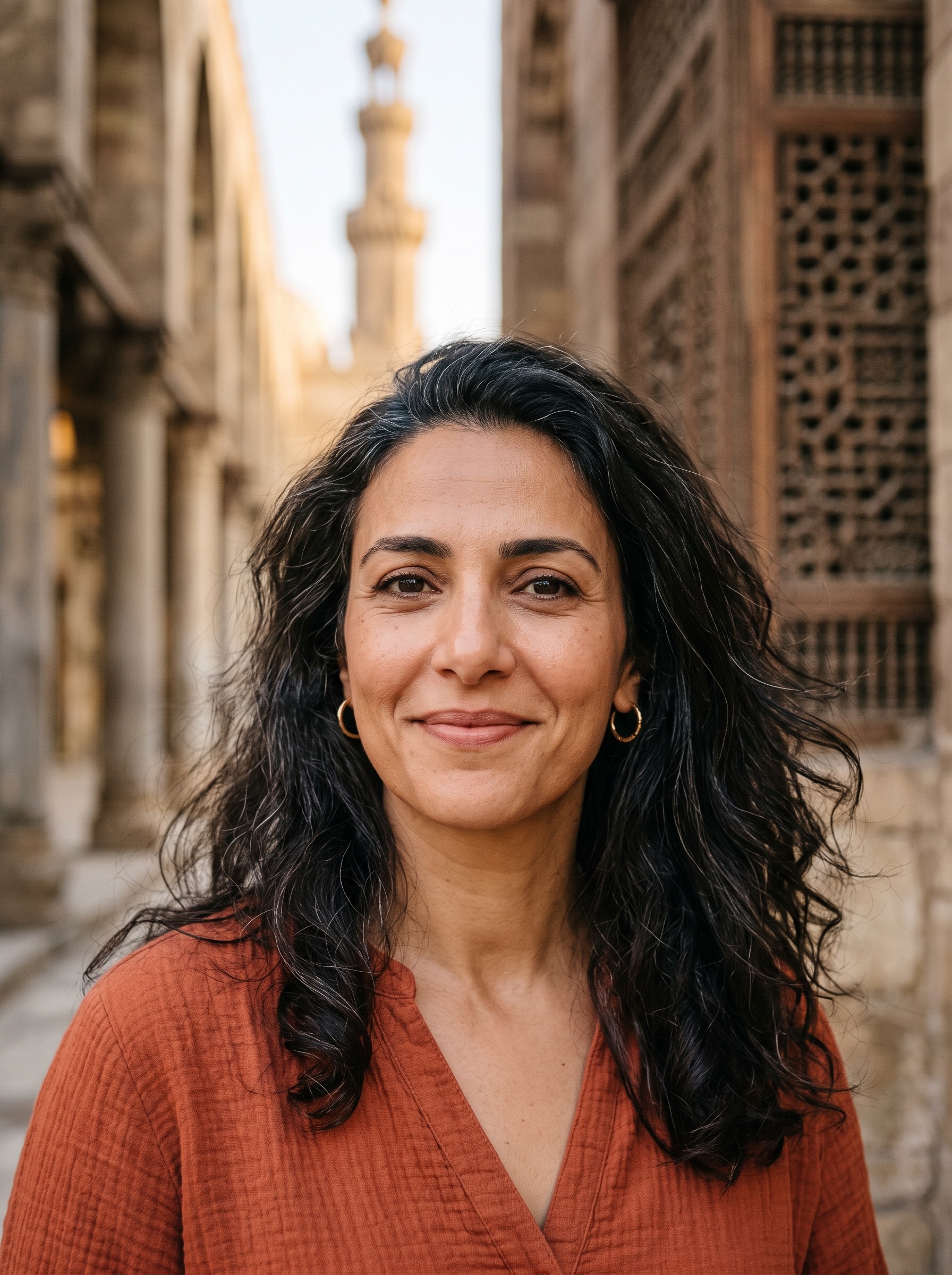

The first thing Giza gives you is scale, and then it gives you noise. Stand anywhere near the plateau fence at dawn and the pyramids do not look like monuments so much as weather systems, huge and silent above the water tanks, satellite dishes and half-open shopfronts of Nazlet El Semman. By midmorning the same street is all engines, hawkers and tour buses. That split — ancient certainty above, modern hustle below — is the whole neighbourhood in one breath.
What Giza is known for
Giza is really two places stacked on top of each other. Up on the limestone plateau are the Pyramids of Giza and the Great Sphinx, built for Khufu, Khafre and Menkaure around 2500 BC and still doing the impossible job of making every other landmark in Cairo feel briefly smaller. Down below is the workaday city that presses right up against the archaeological fence, a sprawl of Al Haram Street, horse stables, papyrus shops and the kind of persistent patter that has been perfected over generations. The photographs people bring home from here — a pyramid rising behind a petrol station, a camel crossing in front of a block of flats — are not tricks. They are the truth of the place.
Since November 2025, Giza has had a second gravitational pull. The Grand Egyptian Museum opened its full galleries on the edge of the plateau, and with it the neighbourhood stopped being only a half-day pilgrimage and became a place worth lingering in. The museum’s vast new scale matches the site outside its windows: twelve galleries, a processional staircase, and Tutankhamun’s complete collection gathered together for the first time. For travellers who once came, ticked the box and fled back to the Nile, this changed the rhythm. Stay here and you can catch the plateau before the buses, then watch the floodlights come on after dark.

The neighbourhood’s mood is not polished, and pretending otherwise is pointless. Around the plateau, Giza is loud, dusty and relentlessly commercial. Al Haram Street, or Pyramids Road, runs straight toward the monuments, thick with traffic and shopfronts, and the closer you get to the gate the more the sell intensifies. Yet that friction is also the point. Giza is not a graceful museum district; it is a place where one of the world’s oldest landscapes sits inside a living city, where the surreal view is inseparable from the messy approach.
Where to eat & drink
For years, people came to Giza for the view and tolerated the food. That changed with Khufu’s, the restaurant physically inside the pyramid complex and, in 2026, named the best restaurant in the Middle East and North Africa. Chef Mostafa Seif, a Top Chef Arabia winner, turns contemporary Egyptian cooking into something that feels both rooted and slightly theatrical: mu’ammar rice with smoked beef, a deconstructed koshari salad, dukkah-crusted pharaonic duck. The room matters as much as the plate. There is the Great Pyramid in the window, fixed and immense, while you work through a set menu that starts around EGP 1,950++ per person. This is the rare Giza meal that justifies the planning it requires.

When the sun drops, Khufu’s Bistro takes over with a Mediterranean-Egyptian menu and the pyramids floodlit behind you. It is the sort of setting that can make even a simple dinner feel ceremonious. Nearby, 9 Pyramids Lounge remains the original plateau dining move, the first restaurant on the site itself. The food is straightforward — ful, ta’amiya, feteer, grills — and the mark-up is real, but the sightline across all nine pyramids is the kind of view that makes a reservation feel like a form of practical wisdom rather than indulgence.
Inside the Grand Egyptian Museum, the dining landscape is more contemporary and more useful than you might expect from a museum complex. Zooba brings modern Egyptian street food with the energy of a Cairo chain that knows exactly what it is doing. 30 North handles specialty coffee. Ladurée, Beano’s and Mandarine Koueider fill the gaps between museum hours and sugar cravings, while the signature Pyramids Restaurant looks out over the plateau. It is the kind of place where a long museum day can stretch into an evening without ever leaving the site.
And then there is the cult budget ritual: the KFC and Pizza Hut at 4 Abou El Houl Square, directly opposite the Sphinx. Go upstairs and the view becomes absurd in the best possible way — a Sphinx panorama for the price of a burger, one of those internet-era Cairo facts that remains funny precisely because it is true.

Things to do
The plateau is the day’s main event, and since the 2025 reorganisation it is a smoother one. Private cars and coaches are now banned inside. You enter through the new visitor centre on the Fayoum Desert Road side and ride electric shuttle buses — more than 45 of them, looping at roughly five-minute intervals — or walk between the main stops if you prefer to feel the scale under your feet. The Panorama viewpoint is the stop to aim for if you want that classic alignment of all three pyramids. Budget four to five hours for the plateau, the Sphinx and the Panorama, and make peace with the fact that the site rewards patience more than speed.
The Pyramids of Giza and the Great Sphinx are still the reason most people come, and they remain the last surviving Wonder of the ancient world for a reason. The experience is partly visual, partly bodily: heat off the stone, sand in the shoes, the sheer stubbornness of the structures against the city that has grown around them. If you want to go inside a pyramid, buy the separate ticket; the Great Pyramid’s cramped ascending passage is the classic claustrophobic choice, and not for the faint-hearted.
The Grand Egyptian Museum deserves its own half-day, not because it is new, though it is, but because it finally gives the plateau a companion worthy of the setting. Twelve galleries climb a vast processional staircase toward a window that frames the pyramids. Two halls are devoted entirely to Tutankhamun’s more than 5,000 objects, shown together for the first time. Foreign adult tickets run roughly EGP 1,230–1,450, and the complex opens daily around 8:30am, with the galleries from 9am, later on Saturdays and Wednesdays. If Giza used to be a place you rushed through, the GEM is what persuades you to slow down.

At night, the Pyramids Sound and Light Show remains the neighbourhood’s most theatrical set piece. Floodlights sweep the stone while a narrated history of the pharaohs plays over loudspeakers in rotating languages. It is unapologetically old-fashioned, and that is part of its charm. In a district that can feel brutally commercial by day, the show leans into spectacle without apology.
{{ATTRACTIONS}}
Camel and horse rides still hover over the experience, postcard-style, but they come with baggage. Welfare has been a live controversy, and the touts around the gate are aggressive. If you want to ride, pre-book through a reputable operator or your hotel rather than negotiating at the fence. The same rule applies to almost everything here: trust official tickets, not improvisation.
Going out
Giza is not a going-out neighbourhood in any conventional sense. There are no club streets, no bar crawl, no late-night scene worth crossing town for. What exists instead is monument-adjacent evening ritual, and it is not nothing. The Pyramids Sound and Light Show is the obvious anchor, but the quieter pleasure is a terrace after dark, when the plateau is lit and the city noise softens just enough to let the view do the work.
The Marriott Mena House is the old grand answer to that need. Its Sultan Lounge is gilded and formal, with a full bar and pyramid views that feel almost indecent this close to the monument fence. The 139 Pavilion is more relaxed, all-day and terrace-based, with live music and the same floodlit backdrop. The hotel’s position near the old plateau gate makes it one of the few places in the immediate area where the evening can feel genuinely composed rather than improvised.

Budget guesthouses in Nazlet El Semman, including Pyramids View Inn, turn the rooftop into the social space. Their barbecues are simple, but the trade is obvious: dinner on a roof with the Sound and Light Show in the distance, the pyramids glowing beyond the village. For an actual bar crawl, cocktails or live music, you cross the Nile. Zamalek and Downtown are where Cairo’s drinking happens, and from Giza that means a taxi and a fair bit of traffic. The neighbourhood is best at one thing at night: making the monuments feel close enough to touch.
Shopping
Shopping in Giza is less a pastime than a gauntlet. Around the plateau gates and along Al Haram Street, the offerings are aimed squarely at visitors: papyrus institutes, perfume-oil showrooms, alabaster displays, scarves, scarabs and mini-sphinxes in every imaginable shade of beige. Some of it is harmless, some of it is aggressively theatrical, and much of the papyrus sold at the roadside is not papyrus at all but banana leaf. The showroom tea routine is a well-worn funnel; know that before you sit down.
If you want a genuine papyrus piece or a decent alabaster object, buy from an established fixed-price gallery rather than a tout on the road. Otherwise haggle hard and keep moving. The Grand Egyptian Museum’s own gift shops are pricier, but they are also the safer bet if you want books, replicas or Tutankhamun-themed pieces without the bargaining performance. For real Cairo shopping — Khan el-Khalili, the Downtown arcades — you will need to cross back over the river. Giza is a place to pick up a souvenir, not to spend an afternoon shopping for its own sake.
Where to stay in Giza
There are two very different Gizas to choose between. At the top end, the Marriott Mena House is the historic grande dame, established in the 1880s and long associated with royalty, Churchill and Agatha Christie. Its 40 acres of gardens and pyramid-facing rooms make it the neighbourhood’s most unmistakable stay. If you book here, ask specifically for a pyramid-view room, because that is the entire point.
A little lower down the scale, newer four- and five-star hotels cluster nearby with rooftop terraces angled at the monuments. Their appeal is not mystery but convenience: you are paying for a view and a short path to the plateau, which in Giza is no small thing.
At the other end of the spectrum is Nazlet El Semman, the village at the pyramids’ feet, where small guesthouses and B&Bs deliver the same jaw-dropping skyline for a fraction of the price. Pyramids View Inn on Sphinx Street is the best-known example, a simple, well-rated bed-and-breakfast whose rooftop barbecue faces the Sound and Light Show. These places trade polish for proximity, and you feel it in the basics: basic rooms, patchy soundproofing, a slightly ramshackle walk to the door. But the sunrise view costs ten times more elsewhere.
The trade-off with any Giza stay is distance. You are far from the Nile-side restaurant and bar scene, and every dinner across the river is a 45–90-minute round trip in traffic. Stay here for the plateau at dawn and dusk; base elsewhere if evenings out matter more.
{{HOTELS}}
Getting around
Giza sits about 18 km southwest of Downtown Cairo, and traffic is the defining fact of movement here. Al Haram Street can feel like a slow-motion river of horns and exhaust, and the bridges toward central Cairo are rarely forgiving. The cheapest link to the city is the Metro: Line 1 runs from Sadat in Tahrir Square to Giza station in around 20 minutes, after which you still need a short taxi or the local shuttle bus to reach the plateau. It is cheap, but with the transfer and the walk, budget closer to an hour door to door.
Most visitors lean on ride-hailing apps such as Uber and Careem, or on a hotel car, especially for the plateau, the GEM and any trip back into town. Inside the pyramid complex, private vehicles are no longer allowed, so the free electric shuttle loop or your own feet are the only ways between the main stops. Cairo International Airport sits on the far northeastern side of the city, roughly 45 km away and 60–90 minutes by car depending on traffic, so if you are staying in Giza before a flight, leave plenty of margin. For Zamalek, Downtown or Islamic Cairo, assume a taxi and a genuine slog in rush hour.
What Giza asks of you is simple: accept the traffic, ignore the touts, and stay long enough for the light to change. If you do, the neighbourhood stops being a transit point and becomes something rarer — a place where one of the world’s great archaeological landscapes is not sealed off from the city but threaded through it, alive, noisy and impossible to forget.
FAQs
Is Giza a good area to stay in Cairo?
Yes, if the Pyramids and the Grand Egyptian Museum are your priority. Staying in Giza buys you sunrise at the plateau before the tour buses arrive and floodlit-pyramid views after dark from your terrace. The trade-off is distance: the best restaurants and nightlife are across the Nile, so every night out becomes a long trip in traffic. Many travellers split their stay, doing a night or two in Giza and the rest in Zamalek or Downtown.
Is Giza safe for tourists?
Giza is very safe when it comes to serious crime, and it is one of the most visited places on earth. The real nuisances are commercial rather than criminal: persistent camel, horse, papyrus and photo touts around the plateau gates, plus classic scams like being told a path is 'closed' to steer you toward a ride. Agree every price up front, buy tickets only from official booths, keep walking past hustlers with a firm 'la shukran', and pre-book any camel or horse ride through a reputable operator.
Has the Grand Egyptian Museum actually opened?
Yes. After years of delays, the Grand Egyptian Museum fully opened its galleries on 4 November 2025, timed to the 103rd anniversary of the discovery of Tutankhamun's tomb. It sits on the edge of the Giza plateau and for the first time displays Tutankhamun's complete collection of more than 5,000 objects together in one place. Budget a half-day; foreign adult tickets are roughly EGP 1,230–1,450, and the galleries open from around 9am daily.
How long should I spend in Giza?
At least one full day, and ideally two or three if you want both the plateau and the Grand Egyptian Museum without rushing. Four to five hours is a sensible window for the pyramids, the Sphinx and the Panorama, and the museum deserves a separate half-day. Staying overnight is what lets you catch dawn before the buses and the floodlit pyramids after dark.