Bruges guide
Onze-Lieve-Vrouwe, Bruges: Michelangelo, museums and quiet canals
Bruges’s most cultured quarter is a short walk of Michelangelo, Memling and canal light, where the day crowds thin and the city speaks in a lower register.
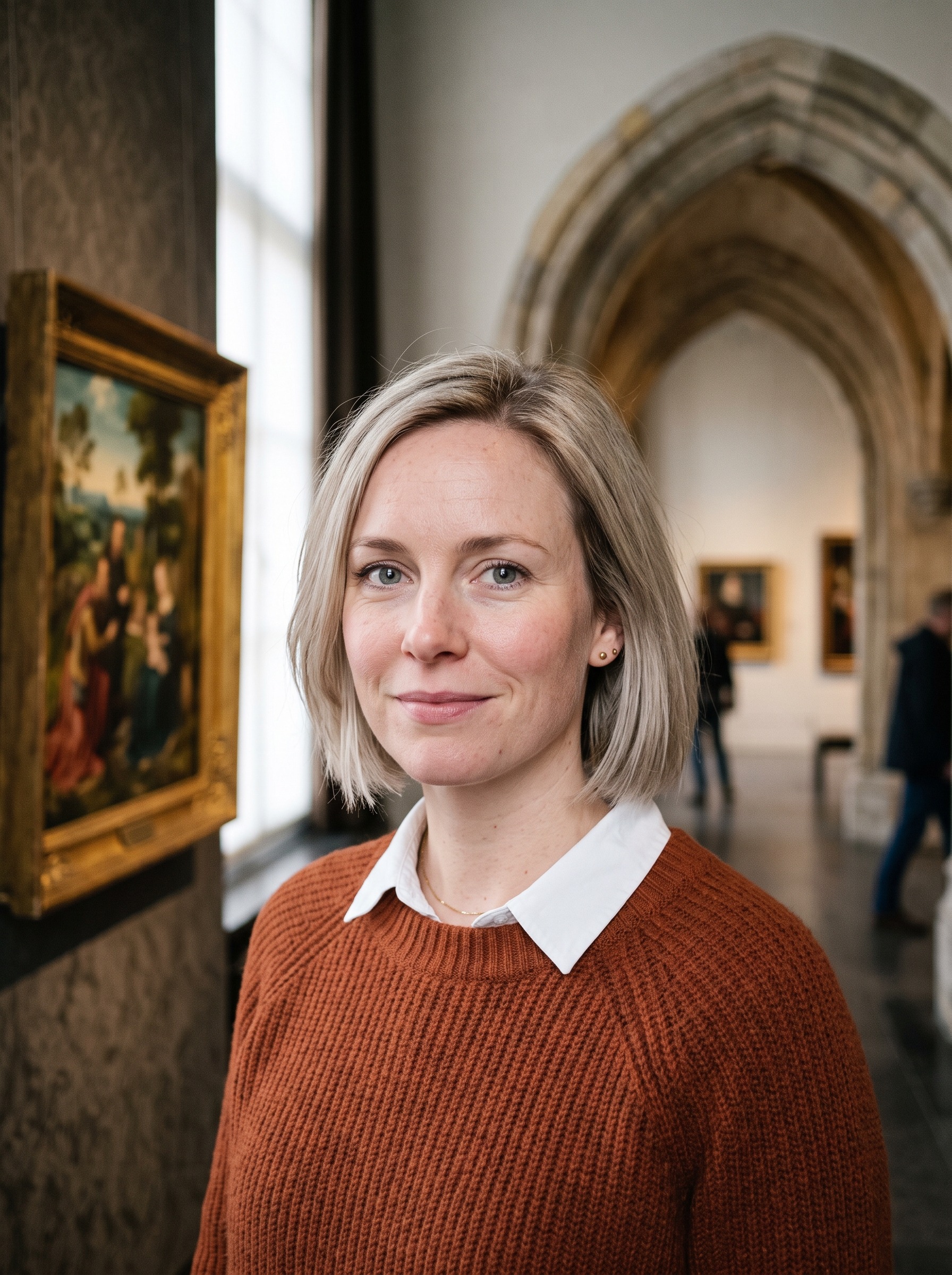 By Margot Devos

Michelangelo’s Madonna and Child has been sitting in a Bruges church since 1514, which is as good a starting point as any for a neighbourhood that prefers marble to spectacle. In Onze-Lieve-Vrouwe, the city’s museum quarter, the streets run south from the Markt along Mariastraat and the Dijver canal, and the whole place seems built to slow you down just enough to notice what is actually here: a white-marble masterpiece, a brick tower that refuses to be modest, and four heavyweight museums packed into a walk so short you could do it before lunch and still have time to argue about whether the Flemish Primitives were more interested in light or in the furniture.
What Onze-Lieve-Vrouwe is known for
The quarter takes its name from the Church of Our Lady on Mariastraat, and the church is not shy about its claims. Its 115.6-metre brick tower is the tallest structure in Bruges and one of the tallest brick church towers in the world. That sounds like the sort of fact a city guide says while pointing upward, but here it matters because the tower sets the scale for everything around it: the low canal quays, the sober façades, the streets that feel as if they were arranged to preserve the view rather than compete with it.
Inside, the headline is Michelangelo’s Madonna and Child, a sculpture from around 1504 bought by the Mouscron brothers and donated to the church in 1514. It is the only Michelangelo sculpture that left Italy during the artist’s lifetime, and it has already survived being looted by French revolutionaries in 1794 and by the retreating German army in 1944. That history gives the room a certain gravity, though the sculpture itself is all calm and contained force, the sort of thing that makes the rest of the church seem to hold its breath.

The church museum also holds the gilded tombs of Mary of Burgundy and Charles the Bold, which is Bruges in one sentence: a city where a Florentine sculptor, Burgundian rulers and a brick tower all share the same address. And because this quarter is not content with one masterpiece, the museum spine continues almost immediately. The Groeningemuseum, Gruuthusemuseum and Sint-Janshospitaal sit within a few hundred metres of one another, which is why the Musea Brugge card earns its keep here faster than anywhere else in town. If you are the kind of traveller who prefers one excellent walk to six mediocre detours, this is your district.
The other thing people come for is the water. The Dijver canal fronts the quarter and feeds the most photographed view in Belgium a couple of minutes downstream at the Rozenhoedkaai. Bruges is never exactly noisy, but here the city seems to lower its voice further. Carillon bells drift over the rooftops, canal boats murmur past, and the gravel in the Arentshof garden keeps company with your shoes. It is dignified rather than lively, cultured rather than cool. Bruges has no need to audition.
Things to do
The museums here are close enough together to make a mockery of any excuse for getting back on a bus. Start at the Groeningemuseum on the Dijver, the essential stop for the Flemish Primitives, housed in a purpose-built art-deco gallery from 1930. Jan van Eyck’s Madonna with Canon Joris van der Paele and Hans Memling’s Moreel Triptych are the names that do the heavy lifting, with Gerard David and Hieronymus Bosch in support. The museum is open Tuesday to Sunday, roughly 9:30am–5pm, which is practical enough to remember and generous enough to reward a proper morning.

A few steps along the same canal, the Gruuthusemuseum occupies the fifteenth-century palace of the Lords of Gruuthuse. It reopened in May 2019 after a five-year restoration and now tells Bruges’s story through some 600 objects: tapestries, lace, silver and furniture, moving through the Burgundian, 17th–18th-century and neo-Gothic eras without turning the whole thing into a costume parade. The adult ticket is around €15, which is not nothing, but then neither is a restored city palace.
Across Mariastraat, the Sint-Janshospitaal, or Memling in Sint-Jan, is one of the oldest surviving hospital buildings in Europe and holds the second-largest Memling collection in the world. Four of the seven masterpieces were painted for this very building in the fifteenth century and never left, which is the sort of continuity museums usually only dream about. The St Ursula Shrine is the exquisite centrepiece, and the place has the quiet authority of a building that has spent centuries doing its job.
Between the museums sits the Arentshof, a quiet garden with bronze sculptures, and the Bonifacius Bridge, the little humpbacked stone crossing locals call the kissing bridge. It looks medieval, which is exactly why it is so easy to fall for, though it was only built in the early twentieth century. Bruges enjoys a good illusion, but it usually has the good manners to make it beautiful.

Follow the water southeast and you reach the Rozenhoedkaai, where the Dijver and Groenerei canals meet under the Belfry and the church tower. It is the most photographed spot in the city, and the trick is to go at first light or dusk, before the crowds turn it into a queue with scenery. The shot is famous because it deserves to be: the water, the tower, the old brick, the reflected sky. Bruges knows how to be posed without looking vain.
{{ATTRACTIONS}}
Where to eat & drink
Eating in this quarter is mercifully less frantic than around the Markt, where the tourist churn can make lunch feel like a civic duty. Here, the meals are more considered, and the settings do some of the work for you. At Le Chef et Moi on Dijver 13, chef Stefaan Cardinael runs a tiny candlelit fine-dining room right on the canal quay. The menu is dictated by the season and by whatever he feels like cooking, so you might find scallops, skate wing or milk-fed lamb, and you will need to book ahead because there are so few tables. It is the kind of place that reminds you why small rooms can feel generous.

For something less ceremonial, Maria van Bourgondië at Guido Gezelleplein 1 has a sunny terrace looking straight at the Church of Our Lady and the Gruuthuse palace, with traditional French-Belgian dishes that know better than to overcomplicate themselves. It is the sort of terrace where lunch can stretch without apology, especially if the weather behaves and the church tower is doing what it does best: looming elegantly.
Then there is the sugar route, because Bruges always makes room for one. The Old Chocolate House at Mariastraat 1C runs an upstairs tearoom where you drop chunks of real chocolate into a jug of hot milk and stir your own drink, with about twenty varieties on the card and Belgian waffles alongside. Expect a short wait for a table, which is fair enough; good hot chocolate is not a democratic emergency. A few doors down, Dumon Chocolaterie at Mariastraat 14 is an artisan chocolatier where you can take a coffee or hot chocolate at the back of the shop with the church in view. Bruges is not subtle about chocolate, and it is right not to be.

For a wider dinner choice, Huidenvettersplein is a two-minute walk east, a small L-shaped square wedged between the Rozenhoedkaai and the fish market, packed with terraces serving moules-frites and Flemish stew. It is not in the official list of star turns, but it is useful to know where a square becomes a meal.
Shopping
Shopping here is boutique and edible rather than high-street, which is probably for the best. The chains cluster on nearby Steenstraat, just north, leaving Mariastraat to do what it does best: chocolate, coffee and the occasional gift you can carry without a suitcase strategy. Dumon Chocolaterie at Mariastraat 14 is a respected artisan maker with a cocoa-tree interior, and The Old Chocolate House at number 1C sells its own praline and spiced hot-chocolate blends alongside its tearoom. If your idea of shopping is to leave with a box that smells better than your hotel room, this is your street.
The museum shops in the Groeningemuseum and Gruuthusemuseum are also worth a browse for art prints and lace-inspired pieces, which feels entirely in keeping with a city whose long lacemaking tradition still shadows the more obvious attractions. Bruges is good at souvenirs that do not insult the room they came from.
For a wider chocolate crawl, the unofficial chocolate mile along Wollestraat is a two-minute walk toward the Markt. And if you want a pause that is not entirely commercial, Simon Stevinplein on the northern edge of the quarter hosts occasional markets and events under the statue of the Bruges-born mathematician Simon Stevin, with a ring of terraces that make a decent place to sit down and pretend you are planning your next move.
Where to stay in Onze-Lieve-Vrouwe
Staying here buys you the rarest thing in central Bruges: a genuinely central location that still goes quiet at night. The museums close, the day crowds leave, and the quarter settles into something almost residential, especially along the Dijver canal where canal-front and former-convent conversions wake you up to water and church-tower views. Mariastraat is the other obvious base, because it puts you steps from the church, the chocolatiers and the Sint-Janshospitaal without making you feel as if you are sleeping inside a brochure.
Pockets around Simon Stevinplein and Guido Gezelleplein are also attractive, with pretty squares and enough distance from the busiest photo spots to preserve your sanity. The price feel here is mid-range to upper-end: boutique and small-luxury hotels rather than budget beds, with canal-view rooms commanding a premium, as they should. Light sleepers will appreciate that, unlike the Markt-facing hotels, the streets here fall silent early. That is not an absence of life; it is a sign that life has learned some manners.
{{HOTELS}}
Getting around
Everything worth seeing in the historic centre is walkable from here. Bruges’s old town is compact and largely car-free, and this quarter sits at its dead centre. The Markt and the Belfry are about a five-minute walk north up Mariastraat, while the Begijnhof and Minnewater, the lake of love, are a similar walk south. That is the practical beauty of staying in Onze-Lieve-Vrouwe: the city does the work for you, provided you are willing to do it on foot.
The nearest bus stop, Brugge Onze-Lieve-Vrouwekerk, sits right by the church and connects to Bruges railway station, about a 20-minute walk or a short bus ride to the southwest. From there, trains reach Brussels in around an hour and Ghent in under half an hour. For Brussels Airport, the direct train from Bruges station takes roughly 1 hour 25 minutes. Streets in the quarter are cobbled and occasionally uneven, so flat shoes are wise, especially around the Rozenhoedkaai stones. Cycling is easy on Bruges’s bike-friendly network, though you will mostly want to be on foot if you are here to take in the museums rather than outrun them.
The quarter suits people who value culture and quiet over nightlife, which is to say, the sort of traveller who does not need a bar tab to feel they have arrived. It is dead-central, five minutes from the Markt, yet calm at night once the museums close and the day-trippers leave. You come here for Michelangelo, Memling, canal light and the simple pleasure of moving between great rooms without ever losing the shape of the city. Bruges can be theatrical, but in Onze-Lieve-Vrouwe it is at its best when it is being precise.
FAQs
Is Onze-Lieve-Vrouwe a good area to stay in Bruges?
Yes, if you value culture and quiet over nightlife. It is dead-central, about five minutes from the Markt, but it goes calm at night once the museums close and the day-trippers leave. You are within easy walking distance of Michelangelo’s Madonna, the Groeninge and Gruuthuse museums, and the Rozenhoedkaai. Expect mid-range to upper-end boutique hotels rather than budget beds.
What are the must-see museums in the quarter?
Four sit within a few minutes of each other: the Church of Our Lady with Michelangelo’s Madonna and the Burgundian tombs, the Groeningemuseum for the Flemish Primitives, the Gruuthusemuseum in a restored medieval city palace, and the Sint-Janshospitaal, which holds Memling’s St Ursula Shrine. A Musea Brugge card that covers several of them is well worth it here.
Where is the best photo spot near the Church of Our Lady?
The Rozenhoedkaai, about a two-minute walk east where the Dijver and Groenerei canals meet, is the most photographed view in Bruges. The church tower and Belfry line up over the water. Go at first light or at dusk to avoid the crowds. The Bonifacius Bridge behind the church, in the Arentshof garden, is the other classic shot.
What is the best thing to eat in Onze-Lieve-Vrouwe?
For a proper meal, Le Chef et Moi on the Dijver canal is the standout, with a seasonal menu that might include scallops, skate wing or milk-fed lamb. For something sweeter, The Old Chocolate House lets you make your own hot chocolate from real chocolate chunks, and Dumon Chocolaterie is ideal for coffee, hot chocolate and pralines with a church view.