Boston guide
South End, Boston: Brownstones, Garden Squares and the City’s Best Tables
A walk through Boston’s South End, where Victorian rowhouses, garden squares, galleries and a dense restaurant scene make the neighbourhood feel lived-in, not staged.
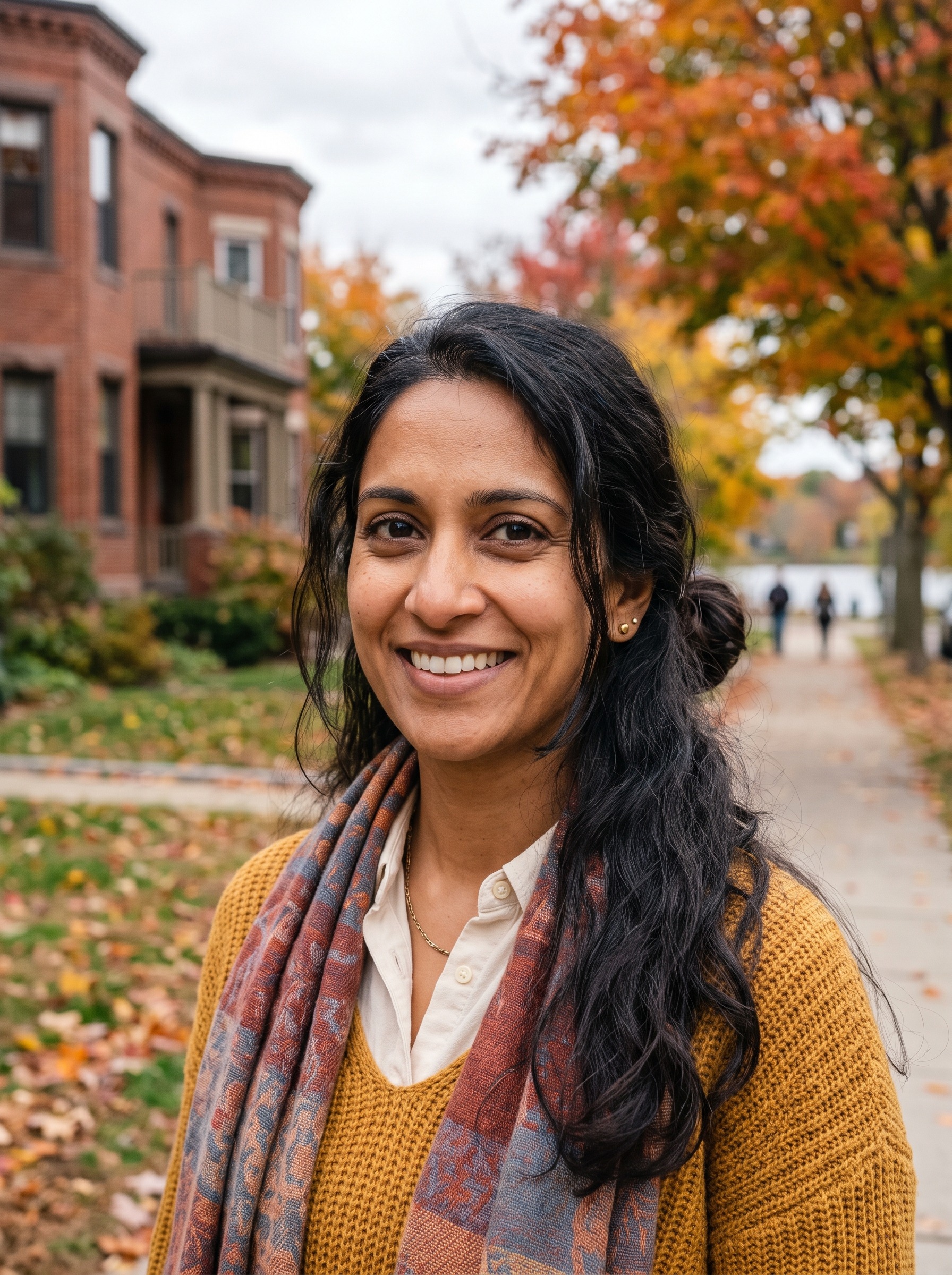

Boston built the South End on filled marshland in the 1830s, and you can still feel that audacity under your feet: a grid of red-brick bowfront rowhouses, iron railings, stoops and little gated squares that seem to pull the street inward. The neighbourhood does not announce itself with monuments. It works by accumulation — brick by brick, table by table, square by square — until the whole place starts to feel like a city within the city, quieter and greener than Back Bay, but with a sharper appetite.
What the South End is known for
The South End’s first impression is architectural, and it stays that way if you keep walking. This is the largest intact Victorian rowhouse district in the country, a Boston Landmark District where the curved fronts and tall windows are not decorative afterthoughts but the neighbourhood’s basic grammar. The streets are lined with bowfronts and brownstones that seem to lean toward the sidewalk just enough to catch the light. Behind them, private garden squares create pockets of calm that are rare in a city this dense. Union Park and Worcester Square are the ones people point you toward first, and for good reason: they show the South End at its most composed, with matching façades facing a shared green.

What makes the South End feel different from the rest of Boston is not one thing but the way its different lives overlap. By day it is stroller-and-dog residential, the kind of place where you notice the buckled brick sidewalks and the stoops with Pride flags as part of the streetscape, not as a seasonal gesture. By evening, the energy shifts toward Tremont Street and Shawmut Avenue, where people stand outside restaurants waiting for tables and the neighbourhood’s food reputation becomes visible in the pedestrian traffic itself. That mix — long-time residents, artists, LGBTQ regulars, Puerto Rican families and a newer wave drawn by the kitchens — gives the South End its particular temperature. It has been Boston’s most openly gay-friendly neighbourhood for a generation, and that history is not abstract here; it is in the everyday domesticity of the block.
The other defining layer is SoWa, short for South of Washington, the former industrial pocket on the Washington Street side that now holds the neighbourhood’s creative engine. Brick warehouses have become galleries, artist studios and design showrooms, and the district feels like the South End’s counterpoint: less intimate, more open, all hard edges and big light. The first Friday of each month brings a free open-studios crawl, and in autumn South End Open Studios opens hundreds of loft doors across the wider neighbourhood. It is the same South End, but with the shutters up.
Where to eat & drink
The South End’s restaurant life is not an accessory to the neighbourhood; it is one of the reasons the neighbourhood feels so alive after dark. If you want a single anchor, make it Toro on Washington Street, Ken Oringer’s beloved no-reservations Spanish tapas room. People queue here for the anchovy-topped pan con tomate, the grilled maíz asado street corn and the paella, and the room has the charged, unpolished confidence of a place that knows exactly why people are waiting. It is one of those restaurants that changes the rhythm of a block simply by existing on it.

A short walk away, Coppa on Shawmut Avenue takes a different register: a corner Italian enoteca built around house-cured salumi, wood-fired pizza and pasta. It feels neighbourly in the best sense, the sort of room where dinner can stretch without becoming formal. If you want the South End’s more exacting Italian mood, SRV on Columbus Avenue is the place to linger over Venetian small plates and locally milled fresh pasta with an all-Italian wine list. The service is famously careful, but not precious; it reads like a restaurant that knows the details matter because the details are the meal.
Bar Mezzana, over in the Ink Block, broadens that Italian conversation toward the coast, with crudo and fresh pasta in a polished room. Elsewhere, the South End’s Greek cooking is a quiet strength. Kava Neo-Taverna on Shawmut does phyllo-wrapped feta and properly charred octopus, while Kaia near Harrison Avenue is where to go for whole fish and lamb. Both feel like restaurants that understand restraint as well as richness.

For Spanish tapas with a more old-school feel, Estragon — run by Madrid native Julio de Haro — is the counterpoint to Toro, while Barcelona Wine Bar on Tremont is the easier, buzzier tapas-and-wine option. Order the chorizo with figs and let the room do the rest. The South End also carries its Puerto Rican history into the dining scene through Maná Escondido, a tiny counter-service café where the pernil jibarita, roast pork pressed between fried plantain bread, gives you a meal with a clear point of view. It is the sort of place that reminds you the neighbourhood’s food story is not only chef-driven and polished; it is also rooted in everyday cooking and memory.
There are a few other names that recur for good reason. Myers + Chang brings Asian street food and a cult dim-sum-style brunch; Mida leans Roman, with a carbonara that has a following; Ilona serves Eastern Mediterranean small plates and oysters behind garage doors that open onto Tremont; and Oishii goes all in on splurgy sushi with caviar and truffle. None of these feel like filler. In the South End, even the “other good options” are the kind of places that would anchor dining districts elsewhere.
For mornings and between-meal life, Flour Bakery + Café matters as much as any dinner reservation. Joanne Chang’s original location is a South End breakfast staple, and the sticky buns have become part of the neighbourhood’s daily ritual. South End Buttery does the gentler version of that routine with coffee, pastries and weekend brunch, while Formaggio Kitchen South End is where you go for cheese, charcuterie and natural wine when dinner needs a home component. This is a neighbourhood that understands the small luxury of bringing something good back to your apartment.
Going out
The South End does grown-up rather than rowdy, and that distinction shapes the night. The most storied room is Wally’s Café on Massachusetts Avenue, founded in 1947 and billed as the oldest continuously operating family-owned jazz club in America. There is live music every night with no cover, an early jam from around 5pm and full bands from roughly 7pm until 1am. The crowd is not a performance of cool; it is a real cross-section of South End and Roxbury regulars, Berklee students sitting in, and people who know exactly when the set will turn. Latin jazz on Thursdays, funk mid-week — the room has a working life of its own.

If Wally’s is the old soul, Spy Bar is the new one. It opened in 2024 down a winding staircase beneath the Revolution Hotel lobby on Berkeley Street, and it is built for high-end cocktails and carefully curated vinyl at conversation volume. That phrase matters: conversation volume. The South End’s nightlife rarely asks you to shout over it. The Beehive on Tremont sits somewhere between bistro and venue, with nightly live jazz, blues, cabaret and burlesque over dinner and drinks, and the room has the easy theatricality that makes a night out feel like a decision rather than an accident.

Beyond those rooms, the after-dark scene is mostly restaurant bars. Frenchie Wine Bistro is a good place to settle into a bottle; Barcelona Wine Bar keeps the tapas-and-wine energy going after dinner; Aquitaine and Gaslight on Harrison Avenue offer long-running French-bistro and vintage-brasserie moods; and Buttermilk & Bourbon leans New Orleans with strong cocktails and a party mood. It is not a club district. That is part of the appeal. The walk between spots is short, the brownstone stoops are lit, and the night unfolds at human scale.
Things to do / what to see
The South End rewards walking more than it rewards a checklist, which is exactly why it holds together so well. Start with Union Park, the elliptical Victorian garden square that may be the neighbourhood’s most photographed block, then continue to Worcester Square to see the same idea in a slightly quieter key. The point is not simply that these squares are pretty; it is that they explain the South End’s urban logic. The houses face inward as much as outward. Life is arranged around shared green space, and the street becomes a kind of frame.
The cultural core is the SoWa Art + Design District off Harrison Avenue, where dozens of galleries, artist studios and design showrooms occupy old industrial buildings. Come on the first Friday of the month for the free evening open-studios crawl, or in autumn for South End Open Studios across the wider neighbourhood. It is one of the few parts of Boston where you can move from a gallery wall to a working studio to a design showroom without ever feeling the seam between them.
The neighbourhood’s green spaces are more numerous than outsiders expect. Titus Sparrow Park has a playground, tennis and basketball courts and summer concerts; Blackstone and Franklin Squares flank Washington Street; and Peters Park is the beloved dog run. The Boston Ballet has its home base on Clarendon Street, another reminder that the South End’s cultural life is not confined to restaurants and galleries. From here, the Southwest Corridor Park runs as a linear greenway along the Orange Line, and Back Bay and the Public Garden are an easy ten to fifteen minutes away on foot.
{{ATTRACTIONS}}
Shopping & markets
The South End’s shopping life is strongest when it is least like shopping and most like browsing. The headline is the SoWa Open Market, one of the largest open-air art-and-artisan markets in Boston, running every Sunday from May through October, roughly 11am to 4pm, around Harrison Avenue and the pedestrianised streets of SoWa. It is free and runs rain or shine. You get well over a hundred booths — handmade art, ceramics, jewellery, vintage curators and a fresh-produce farmers’ market — plus food trucks selling everything from banh mi to elote and a beer garden where you can sit and watch the afternoon drift by.
It is easy to build a full Sunday around it: brunch first, then the market, then a slow pass through the studios and galleries nearby. Beyond market day, SoWa’s design showrooms are the main draw, alongside independent home, gift and clothing boutiques scattered along Tremont Street and Shawmut Avenue. For edible souvenirs, Formaggio Kitchen South End is a practical pilgrimage for cheese, charcuterie and natural wine, while Flour Bakery and South End Buttery make pastry stops feel like part of the neighbourhood rather than a concession to hunger. This is not a place for big-brand retail. If you want that, Newbury Street is a short walk away in Back Bay. The South End prefers things with a little more texture.
Where to stay in the South End
The South End works best as a base for travellers who want to live inside a neighbourhood rather than beside a sightseeing corridor. Hotels are relatively few, which suits the place. The best-known option is The Revolution Hotel on Berkeley Street, a design-forward, mid-range boutique with the Spy Bar listening lounge downstairs and a young, creative feel. Around the corner on Chandler Street, Staypineapple offers a cheerful, comfortable boutique stay. Both put you within a few minutes’ walk of Tremont Street’s restaurants, SoWa and the garden squares, and within fifteen minutes on foot of Back Bay and the Public Garden.
For the best sense of place, aim for the blocks around Tremont Street, Shawmut Avenue and Union Park. That is where the densest cluster of restaurants and cafés sits, and where the South End’s residential rhythm is easiest to feel. The SoWa and Washington Street side is a little more spread out and industrial, but it is the closest to the Sunday market and galleries, so it suits visitors who plan their days around browsing and studio visits. The neighbourhood sits in the mid-range to upper-mid bracket: cheaper and calmer than the Seaport or the grand Back Bay hotels, and far more atmospheric than a downtown chain.
{{HOTELS}}
Getting around
The South End is compact and made for walking. You can cross the neighbourhood on foot without much effort, and from most of it you can reach Back Bay and the Public Garden in ten to fifteen minutes. That is the first thing to understand here: the neighbourhood is not built around the subway, even if the subway brushes past it. On the Orange Line, Back Bay station sits at the northwest corner, while Massachusetts Avenue and Tufts Medical Center are on the fringes. None drops you into the middle.
The Silver Line bus rapid transit routes SL4 and SL5 run straight through the neighbourhood along Washington Street between downtown and Nubian Square, with a useful Union Park Street stop for the SoWa side. Back Bay station also gives you commuter rail and is a five-minute ride to South Station. Logan Airport is roughly 15 to 20 minutes by taxi or rideshare in normal traffic, or you can connect via the Silver Line SL1 from South Station. Driving is best avoided. The streets are narrow, resident-permit parking dominates and garages are limited, so the neighbourhood works better when you accept that the best way through it is on foot.
FAQs
Is the South End a good area to stay in Boston?
Yes, if you care more about food and neighbourhood atmosphere than being next to the major sights. It has Boston’s best concentration of restaurants, leafy Victorian streets and a couple of good boutique hotels, and it is a 10 to 15 minute walk to Back Bay and the Public Garden. It is less convenient for the Freedom Trail and the harbour, and the subway only reaches the edges, so you will walk a lot — which is usually part of the pleasure here.
Is the South End safe?
It is a well-kept, largely residential neighbourhood that feels safe by day and evening, with plenty of foot traffic around the restaurants. Use normal big-city awareness late at night, especially along Massachusetts Avenue and on the quieter blocks at the edges.
Is the South End the same as South Boston?
No. They are different neighbourhoods that people often confuse. The South End is the Victorian rowhouse and restaurant district just south of Back Bay. South Boston, or Southie, is a separate waterfront neighbourhood to the east, historically Irish-American and next to the Seaport. If you are coming for the food, galleries and brownstones, you want the South End.
What is the best day to visit the South End?
Sunday from May through October is the sweet spot, for the SoWa Open Market — over a hundred art, vintage and produce vendors plus food trucks and a beer garden — which pairs neatly with brunch and a walk past the garden squares. First Fridays are good too, when the SoWa studios open up for a free evening gallery crawl.