Bonn guide
Gronau, Bonn: the quiet republic by the Rhine
Once Bonn’s government quarter, Gronau is now a calm, green district of museums, UN offices and riverside paths where the city’s post-war story still feels close enough to touch.
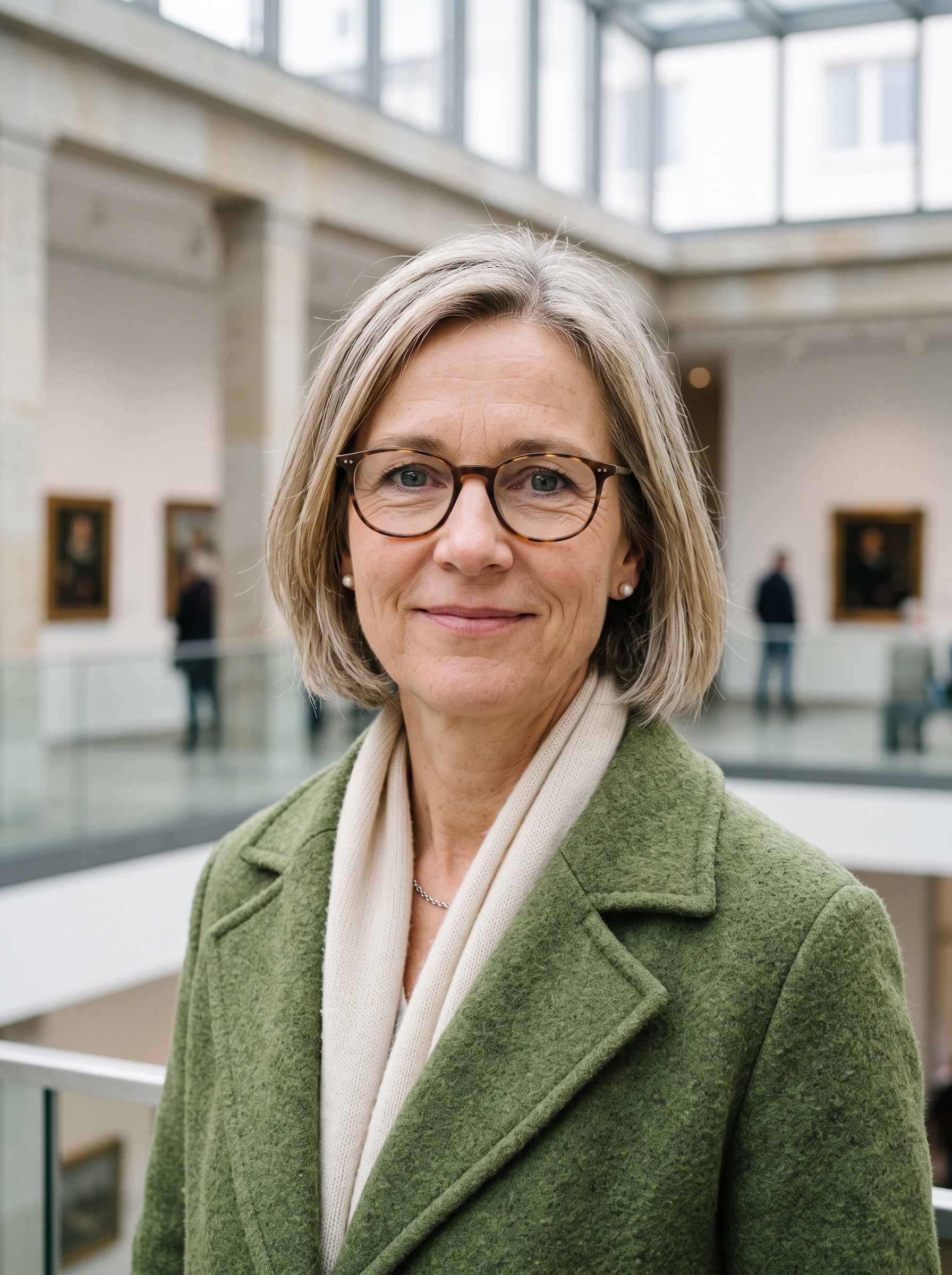

At Heussallee/Museumsmeile, the Stadtbahn doors open onto a district that still seems to think in official language: broad avenues, clipped trees, glass façades, and the long, measured distances of a place built to host a republic. A few minutes away, the Rhine moves past the edge of the quarter, and the old capital’s working life is now archived in museums, repurposed towers and a modernist bungalow screened by greenery. Gronau, the heart of Bonn’s Bundesviertel, is a neighbourhood that asks for daylight, patience and a slow step.
What Gronau and the Bundesviertel are known for
Two forces define this part of Bonn: government and green space. For half a century the Bundesviertel was the working centre of West Germany, and the district still carries that seriousness in its bones. The Bundestag sat here, ministers occupied the avenues between the Rhine and the railway, and the Chancellor lived and received guests in the Kanzlerbungalow. When parliament left for Berlin in 1999, the quarter did not collapse into afterlife. It was re-assigned, kept intact, and allowed to evolve with a kind of civic restraint that feels very Bonn: less spectacle than continuity.
The most visible symbol of that continuity is the Langer Eugen, the 115-metre former parliamentary office tower built between 1966 and 1969 and named, with heavy irony, after the short-statured Bundestag president Eugen Gerstenmaier. It now anchors the UN Campus, where around a thousand staff work for bodies including the UN Climate Change secretariat. The tower rises with a kind of plain confidence, a vertical reminder that this was once a capital and still acts like one in certain rooms.

The district’s second pillar is the Museum Mile (Museumsmeile), a roughly three-kilometre run along Friedrich-Ebert-Allee and Willy-Brandt-Allee lined with five major institutions. This is where Gronau’s public life now happens: in galleries, history museums and science halls rather than ministries. The third pillar is the Rheinaue, a 160-hectare leisure park laid out for the 1979 Federal Garden Show. It softens the whole quarter, giving the former government district a river park of lakes, paths and open lawns that feels almost implausible beside the old administrative grid.
What makes Gronau compelling is the way those three elements sit together. Statecraft, art and parkland are not separated here by dramatic transitions; they are stitched into one walkable strip. It is a district for people who like to understand a city through its institutions, and through the spaces between them.
Things to do and what to see
The Museum Mile is the reason most people come, and it rewards a full day. Start at Haus der Geschichte on Willy-Brandt-Allee 14, the most accessible and perhaps the most lucid of Bonn’s major museums. It is free, and roughly a million visitors a year move through its permanent trail of German history from 1945 to the present. The story is told with objects rather than abstractions: a parliamentary rail carriage, a chunk of the Berlin Wall, the tactile evidence of a country that rebuilt itself, argued with itself and changed shape in public.

Next door, the Kunstmuseum Bonn deepens the mood from history into colour and line. Its great strength is the world’s largest collection of Rhenish Expressionism, anchored by August Macke, but it also reaches well into post-war German art. It is one of those museums that feels quietly serious rather than encyclopedic, and that restraint suits the quarter around it.
Then comes the Bundeskunsthalle, whose changing exhibitions give the district a contemporary pulse. It can stage up to four major exhibitions at once, and when nothing is installed on the roof, the rooftop garden is free to enter. That garden is one of the best pauses in the whole neighbourhood: a place to stand above the avenues and understand how deliberate this part of Bonn really is.

Across the way, Museum Koenig changes the register again. It is a natural-history museum with walk-through African-savannah dioramas, and it carries a particular historical weight because the Parliamentary Council held its opening session here on 1 September 1948 before drafting the Basic Law. The building is lovely in a formal, almost old-fashioned way, but what matters most is the sense that the constitutional history of the Federal Republic began in rooms that still feel tangible.
The Deutsches Museum Bonn, at Ahrstraße 45, turns the quarter from political memory toward scientific curiosity. As the Munich institution’s science-and-technology outpost, it now leans hard into an AI theme with hands-on labs. It is the most interactive of the museums here, and an easy choice for families or anyone who wants a more tactile counterpoint to the archival tone of the others.
Beyond the museums, the most rewarding thing to do is walk. The Weg der Demokratie is a signed 90–120 minute route from Haus der Geschichte past the old Bundestag, Villa Hammerschmidt and the World Conference Center Bonn. It is not a sentimental trail. It is a route through the architecture of the old capital, and it makes the district legible in a way no map quite can. The Kanzlerbungalow reopened for guided tours in December 2025 after a long restoration, and its low modernist profile remains one of the most discreetly revealing buildings in the city.
{{ATTRACTIONS}}

Where to eat and drink
Be realistic about the Bundesviertel: this is not a restaurant district with a dense high street, and that is part of its character. The good eating is attached to institutions and to the park, and it is genuinely decent if you accept the district on its own terms.
The most reliable sit-down lunch is Restaurant GUSTAV inside the Bundeskunsthalle at Helmut-Kohl-Allee 4. It opens Tuesday to Sunday from around 11:00, and there is a café alongside. The appeal is simple and very Bonn: take in an exhibition, then sit down beneath the museum’s architecture with the sense that the day is moving at the right speed. The free rooftop garden makes the meal feel less like a break and more like part of the visit.
Café Zwischenzeit at Haus der Geschichte is the museum café you want when you are moving through the history galleries and do not wish to leave the building’s orbit. It is practical, but in a district like this practicality can feel like a virtue.
Out in the Rheinaue, the Parkrestaurant Rheinaue at Ludwig-Erhard-Allee 20 does exactly what a park restaurant should do: bratwurst and fries, pizza, tarte flambée, with a summer beer garden and open-air concerts near the Rheinauensee. There is also a snack pavilion near the Heinemannstraße entrance for a lakeside coffee. The food is unpretentious, the setting is the point, and the whole arrangement suits a long afternoon in the park.

For a meal with a view and a proper kitchen, the riverside hotel at Platz der Vereinten Nationen 4 — long the Bonn Marriott, rebranding to Radisson Blu in 2026 — runs Konrad's Restaurant & Bar and its SkyBar on the 17th floor. The cooking leans Mediterranean, and the floor-to-ceiling Rhine views are the sort that make even a business district feel briefly cinematic. Downstairs, Restaurant Parlament does a weekday business lunch. This is the place to come when you want the district’s official gravity, but with a glass in hand and the river in front of you.
If dinner needs to become an event, cross to the Bonner Bogen on the opposite bank for Yunico at the five-star Kameha Grand. It is Michelin-starred Japanese dining, and while it is not in Gronau proper, it belongs to the wider Bonn of conference hotels, river crossings and serious reservations.
Shopping & markets
Retail is not why you come to Gronau. There is no shopping street here, and for department stores or boutiques you head north to Bonn’s centre around the Marktplatz. What the quarter does have, however, are museum shops that are unusually good. The stores at the Bundeskunsthalle and Kunstmuseum Bonn are worth a browse for exhibition catalogues, design objects and art books, while the Haus der Geschichte shop leans into 20th-century German history and design.
The real market of the district is out in the Rheinaue, where one of Germany’s largest flea markets takes over the park on the third Saturday of the month from April to October. Hundreds of stalls of bric-a-brac, vinyl, books and vintage draw browsers from across the region. It is one of the few moments when the district feels crowded in a way that is not institutional.
For everyday groceries and a bakery run, you will find the usual supermarkets around the residential edges of Gronau rather than along the museum avenues, so plan a picnic before you head into the park rather than expecting to buy it on the Museum Mile.
Where to stay in Gronau (Bundesviertel)
The Bundesviertel makes most sense as a base if you are here for the museums, a conference, or river-and-park quiet rather than nightlife. The obvious anchor is the large four-star hotel at Platz der Vereinten Nationen 4, on the Rhine and directly linked to the World Conference Center and the UN Campus. It has long run as the Bonn Marriott and will rebrand to Radisson Blu in 2026, with an indoor pool, spa and the SkyBar upstairs. Across the river at the Bonner Bogen, the five-star Kameha Grand is the design-led splurge, with a rooftop pool looking over the Rhine to the Siebengebirge hills.
Both put you within a short walk or ride of the Museum Mile while keeping you away from the city-centre bustle. Expect a mid-to-upper price feel: this is a business-and-culture district, so weekday rates track conferences while weekends can soften. If you would rather trade quiet for atmosphere and a livelier evening on your doorstep, base yourself in the centre or Südstadt instead and come out to Gronau for the day — it is only a few U-Bahn stops.
{{HOTELS}}
Getting around
The spine of the quarter is Heussallee/Museumsmeile, the underground station served by Stadtbahn lines 16, 63 and 66. From Bonn Hauptbahnhof it is roughly five stops and about six minutes on line 16 towards Bad Godesberg. You can also stay on for Bundeskanzlerplatz/Heussallee, served by bus lines 610 and 611, which drops you right by Haus der Geschichte.
Within Gronau, everything is walkable and flat. The five Museum Mile institutions sit within about a fifteen-minute stroll of one another, and the Rheinaue opens off the same avenues down to the river. Cycling is the local’s choice — the Rheinaue alone has some 45 kilometres of paths, and Bonn’s bike-share docks, including one at Heussallee/Museumsmeile, make it easy to pick up a bike for the day.
For the airport, Cologne/Bonn (CGN) is about 25 km away. The SB60 Airport Express runs from Bonn Hauptbahnhof to the terminal in roughly 27 minutes, every 30 minutes on weekdays, and you connect into the quarter from the station on the 16/63/66. Cologne itself is around 30 minutes by regional train.
Gronau is calm and safe by day, and very quiet after office hours, so the emptiness feels like a condition of the place rather than a warning. That is perhaps the most honest way to understand it. This is not a quarter that performs itself for the evening crowd. It keeps its composure, and lets you walk through the republic at your own pace.
FAQs
Is Gronau (the Bundesviertel) a good area to stay in Bonn?
Yes, if you are coming for the Museum Mile, a conference at the World Conference Center, or quiet riverside walks. The big hotel at Platz der Vereinten Nationen puts you right on the Rhine. It is a poor choice if you want nightlife, shopping streets or a lively evening scene, because the quarter empties out after office hours. Many visitors sleep in the centre or Südstadt and come out here for the day.
How many museums are on Bonn’s Museum Mile, and are any free?
There are five major ones: Haus der Geschichte, Kunstmuseum Bonn, Bundeskunsthalle, Museum Koenig and Deutsches Museum Bonn. Haus der Geschichte is free to enter, and the Bundeskunsthalle’s rooftop garden is free when no installation is up. Museum Koenig is inexpensive at around €6, while the Deutsches Museum Bonn and Bundeskunsthalle exhibitions charge standard admission.
What is there to do in the Bundesviertel besides museums?
Quite a lot. The 160-hectare Rheinaue park has lakes, cycle paths, playgrounds and one of Germany’s biggest flea markets on the third Saturday of the month from April to October. You can also walk the Weg der Demokratie, tour the reopened Kanzlerbungalow, and see the UN Campus around the Langer Eugen tower.
How do I get around Gronau without a car?
Use Heussallee/Museumsmeile on Stadtbahn lines 16, 63 and 66. From Bonn Hauptbahnhof it is about six minutes on line 16 towards Bad Godesberg. The area is flat and walkable, and bike-share docks make cycling easy.