Agra guide
Taj East Gate Road, Agra: the calm, green front door to the Taj Mahal
Agra’s eastern approach trades bustle for birdsong, with the shortest sunrise queues, the city’s best Taj-facing hotels and a rare pocket of quiet right by the marble.
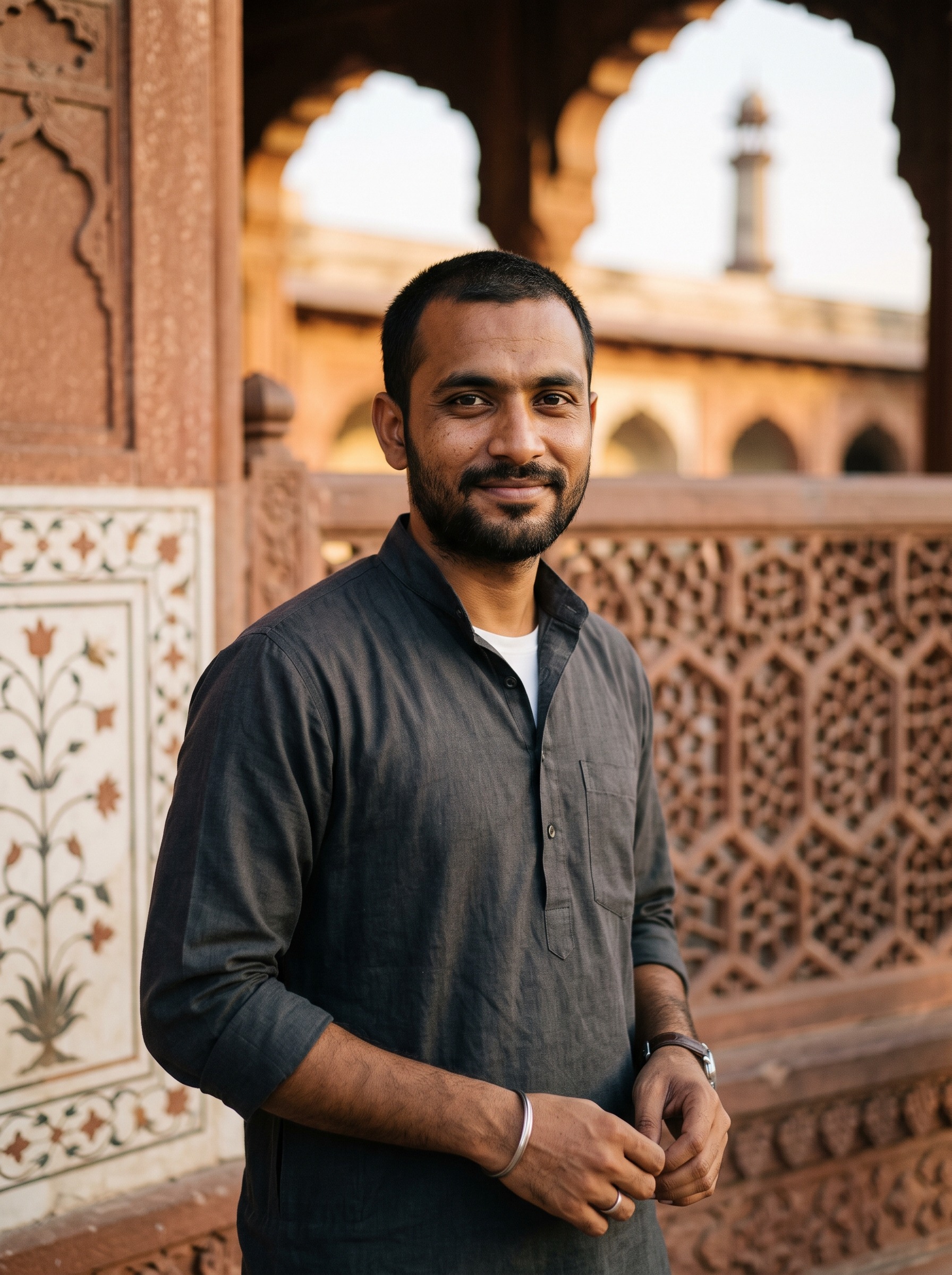

The first thing you notice on Taj East Gate Road is not the Taj itself but the hush around it: birdsong from the Taj Nature Walk, a line of trees, and the sense that the monument is being approached with care rather than crowd noise. By the time you reach the last 500 metres, the road has already done its work. Cars are gone, the air feels lighter, and the marble begins to seem less like a destination than a presence slowly revealed.
What Taj East Gate Road is known for
This is Agra’s polished front door to the Taj Mahal, the approach most guides quietly favour for sunrise visitors and first-timers who want the smoothest entry. The East Gate reliably has the shortest queues of the three gates, and the route is designed to keep the monument’s immediate surroundings calm: petrol and diesel vehicles stop 500 metres short, at Shilpgram parking, and the final stretch is covered on foot or by free electric buggy. That simple rule changes everything. Instead of the usual crush of city traffic, you arrive through a green buffer, with the Taj Trapezium Zone doing its unglamorous but essential work of protecting the white marble from yellowing.

The road itself has almost no street life to speak of. That is not a flaw here; it is the point. Taj East Gate Road is where Agra chooses order over noise. On one side sits the Taj Nature Walk, a 70-hectare reserve of scrubland and shaded trails, and on the other the hotels that make this stretch the most comfortable base within walking distance of the monument. The atmosphere skews early: sunrise tour groups, photographers chasing softer light, hotel guests stepping out from air-conditioned lobbies, older travellers relieved not to be negotiating a bazaar before breakfast. After dark, the road empties to near silence.
The monument’s East Gate opens roughly 30 minutes before sunrise, and if you want that classic pink-to-gold shift on the marble, you need to be in the queue well before 6am. It is worth saying plainly that this side of the Taj is calmer partly because it is less social. If your idea of a neighbourhood is a tangle of rooftop cafes, souvenir stalls and evening chatter, Taj Ganj is the noisier, more textured answer. Taj East Gate Road coasts on the Taj, yes, but it also protects the visitor from the friction that often comes with being close to a global icon.
Where to eat & drink
Dining on Taj East Gate Road happens mostly inside hotels, and the area wears that fact with confidence. There is no restaurant strip, no street-food crawl, no after-hours cafe culture. Instead, the tables here are polished, formal and often blessed with the one thing Agra sells best: a view of the marble.
At The Oberoi Amarvilas, Esphahan is the room that best captures the Mughal fantasy without tipping into costume. It is a fine-dining Indian restaurant built around recipes said to come from the emperors’ kitchens, with tandoor tasting platters and live santoor music. The effect is ceremonial but not stiff; the food has the weight and perfume you come to Agra for, and the room itself feels like an extension of the monument’s own discipline.

The same hotel’s Bellevue is more relaxed in tone, an all-day restaurant serving international and Indian menus from a terrace that looks towards the Taj. It is the sort of place where breakfast can stretch into lunch without anyone forcing the pace, and where the monument remains visible even when you are not actively looking at it. For a pause rather than a performance, The Lounge is the terrace spot for afternoon tea with the marble in view.
A short way along the road, the Taj Hotel & Convention Centre — marketed as Taj Agra — gives the neighbourhood two of its most dependable dining rooms. Daawat-e-Nawab is one of the city’s celebrated addresses for Nawabi and Mughlai cooking, the sort of place where slow-cooked kebabs and biryani arrive under resplendent decor and live music. It is a room that understands Agra’s appetite for grandeur and delivers it with polish. Palato, by contrast, is the hotel’s high-ceilinged all-day restaurant, with an island bar and alfresco terrace that make it useful at almost any hour.
If you want the Taj in full view while you eat or drink, Infini — The Sky Lounge is the obvious rooftop pick. It serves food and drinks poolside from noon to 11pm, looking straight at the Seventh Wonder. The view is the point, but the setting matters too: elevated, open, and just removed enough from the monument to make you feel you are watching a living postcard rather than standing inside one.
Nearer the gate, Taj Terrace at Hotel Taj Resorts is the mid-range compromise that still gets the essentials right: Indian, Chinese and continental plates, a rooftop setting, and a monument view. For travellers who want to remain close to the East Gate without committing to five-star dining, it is one of the more practical tables on the road.
And then there is Hotel Taj Khema, where the government-run kitchen does something increasingly rare in this part of Agra: a plain, honest lunch for a few hundred rupees, close enough to the gate to make it the nearest affordable option. It is not trying to seduce you. It simply feeds you, and in a neighbourhood where many meals are wrapped in hotel formality, that can feel like a small mercy.
Things to do / what to see
The obvious thing to do here is still the best one: enter the Taj Mahal through the East Gate at sunrise. The route is shorter, the queues are usually lighter, and the approach feels deliberate rather than chaotic. If you are staying on this road, the morning becomes beautifully simple: out early, through the gate, and into that first hour when the marble seems to change colour by the minute.

But Taj East Gate Road rewards a slower stay if you let it. The Taj Nature Walk is the neighbourhood’s quiet secret, a 70-hectare reserve of scrubland, shaded trails and viewing mounds just a five-minute walk from the gate. It opens from 6am to 7pm, and a small ticket — around INR 50 for Indians and INR 200 for foreign visitors — buys you birdsong, paradise flycatchers, golden orioles and a distant, uncrowded profile of the Taj rising above the trees. It is the antidote to the monument’s morning crush, a place where the Taj becomes a silhouette again, which is often the most moving way to see it.

Cross the river and the mood changes again. Mehtab Bagh, the Mughal Moonlight Garden on the far bank of the Yamuna, is a 3-to-4 km hop by auto-rickshaw or taxi, roughly 10 to 20 minutes depending on traffic. You exit the East Gate, cross the bridge and follow the signs. Time it for late afternoon and you get the city’s best crowd-free sunset view of the Taj, especially between about 4pm and sunset. A sunrise inside the monument and a sunset from across the water is one of Agra’s most satisfying pairings; it lets you see the same building in two completely different moods.
The rest of the doing here is gentler and less scripted: a slow wander through Shilpgram, a coffee on a hotel terrace, a pause in the green before the day’s heat settles in. The point is not activity for its own sake. It is the luxury of not having to fight for space.
{{ATTRACTIONS}}
Shopping & markets
There is no bazaar on Taj East Gate Road, and that absence is part of its identity. Shopping here is concentrated in one place: Shilpgram, the government-run open-air crafts emporium about 500 to 600 metres from the East Gate. Spread over roughly 11.5 acres and run by Uttar Pradesh Tourism, it gathers the city’s craft traditions under one address — leather goods, carpets and rugs, embroidered suits and saris, brassware and metal lamps, and the marble pietra dura inlay that Agra is famous for.

Prices are fixed-ish, the pressure is lower than in the Taj Ganj stalls, and that alone makes it a more forgiving first stop than the old-city markets. It is not the place for the drama of bargaining; it is the place for browsing without being hurried. If you are here in the second half of February, build an evening around the Taj Mahotsav, which runs at Shilpgram for ten days — in 2026, from 18 to 27 February. Since 1992, the festival has brought a Mughal-style opening procession with decorated elephants and camels, folk performers and hundreds of craftspeople from across India. For a few nights the road’s quiet, almost reserved personality opens out into colour and ceremony.
For more serious shopping — marble workshops, leather, the old bazaars of Sadar and the walled city — you will need a short ride into Fatehabad Road or Belanganj. That is the honest geography of this neighbourhood: the best shopping is nearby, but not on the doorstep.
Where to stay in Taj East Gate Road
This is where Taj East Gate Road becomes most persuasive. The neighbourhood is built for travellers who want quiet nights, cleaner air and the shortest possible sunrise walk, and the hotel ladder reflects that ambition clearly.
At the top sits The Oberoi Amarvilas, the landmark property on the road and, by its own claim, the only luxury hotel in Agra with unrestricted Taj views from every room and suite. It is 600 metres from the monument and runs guests to the gate by private golf buggy. Even by Agra standards, it is the address that most directly converts proximity into privilege.
The Taj Hotel & Convention Centre — Taj Agra — is the other major five-star presence, set on 4.5 landscaped acres with a rooftop infinity pool overlooking the marble. It is bigger, more convention-minded, but still very much part of this eastern corridor’s appeal: comfort, space and the Taj as daily backdrop rather than special excursion.
Below those, Hotel Taj Resorts offers a more approachable stay without abandoning the neighbourhood’s central advantage. You are still within a short walk of the East Gate, and still close enough to claim the sunrise without a long pre-dawn transfer. Hotel Taj Khema, the six-room government-run option, is the budget outlier: perched on an elevated lawn with its own Taj viewpoint and the cheapest bed genuinely walkable to the gate.
Choose this side if you want the monument to be part of your waking and sleeping hours. Choose it if you prefer calm to café culture, and if the idea of stepping out into birdsong appeals more than stepping out into a bazaar. The trade-off is real: life happens inside the hotels, not on the street.
{{HOTELS}}
Getting around
The last 500 metres to the Taj are car-free, so plan on a short walk or the free electric buggy from Shilpgram parking to the East Gate. That shuttle, along with shoe covers and a bottle of water, is included with the foreign-visitor ticket. Once you understand that pattern, the neighbourhood becomes easy to navigate: everything important is either on foot or a quick auto-rickshaw ride away.
Agra Cantt railway station, the main hub for fast trains from Delhi and Jaipur including the Gatimaan and Vande Bharat, is about 6 km away, roughly a 15 to 20 minute drive. Mehtab Bagh across the river is 3 to 4 km, or about 10 to 20 minutes. Fatehabad Road, with more hotels and dining, is only a few minutes south. Agra also has a small airport, Agra Airport or Kheria, about 40 minutes by road, though most travellers still arrive from Delhi over the Yamuna Expressway in roughly 3.5 to 4 hours.
Within Taj East Gate Road itself, walking is easy and pleasant. You only need wheels to reach the parking zone, cross to Mehtab Bagh, or head deeper into town. The road is safe, calm and orderly day and night, but after dark it is residential-quiet, so late arrivals should pre-arrange transport rather than expect much to be waiting on the curb.
The eastern approach to the Taj does not try to entertain you. It offers something subtler: a clean line into the monument, a pocket of green, and the rare feeling that one of the world’s most visited places can still be approached with grace.
FAQs
Is Taj East Gate Road a good area to stay in Agra?
Yes, if you want quiet and comfort near the Taj. It is the calmest, greenest approach to the monument, has the shortest sunrise queues at the East Gate, and holds Agra’s best upscale hotels, including The Oberoi Amarvilas and the Taj Hotel & Convention Centre. The trade-off is that dining and everyday life happen mostly inside the hotels, not on the street.
Is the East Gate the best entrance to the Taj Mahal?
For most independent travellers and sunrise visitors, yes. The East Gate reliably has the shortest queues of the three gates and is served by the Shilpgram parking area with its free electric shuttle. It is especially convenient if you are staying on Taj East Gate Road, and the Taj is closed on Fridays.
Why do cars stop before the gate on Taj East Gate Road?
Petrol and diesel vehicles are banned within 500 metres of the Taj Mahal to reduce pollution and protect the marble. Everyone parks at Shilpgram and covers the final stretch on foot or by free battery bus or golf cart, which is a big reason this side feels cleaner and quieter.
What is there to do besides visiting the Taj Mahal?
The best extra stop is the Taj Nature Walk, a 70-hectare reserve with birdlife and distant Taj views. Mehtab Bagh across the river is the other standout, especially at sunset. Shilpgram is worth a browse for crafts, and in late February it hosts the Taj Mahotsav.