Agra guide
Cantonment (Sadar Bazar), Agra: where the city really eats, shops and slows down
A walk through Agra’s ordered half, from colonial roads and St George’s Cathedral to Sadar Bazaar’s evening ritual of chaat, petha and leather shopping.
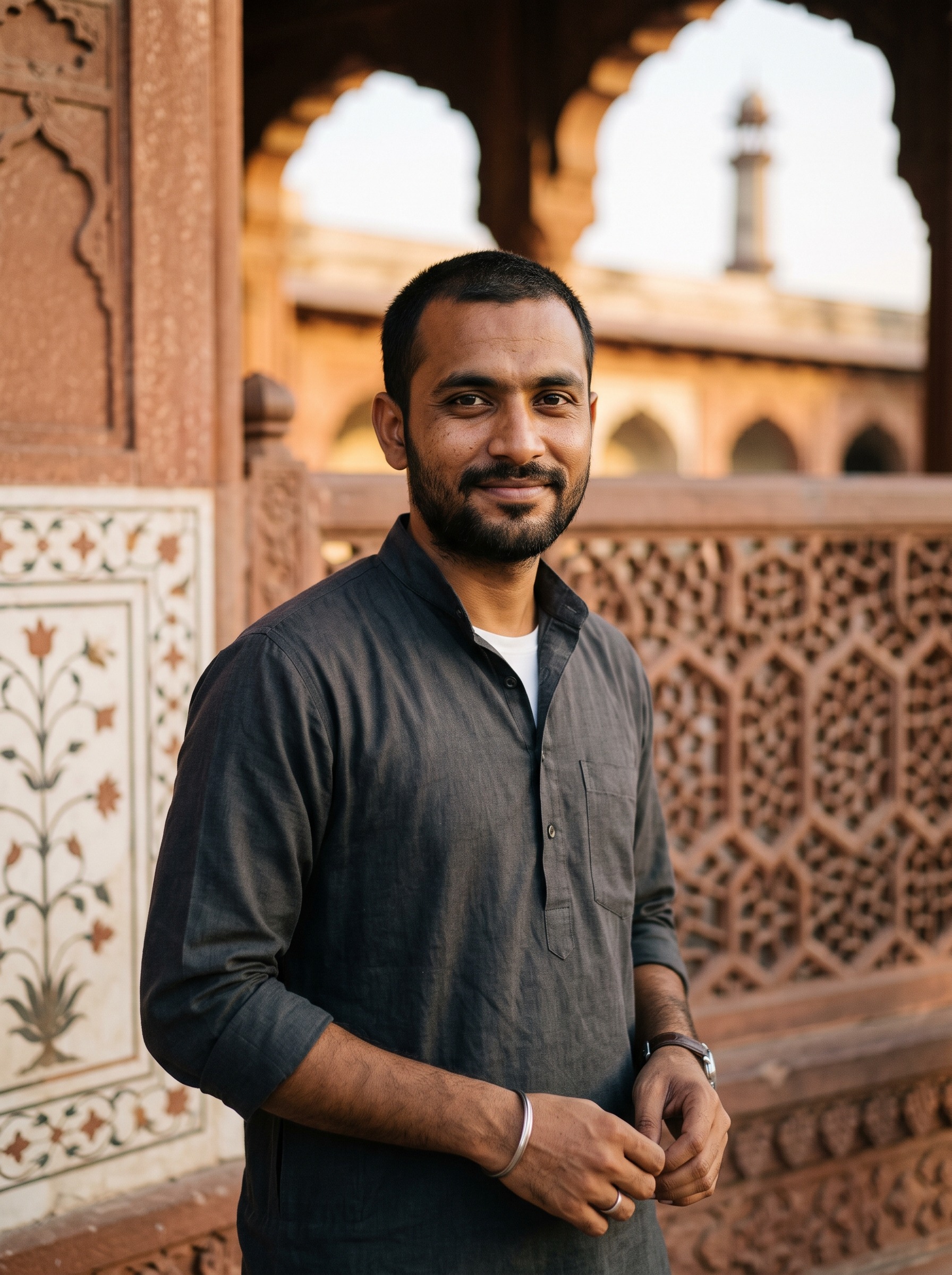

Most people arrive in Agra with the Taj in their head and Agra Cantt station under their feet, then hurry away before the city shows its hand. But the Cantonment is where Agra keeps its daily rhythm: straight roads, old bungalows, a garrison church, and Sadar Bazaar turning on after dark like a stage set for the ordinary pleasures of the city — eating, bargaining, strolling, and eating again.
What the Cantonment and Sadar Bazaar are known for
The Cantonment is Agra’s ordered half, and it wears that order lightly. Laid out by the British after 1803, it sits south of the old city on a grid of tree-lined roads and low colonial-era bungalows, with The Mall cutting a clean line from Agra Cantt station eastward toward the road to the Taj. It feels calmer than the tangle of the older bazaars, less theatrical, more lived-in. That is precisely its appeal. This is not a district built to impress you with monuments; it is a place that lets you see how Agra actually moves when the day’s sightseeing is over.
At the centre of it all is Sadar Bazaar, a largely vehicle-free market street that comes into its own in the evening. By early dusk, the shopfronts glow and the chaat vendors start frying. Families drift in, soldiers off duty appear in the crowd, and the whole strip becomes a slow-moving ritual of a shaam ki sair — an evening walk built around eating. The soundscape is all part of it: bargaining, the hiss of tikkis meeting a griddle, the scrape of kulfi being turned out of its mould. Come at 7pm, not 2pm, and you understand why locals rate this place above the tourist trail.

There is a practical side to the Cantonment too. Agra Cantt railway station is a few minutes away by auto, which makes this the natural landing pad for anyone arriving by train from Delhi or Jaipur. If you want a neighbourhood that is easy to reach, easy to walk, and easy to eat in, this is Agra at its most usable.
Where to eat & drink
This is the reason to come. Sadar Bazaar and its offshoot lane, Chaat Gali — the khau gali, the eating alley — pack in more good street food than anywhere else in Agra. It is the sort of place where a sensible plan is still a hungry one: start with sweets, move to chaat, detour for a proper breakfast if you arrive early enough, and finish with kulfi or a franky roll if you still have room.
Begin with petha, the translucent ash-gourd sweet that Agra has made into an identity. The name to trust is Panchhi Petha, whose original Sadar Bazaar store has been the benchmark since the mid-20th century. Buy the plain dry petha if you want the classic version, or the kesar and angoori varieties, vacuum-packed for the journey home. This is one of those places where being specific matters; imitators using the Panchhi name are everywhere, and the original remains the one worth your time.

For breakfast, Deviram Sweets & Restaurant is the local institution, credited with introducing bedai to Agra. A plate here is the city’s morning grammar: fried puffed puri, spiced potato-and-lentil sabzi, a spoon of curd, and a coil of hot jalebi on the side. It gets a queue for good reason. There is something deeply satisfying about eating it before the market has fully woken up, when the day still feels organised and full of intent.
By evening, Chaat Gali takes over. This is where the street-food crowd goes, and where the Cantonment reveals its appetite without apology. Work through aloo tikki, crisp dahi bhalla drowned in yoghurt, papdi chaat and golgappa or pani puri from the long-running stalls. Agra Chaat House is one of the names that keeps the lane honest, the sort of place locals return to because it has earned the right to be busy.

When you want dessert with a little old-market theatre, Shankar Kulfi Falooda is one of the oldest kulfi shops in the lane. A plate of kulfi-falooda runs around ₹100, and it arrives in the precise, slightly nostalgic way that makes this neighbourhood feel like a lived archive rather than a curated one. The kulfi is part chill, part ceremony; the falooda gives it lift.
For something heavier and non-veg, Mama Chicken Mama Franky House is Agra’s cult roll-and-kebab joint. The double-chicken franky rolls, seekh kebabs and momos are the order here, and the place has the kind of following that tells you more than a menu ever could. It is not trying to be refined. It is trying to be satisfying, and it succeeds.

If you prefer to sit down, Deepee Restaurant — long known as Dasaprakash — in the Meher Cinema complex has been serving South Indian vegetarian dosas and thalis since 1921. That date matters. In a neighbourhood that can feel all movement and no pause, a restaurant with that kind of continuity gives the Cantonment a steadier pulse.
One thing to set expectations on: this is a snacking-and-sweets neighbourhood, not a drinking one. For a proper cocktail, you will be heading to a hotel bar on Fatehabad Road. Here, the social life is in the food, and that is enough.
Things to do and what to see
The set-piece is St George’s Cathedral, the Cantonment’s garrison church, built in the 1820s to a design by Colonel J. T. Boileau, the garrison engineer. It is an unfussy Protestant church in ochre stucco with white dressings, and its interior is lined with stone tablets commemorating British soldiers, many of whom died in the events of 1857. There is a footnote of grandeur too: the future George V and Queen Mary attended a service here in 1905. It sits on Station Road, which makes it an easy stop between the railway station and the bazaar.

Beyond that, the pleasure of the Cantonment is simply walking it. The Mall is the grandest of the area’s roads, and it tells you everything about the district’s colonial logic: straight, tree-lined, measured. The surrounding lanes hold low bungalows and old institutional buildings, and the whole place reads as a city planned to breathe a little more slowly than the old bazaar quarter. If you are the kind of traveller who likes to understand a city by its street pattern, this is a rewarding hour on foot.
The best way to experience the Cantonment is not as a checklist but as a sequence. Start with the station side, pass St George’s Cathedral, drift along The Mall, and then let the evening pull you toward Sadar Bazaar. By the time the market is fully switched on, the neighbourhood’s logic becomes obvious: rail arrivals, local families, soldiers, shopkeepers, and food stalls all sharing the same stage.
A guided street-food or heritage walk through Sadar and Chaat Gali can be a smart move if you want to eat widely without gambling on every stall. Several operators run three-hour evening tours that tie together petha, chaat, jalebi and kulfi with the market’s history. That said, the Cantonment also rewards the independent wanderer. Its pleasures are legible enough on their own.
The other practical virtue here is location. The Cantt works best as a comfortable, central base rather than a destination in itself. You are a short drive from Agra Fort and well placed for an early departure to the Taj. It is not the place for monument-hopping on foot, but it is a fine place to return to after the monuments have done their work.
{{ATTRACTIONS}}
Shopping
Sadar Bazaar is the reason plenty of Agra residents come here at all. It is a general-purpose market — garments, footwear, everyday goods — but for visitors the pull is threefold: leather, marble handicrafts and petha. That combination is so Agra it almost sounds like a shorthand, yet in Sadar it is simply the shopping reality.
Agra has been a leather town for generations, and Sadar is where you browse it. Taj Leather World is the best-known name on the street for bags, belts and jackets, and it sits comfortably in a market where the serious task is comparison. For souvenirs, look for the marble-inlay work — small boxes, coasters and plates decorated in the pietra dura style that echoes the Taj — sold alongside brassware and handicrafts. These are the pieces that let the neighbourhood speak to the city beyond it: the Taj in miniature, made for a suitcase.
And no one leaves without a box or two of petha from an established shop like Panchhi. That is part of the ritual here. Shopping in Sadar is not about a single grand purchase; it is about gathering small, useful proofs that you were in Agra and knew where to go.
Expect to bargain in the smaller shops and stalls. Opening prices are pitched high for tourists, so it is normal to negotiate down, though branded stores keep fixed prices. Shops broadly run from late morning until about 10pm, but the market is busiest and best after dark — and remember it traditionally shuts on Mondays.
Where to stay in the Cantonment
This is Agra’s practical, mid-range base — less touristy than Fatehabad Road, and far better connected than Taj Ganj if you are travelling by train. Most accommodation clusters around Agra Cantt railway station and along the Cantonment’s roads, running from budget guesthouses and B&Bs up to comfortable three-star hotels. Several sit within a five-to-ten-minute walk of the station, which is ideal for early or late trains.
Who it suits is easy to define: rail arrivals, shoppers and food-focused travellers who want to walk to Sadar Bazaar in the evening and keep costs sensible. The trade-off is distance from the Taj. You will need an auto or taxi for the roughly 20-to-30-minute run to the monument, and the neighbourhood has none of Taj Ganj’s rooftop views. If proximity to the Taj at dawn is your priority, stay in Taj Ganj or on Taj East Gate Road instead. If a comfortable, well-linked local base with Agra’s best eating on your doorstep sounds better, the Cantonment is the smart pick.
The area’s live hotels are listed directly below.
{{HOTELS}}
Getting around
The Cantonment’s single biggest advantage is Agra Cantt railway station, the city’s main railhead, with fast trains to Delhi — around two hours on the quickest services — Jaipur, Mumbai and beyond. Most travellers arrive here anyway, which is why the area feels so naturally useful from the start. From the station, Sadar Bazaar is only a few minutes by auto-rickshaw or cab.
Within the neighbourhood, walking is the way. Sadar Bazaar itself is largely pedestrianised and best explored on foot, especially in the evening when the market is at its liveliest. For getting to the sights, budget roughly 20–30 minutes by auto or taxi to the Taj Mahal, and a shorter hop to Agra Fort. Agree the fare with auto and tuk-tuk drivers before you set off, and consider using an app-based cab for fixed pricing.
Agra’s airport, Kheria, handles limited flights. Most visitors come and go by train from Cantt station or by road on the Yamuna Expressway from Delhi. The Cantonment is not a neighbourhood that demands a car. It asks for a pair of feet, a little appetite and, ideally, an evening.
FAQs
Is Cantonment (Sadar Bazar) a good area to stay in Agra?
Yes — it’s a strong mid-range choice if you’re arriving by train or care about food and shopping. It’s a few minutes from Agra Cantt station and puts Agra’s best street food on your doorstep. The trade-off is distance from the Taj, about 20–30 minutes by auto, and no monument views, so Taj Ganj or Taj East Gate Road are better if sunrise walks to the Taj matter most.
What is Sadar Bazaar in Agra famous for, and when should I go?
Sadar Bazaar is known for leather goods, marble handicrafts and Agra’s petha, plus a very good street-food scene along Chaat Gali — dahi bhalla, aloo tikki, golgappa, kulfi-falooda and franky rolls. Go in the evening, roughly 6–9pm, when the largely pedestrian market is liveliest. It traditionally closes on Mondays.
Where can I buy authentic Agra petha in Sadar Bazaar?
Panchhi Petha’s original Sadar Bazaar store is the reliable benchmark. Try the plain dry petha or the kesar and angoori versions, sold vacuum-packed for travel. Because plenty of copycats use the Panchhi name, stick to the established shop rather than an anonymous stall.
What’s the best way to get around Cantonment and Sadar Bazaar?
Walk Sadar Bazaar itself, especially in the evening, since it’s largely pedestrianised. Use an auto-rickshaw or cab for the short hop from Agra Cantt station, and budget about 20–30 minutes by auto or taxi to the Taj Mahal. Agree fares before you set off, or use an app-based cab for fixed pricing.